Military Spouse Pharmacy Tech License: Moving Your State Registration
Luana, a military spouse, landed a Staff Policy and Procedures Analyst role.
Luana, military spouse, policy and procedures analyst
Your national pharmacy tech card moves with you. But the national board that grants it says "the legal scope of practice for CPhTs is defined by individual State Boards of Pharmacy." So you apply for the new state's registration. Texas runs spouse routes for it under rule 297.10.
This guide lays out four state routes, the federal law in plain words and a move plan.
Still studying for the exam? Our guide to pharmacy tech certification after military medicine covers that step first.
Two cards behind a military spouse pharmacy tech license
PTCB is the Pharmacy Technician Certification Board. It gives the Certified Pharmacy Technician (CPhT) credential. You earn it by passing the Pharmacy Technician Certification Exam (PTCE).
The PTCB credential page says the program is "nationally accredited by the National Commission for Certifying Agencies (NCCA)." No state issues it. So it stays valid when you cross a state line.
It also says "Employers prefer, and many require, their pharmacy technicians to be PTCB CPhTs." That is why the card still matters at your next pharmacy.
But PTCB does not decide what you may do on the job. Each state board of pharmacy does. Boards name it differently. Texas calls it a registration, Louisiana a certificate and California a license. That state permit is the part that does not travel.
Think of it as two cards. The national one proves what you know. The state one lets you work in that state.
Four state boards, four spouse routes
Each board writes its own spouse rules. The table sums up four of them. It draws on each board's own page, checked November 2026.
| State | Spouse route | What you send | Watch for |
|---|---|---|---|
| Louisiana | A faster path for spouses who hold or seek a tech credential. | Copies of your marriage license and orders. A clean, current license from another state. Proof you can do the work. That can be continuing education records, a letter from a past pharmacy manager, an exam or an interview. | You can't work until you hold a Special Work Permit or the Louisiana credential. The permit lasts 120 days. It does not renew. |
| Texas | Two routes under rule 297.10: an alternative one and a fast one. A spouse who holds a tech card in another state can also seek a three-year interim one. | An email to the board for the alternative or fast route. The board's interim application for the three-year route. Each route is open to an eligible spouse. | The trainee card on the alternative route does not renew. Neither does the three-year one. |
| California | A short-term license for techs tied to an active-duty member. The tie must be a marriage, domestic partnership or other legal union. | Proof of the marriage, domestic partnership or other legal union. Orders that put your spouse's duty station in California. Written proof from your home state's board. It must show your license is current and unrestricted. A Live Scan receipt or fingerprint cards with the $49 fee. | The board issues it within 30 days of your papers if your record check is clear. It does not renew. It ends after 12 months at most. |
| Maryland | Its page explains the federal law as it was passed in 2023. | Maryland's application for recognition, with your spouse's orders. Good standing in every state that licensed you. The current federal law also asks for your marriage certificate. It asks for a notarized affidavit too. | You answer to Maryland's board on rules, discipline and continuing education (CE). The right lasts while your spouse is based there. A divorce ends it. |
Two patterns stand out. Louisiana and California ask for your spouse's orders and proof of marriage. The federal law's packet does too. And two states offer a short stopgap: Louisiana's 120-day work permit and California's temporary license. Texas's three-year interim registration is longer, but it does not renew either.
All three end on a fixed date. Our advice is to start the full registration at the same time.
Moving to a state not shown here? Our state guide to license reciprocity lists the other paths states use.
A federal backstop for a slow board
A federal law also helps. It sits at 50 U.S.C. 4025a, in the Servicemembers Civil Relief Act.
It applies when your spouse's orders move your home to a new state. Under section (a), your license "shall be considered valid for the scope of practice" there. You must first send the new board an application.
Why a tech registration fits
Section (f)(2) defines a license as "any license, certificate, or other evidence of qualification" a person must get before working. A state tech card you need to work fits those words.
It must come from a state board, and it must be clean. That means good standing, no discipline and no open case.
The 30 days and the packet
The packet holds your spouse's orders, your marriage certificate and a notarized affidavit. Our dental hygiene license guide walks through each part of that same packet.
Section (b) covers a slow board. If it can't act within 30 days of your packet, it "may issue" a short-term license. The word is "may," so it is not a promise.
A note on Maryland's page
Maryland's page names the law the Veterans Auto and Education Improvement Act (VAEIA). It describes the law as signed on January 5, 2023.
Congress rewrote the section on December 23, 2024. So read the new text on govinfo before you trust the old summary.
Timing the registration around your spouse's orders
This plan is BMR advice drawn from the sources above. It is not a rule from any board.
Before orders
- Keep your CPhT current. PTCB runs its own renewal, apart from any state.
- Keep your state registration active and free of any complaint.
- Find your marriage certificate and keep a copy with your license papers.
- Write down your registration number and its exact title.
When orders arrive
- Find the board of pharmacy in the new state. Look for its military page.
- Ask the board two things. Which spouse route fits me? Will you take a 4025a application?
- If the state has a stopgap, ask for it with your main application.
The first month in the new state
- Note the date the board got your packet, and count 30 days.
- No answer by then? Ask the board about a temporary license.
- Don't start work until you hold a permit or registration there.
- Keep every fee receipt. Our guide on getting license fees paid back explains the claim.
Want a wider view of jobs that move well? Our list of portable healthcare careers for spouses compares them.
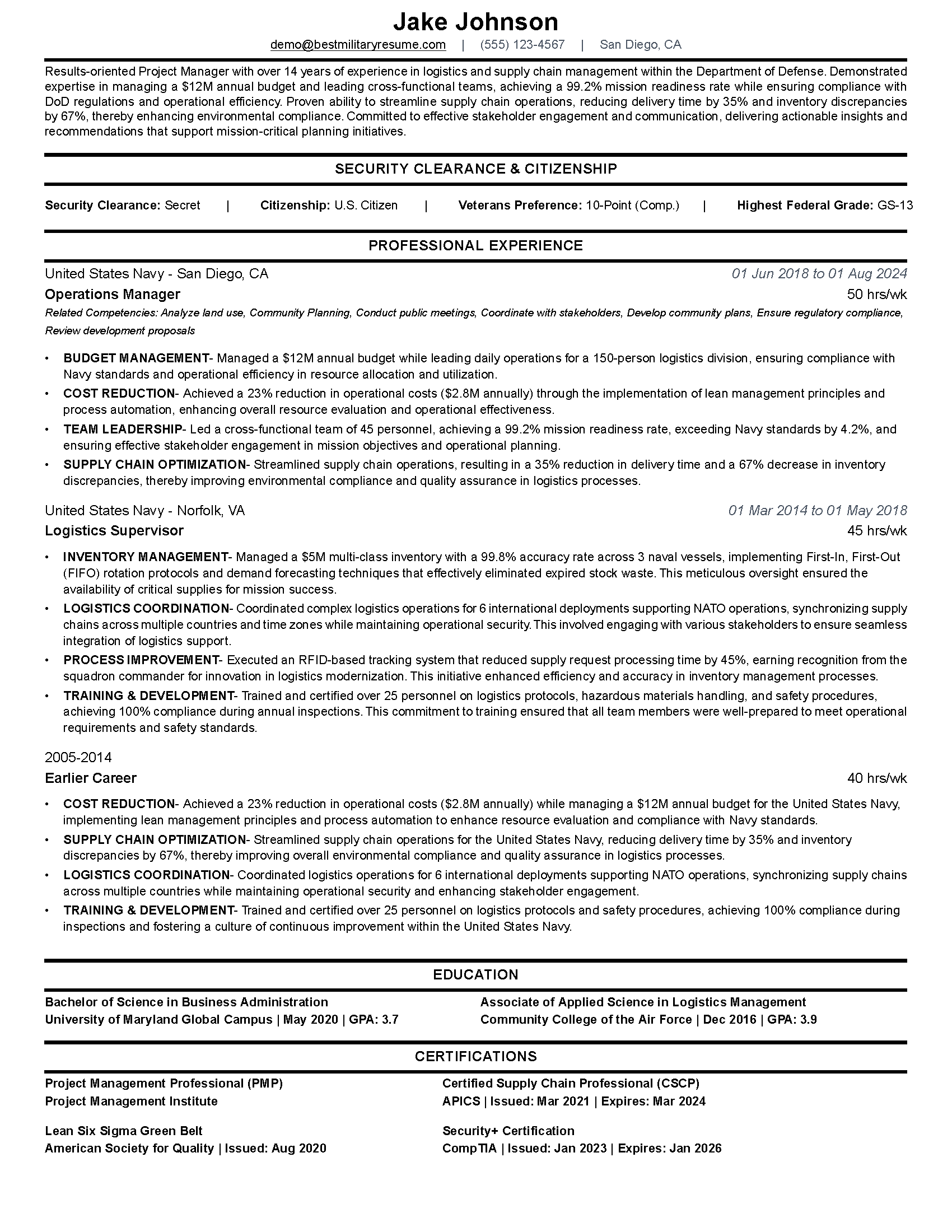
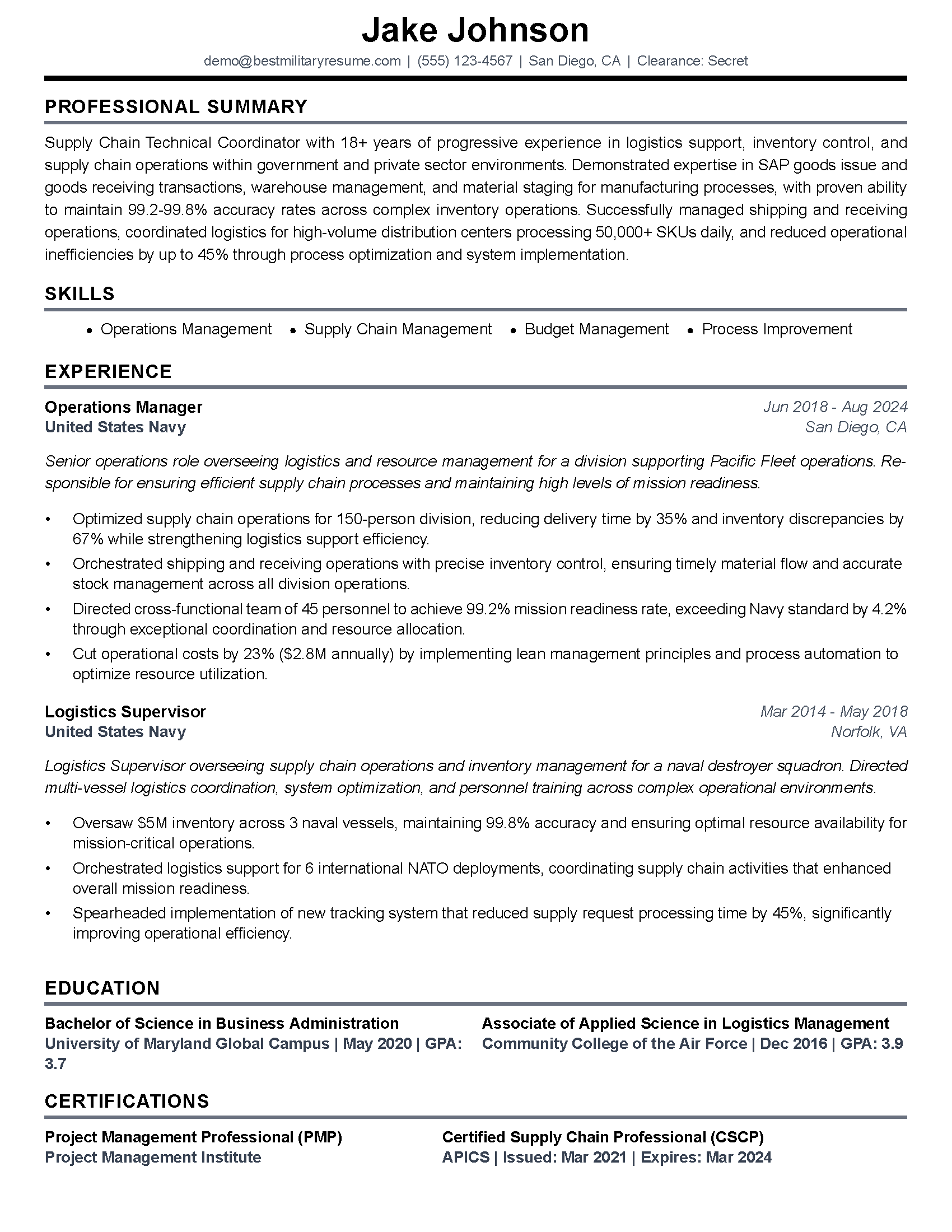
Lead your resume with the CPhT and each state registration
The work pays enough to protect. O*NET lists a 2025 median of $45,750 a year for pharmacy technicians. It rates growth "Faster than average (5% to 6%)."
Make two things easy to find: where you can work, and where you have worked. So open your resume with a credentials block. Put the CPhT first. List each state registration with its state and status. Then name each pharmacy setting you have worked, such as a hospital or a retail store.
BMR users have built 79,061 resumes on the site. Draft that credentials block in BMR's Resume Builder, using one pharmacy posting as the target. As a spouse, you can tailor two resumes without paying: one federal, one private.
The quoted words belong to PTCB, the four state boards, govinfo's U.S. Code and O*NET. Their pages still said so in November 2026.
Frequently Asked Questions
Does Louisiana waive renewal fees for military spouses who are pharmacy techs?
Can a California temporary license end before 12 months?
Can the new board run a background check under the federal law?
About the author
Brad Tachi is the CEO and founder of Best Military Resume and a 2025 Military Friendly Vetrepreneur of the Year award recipient for overseas excellence. A former U.S. Navy Diver with over 20 years of combined military, private sector, and federal government experience, Brad brings unparalleled expertise to help veterans and military service members successfully transition to rewarding civilian careers. Having personally navigated the military-to-civilian transition, Brad deeply understands the challenges veterans face and specializes in translating military experience into compelling resumes that capture the attention of civilian employers. Through Best Military Resume, Brad has helped thousands of service members land their dream jobs by providing expert resume writing, career coaching, and job search strategies tailored specifically for the veteran community.