Loading...
Loading...
The civilian and federal jobs that hire Air Force Nondestructive Inspections — with real salaries and the resume that gets callbacks.
Every 2A7X2 has more options than a Google search will tell you. Below: career paths, BLS salary data, federal GS series, certifications by target career, and how to translate your experience without losing what made you valuable to the Air Force in the first place.
Free · No credit card · Tailored resume in under 5 minutes
After the Navy I got hired into 6 federal career fields and tech sales, and sat on federal hiring panels along the way. I spent the last 2 years rebuilding everything I learned into BMR, tuned for how AI actually screens resumes today. This is the system I wish I'd had on day one.
One page, built in our template, with your military experience translated into civilian terms hiring managers and ATS systems read. Use it as a reference for your own. Drop your email and we'll send you the download link.
Free. We'll also send occasional job-search tips. Unsubscribe anytime.
As a 2A7X2, you find the flaws nobody can see. You inspect aircraft structures, engine components, and support equipment for cracks, corrosion, delamination, voids, and heat damage without ever cutting the part apart. You run five core methods: liquid penetrant for surface-breaking flaws, magnetic particle for ferrous surface and near-surface defects, eddy current for conductivity and subsurface cracks, ultrasonic for internal discontinuities and thickness, and radiographic (X-ray) for internal structure you photograph onto film or a digital detector. You also run the oil analysis program, using spectrometric and ferrographic equipment to read wear-metal content in engine lubricating oil and flag a failing bearing before it lets go in flight.
The job carries responsibility most maintenance specialties never touch. When you run radiographic operations you establish the radiation area, compute and post exposure boundaries, and monitor personnel dosimetry. Your inspection call is the documented record that a part is airworthy or condemned, and that record is held to written specification: technical orders, ASTM and NAS-410 process requirements, and the certification levels that govern who is allowed to interpret a result. You train and certify to NAS-410 Level I, II, and III in the methods your shop is qualified for, which is the same standard the civilian aerospace industry runs on.
Training starts at the NDI apprentice course taught by AETC at Naval Air Station Pensacola, Florida, the joint-service NDI schoolhouse. From there you move into your home-station NDI lab, supporting flightline and back-shop maintenance across whatever airframes your wing flies. At the senior level 2A7X2 merges into the 2A790 craftsman tier and ultimately 2A600 maintenance management, so the career field hands you both deep technical depth and the supervisory record that federal and industry employers pay for.
Civilian employers value this background because it is rare and it is regulated. Precision flaw detection, radiation-safety discipline, imaging interpretation, and documented compliance to spec are exactly what aerospace, energy, pipeline, and medical-imaging employers struggle to hire for. If you are mapping where these skills go next, start with the military career crosswalk, and if you also worked alongside metals or structures shops, the related 2A7X1 Aircraft Metals Technology and 2A7X3 Aircraft Structural Maintenance paths are worth a look.
My federal years were in environmental and engineering work, and NDI sits right in that world. It is materials integrity and engineering quality assurance with a radiation-safety program bolted on. The part of your job that civilian managers underrate is the documentation. You do not just find a crack, you prove it to a written spec and sign your name to the disposition. That paper trail is the federal hiring language, and most veterans bury it instead of leading with it. — Brad Tachi, Navy Diver veteran & BMR founder
The number that matters when you're deciding what's next: how does civilian pay compare to what you make now?
Military comp is approximate (varies by location/dependents). Civilian is BLS median. Federal includes locality pay. Your real number depends on duty station, family status, GS step, and overtime.
NDI is one of the few military specialties whose civilian equivalent uses the exact same vocabulary, the same methods, and often the same NAS-410 certification framework you already trained under. Salary figures below are from the U.S. Bureau of Labor Statistics Occupational Employment and Wage Statistics survey, May 2024.
The direct civilian title. Aerospace OEMs, MRO shops, refineries, and inspection-service companies hire NDT specialists to run the same five methods you ran in service. BLS classifies non-destructive testing specialists under Engineering Technologists and Technicians, Except Drafters, All Other (O*NET 17-3029.01), with a median wage of $80,960 (BLS OEWS, May 2024). Your NAS-410 Level II certifications transfer directly, which is the single biggest reason NDI veterans skip entry-level pay bands.
Inspection-titled roles in manufacturing and aerospace fall under Inspectors, Testers, Sorters, Samplers, and Weighers (O*NET 51-9061), median wage $47,460 (BLS OEWS, May 2024). The pay band is wide here. Inspectors who hold method certifications and read radiographs sit at the top of the range, not the median.
If you want to stay on the flightline, Aircraft Mechanics and Service Technicians (O*NET 49-3011) earn a median of $78,680 and Avionics Technicians (O*NET 49-2091) earn a median of $81,390 (BLS OEWS, May 2024). Airlines and MROs treat an A&P certificate plus NDI experience as a premium combination. Veterans from Navy AM Aviation Structural Mechanic and Coast Guard Aviation Maintenance Technician backgrounds compete for the same openings.
Your equipment and measurement discipline opens technician roles a step toward engineering: Mechanical Engineering Technologists and Technicians (O*NET 17-3027) at a $68,730 median, Calibration Technologists and Technicians (O*NET 17-3028) at $65,040, Aerospace Engineering and Operations Technologists and Technicians (O*NET 17-3021) at $79,830, and Industrial Machinery Mechanics (O*NET 49-9041) at $63,510 (all BLS OEWS, May 2024).
Be honest about the market. NDT hiring tracks aerospace production cycles, oil-and-gas capital spending, and infrastructure budgets, so it runs hot and cold by region and year. The Gulf Coast, Wichita, Seattle, and the Southeast aerospace corridor concentrate the openings. The certification you hold, not the years you served, is what sets your offer. To put these on paper in language a hiring manager scans cleanly, our military resume builder maps the methods and cert levels into civilian-facing bullets, or you can build your resume now.
| Civilian Job Title | Industry | BLS Median Salary | Outlook | Match |
|---|---|---|---|---|
Nondestructive Testing Specialist O*NET: 17-3029.01 | Aerospace & Manufacturing | $80,960 | Growth tied to aerospace production and energy capital spending | strong |
Quality Control / NDT Inspector O*NET: 51-9061 | Manufacturing | $47,460 | 4% (As fast as average) | strong |
Aircraft Mechanic & Service Technician O*NET: 49-3011 | Aviation | $78,680 | 5% (Faster than average) | strong |
Avionics Technician O*NET: 49-2091 | Aviation | $81,390 | 5% (Faster than average) | moderate |
Mechanical Engineering Technician O*NET: 17-3027 | Engineering Services | $68,730 | 4% (As fast as average) | moderate |
Calibration Technologist & Technician O*NET: 17-3028 | Manufacturing | $65,040 | 4% (As fast as average) | moderate |
Aerospace Engineering & Operations Technician O*NET: 17-3021 | Aerospace | $79,830 | 7% (Faster than average) | emerging |
Industrial Machinery Mechanic O*NET: 49-9041 | Manufacturing | $63,510 | 13% (Much faster than average) | moderate |
BMR rewrites your 2A7X2 experience for any of the civilian roles above — keywords, achievements, and language hiring managers actually scan for.
Free · No credit card · 2 tailored resumes included
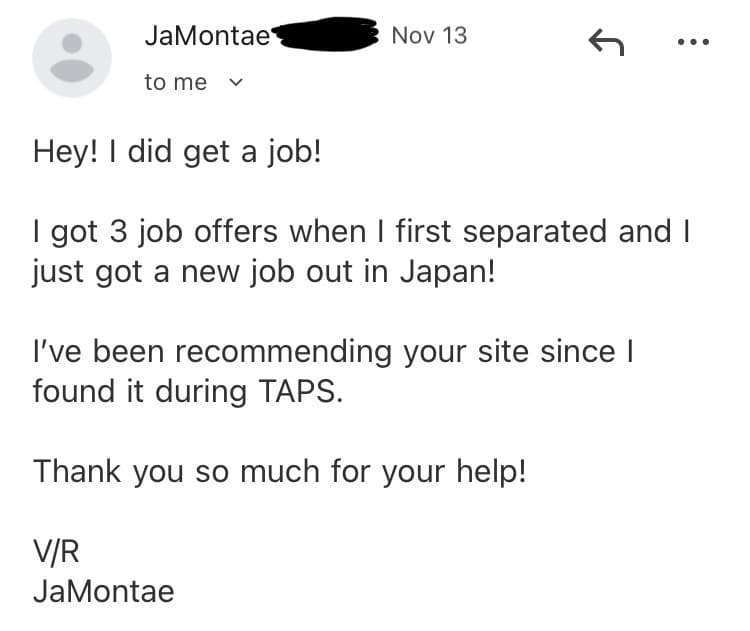
“Hey! I did get a job! I got 3 job offers when I first separated and I just got a new job out in Japan! I’ve been recommending your site since I found it during TAPS. Thank you so much for your help! V/R JaMontae ”
Federal NDI work is its own occupational series, which is unusual and works in your favor. You are not forcing a translation. There is a GS code built for exactly what you did.
This is the federal home series for your specialty. Air Logistics Complexes at Tinker, Robins, and Hill, Navy Fleet Readiness Centers, Army aviation depots, and the Federal Aviation Administration all staff GS-3705 and the wage-grade trades equivalent. Your NAS-410 certifications and method experience qualify you directly, typically at the GS-7 through GS-11 band depending on certification level and supervisory history.
Beyond the direct series, your background qualifies for Engineering Technician (GS-0802), General Engineering (GS-0801), Mechanical Engineering (GS-0830) at facilities that value hands-on inspection, Quality Assurance (GS-1910) for depot and acquisition QA roles, and Safety Engineering (GS-0803). Depot quality and airworthiness offices lean heavily on people who can read an inspection result and defend it.
Your radiographic operations experience is a genuine differentiator here. Health Physics (GS-1306) covers radiation-safety officer and program roles, General Physical Science (GS-1301) covers materials and testing labs, and Electronics Technician (GS-0856) fits eddy-current and ultrasonic instrumentation work. Few applicants arrive with documented dosimetry-program and radiation-area-control experience.
Veterans' Preference adds 5 or 10 points to your rated score on competitive federal applications and can be decisive at the referral stage. Federal hiring rewards a resume written to the announcement and the qualification standard, not a private-sector one-pager. Our federal resume builder is built around the OPM format, and these guides help: how OPM translates military experience to GS grades, decoding a USAJOBS announcement, and how Veterans' Preference points actually work. When you are ready, start your federal resume.
| GS Series | Federal Job Title | Typical Grades | Match | Explore |
|---|---|---|---|---|
| GS-1910 | Quality Assurance | GS-7, GS-9, GS-11 | View Details → | |
| GS-3705 | Nondestructive Testing | GS-7, GS-9, GS-11 | View Details → | |
| GS-1301 | General Physical Science | GS-7, GS-9, GS-11 | View Details → | |
| GS-1306 | Health Physics | GS-9, GS-11, GS-12 | View Details → | |
| GS-0802 | Engineering Technician | GS-7, GS-9, GS-11 | View Details → | |
| GS-0856 | Electronics Technician | GS-7, GS-9, GS-11 | View Details → | |
| GS-0803 | Safety Engineering | GS-9, GS-11, GS-12 | View Details → | |
| GS-0830 | Mechanical Engineering | GS-9, GS-11, GS-12 | View Details → | |
| GS-0801 | General Engineering | GS-9, GS-11, GS-12 | View Details → |
Federal hiring uses keyword-matching and structured experience. BMR builds federal-format resumes (USAJobs-ready) with the right keywords, hours/week, and supervisor info — for any GS series above.
Free · No credit card · Federal + civilian resume formats included
Not everyone wants to stay in a related field. These career paths leverage your transferable skills — leadership, risk management, logistics, project planning — in completely different industries.
Your radiographic NDI work is image production and interpretation under radiation-safety rules, the same core skills medical imaging runs on, just applied to people instead of parts.
Ultrasonic NDI and medical sonography use the same physics: pulse sound into a material and read the returning echoes. The interpretation instinct transfers; the anatomy is what you learn.
Running radiographic operations means you already managed radiation areas, exposure computation, and personnel monitoring under federal standards, which is the daily reality of nuclear-plant radiation protection.
NDI is disciplined materials examination where every finding has to survive scrutiny on paper. Forensic labs need exactly that combination of analytical method and airtight documentation.
Aging bridges, pipelines, and structures need people who can assess material integrity and document inspections to spec. That is your job description applied to civil infrastructure.
You already make pass-fail calls against written standards and document them defensibly. Building inspection is the same decision discipline applied to structures and code compliance.
Your radiation-safety program experience is a direct on-ramp to EHS, where managing regulated hazards and proving compliance on paper is the whole job.
The skills that made you a good Marine, Sailor, Airman, or Soldier transfer further than you think. BMR rewrites your bullets for any of the pivot careers above — without making you sound like you've never done the work.
Free · No credit card · Try unlimited career angles
If you are staying in nondestructive testing, aerospace, or depot maintenance, your terminology already translates. Recruiters in those industries know what eddy current and NAS-410 Level II mean. This section is for 2A7X2 veterans targeting careers OUTSIDE inspection, where a hiring manager has never heard your method names and reads them as noise.
The move is to lead with the outcome and the standard, then name the method as supporting detail. A civilian manager cares that you caught failures before they became incidents and that you documented every call to a written spec.
| Military Term | Civilian Translation |
|---|---|
| NAS-410 Level II certified, five methods | Industry-certified inspection professional qualified to interpret and disposition results independently |
| Radiographic operations and dosimetry monitoring | Radiation-safety program administration and regulated-area control |
| Oil analysis program (JOAP, spectrometric) | Predictive condition-monitoring and failure-trend analysis |
| Eddy current and ultrasonic inspection | Precision electronic and acoustic testing of material integrity |
| Part disposition to technical order | Compliance documentation and quality-of-record accountability |
Before: Performed PT, MT, ET, UT, and RT inspections on aircraft components per applicable T.O.s.
After (quality/operations target): Inspected high-value aerospace components using five certified testing methods, identifying structural defects before failure and documenting each disposition to written specification, sustaining a fully auditable quality record.
Before: Ran radiographic operations and monitored personnel exposure.
After (safety/EHS target): Administered a radiation-safety program covering area control, exposure computation, and personnel dosimetry, maintaining zero overexposure events under federal radiation-protection standards.
For more on reframing technical military work, see 50 military terms translated to civilian language and hidden military skills civilians do not know you have. Our military resume builder handles this reframing for you, or get started here.
BMR turns your 2A7X2 duties and accomplishments into civilian bullets that match the job you're applying for — no manual translation, no rewriting.
Free · No credit card · Tailored to each job posting
Which certifications you need depends on where you're headed. Find your target career path below.
The wrong placement can sink an otherwise strong application. BMR knows where each cert ranks, what to call it, and how to frame it for ATS keyword matching and hiring manager attention.
Free · No credit card · Built around your real certs and clearance
The American Society for Nondestructive Testing (ASNT) is the certifying and professional body for the field, and ASNT certification or documented NAS-410 equivalency is the credential employers screen for. Aerospace MROs, the major OEMs, refineries, and dedicated inspection-service firms run SkillBridge and apprenticeship pipelines worth researching before you separate. Keep your method certifications and qualification records current and portable, because the cert is what carries your pay band across the fence.
Related aviation-maintenance paths if you want to broaden the search: Navy AM Aviation Structural Mechanic, Army 15B Aircraft Powerplant Repairer, and Coast Guard Aviation Maintenance Technician.
If you are leaving the specialty, the radiation-safety, imaging-interpretation, and materials-analysis pieces of your background open doors most veterans never connect to NDI. Use the career crosswalk to explore them, and lean on American Corporate Partners (ACP) for a free veteran mentor in your target industry. For transition timing, this SkillBridge guide walks the pre-separation window, and the SFL-TAP resources cover the required transition program.
Whichever direction you go, the resume is the bottleneck. Use the military resume builder for private-sector roles or the federal resume builder for GS applications. When you are ready to start, build your resume now.
Most veterans do this backwards — they wait until terminal leave to start, then panic. Here's the actual sequence that works.
Print this. Tape it to your monitor. Veterans who treat the transition like a 90-day op get hired faster than the ones who treat it like an emergency.
Stop rewriting from scratch every time you apply. BMR turns your military experience into civilian and federal resumes — tailored to each job.