Air ForceAFSC: 4N1X1

Surgical Technologist

The civilian and federal jobs that hire Air Force Surgical Technologists — with real salaries and the resume that gets callbacks.

Every 4N1X1 has more options than a Google search will tell you. Below: career paths, BLS salary data, federal GS series, certifications by target career, and how to translate your experience without losing what made you valuable to the Air Force in the first place.

Free to start · Tailored resume in under 5 minutes

$44K–$100K
Salary Range
BLS-verified median salaries
14
Career Paths
14
Companies Hiring
9
Resume Examples
7
Federal GS Series
5
Certification Paths
10
FAQs Answered
BT
Brad Tachi
Navy Diver · BMR Founder

After the Navy I got hired into 6 federal career fields and tech sales, and sat on federal hiring panels along the way. I spent the last 2 years rebuilding everything I learned into BMR, tuned for how AI actually screens resumes today. This is the system I wish I'd had on day one.

65,000+ resumes built·Success stories every week
Free Sample · Emailed to You

Get a free 4N1X1 Surgical Technologist sample resume

One page, built in our template, with your military experience translated into civilian terms hiring managers and ATS systems read. Use it as a reference for your own. Drop your email and we'll send you the download link.

Free. We'll also send occasional job-search tips. Unsubscribe anytime.

Military Role Overview

As a 4N1X1 you ran the sterile field in an Air Force operating room. You set up the back table and Mayo stand, counted every sponge, needle, and instrument before the first incision and again before closing, anticipated the surgeon's next move, and kept the field sterile while a procedure moved fast around you. The work happened at military treatment facilities like Wilford Hall and the surgical suites at Joint Base San Antonio, and your training started at the Medical Education and Training Campus (METC) at JBSA-Fort Sam Houston, where every branch's surgical and medical technicians learn the same core skills.

Your pipeline put you through Basic Military Training, then the surgical technology program at METC, and many of you earned the national Certified Surgical Technologist (CST) credential through the National Board of Surgical Technology and Surgical Assisting as part of the 5-skill-level upgrade. Some of you specialized further into Urology (4N1X1B), Orthopedics (4N1X1C), or Otolaryngology (4N1X1D), and some moved into Sterile Processing (SPD), anesthesia support, or surgical specialty clinics. That CST is the same credential civilian hospitals require, which is why this is one of the cleanest military-to-civilian translations in healthcare.

Civilian employers value 4N1X1 experience because you already hold the certification the job asks for, and you bring operating room volume that new graduates do not have. You know aseptic technique, instrument accountability, and how to stay calm when a case turns. If you want to see how your experience maps to civilian and federal roles, our military-to-civilian career crosswalk lays it out by job. Related Air Force medical specialties include the 4N0X1 Aerospace Medical Technician and the 4R0X1 Diagnostic Imaging Technologist.

BMR has built more than 60,000 resumes across every branch and specialty, and surgical techs are one of the few medical AFSCs where the credential does most of the talking. The catch we see constantly is a resume that lists duties instead of operating room volume. Civilian OR managers hire on case counts and specialty exposure, so lead with the numbers, not the job title. — Brad Tachi, Navy Diver veteran & BMR founder

Security ClearanceNone
ASVAB RequirementGeneral (G); AFQT 65 for non-graduates
TrainingBasic Military Training, then the Surgical Technologist program at the Medical Education and Training Campus (METC), JBSA-Fort Sam Houston. CST credential earned via NBSTSA as the 5-skill-level upgrade.
Certs Earned in ServiceCertified Surgical Technologist (CST), Basic Life Support (BLS), CCAF coursework toward an Associate in Applied Science in Surgical Services Technology

Pay Reality Check

The number that matters when you're deciding what's next: how does civilian pay compare to what you make now?

Air Force mid-career
$58K–$82K
E-5 to E-7 total comp (base + BAH + BAS + tax advantage)
Civilian Surgical Technologist
$44K–$63K
BLS median across direct-match civilian roles
Federal (GS-9 to GS-13)
$58K–$120K
7 matching GS series + locality pay + step increases
-22% on average
Civilian base pay for Surgical Technologists runs ~$16K below mid-career enlisted total comp — but BAH-equivalent housing costs are now your responsibility on the military side too.

Military comp is approximate (varies by location/dependents). Civilian is BLS median. Federal includes locality pay. Your real number depends on duty station, family status, GS step, and overtime.

Private Sector Career Paths

The strongest civilian path for a 4N1X1 is the direct one. Surgical technologists earned a median annual wage of $62,830 in May 2024 (BLS OEWS), with the top 10 percent above $90,700, and the field is projected to grow about 5 percent through 2034. Hospitals, ambulatory surgery centers, and specialty clinics hire continuously, and your CST plus Air Force OR hours often lets you skip the entry-level queue that new civilian graduates sit in.

If you want to move up rather than out, a few adjacent roles use the same foundation. Surgical Assistants, who take a larger hands-on role at the table, earned a median of $60,290 in May 2024, though that path usually requires additional certification (CSFA or SA). Medical Equipment Preparers, the sterile processing and instrument-reprocessing role, earned a median of $44,200 to $45,000 range depending on setting, and your SPD time at METC maps to it directly. Central sterile work is a common landing spot for techs who want operating room knowledge without standing a full case load.

Be honest with yourself about geography and schedule. OR jobs cluster around hospital systems, so pay and availability swing with the local market, and trauma and on-call coverage come with the territory. Travel surgical tech contracts pay well above the median but move you city to city. For a wider view of how military medical experience translates across the civilian healthcare market, the veterans in healthcare guide is worth a read. Cross-branch peers walking the same path include the Army 68D Operating Room Specialist and the Navy HM Hospital Corpsman. When you are ready to put it on paper, our military resume builder structures your case volume and specialty exposure the way OR managers scan for it.

Civilian Job Title Translations

Surgical Technologist
Healthcare
strong
$62,830median
5% (Faster than average)
O*NET: 29-2055.00
Surgical First Assistant
Healthcare
moderate
$60,290median
5% (Faster than average)
O*NET: 29-9093.00
Sterile Processing Technician
Healthcare
strong
$44,200median
5% (As fast as average)
O*NET: 31-9093.00
Surgical Specialty Coordinator
Healthcare
moderate
$62,830median
5% (Faster than average)
O*NET: 29-2055.00
Endoscopy Technician
Healthcare
moderate
$44,200median
5% (As fast as average)
O*NET: 31-9093.00
Medical Assistant
Healthcare
moderate
$44,200median
15% (Much faster than average)
O*NET: 31-9092.00
Surgical Services Educator
Healthcare
moderate
$62,830median
5% (Faster than average)
O*NET: 29-2055.00

Companies That Hire This Background

Largest U.S. employer of surgical technologists. Hires directly into GS-0640 OR and sterile processing roles.
One of the largest hospital operators. Continuous OR and sterile processing openings nationwide.
Integrated health system with high surgical volume across its medical centers.
Academic medical center hiring surgical techs and first assistants across specialties.
High-volume surgical institute with sterile processing and OR career ladders.
Large multi-state system with surgery centers and continuous tech demand.
Operates one of the largest networks of ambulatory surgery centers, a strong fit for techs wanting predictable hours.
Surgical care affiliates operating outpatient surgery centers nationwide.
Travel staffing agency placing surgical techs on premium-pay contracts across the country.
Medical device leader hiring former OR techs into clinical specialist and surgical sales roles.
Surgical equipment maker that actively recruits techs for clinical support and device sales.
Maker of the da Vinci robotic system. Hires OR-experienced techs as clinical sales and training specialists.
Sterilization and infection-prevention company. Direct fit for SPD-experienced techs.
DoD military treatment facilities hire civilian surgical techs and sterile processing staff.

See a salary you want? Build a resume targeting it.

BMR rewrites your 4N1X1 experience for any of the civilian roles above — keywords, achievements, and language hiring managers actually scan for.

Free to start · 2 tailored resumes included

Build My Resume Free
Real Air Force success story
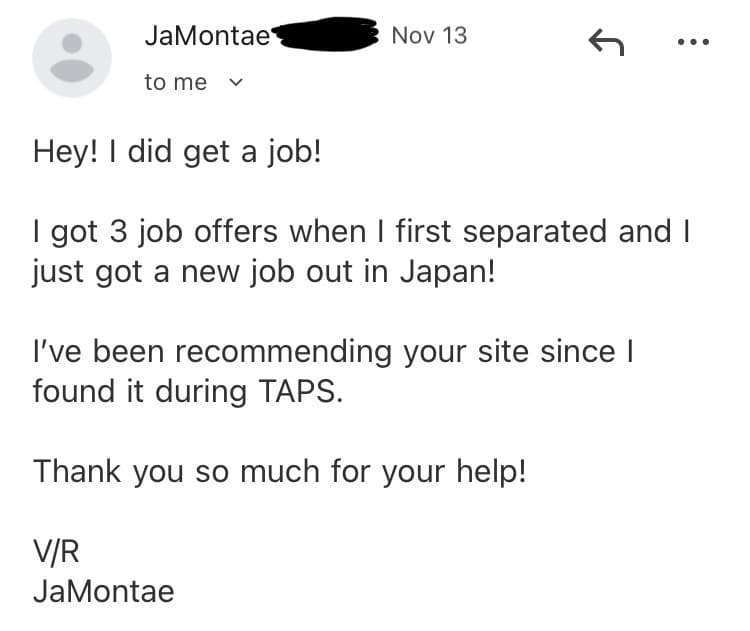
Hey! I did get a job! I got 3 job offers when I first separated and I just got a new job out in Japan! I’ve been recommending your site since I found it during TAPS. Thank you so much for your help! V/R JaMontae
JaMontae· Staff Sergeant (E-5)· Air Force
Information Technology and Computer Science
Read the full story

Federal Career Paths

Federal hospitals hire surgical techs directly, and the Department of Veterans Affairs is the largest employer of them in the country. The core series is GS-0640 Health Aid and Technician, which is where most surgical technologist positions sit, typically at the GS-5 through GS-8 range depending on certification and OR experience. The VA and DoD also classify some surgical and sterile-processing roles under GS-0645 Medical Technician. Your CST credential and documented case volume are what move you toward the higher steps inside the grade.

Look wider than the operating room. GS-0671 Health System Specialist covers OR coordination, sterile supply management, and surgical-services administration, and it rewards the logistics side of what you did. GS-0640 also houses sterile processing and surgical instrument technicians, so your SPD time counts there too. If you move toward clinical leadership and finish a nursing degree, GS-0610 Nurse opens up. For the broader administrative and program side of a medical treatment facility, GS-0301 Miscellaneous Administration and Program and GS-0341 Administrative Officer are realistic targets once you have a few years of healthcare operations behind you. Quality and safety roles map to GS-0018 Safety and Occupational Health Management and GS-1910 Quality Assurance, both of which value infection-control and instrument-accountability experience.

Veterans' Preference applies on USAJOBS, and your time at a military treatment facility is the specialized experience federal HR is looking for, so describe it in their language. The specialized experience guide and the federal job series breakdown show how to frame it. The Coast Guard HS Health Services Technician page targets several of these same GS series. To build the document USAJOBS actually scores, start with our federal resume builder, or if you are ready to go, start your federal resume now.

GS Series & Position Matches

GS-0640
Health Aid and Technician
Typical grades: GS-7, GS-9
View Details
GS-0645
Medical Technician
Typical grades: GS-5, GS-6, GS-7
View Details
GS-0671
Health System Specialist
Typical grades: GS-7, GS-9, GS-11
View Details
GS-0301
Miscellaneous Administration and Program
Typical grades: GS-7, GS-9, GS-11
View Details
GS-0610
Nurse
Typical grades: GS-9, GS-11, GS-12
View Details
GS-0018
Safety and Occupational Health Management
Typical grades: GS-7, GS-9, GS-11
View Details
GS-1910
Quality Assurance
Typical grades: GS-7, GS-9, GS-11
View Details

Federal resumes follow different rules. We know them.

Federal hiring uses keyword-matching and structured experience. BMR builds federal-format resumes (USAJobs-ready) with the right keywords, hours/week, and supervisor info — for any GS series above.

Free to start · Federal + civilian resume formats included

Build My Federal Resume Free

Want to Change Careers Entirely?

Not everyone wants to stay in a related field. These career paths leverage your transferable skills — leadership, risk management, logistics, project planning — in completely different industries.

Quality Control Inspector

$47,460
Manufacturing(O*NET: 51-9061.00)BLS OEWS May 20240% (Little or no change)
Zero-defect accountability under time pressureProtocol-driven inspection and reconciliationContamination and tolerance controlDocumentation of critical counts

Medical-device and pharmaceutical plants run on the same zero-tolerance accountability you held in the OR. Your habit of reconciling every item against a checklist is exactly what regulated inspection demands.

How to get there: Hire on at an entry inspector role in a regulated plant. The ASQ Certified Quality Inspector credential accelerates promotion into QA lead roles.

Semiconductor Processing Technician

$51,180
Microelectronics(O*NET: 51-9141.00)BLS OEWS May 20244% (As fast as average)
Cleanroom and contamination-control disciplineGowning and aseptic protocolPrecision handling of sensitive componentsStrict step-by-step procedure adherence

Chip fabs run cleanrooms with gowning and contamination rules that mirror the sterile field. The discipline you built scrubbing in transfers almost one to one to a fab environment.

How to get there: Apply directly to a semiconductor fab; most train on the line. A community-college microelectronics or process-technology certificate strengthens the application.

Forensic Science Technician

$67,440
Law Enforcement and Forensics(O*NET: 19-4092.00)BLS OEWS May 202414% (Much faster than average)
Chain-of-custody and evidence accountabilityAnatomy and procedure knowledgeSterile and contamination-free handlingMeticulous documentation under scrutiny

Crime-lab work rewards your evidence-handling discipline and anatomy knowledge. The same chain-of-custody rigor you used counting instruments applies to processing physical evidence.

How to get there: Most lab roles require a science-related bachelors degree; use the GI Bill. Some agencies hire technicians with an associate degree plus on-the-job training.

Embalmer

$58,390
Funeral Services(O*NET: 39-4011.00)BLS OEWS May 20243% (As fast as average)
Detailed anatomy and physiology knowledgeComposure in emotionally heavy settingsSterile technique and standard precautionsPrecision hands-on procedural work

Embalming draws on the anatomy fluency and steady hands you developed at the table, plus the composure to work in a setting most people find difficult. Few candidates bring both.

How to get there: Complete a mortuary science program (often an associate degree, GI Bill eligible), then an apprenticeship and state licensure exam.

Sales Representative, Surgical Devices

$100,070
Medical Device Sales(O*NET: 41-4011.00)BLS OEWS May 20246% (Faster than average)
Operating room credibility and case knowledgeInstrument and device fluencyAbility to stay composed in live proceduresSurgeon-facing communication

Device companies pay a premium for reps who can stand in a live OR and speak the surgeons language. Your case experience is the credential most sales hires spend years trying to fake.

How to get there: Apply to medical-device clinical-specialist or associate-sales roles, which many companies use as the on-ramp to full sales territories. OR experience often substitutes for a sales background.

Occupational Health and Safety Specialist

$83,910
Industrial Safety(O*NET: 19-5011.00)BLS OEWS May 20247% (Faster than average)
Infection-control and aseptic protocolStandard-precautions and PPE expertiseIncident-free procedural complianceAuditing against exacting standards

Your infection-control and standard-precautions background is the foundation of workplace safety. You already think in terms of preventing contamination and enforcing protocol, which is the job.

How to get there: Start as a safety technician or coordinator. The BCSP Associate Safety Professional credential, then the CSP, opens specialist and management roles.

Food Science Technician

$49,430
Food and Beverage Manufacturing(O*NET: 19-4012.00)BLS OEWS May 20246% (Faster than average)
Sanitation and contamination-control protocolSample handling and accountabilityStep-by-step procedural precisionQuality documentation and traceability

Food-safety labs and production lines run on sanitation and sample-control protocols that echo sterile processing. Your contamination-control instincts transfer straight into HACCP-driven work.

How to get there: Many roles take an associate degree in food science or a related field; some hire with strong lab and sanitation experience plus on-the-job training.

Pivoting industries? You don't need to start from scratch.

The skills that made you a good Marine, Sailor, Airman, or Soldier transfer further than you think. BMR rewrites your bullets for any of the pivot careers above — without making you sound like you've never done the work.

Free to start · Try as many career angles as you want

Tailor My Resume to a New Career

Skills Translation Guide

If you are staying in the operating room or sterile processing, your terminology already matches the civilian field. Hospital OR managers know what a CST is, what a back table is, and what a count is. This section is for 4N1X1s targeting careers OUTSIDE the surgical suite, where hiring managers have never heard your language and read your bullets cold.

The skills that carry across industries are sterile-field and contamination control, instrument and inventory accountability under time pressure, and the ability to follow exacting protocol while a high-stakes situation moves fast. Translate those into business outcomes a non-medical manager understands. For more on converting military language into civilian terms, see the 50 military terms glossary.

  • Before: "Maintained sterile field and performed instrument counts for 400+ surgical cases annually with zero retained-item events." After (quality or manufacturing): "Executed contamination-control and 100 percent accountability protocols across 400+ time-critical procedures annually with a zero-defect record."
  • Before: "Managed surgical instrument trays and sterile supply inventory for a multi-specialty OR." After (operations or logistics): "Controlled a high-value instrument and consumable inventory across multiple service lines, ensuring readiness with no stockouts during peak demand."
  • Before: "Anticipated surgeon needs and adjusted setup mid-procedure to keep cases on schedule." After (project or process roles): "Coordinated fast-changing technical requirements in real time, adapting setup and resources to keep complex operations on timeline."

The point is to lead with the transferable discipline, not the clinical setting. Our military resume builder rewrites OR bullets for non-medical roles automatically, and you can try it free.

Resume Bullet Examples

Before (Military)
Maintained the sterile field and aseptic technique for 400+ surgical cases annually.
After (Civilian)
Enforced strict contamination-control protocols across 400+ time-critical procedures with a zero-defect record.
Before (Military)
Performed and reconciled instrument, sponge, and needle counts before and after every case.
After (Civilian)
Reconciled high-value inventory before and after each operation with 100 percent accuracy and zero discrepancies.
Before (Military)
Scrubbed in and set up the back table and Mayo stand for multi-specialty surgical cases.
After (Civilian)
Prepared workstations and resources to spec for back-to-back operations, minimizing turnaround time.
Before (Military)
Decontaminated, assembled, and sterilized surgical instrument trays in the SPD.
After (Civilian)
Managed reprocessing and quality control of critical equipment, ensuring availability and regulatory compliance.
Before (Military)
Anticipated surgeon needs and adjusted instrumentation mid-procedure to keep cases on schedule.
After (Civilian)
Coordinated fast-changing technical requirements in real time to keep complex operations on timeline.
Before (Military)
Led the surgical time-out and verified patient, procedure, and site before every incision.
After (Civilian)
Executed standardized verification checkpoints before each operation to ensure procedural and safety compliance.
Before (Military)
Rotated across urology, orthopedic, and ENT service lines, mastering each instrument set.
After (Civilian)
Built cross-functional proficiency across multiple specialized technical domains and equipment families.
Before (Military)
Served as preceptor for new surgical techs and students at the medical treatment facility.
After (Civilian)
Onboarded and trained new technical staff to standard, accelerating their time to independent performance.
Before (Military)
Maintained precision and composure during emergent and trauma surgical cases.
After (Civilian)
Delivered accurate, protocol-driven work in high-stakes, time-critical environments without error.

Get bullets like these auto-generated for your resume.

BMR turns your 4N1X1 duties and accomplishments into civilian bullets that match the job you're applying for — no manual translation, no rewriting.

Free to start · Tailored to each job posting

Generate My Resume Bullets

Certifications by Career Path

Which certifications you need depends on where you're headed. Find your target career path below.

Federal Employment

Veterans Preference Documentation (SF-15)
Recommended
OPM
Cost: FreeTime: 1 day
Not a certification but essential for federal hospital applications. Establishes your preference on USAJOBS.

Healthcare

Certified Surgical Technologist (CST)
Required
NBSTSA
Cost: Check current pricingTime: Earned in service; recertify periodicallyGI Bill Eligible
The core civilian OR credential. Most 4N1X1s earn it as the 5-skill-level upgrade. Keep it current.
Certified Surgical First Assistant (CSFA)
Recommended
NBSTSA
Cost: Check current pricingTime: 12-24 monthsGI Bill Eligible
Opens the higher-paid surgical first assistant role. Requires a first-assistant program plus exam.
Tech in Surgery - Certified (TS-C)
Optional
NCCT
Cost: Check current pricingTime: 1-3 months prepGI Bill Eligible
Alternative surgical tech credential some employers accept alongside or instead of the CST.
Certified Registered Central Service Technician (CRCST)
Recommended
HSPA
Cost: Check current pricingTime: 3-6 monthsGI Bill Eligible
The sterile processing credential. Direct fit for SPD-experienced techs moving into central sterile.
Basic Life Support (BLS)
Required
American Heart Association
Cost: Check current pricingTime: 1 day
Standard clinical requirement. Keep current; most OR employers verify it on hire.
Associate of Applied Science, Surgical Services Technology
Recommended
Community College of the Air Force
Cost: GI Bill eligibleTime: 2 yearsGI Bill Eligible
CCAF degree many 4N1X1s start in service. Completes the academic side for advancement.
Registered Nurse (ADN or BSN)
Optional
State Board of Nursing
Cost: GI Bill eligibleTime: 2-4 yearsGI Bill Eligible
A common GI Bill pathway. OR experience makes perioperative nursing a natural target after the degree.

Healthcare Administration

Certified Healthcare Administrative Professional (cHAP)
Optional
NAHAM
Cost: Check current pricingTime: 3-6 monthsGI Bill Eligible
For techs moving toward surgical services coordination or MTF administration roles.

Quality Assurance

Certified Quality Inspector (CQI)
Recommended
ASQ
Cost: Check current pricingTime: 3-6 months
For the manufacturing or medical-device quality pivot. Your zero-defect accountability mindset maps directly.
Certified Quality Technician (CQT)
Optional
ASQ
Cost: Check current pricingTime: 3-6 months
Entry credential for inspection and quality roles in regulated manufacturing.

Safety & EHS

OSHA 30-Hour General Industry
Optional
OSHA / authorized trainers
Cost: Check current pricingTime: 30 hours
Foundation for the occupational health and safety pivot. Pairs with infection-control experience.
Associate Safety Professional (ASP)
Optional
BCSP
Cost: Check current pricingTime: 6-12 months
Stepping stone to the CSP for techs moving into healthcare safety or industrial EHS.

Got a cert? Don't bury it. List it the right way.

The wrong placement can sink an otherwise strong application. BMR knows where each cert ranks, what to call it, and how to frame it for ATS keyword matching and hiring manager attention.

Free to start · Built around your real certs and clearance

Build My Resume the Right Way

Transition Resources

Use these resources based on whether you are staying in surgical services or moving into a different field.

Staying in Surgical Services

  • Keep your CST credential current through the National Board of Surgical Technology and Surgical Assisting (NBSTSA). It is the credential civilian ORs require, and lapsing it costs you the easiest part of your translation.
  • The Association of Surgical Technologists (AST) at ast.org offers continuing education, the CSFA surgical-first-assistant pathway, and a job board specific to the field.
  • For sterile processing, the Healthcare Sterile Processing Association (HSPA) certifies the CRCST credential that pairs well with your SPD experience.
  • Explore DoD SkillBridge internships with hospital systems during your final months to line up a civilian OR role before you separate.

Careers Outside Surgical Services

See also the Army 68D Operating Room Specialist, the Army 68W Combat Medic, and the Air Force 4P0X1 Pharmacy Technician career paths. When you are ready, our military resume builder and federal resume builder are built for exactly this, or you can build your resume now.

Your 30 / 60 / 90-Day Transition Plan

Most people do this backwards. They wait until terminal leave to start, then panic. Here's the sequence that works. Already out? Same plan, start at day one today.

1Days 0–30

Set the foundation

  • Pull your DD-214 (request from Milconnect if separated)
  • List your top 3 civilian roles AND top 3 GS series
  • Build your tailored 4N1X1 resume — BMR does it free
  • Write 1 strong LinkedIn headline (not "veteran seeking opportunities")
  • Pull together your evals/performance reports for accomplishments
Build my resume free
2Days 30–60

Apply with intent

  • Apply to 5–10 jobs/week — quality over quantity
  • Tailor every resume to the job description (BMR auto-tailors)
  • Connect with 5 people/week on LinkedIn (not a spray)
  • Set up a USAJobs profile and a saved-search alert for your GS series
  • Practice translating your military bullets out loud — explain to a civilian friend
Tailor my next resume
3Days 60–90

Close the offer

  • Track every application — date, status, contact, notes
  • Follow up 7–10 days after each application
  • Prep for behavioral interviews using the STAR method
  • Negotiate salary — don't take the first offer (BLS median is your floor)
  • Stay applying even after one offer — leverage = options
Track my applications

Print this. Tape it to your monitor. Veterans who treat the job search like a 90-day op get hired faster than the ones who treat it like an emergency.

Frequently Asked Questions

What civilian job is the most direct match for a 4N1X1?
Civilian Surgical Technologist. You already hold the CST credential and have operating room volume, so most hospitals and surgery centers hire you without the entry-level wait new graduates face. Surgical technologists earned a median of $62,830 in May 2024 (BLS OEWS), with the top 10 percent above $90,700.
Does my Air Force CST certification transfer to civilian hospitals?
Yes. The Certified Surgical Technologist credential is issued by the National Board of Surgical Technology and Surgical Assisting (NBSTSA), the same body civilian employers recognize. Keep it current through continuing education so you do not have to recertify. It is the single biggest reason this AFSC translates cleanly.
What does a civilian surgical technologist earn?
The BLS OEWS May 2024 median annual wage was $62,830, with the lowest 10 percent under $43,290 and the highest 10 percent above $90,700. Pay varies by region, facility type, and whether you take call or travel contracts. Travel surgical tech roles often pay well above the median.
What if I want to leave the operating room entirely?
Your sterile-field discipline, instrument and inventory accountability, and ability to follow exacting protocol under pressure transfer to fields like quality control inspection, semiconductor cleanroom processing, forensic evidence handling, and occupational health and safety. See the Want to Change Careers Entirely section below for specific roles with BLS salary data and entry paths.
What federal job series should a surgical tech target?
GS-0640 Health Aid and Technician is the core series for surgical technologists, typically GS-5 through GS-8. GS-0645 Medical Technician and GS-0671 Health System Specialist are also strong fits. The VA is the largest single employer of surgical techs, and Veterans' Preference applies on USAJOBS.
How valuable is my sterile processing (SPD) experience?
Very. Central sterile processing is its own civilian career with steady demand. Your METC SPD time maps to Medical Equipment Preparer roles (median $44,200 in May 2024) and to the CRCST credential through the Healthcare Sterile Processing Association. It is a common landing spot for techs who want OR knowledge without a full case load.
Can I move up to a surgical first assistant role?
Yes, with additional certification. Surgical Assistants take a larger hands-on role at the table and earned a median of $60,290 in May 2024 (BLS). The path usually requires the CSFA (through AST) or SA credential plus a first-assistant program. Your existing OR hours count toward the experience requirements.
Does Veterans' Preference help for federal hospital jobs?
Yes. Veterans' Preference adds points to your federal application rating and can be decisive for GS-0640 and GS-0645 positions at VA and DoD medical facilities. Document your military treatment facility experience as specialized experience in OPM language so HR scores it correctly.
How do I use the GI Bill after separating as a 4N1X1?
Many surgical techs use the GI Bill to bridge into nursing (RN), physician assistant, or healthcare administration programs, building on the clinical foundation you already have. If you stay in surgical services, you can also use it for the CSFA first-assistant pathway. Confirm program eligibility with your school's VA certifying official.
Where are surgical tech jobs concentrated geographically?
OR jobs cluster around hospital systems and metro areas with large surgical volume. Pay and availability track the local healthcare market, so a high-cost metro pays more but competition is higher. Travel surgical tech contracts let you chase the highest-paying assignments city to city if you are open to moving.
Free for every veteran

Translate your 4N1X1 Surgical Technologist experience into a resume that gets callbacks

Stop rewriting from scratch every time you apply. BMR turns your military experience into civilian and federal resumes — tailored to each job.

What you get — all free:
2
Tailored resumes
AI-rewritten for each job posting
2
Cover letters
Matched to the role
LinkedIn optimization
Profile rewrite for civilian recruiters
Elevator pitch generator
For interviews and networking
2
Company research reports
Know who you're applying to
Job tracker
Manage every application in one place
Start My Free Resume
Free to start · 90 seconds to sign upBuilt by a Navy Diver veteran. More than 65,000 resumes built for the military community.