Loading...
Loading...
The civilian and federal jobs that hire Marines Satellite Communications Operator-Maintainers — with real salaries and the resume that gets callbacks.
Every 0627 has more options than a Google search will tell you. Below: career paths, BLS salary data, federal GS series, certifications by target career, and how to translate your experience without losing what made you valuable to the Marines in the first place.
Free · No credit card · Tailored resume in under 5 minutes
After the Navy I got hired into 6 federal career fields and tech sales, and sat on federal hiring panels along the way. I spent the last 2 years rebuilding everything I learned into BMR, tuned for how AI actually screens resumes today. This is the system I wish I'd had on day one.
As a Marine Corps 0627 you ran the satellite end of the MAGTF's reachback. You set up and tore down ground satellite terminals like the AN/TSC-167 SMART-T, the SCAMP, and the PRC-117G manpack on the move, aligned antennas to a bird thousands of miles away, peaked the signal, and kept baseband and RF chains clean so commanders never lost the link. You read spectrum analyzers, traced a fade back to a connector or a cable run, swapped LNBs and HPAs, and held SHF and EHF circuits up in heat, dust, and field conditions where most gear quits.
The training pipeline runs through MCCES at Twentynine Palms, where you learned terminal operation, antenna geometry, link budgets, modem and crypto configuration, and the hands-on troubleshooting that separates an operator from a maintainer. That second word matters to employers. Plenty of people can push buttons on a terminal. Far fewer can read a degraded link, isolate the fault to a stage, and bring the circuit back. That diagnostic instinct is what civilian satellite, broadcast, and field-service employers pay for.
Why does the private sector value this background? Because the commercial satellite and telecom world runs on the exact same physics you already know. A VSAT installer, a teleport technician, and a cellular backhaul tech all live in the world of azimuth and elevation, signal-to-noise, and RF power budgets. Your clearance is a bonus, your field-repair discipline is the real asset, and the gear is more alike than different. If you want to see how your skills map across the force, start with the military career crosswalk, and compare notes with the Marine 0621 Field Radio Operator path, which shares the RF foundation. For broader transition timing, the SFL-TAP timeline guide walks you through the runway you have before EAS.
After my Navy time I pivoted into tech sales, and SATCOM operator-maintainers are some of the most underrated candidates I see. You already speak link budgets, RF power, and antenna geometry at a depth most civilian field engineers never reach, and that technical credibility opens doors at companies selling teleport services, VSAT, and secure comms. The work is real, so the resume just has to translate it without burying the fault-isolation skill that makes you hard to replace. — Brad Tachi, Navy Diver veteran & BMR founder
The number that matters when you're deciding what's next: how does civilian pay compare to what you make now?
Military comp is approximate (varies by location/dependents). Civilian is BLS median. Federal includes locality pay. Your real number depends on duty station, family status, GS step, and overtime.
The commercial satellite and telecom market hires directly off an 0627 background, but the work splits into a few distinct lanes, and pay tracks the lane more than the title. Field-facing install and repair pays moderately, engineering-tier roles pay well, and the network-design end pays the most once you add a few certs or a degree.
Telecommunications Equipment Installer and Repairer is the closest one-to-one. BLS reports a median wage of $64,310 (May 2024) for this group, which installs and services the modems, multiplexers, and terminal gear that carry voice and data. Your modem-and-baseband experience drops straight in. Avionics Technicians (BLS median $81,390, May 2024) do precision electronics repair on transmission and navigation systems, and SATCOM maintainers compete well because the fault-isolation discipline is identical even when the platform changes.
Electrical and Electronic Engineering Technologists and Technicians earn a BLS median of $77,180 (May 2024) and cover the test-bench and integration side, where your spectrum-analyzer and link-budget habits stand out. For mobile-platform install work, Electrical and Electronics Installers and Repairers, Transportation Equipment sit at a BLS median of $71,270 (May 2024), which is a strong fit for vehicle-mounted and transportable terminal builds. At the higher end, Computer Network Architects (BLS median $130,390, May 2024) and Electronics Engineers, except computer (BLS median $127,590, May 2024) reward those who add the network or engineering credential layer on top of the RF foundation.
Be honest with yourself about geography. The densest satellite-employer clusters sit around teleports and defense corridors, Northern Virginia, Denver/Colorado Springs, Southern California, and Florida's Space Coast, so the highest-paying roles often want you near a hub. The field-service and tower side is far more distributed and travel-heavy. Marines who shared the RF foundation, like Army 25S Satellite Communication Systems Operator-Maintainer and Navy ET Electronics Technician, chase the same employers, so their pages are worth a look. For a concrete sense of how a SATCOM resume reads to a civilian hiring manager, the Air Force 2E1X3 SATCOM transition guide covers the same civilian lane. When you are ready to build the document itself, the military resume builder structures it around the skills employers actually scan for.
| Civilian Job Title | Industry | BLS Median Salary | Outlook | Match |
|---|---|---|---|---|
Telecommunications Equipment Installer and Repairer O*NET: 49-2022.00 | Telecommunications | $64,310 | Little or no change | strong |
Avionics Technician O*NET: 49-2091.00 | Aerospace & Defense | $81,390 | 4% (As fast as average) | strong |
Electrical and Electronic Engineering Technologist or Technician O*NET: 17-3023.00 | Engineering Services | $77,180 | 4% (As fast as average) | strong |
Satellite Field Service Technician (Transportation Equipment Installer) O*NET: 49-2093.00 | Telecommunications | $71,270 | 2% (Slower than average) | strong |
Computer Network Architect O*NET: 15-1241.00 | Information Technology | $130,390 | 13% (Much faster than average) | emerging |
Electronics Engineer (except computer) O*NET: 17-2072.00 | Aerospace & Defense | $127,590 | 7% (Faster than average) | emerging |
BMR rewrites your 0627 experience for any of the civilian roles above — keywords, achievements, and language hiring managers actually scan for.
Free · No credit card · 2 tailored resumes included
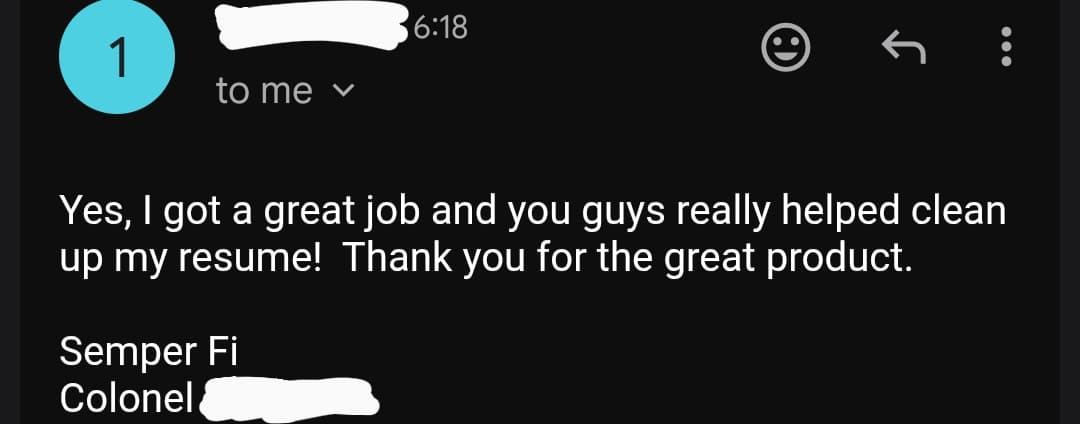
“Hey Brad, Just wanted to send out a quick thank you. You've created something amazing with BMR and your continued advocacy for transitioning service members does not go unnoticed. It was the most effective resource I used in my transition and I know it played a key role in landing a six figure…”
Federal service is one of the cleaner landings for an 0627, because the government runs more satellite ground terminals than any commercial operator and classifies the work into series your experience maps onto directly. The trick is matching your record to the right series and grade, not flooding USAJobs with one generic resume.
The GS-0391 Telecommunications series is the center of gravity. It covers planning, operating, and managing communications systems, including satellite circuits, and an 0627 with terminal and link-management time qualifies on experience alone. Entry commonly lands at GS-7 to GS-9, with GS-11 and above for those who managed circuits or supervised. GS-0856 Electronics Technician is the hands-on maintainer counterpart, ideal if you want to stay on the gear, repairing and calibrating RF and baseband equipment at depot or installation level. Pair these with GS-0855 Electronics Engineering if you finish an engineering degree, and GS-0850 Electrical Engineering for the power-and-systems side of terminal facilities.
GS-2210 Information Technology Management is worth a serious look as enterprise SATCOM merges with IP networks. Your transport-layer experience qualifies you for the network-services specialty, and 2210 grades and locality pay tend to run higher than the technician series. GS-0802 Engineering Technician and GS-1670 Equipment Services round out the adjacent matches, covering systems test, integration, and the lifecycle management of communications equipment fleets.
Your Veterans' Preference is a real edge in this space, and it is verified from your separation paperwork during the federal application, not from your resume content. Read the 5-point vs 10-point Veterans' Preference breakdown so you claim it correctly, and the federal resume guide for veterans for the detail-and-length standard USAJobs expects. Other comms-field veterans target the same series, so the Air Force 1D7X2 RF Transmissions page is a useful cross-reference. When you draft the application itself, the federal resume builder keeps you inside the format federal HR scores against.
| GS Series | Federal Job Title | Typical Grades | Match | Explore |
|---|---|---|---|---|
| GS-0391 | Telecommunications | GS-7, GS-9, GS-11 | View Details → | |
| GS-0856 | Electronics Technician | GS-7, GS-9, GS-11 | View Details → | |
| GS-0855 | Electronics Engineering | GS-7, GS-9, GS-11 | View Details → | |
| GS-2210 | Information Technology Management | GS-9, GS-11, GS-12 | View Details → | |
| GS-0802 | Engineering Technician | GS-7, GS-9, GS-11 | View Details → | |
| GS-1670 | Equipment Services | GS-7, GS-9, GS-11 | View Details → | |
| GS-0850 | Electrical Engineering | GS-9, GS-11, GS-12 | View Details → |
Federal hiring uses keyword-matching and structured experience. BMR builds federal-format resumes (USAJobs-ready) with the right keywords, hours/week, and supervisor info — for any GS series above.
Free · No credit card · Federal + civilian resume formats included
Not everyone wants to stay in a related field. These career paths leverage your transferable skills — leadership, risk management, logistics, project planning — in completely different industries.
Sonography is image-from-signal work. The same instinct that lets you read a spectrum analyzer and position an antenna to peak a signal transfers to positioning a transducer and interpreting ultrasound returns.
PV install is field electrical work on power systems, the same hands-on install-and-commission cycle you ran on transportable terminals, minus the RF. Your DC-power and field-deploy experience shortens the ramp.
Pointing an antenna is applied azimuth-elevation geometry, and surveying runs on the same math plus GPS. The precision-measurement and field-positioning skills move over almost directly.
Aerospace and manufacturing calibration labs need people who treat tolerance and traceability as second nature, which is exactly how you ran terminal alignment and test. The instrument fluency transfers.
Keeping a production line running is the same race against downtime you ran keeping a circuit up. The diagnostic mindset and schematic literacy carry over even though the machinery is mechanical, not RF.
Running a treatment plant is monitoring instrumented systems around the clock and responding fast when readings drift, the same console-and-respond discipline you used managing circuits from a tech control facility. The medium is water, not RF, but the operator mindset is identical.
The skills that made you a good Marine, Sailor, Airman, or Soldier transfer further than you think. BMR rewrites your bullets for any of the pivot careers above — without making you sound like you've never done the work.
Free · No credit card · Try unlimited career angles
If you are staying in satellite, telecom, or RF, your terminology already matches the job posting. A teleport or VSAT employer knows what a link budget and an HPA are, so you do not need to translate for them. This section is for 0627s aiming at careers OUTSIDE communications, where a hiring manager has never set up a satellite terminal and needs to see the underlying skill, not the acronym.
The pattern that works is naming the transferable engineering skill first, then the scale or the result. A civilian manager does not know what SMART-T is, but everyone understands "aligned and maintained precision RF systems to sub-degree tolerance with 99 percent uptime." Lead with the capability.
| Military term | Civilian translation |
|---|---|
| Antenna alignment / peaking the bird | Precision instrument calibration and signal optimization |
| Link budget analysis | Systems performance analysis and capacity planning |
| Fault isolation on a degraded circuit | Root-cause diagnostics and equipment troubleshooting |
| Terminal setup and teardown in the field | Rapid equipment deployment and field commissioning |
| Baseband and crypto configuration | Secure systems configuration and integration |
Here is the before-and-after that lands outside the field. Before: "Operated AN/TSC-167 SMART-T terminal and maintained SHF SATCOM links for the MAGTF." After: "Deployed and maintained precision RF transmission systems in austere field conditions, isolating faults across baseband, IF, and antenna stages to sustain mission-critical connectivity at 99.5 percent uptime." The second version reads as engineering capability to a manufacturing, energy, or medical-device employer who will never know what SMART-T is.
For more reusable phrasing, the 50 military terms translated to civilian language glossary is a fast reference, and quantifying military experience shows how to attach the numbers that make these bullets credible. Once you have the raw bullets, the resume builder tightens them into the form a non-technical recruiter scans first.
BMR turns your 0627 duties and accomplishments into civilian bullets that match the job you're applying for — no manual translation, no rewriting.
Free · No credit card · Tailored to each job posting
Which certifications you need depends on where you're headed. Find your target career path below.
The wrong placement can sink an otherwise strong application. BMR knows where each cert ranks, what to call it, and how to frame it for ATS keyword matching and hiring manager attention.
Free · No credit card · Built around your real certs and clearance
Use these resources two ways depending on where you are headed: deeper into satellite and RF, or out of it entirely.
Stack the certifications civilian employers recognize. The FCC General Radiotelephone Operator License (GROL) signals RF competence to broadcast and field-service employers, the ETA satellite installer and fiber credentials cover the install side, and a CompTIA Network+ bridges you toward the IP-transport roles that pay more. SkillBridge is the highest-leverage move while you are still in, because a SATCOM-adjacent internship converts to an offer far more often than a cold application. Browse the SkillBridge programs list by industry for comms and defense placements, and the CompTIA Security+ free training guide if you are leaning toward the network and cyber side.
If you are done with RF, your precision-electronics and field-diagnostics skill set transfers to manufacturing, energy, healthcare, and engineering-tech roles. American Corporate Partners (ACP) offers free veteran mentorship that helps you map an unfamiliar industry, and your GI Bill can fund the bridge credential a pivot requires. Start with the best certifications for veterans by career field to pick the right bridge, and use the explaining military experience in interviews guide so a non-technical panel hears the skill, not the jargon.
Map your full set of options with the military career crosswalk, time your milestones against the SFL-TAP transition resources, and when you are ready to write, build your resume now so the SATCOM experience is on paper before the interviews start.
See also: the Marine 2841 Ground Radio Repairer path for the bench-repair lane, and the Air Force 1D7X3 Cable and Antenna page for the infrastructure side of the same field.
Most veterans do this backwards — they wait until terminal leave to start, then panic. Here's the actual sequence that works.
Print this. Tape it to your monitor. Veterans who treat the transition like a 90-day op get hired faster than the ones who treat it like an emergency.
Stop rewriting from scratch every time you apply. BMR turns your military experience into civilian and federal resumes — tailored to each job.