Loading...
Loading...
The civilian and federal jobs that hire Marines Amphibious Combat Vehicle (ACV) Crewmans — with real salaries and the resume that gets callbacks.
Every 1834 has more options than a Google search will tell you. Below: career paths, BLS salary data, federal GS series, certifications by target career, and how to translate your experience without losing what made you valuable to the Marines in the first place.
Free · No credit card · Tailored resume in under 5 minutes
After the Navy I got hired into 6 federal career fields and tech sales, and sat on federal hiring panels along the way. I spent the last 2 years rebuilding everything I learned into BMR, tuned for how AI actually screens resumes today. This is the system I wish I'd had on day one.
As a 1834 Amphibious Combat Vehicle Crewman you operate the ACV, the Marine Corps' eight-wheeled (8x8) amphibious platform that is replacing the tracked AAV across the fleet under Force Design. Where the old AAV swam on tracks, the ACV is a wheeled, water-capable combat vehicle with independent suspension, a central tire-inflation system, two rear-mounted waterjets for surf-zone propulsion, and a digital architecture that ties the drivetrain, the remote weapon station, and the diagnostics together. You launch from amphibious shipping or enter the water from shore, drive the vehicle ashore through the surf, then maneuver it inland carrying an infantry squad, all while reading vehicle health off a screen instead of a gauge cluster.
The training pipeline runs through the Assault Amphibian School at Camp Pendleton after recruit training and Marine Combat Training. New crewmen learn the ACV's wheeled water entry and egress, land driving on the 8x8 drivetrain, operation of the Remote Weapon Station, and operator and crew-level maintenance on a modern diesel powerpack with computerized fault codes. Marines crossing over from the AAV go through a transition course because the wheeled platform handles, floats, and is maintained differently than the tracked vehicle it replaces. You finish able to run a multi-million-dollar amphibious vehicle in open water and on land and keep it mission-ready in a salt environment that punishes any seal, bearing, or electrical connection that is not maintained correctly.
Civilian employers value this background once it is described in their language. Operating a heavy, water-capable 8x8 wheeled vehicle is commercial-driver and heavy-equipment work. Running waterjet propulsion and surf-zone navigation is marine-craft operation. Diagnosing a computer-controlled diesel powerpack off fault codes is exactly what a modern diesel technician does all day. The skills are real and certifiable. The blocker is translation, which is why a structured military resume builder and the full military-to-civilian career crosswalk matter so much for this MOS. If you are weighing whether your work even transfers, the hidden skills civilians do not know you have breakdown is a good starting read. Marines on the maintenance side often pair with the 2147 Light Armored Vehicle Repairer path.
When I left the Navy I spent 18 months sending applications into the void with nothing coming back. My experience was fine. The way I wrote it was the problem, because I used words a civilian recruiter could not decode. A 1834 hits that wall hard, because "ACV crewman" reads as nothing to someone who has never seen the vehicle. As a Navy Diver I worked the same surf zone and amphibious world you do, so take this straight from me: operating a wheeled water-capable vehicle, running waterjet propulsion, and diagnosing a computerized diesel powerpack are real civilian skills, and the callbacks start the day your resume names them instead of your MOS. — Brad Tachi, Navy Diver veteran & BMR founder
The number that matters when you're deciding what's next: how does civilian pay compare to what you make now?
Military comp is approximate (varies by location/dependents). Civilian is BLS median. Federal includes locality pay. Your real number depends on duty station, family status, GS step, and overtime.
The most direct civilian path is operating heavy, road-legal equipment. As an Operating Engineer or heavy equipment operator (O*NET 47-2073.00), you run dozers, loaders, and graders on construction and infrastructure sites. BLS OEWS (May 2024) puts the median wage at $58,320, with employment tied to construction and public-works funding, so demand runs hot in growing metro and energy regions and softens where building slows. Your hours behind a heavy drivetrain in unforgiving terrain map onto this work cleanly.
Driving is the other obvious lane. A heavy and tractor-trailer driver (O*NET 53-3032.00) earns a BLS median of $57,440 (May 2024), and a Class A CDL is the gate, not a four-year degree. Operating the ACV does not hand you a CDL, but your documented time controlling a large, heavy wheeled vehicle is exactly the experience a carrier wants to see paired with the license. For the broader picture, see military-to-CDL truck driving with free training.
Maintenance pays well and travels anywhere. Bus and truck mechanics and diesel engine specialists (O*NET 49-3031.00) earn a BLS median of $61,030, and mobile heavy equipment mechanics (O*NET 49-3042.00) earn $63,030 (both May 2024). The ACV's computer-controlled diesel powerpack and fault-code diagnostics are the same skill set a modern fleet shop runs on. Industrial machinery mechanics (O*NET 49-9041.00, $63,520) is a closely related plant-side option, and crane and tower operators (O*NET 53-7021.00, $64,690) suit those who liked the precision side of moving heavy loads.
The waterjet and surf-zone side opens a path most crewmen overlook. Captains, mates, and pilots of water vessels (O*NET 53-5021.00) earn a BLS median of $88,730 (May 2024), the highest figure here. Entry runs through the Merchant Mariner Credential and documented vessel time, and your hours handling a powered, water-capable craft in the surf zone are genuine sea-service experience toward that credential. Roles cluster on the coasts and inland waterways. Veterans weighing whether to stay near heavy equipment or branch out should skim veterans in logistics and supply chain careers and the cross-branch Navy Equipment Operator page, which shares the heavy-equipment crosswalk. Ready to put it on paper? You can build your resume now.
| Civilian Job Title | Industry | BLS Median Salary | Outlook | Match |
|---|---|---|---|---|
Heavy Equipment Operator O*NET: 47-2073.00 | Construction & Infrastructure | $58,320 | 5% (Faster than average) | strong |
Heavy and Tractor-Trailer Truck Driver O*NET: 53-3032.00 | Transportation | $57,440 | 5% (Faster than average) | strong |
Diesel and Heavy-Vehicle Service Technician O*NET: 49-3031.00 | Vehicle Maintenance | $61,030 | 4% (As fast as average) | strong |
Mobile Heavy Equipment Mechanic O*NET: 49-3042.00 | Heavy Equipment | $63,030 | 4% (As fast as average) | strong |
Marine-Craft / Workboat Operator O*NET: 53-5021.00 | Maritime | $88,730 | 3% (As fast as average) | moderate |
Industrial Machinery Mechanic O*NET: 49-9041.00 | Manufacturing | $63,520 | 13% (Much faster than average) | moderate |
Crane and Tower Operator O*NET: 53-7021.00 | Construction | $64,690 | 3% (As fast as average) | moderate |
BMR rewrites your 1834 experience for any of the civilian roles above — keywords, achievements, and language hiring managers actually scan for.
Free · No credit card · 2 tailored resumes included
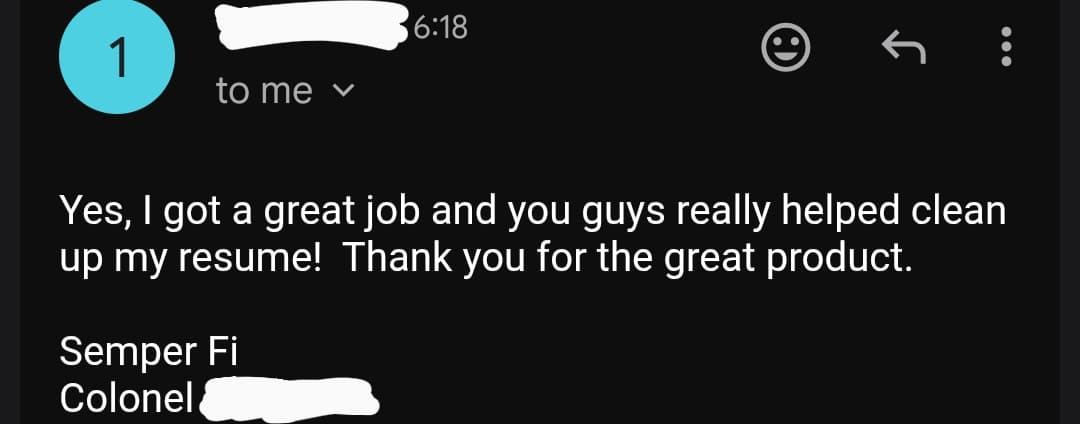
“Hey Brad, Just wanted to send out a quick thank you. You've created something amazing with BMR and your continued advocacy for transitioning service members does not go unnoticed. It was the most effective resource I used in my transition and I know it played a key role in landing a six figure…”
Federal trades and wage-grade jobs are the strongest match for hands-on ACV experience, and most sit on the Wage Grade (WG) schedule rather than the GS scale, because the work is graded by the equipment you run, not by an office series. The closest fit is Motor Vehicle Operating (5703), which covers driving heavy government vehicles for DoD installations, the VA, and federal logistics depots. Engineering Equipment Operating (5716) covers dozers, loaders, and graders for the Army Corps of Engineers, Bureau of Reclamation, and National Park Service maintenance fleets.
On the maintenance side, Automotive Mechanic (5823) and Mobile Equipment Servicing (5806) put your fault-code diagnostics and powerpack work directly into federal fleet shops. Boat Operator (5786) is the path that connects your waterjet and surf-zone time to federal vessel operation at the Navy, Army Corps, and NOAA. For those moving toward planning rather than wrenching, Transportation Operations (2150) is a GS-graded series covering dispatch, movement control, and fleet coordination, and Equipment Services (1670) and Logistics Management (0346) sit adjacent for anyone who wants the office side of fleet management.
Veterans' Preference applies to all of these. Five-point preference attaches to most who served on active duty under honorable conditions, and ten-point preference attaches for a service-connected disability or other qualifying basis, moving you up the certificate of eligibles. Wage-grade trade jobs frequently weight a hands-on skills demonstration alongside the resume, which favors a crewman who can actually run and fix the equipment. Build the application on USAJOBS with a federal resume builder that handles WG qualification language, and read the 2026 OPM-compliant federal resume format and how 10-point Veterans' Preference works before you submit.
| GS Series | Federal Job Title | Typical Grades | Match | Explore |
|---|---|---|---|---|
| GS-5716 | Engineering Equipment Operating | WG-8, WG-9, WG-10 | View Details → | |
| GS-5703 | Motor Vehicle Operating | WG-7, WG-8, WG-9 | View Details → | |
| GS-5823 | Automotive Mechanic | WG-8, WG-9, WG-10 | View Details → | |
| GS-5786 | Boat Operator | WG-8, WG-9, WG-10 | View Details → | |
| GS-5806 | Mobile Equipment Servicing | WG-7, WG-8, WG-9 | View Details → | |
| GS-1670 | Equipment Services | GS-5, GS-7, GS-9 | View Details → | |
| GS-2150 | Transportation Operations | GS-5, GS-7, GS-9 | View Details → |
Federal hiring uses keyword-matching and structured experience. BMR builds federal-format resumes (USAJobs-ready) with the right keywords, hours/week, and supervisor info — for any GS series above.
Free · No credit card · Federal + civilian resume formats included
Not everyone wants to stay in a related field. These career paths leverage your transferable skills — leadership, risk management, logistics, project planning — in completely different industries.
Coordinating ship-to-shore movement and crew comms on a radio net is the same calm, structured coordination a 911 dispatcher runs under pressure.
Sustaining a fleet readiness rate is operations-efficiency work; the same uptime and process mindset drives industrial engineering support on a production floor.
Running and maintaining the ACV digital architecture and Remote Weapon Station electronics builds the signal and wiring troubleshooting that field telecom techs do daily.
Comfort operating heavy gear in austere, hazardous environments is exactly what energy and exploration field technicians need on remote sites.
The ACV ties drivetrain, sensors, and diagnostics into one digital system; troubleshooting that is the core of maintaining automated and robotic equipment.
Running a gas plant means controlling pressurized, high-stakes machinery off a panel of live readings, the same instinct you used reading vehicle health off a screen and keeping a complex platform safe in an unforgiving environment, in an industry you never expected to fit.
The skills that made you a good Marine, Sailor, Airman, or Soldier transfer further than you think. BMR rewrites your bullets for any of the pivot careers above — without making you sound like you've never done the work.
Free · No credit card · Try unlimited career angles
If you are applying to a heavy-equipment company, a trucking carrier, a diesel fleet shop, or a marine-craft operator, those employers already speak your language and you can keep the technical terms. This section is for the careers OUTSIDE vehicle and amphibious operations, where a hiring manager has never seen an ACV and needs the work in plain civilian terms.
Start with the platform itself. "Operated the ACV, an 8x8 amphibious combat vehicle" becomes "operated a heavy water-capable wheeled vehicle in open water and on rough terrain." "Ran the Remote Weapon Station" becomes "operated integrated electronic weapons and sensor systems from a digital control station." Your maintenance work translates the same way: "performed crew-level maintenance on the ACV powerpack" becomes "diagnosed and serviced a computer-controlled diesel drivetrain using onboard fault-code systems." The civilian reader needs the function, not the platform name.
A before example a recruiter cannot read: "Served as 1834 ACV crewman, conducted ship-to-shore amphibious operations and crew-level maintenance." The after, aimed at a fleet-operations or logistics role: "Operated and maintained a multi-million-dollar amphibious vehicle across water and land environments, completed daily preventive maintenance and computerized diagnostics, and sustained 100 percent operational readiness across a deployment." The work did not change. The words a non-military manager can act on did. For a full reference, the 50 military terms translated to civilian language glossary and how to explain military experience in a civilian interview both help. A military resume builder does this translation as you write, or you can start building free.
BMR turns your 1834 duties and accomplishments into civilian bullets that match the job you're applying for — no manual translation, no rewriting.
Free · No credit card · Tailored to each job posting
Which certifications you need depends on where you're headed. Find your target career path below.
The wrong placement can sink an otherwise strong application. BMR knows where each cert ranks, what to call it, and how to frame it for ATS keyword matching and hiring manager attention.
Free · No credit card · Built around your real certs and clearance
Staying in heavy equipment, transport, or marine craft. Use a SkillBridge slot to land a civilian seat before you separate. Carriers and equipment firms run programs that put you in a real role during terminal leave, covered in the SkillBridge programs list by industry. A Class A CDL is the single highest-leverage move, mapped in military-to-CDL truck driving with free training, and the trades route is in Helmets to Hardhats apprenticeships. Industry groups worth knowing include the Associated General Contractors and the American Trucking Associations.
Careers outside the field. If you are done with vehicles entirely, American Corporate Partners (ACP) runs free year-long mentorship that pairs you with a professional in your target industry. Your GI Bill and VR&E (Chapter 31) can fund a pivot, weighed in VR&E vs GI Bill: which to use first. Explore options through the full military-to-civilian career crosswalk, and use SFL-TAP transition resources to schedule counseling early.
See also: Marine 3531 Motor Vehicle Operator, Army 88M Motor Transport Operator, and Army 19K M1 Armor Crewman for related crosswalks. When you are ready, you can get started on your resume, or read jobs for veterans by MOS to map more options.
Most veterans do this backwards — they wait until terminal leave to start, then panic. Here's the actual sequence that works.
Print this. Tape it to your monitor. Veterans who treat the transition like a 90-day op get hired faster than the ones who treat it like an emergency.
Stop rewriting from scratch every time you apply. BMR turns your military experience into civilian and federal resumes — tailored to each job.