Can a New Employer Pull Your Job Offer Because You Got Orders?
"Still getting interviews left and right. Now I have to say no."
Taranjeet, E-5, Army, optimized her LinkedIn and resume with BMR
Labor's USERRA rules say a new employer must not pull your job offer because of your orders. The Office of Special Counsel (OSC) says USERRA "does not automatically entitle service members to a civilian position," and employers may say no for reasons "not influenced by" service.
A firm that pulls an offer over orders "need not actually employ" you to count as your employer, says 20 CFR 1002.40. Read on for the limits, the gap before day one, notice, a start-date ask and help.
This is not legal advice. For your own case, use the help offices named near the end.
What the USERRA hiring rule says about a pulled offer
USERRA is short for the Uniformed Services Employment and Reemployment Rights Act. The hiring rule is 20 CFR 1002.40, part of the Labor Department's USERRA rules. CFR stands for Code of Federal Regulations. The rule asks if USERRA covers hiring. Its answer starts with "Yes."
It gives two cases. A company that turns you down over Guard or Reserve duty is your employer under the law. So is a firm that "withdraws an offer of employment" because you are "called upon to fulfill an obligation" to serve.
A second rule, 20 CFR 1002.18, lists what the law protects. The list includes your "obligation for service." So orders you have not started yet still count.
OSC gives an example of what the law bans. It's a job-seeker passed over "because he may have a military obligation on the day his employer wants him to start work." Pay and leave questions are a separate topic. Our guide to negotiating an offer as a reservist covers those.
Who has to prove the offer was pulled over service
The rule does not hand you the job. OSC says a firm can still say no if the choice is "not influenced by" your service. It still can't say no because of your orders.
A rule at 20 CFR 1002.23 sets the order of proof, and you go first. You "must first show" that the employer's action was "motivated by" a protected reason. Your "obligation for service" is one of them.
If you show that, the weight shifts. The employer must then prove "the action would have been taken anyway." That's why the papers in the next sections matter so much.
The gap before your first day: no rule we found settles return rights
USERRA holds two kinds of rights. One bans bias in hiring. The other lets you return to your job after service.
The first is broad. 20 CFR 1002.21 says the bias rules cover "potential employers." They also cover jobs "for a brief, nonrecurrent period."
The second is narrower. The same rule says "reemployment rights and benefits do not apply" to those brief jobs. Two more rules let an employer use that as a defense. One is 20 CFR 1002.41, and 20 CFR 1002.139 lists it with the other employer defenses. The employer "bears the burden of proving" it.
Return rights also turn on one phrase. The return rule, 20 CFR 1002.32, covers a person "absent from a position of civilian employment" because of service. The rules do not say if an accepted offer you have not started counts. We found no rule that settles it, so we make no claim either way.
What you can control is the record. Get your start date in writing. Get any change to it in writing too.
Telling the new employer about orders: notice, not permission
For a worker who holds a job, the rules ask for notice before service. The permission rule, 20 CFR 1002.87, says you are "not required to ask for or get" the employer's permission. You only give "notice of pending service."
The notice rule is 20 CFR 1002.85. It says notice "may be either verbal or written." A call works. So does an email. It "may be informal." The Department of Defense (DoD) "strongly recommends" notice "at least 30 days prior to departure" when "it is feasible to do so."
A rule on excused notice, 20 CFR 1002.86, names two cases. One is "military necessity." The other is when notice is "impossible or unreasonable." One example it gives is orders to report "in an extremely short period of time."
The OSC USERRA questions page says sharing orders before duty is "best practice." But it says "you are not required to do so."
You also don't have to promise to come back. The rule on coming back, 20 CFR 1002.88, says you are "not required to tell" the employer you plan to return.
These notice rules speak of someone leaving a job they hold. Before day one, our advice is to use them anyway. Still in the interview stage? See our guide to the question about deployments.
Asking to move the start date, and the papers to keep
This part is BMR advice, not a rule. For orders that run weeks or months, ask in writing to move the start date. Keep the ask short and plain. Use these words:
"I've received orders that run past my start date. I still want this job. Could we move my start date to after I return? I can share my orders and will confirm the new date in writing."
A start date that lands in an annual training period is a smaller ask. Our annual training job search guide covers that case.
Keep these in one folder:
- The offer letter, or the email that made the offer.
- The email that set your first start date.
- Any email that moves the start date.
- Your orders.
- Any message that pulls the offer, with the date you got it.
Once you start, you will tell your new boss about drill. Our drill notice email guide covers that note. If the hiring manager is new to this, you can send them our employer guide to USERRA.
If the offer is pulled: mediation, an investigation or a lawyer
Employer Support of the Guard and Reserve (ESGR) has a USERRA questions sheet. It lists three paths.
- Its "trained ombudsmen can provide informal mediation."
- For "a formal investigation," you contact the Department of Labor.
- "Another option available would be to hire a private attorney."
The Labor Department's Veterans' Employment and Training Service (VETS) built the USERRA Advisor. It says "ESGR and VETS staff are available to provide technical assistance prior to filing an official claim." You can reach ESGR through its USERRA help page.
The USERRA rule, 20 CFR 1002.5, lists "The Federal Government" as an employer. The ESGR sheet says federal employees have "the same USERRA rights." It says they can get help through ESGR or VETS. When appropriate, the sheet says, VETS can refer a case to OSC or the Merit Systems Protection Board.
If the offer is gone, your search starts again. Our guide to restarting a search after orders walks through it.
A resume ready for the next posting
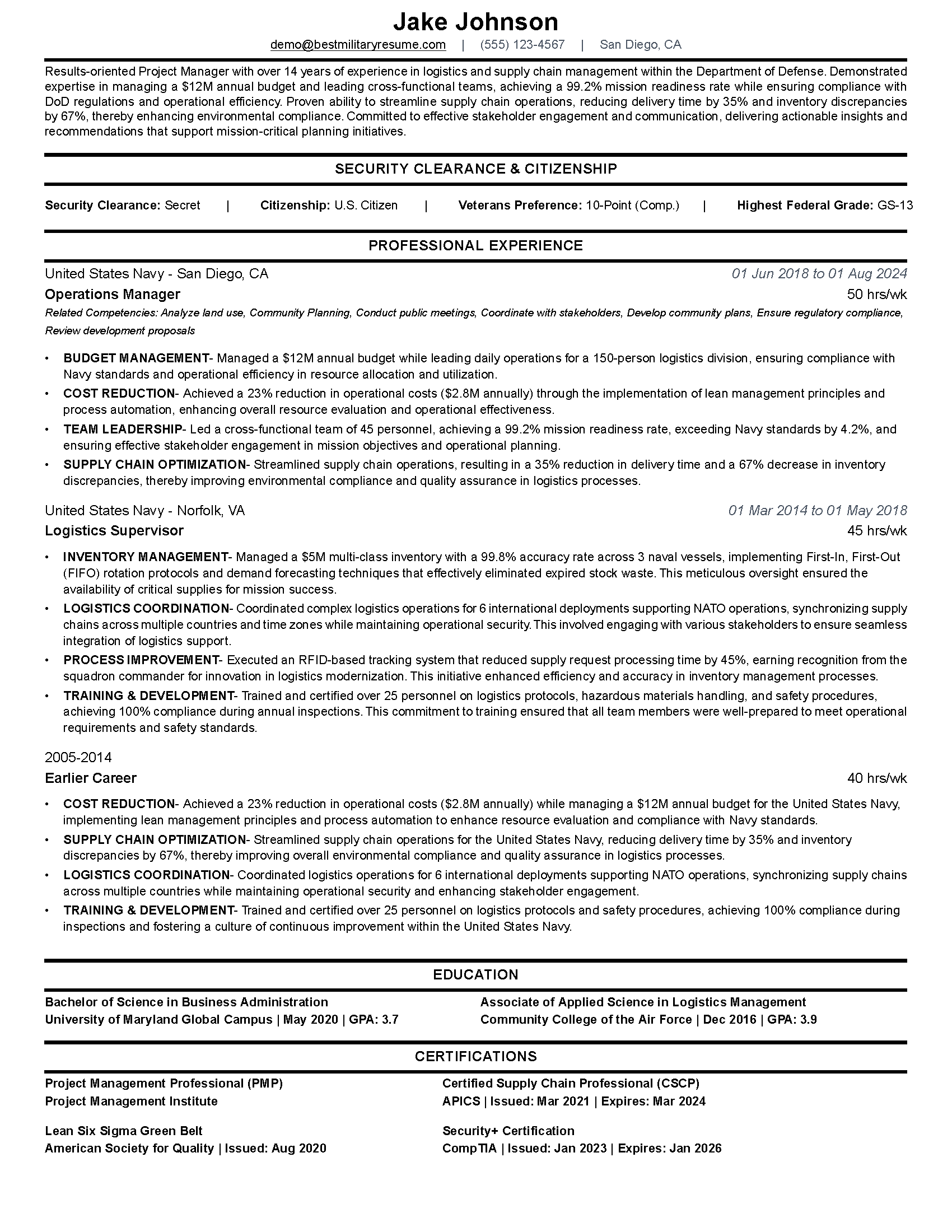
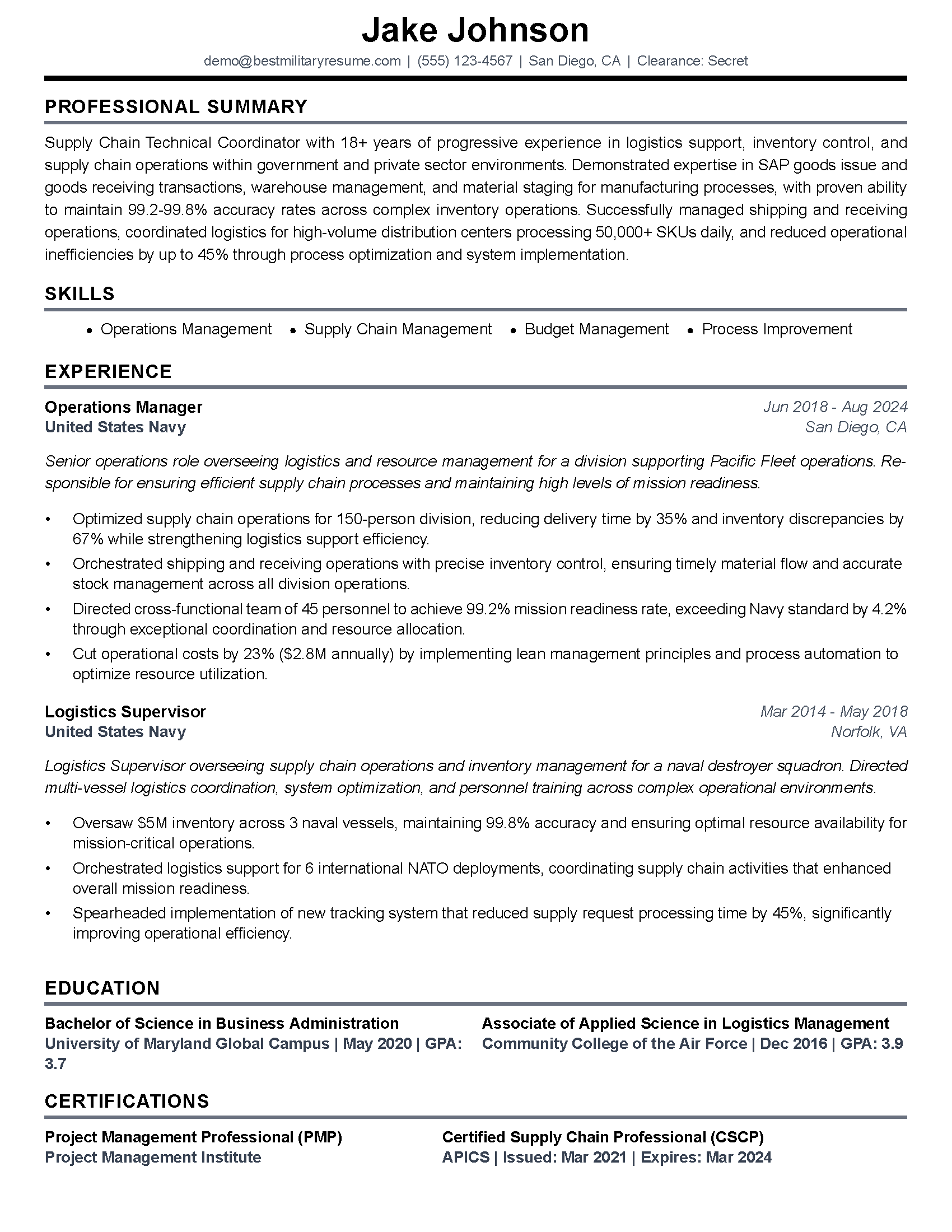
A moved start date or a pulled offer can send you back to job boards fast. Your Guard or Reserve job belongs on the resume as a job, with your unit and dates. Then aim each copy at one posting.
By November 22, 2026, the number of resumes built on BMR had reached 79,689. Keep a resume on hand for the next opening in BMR's Resume Builder. Your first federal tailored resume and your first private one come with the free account.
Last check of the rules and agency quotes here: November 23, 2026.
Frequently Asked Questions
Does USERRA cover a small employer with only a few staff?
Does the five-year service limit start over with a new employer?
How long do I have to ask for my job back after long orders?
About the author
Brad Tachi is the CEO and founder of Best Military Resume and a 2025 Military Friendly Vetrepreneur of the Year award recipient for overseas excellence. A former U.S. Navy Diver with over 20 years of combined military, private sector, and federal government experience, Brad brings unparalleled expertise to help veterans and military service members successfully transition to rewarding civilian careers. Having personally navigated the military-to-civilian transition, Brad deeply understands the challenges veterans face and specializes in translating military experience into compelling resumes that capture the attention of civilian employers. Through Best Military Resume, Brad has helped thousands of service members land their dream jobs by providing expert resume writing, career coaching, and job search strategies tailored specifically for the veteran community.