Job Applications Getting No Response? A Veteran's Stage-by-Stage Check
"Still getting interviews left and right. Now I have to say no."
Taranjeet, E-5, Army, optimized her LinkedIn and resume with BMR
Silence after a job application is common. In September 2026, the Bureau of Labor Statistics (BLS) counted 7.5 million job openings but 5.4 million hires. Those figures come from its Job Openings and Labor Turnover Survey (JOLTS) release of November 3, 2026.
The fix is to find which stage of your search fails, not to send more of the same. Each of the five stages below has a check you can run today and a fix.
Is it normal to get no response on job applications?
Yes. The two numbers measure different things, so the gap is not a count of unfilled jobs. BLS counts each one this way: "Job openings include all positions that are open on the last business day of the month. Hires and separations include all changes to the payroll during the entire month."
Our read: a posting you saw may not turn into a hire that month.
Veterans face the same market. BLS's Employment Situation of Veterans, 2025 report, released April 28, 2026, says: "The unemployment rate for all veterans increased to 3.5 percent in 2025 and was lower than the rate for nonveterans, at 4.2 percent."
For newer veterans, it says: "The unemployment rate for veterans who served on active duty in the U.S. Armed Forces at any time since September 2001--a group referred to as Gulf War-era II veterans--was little changed at 3.6 percent in 2025." BLS built the 2025 figures from 11 months, because October 2025 survey data were not collected.
A national rate can't tell you why your own applications get no reply. The stage check can.
Which stage of your job search is failing?
Find your stage in this table. The facts in the second column come from the linked official pages. Lines marked "Our advice" are BMR's view, not an official rule.
| Stage | What silence there usually means | The check you can run | The page with the fix |
|---|---|---|---|
| 1. The application never reached a person | Federal jobs: "The hiring agency will start reviewing applications after the job announcement closes" (USAJOBS). | Open Track this application in USAJOBS. For other jobs, find the confirmation email or portal status. | USAJOBS application status, explained |
| 2. The resume did not show the posting's requirements | Federal jobs: the agency sorts qualified applicants into "Minimally qualified" and "Highest qualified" groups. The agency then sends "the highest qualified applications to the hiring official" (USAJOBS). | Match each required qualification in the posting to a line on your resume. | Tailor one resume to each posting |
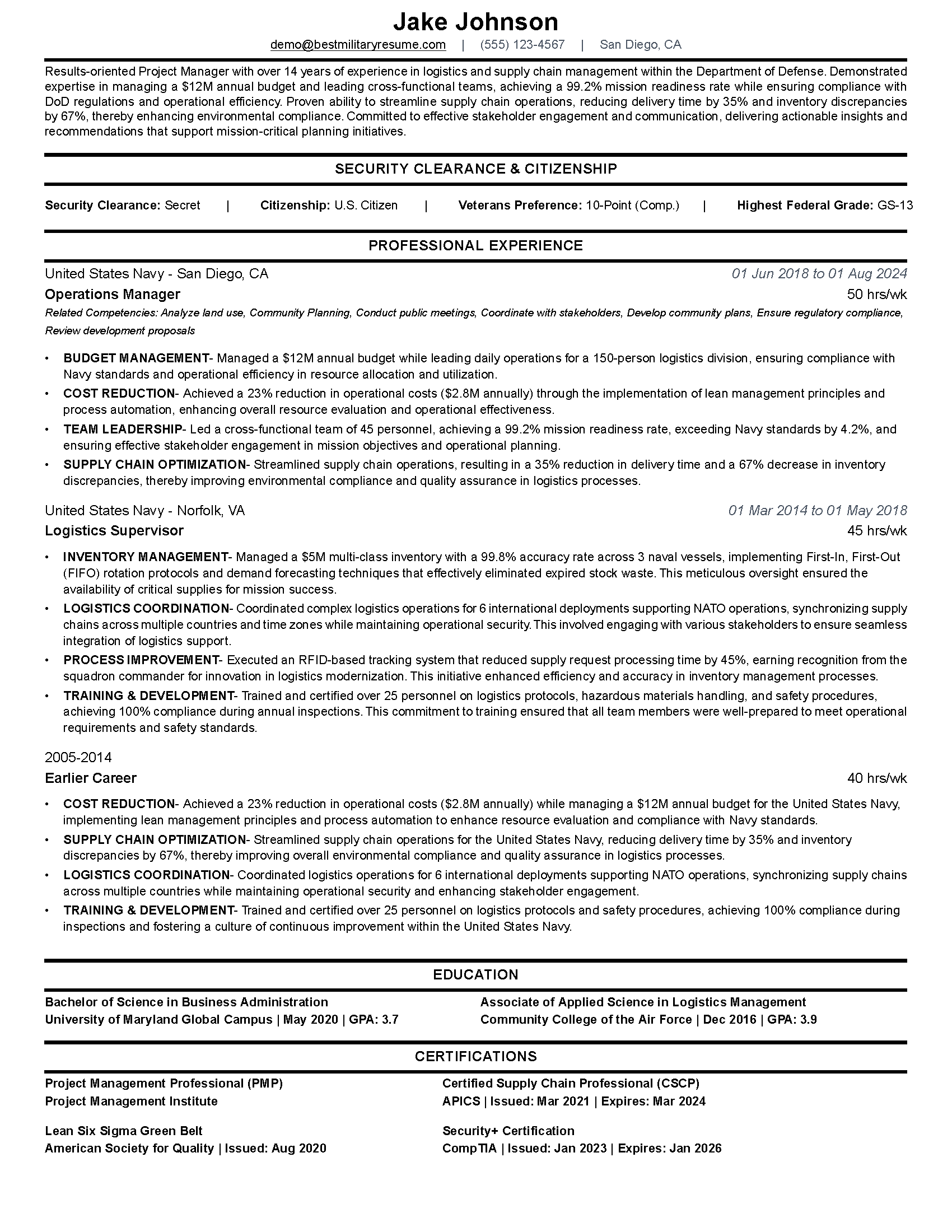
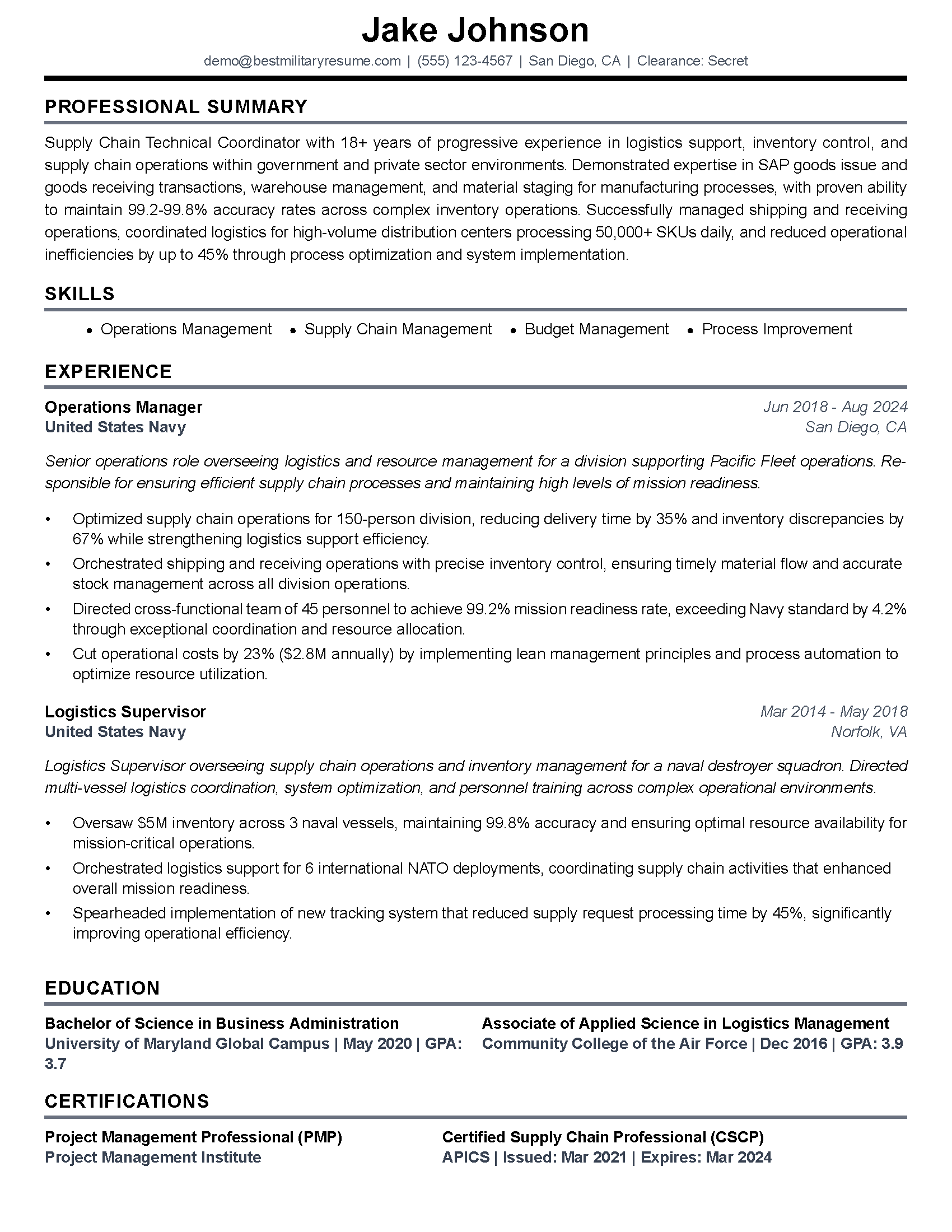
| 3. A person read it, but it did not translate | Our advice: the reader could not tell what you did in civilian terms. | Ask someone who never served to name your job from the resume alone. | Write a military to civilian resume |
| 4. The wrong role or level | Our advice: you aimed at jobs where you meet only part of the requirements. | Count how many required qualifications you fully meet in each posting. | Turn your military job into civilian search terms |
| 5. You applied but never followed up | Our advice: your file may not get a second look. | Check whether you contacted anyone after you applied. | Follow up on a job application |
How do you check each stage?
Our advice: run the checks in order, on your last few applications. The first stage that fails is the one to fix.
Stage 1: Did your application reach anyone?
On a federal job, sign in to USAJOBS and open your applications. The USAJOBS application process page says your status "will say you applied and include the date you submitted your application if it went through."
It also says: "It may take a few hours after you submit your application for the agency to update your status."
On a private job, look for a confirmation email or a status in the company's job portal.
Our advice: no status after a day? Check the agency system before you assume you were turned down. No proof it arrived? Apply again or ask the recruiter.
Stage 2: Does your resume show each requirement?
Copy the required qualifications from the posting into a list. Next to each one, paste the resume line that proves it. Use the posting's own words where they are true for you.
The USAJOBS resume page puts it plainly: "Make sure your work experience addresses the requirements and qualifications in the job announcement." Our advice: a blank next to any required item is your likely stage. Our guide to tailoring one resume to each posting shows how to fill the gaps.
Stage 3: Can a civilian tell what you did?
Hand your resume to someone who never served. Give them one minute. Then ask what job you did and how big it was. If they can't say, the resume did not translate.
This example shows the fix. Fill the brackets with your own facts.
- Before: NCOIC, S4 section. Responsible for all supply actions.
- After: Supervised a [number]-person supply team that tracked $[amount] in equipment with [number] losses.
For the full method, see how to write a military to civilian resume. For the common flaws a reader spots, see resume red flags that get veteran resumes rejected.
Stage 4: Are you aiming at the right job and level?
Pull up the last ten postings you applied to. Mark each required qualification you fully meet. Our advice: if most postings have several you can't mark, the target is off, not the resume.
Look for job titles where you meet nearly every requirement. Our guide to civilian search terms for your military job helps you find them. For federal jobs, match your military job to a federal job series first.
Stage 5: Did anyone hear from you after you applied?
On a federal job, our advice: use the contact named on the job announcement. On other jobs, the recruiter or hiring manager is the contact. Our guide to following up on a job application covers timing and what to write.
What changes when the job is federal?
Federal jobs report status at set points. Our guide to USAJOBS application statuses explains each one. The USAJOBS application process page lists the steps after you apply:
- Agency reviews application
- Interview
- Agency selects candidate
- Job offer
Our advice: find the last step you reached. That tells you which stage to check.
Federal resumes also have a page limit. The USAJOBS resume page says: "Federal agencies only accept resumes up to two pages in length to comply with the Merit Hiring Plan." Two pages is the rule for most federal jobs. Always check the announcement, because some are exceptions. Each BMR tailored resume has a function to condense down to two pages.
The same page says: "Use plain language. Avoid using acronyms and terms that are not easily understood. The hiring agency will not make assumptions about what's in your resume." That's the stage 3 check, in the government's own words.
Referred, then nothing for weeks? That's a different problem. See what to do when you're referred on USAJOBS but ghosted.
Where can you get help from the Department of Labor?
The Department of Labor (DOL) runs the Veterans' Employment and Training Service (VETS). Its Find a Job page for veterans says: "Nearly 2,400 American Job Centers nationwide help people search for jobs, find training, and answer other employment related questions." The page links a finder for the center nearest you.
The same page links the Veterans Job Matcher. Its line reads: "Enter your military job to find related civilian careers." That helps most at stage 4, when the target is the problem.
Figures checked November 2026 in the BLS November 3, 2026 JOLTS release and its 2025 veterans report. We read the BLS and USAJOBS pages from archived copies, and the DOL page live.
What to Do Next
Did stage 2 or 3 fail? Rebuild your resume against one real posting.
The BMR Resume Builder does that step. Paste a job posting and get a resume tailored to that role. The free tier includes one federal tailored resume and one private. Over 1,000 new profiles are added to BMR every month, and 79,061 resumes have been built on BMR.
Frequently Asked Questions
Will the agency email me to confirm my application?
What does "Job canceled" mean on USAJOBS?
Can I upload a resume longer than two pages to USAJOBS?
About the author
Brad Tachi is the CEO and founder of Best Military Resume and a 2025 Military Friendly Vetrepreneur of the Year award recipient for overseas excellence. A former U.S. Navy Diver with over 20 years of combined military, private sector, and federal government experience, Brad brings unparalleled expertise to help veterans and military service members successfully transition to rewarding civilian careers. Having personally navigated the military-to-civilian transition, Brad deeply understands the challenges veterans face and specializes in translating military experience into compelling resumes that capture the attention of civilian employers. Through Best Military Resume, Brad has helped thousands of service members land their dream jobs by providing expert resume writing, career coaching, and job search strategies tailored specifically for the veteran community.
