Return to Work After School: A Veteran's Job Search Plan
"Still getting interviews left and right. Now I have to say no."
Taranjeet, E-5, Army, optimized her LinkedIn and resume with BMR
I went straight from the Navy into private-sector tech sales. That job taught me one thing fast. Employers rarely hire you for what you plan to do. They usually hire you for what they can see on paper and hear in a short call. That lesson hits hard when you finish school and turn back toward the job market.
You did the hard part. You separated, used your GI Bill, and sat through two or four years of classes. Now the degree is done or nearly done. But your last real job was in uniform, and that was a while ago. Your old network has moved on. Your resume still reads like you're about to leave the service. And the housing money is about to stop.
This post is the plan for that exact spot. It's a step-by-step plan to return to work after school as a veteran. You'll get a timeline and a way to pick targets. You'll also get the doors open to new grads and a script for the gap question. If you're still deciding between school and work, start with grad school vs. job search for veterans first. This one starts after the choice is made.
When does your job search clock really start?
Your clock starts before graduation day. For a lot of student veterans, the real deadline is the last housing payment.
If you use the Post-9/11 GI Bill, VA pays a monthly housing allowance. But it only pays while you're in school more than half time. VA's own page is plain about breaks. A 2011 law stops VA from paying housing during school breaks. That covers the gaps between semesters, quarters, and terms. And if your enrollment ends partway through a month, VA prorates that last payment.
So plan for the money to stop when your last class ends. Your plan should count backward from that date, not forward from your diploma.
A simple backward timeline
Use your last day of classes as day zero. Then work back from it. These are planning targets, not rules. Shift them to fit your field.
- Start of your final term: Pick your target job titles and build one master resume that holds everything.
- About 12 weeks out: Start your outreach. Talk to people in the jobs you want.
- About 10 weeks out: Start applying every week. Hiring often takes weeks to move from posting to offer.
- About 6 weeks out: Practice the gap answer out loud until it sounds like you.
- Day zero and after: Keep the weekly rhythm going until you sign an offer.
Already past day zero? That's fine. Start at the top and move faster. The steps stay the same.
What job are you aiming at now?
School may have changed your target. Maybe you were a logistics specialist and now you hold a business degree. Maybe you were a medic and finished a nursing program. Either way, you now carry two kinds of proof. You have the work you did in uniform. And you have the degree and what you built to earn it.
The best target uses both. A supply sergeant with a degree in supply chain management has a clear story. A Navy electronics tech with a computer science degree has one too. When your old job and your new degree point the same way, lead with that path.
When they don't line up, pick the degree path but keep the service work on the page. It still shows you can show up, run gear, lead people, and finish hard things.
Read postings before you pick
Don't pick a title from a list in your head. Pull up 10 real job postings for the role you think you want. Read what they ask for. Then sort them.
- Jobs you qualify for today: These go to the top of your list.
- Jobs that need one more thing: That might be a cert, a license, or a year of work. Note what it is.
- Jobs that pay best: Star these. Among the jobs you qualify for, apply to these first.
- Jobs you'd actually take: Cut the ones you'd turn down. They waste your weeks.
Aim for two to four target titles, not twelve. A focused search is easier to run each week. It also makes your resume and your outreach sharper.
Worried the degree won't count for much? Read do veterans need a degree to get hired. It covers which jobs care about the degree and which care more about the work.
How do you put school and service on one resume?
This section is short on purpose. Your resume is a tool for the plan, not the whole plan.
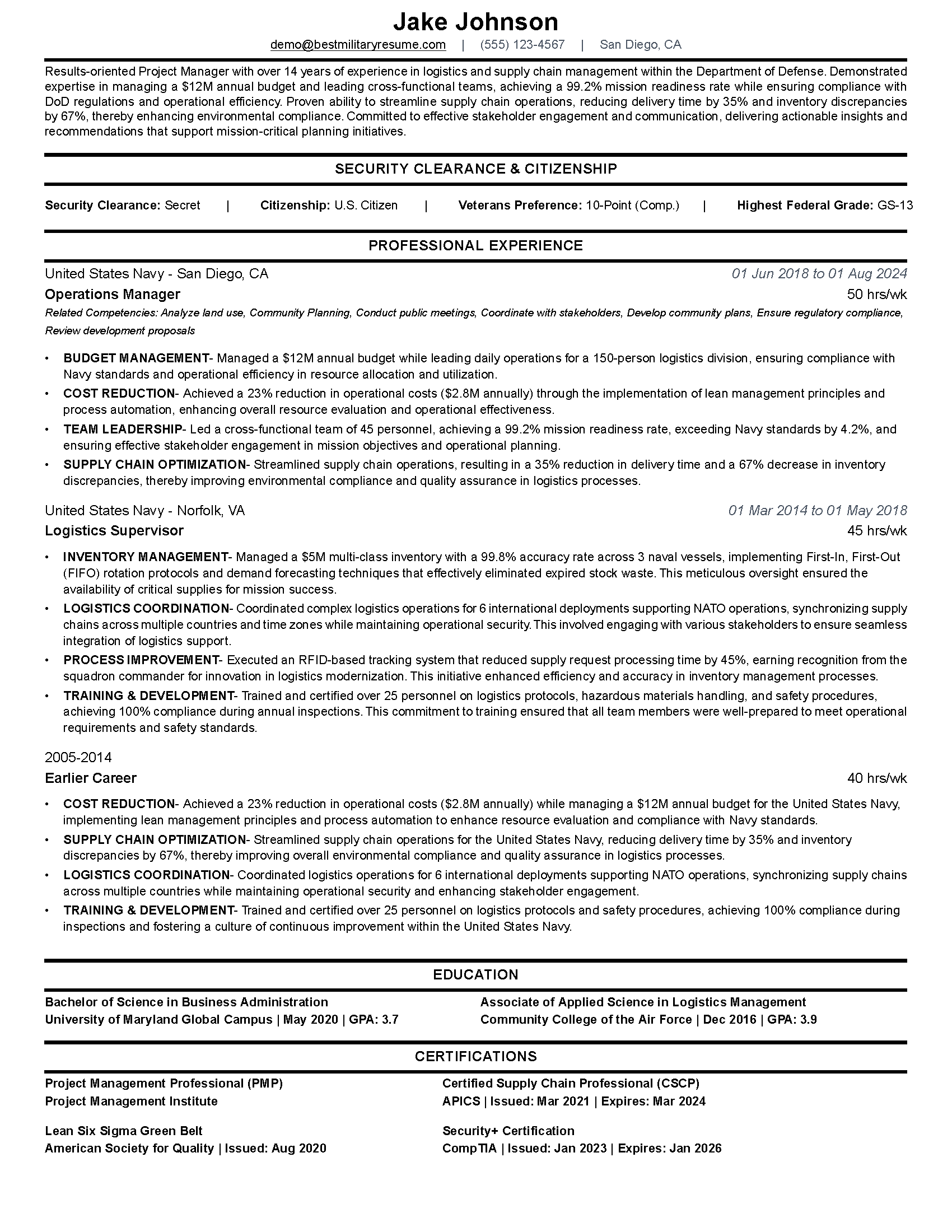
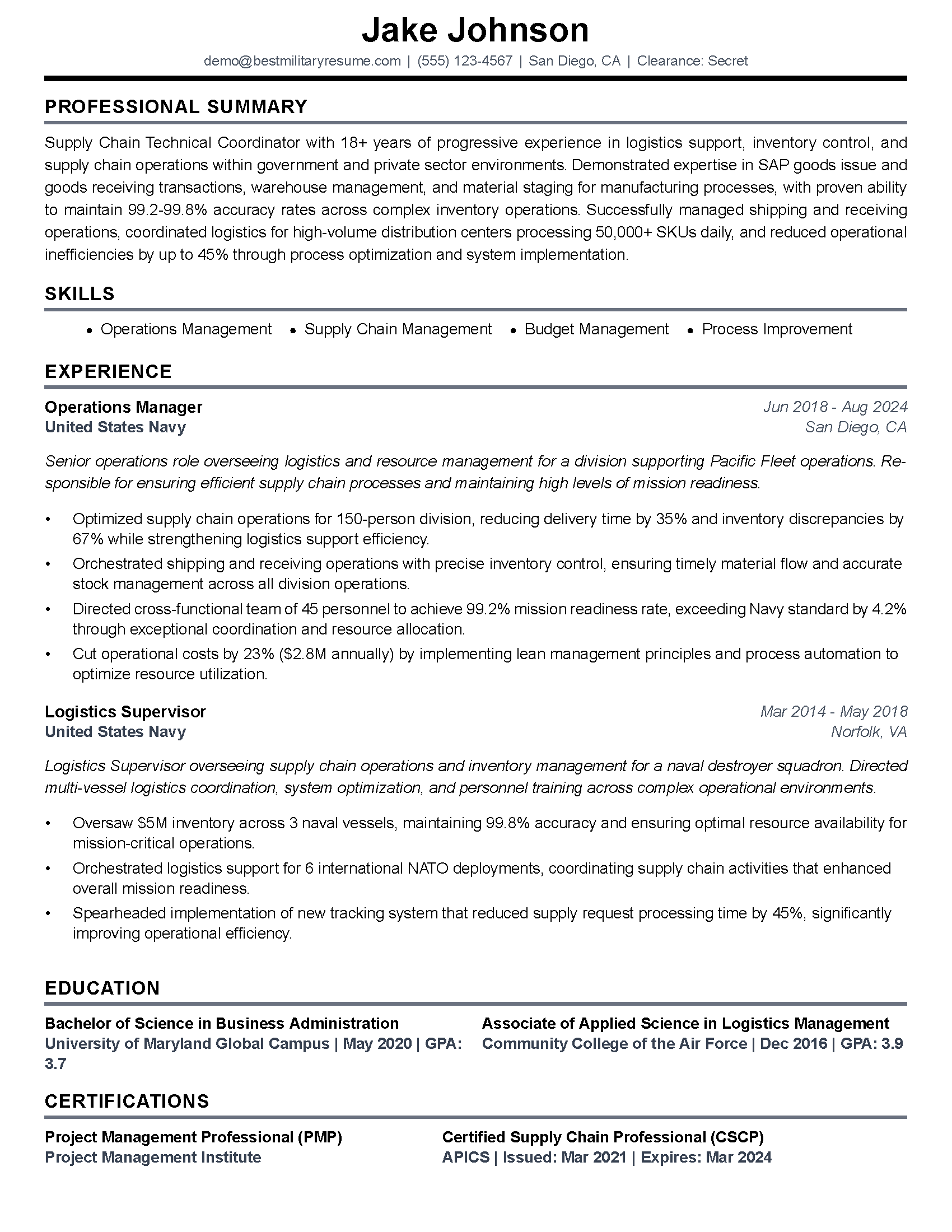
Start with one master resume. It holds every job, every school project, every work-study shift, and every service role. You never trim the master. When you apply, you cut a version from it that fits one posting. That keeps every fact in one place, so nothing gets lost.
School time is not a blank space
Full-time school is a reason, not a mystery. List the degree with the school name and your graduation date. If you worked while in school, list that job too. If you did a capstone, an internship, or a big team project, give it a line. Write it like work: what you built, who used it, and what came out of it.
Did you work for VA while you studied? Our VA work-study guide explains that program. Those hours belong on your resume as a real job.
For gaps beyond school, like time off after separation, see our guide to resume gaps for veterans. It covers the full set of gap types.
Bring the service work forward
Your service didn't expire when you enrolled. Translate it into the posting's own words. Then bring the size of what you ran. Think people, gear, and money. The rank comes off. The scope is what tells an employer your level.
Who do you know now that you didn't know in uniform?
School gave you a network. You may not think of it that way yet. But it's there, and it's warmer than a cold application.
- Professors: Some teach part time and work in the field. Ask who they know at the places you want.
- Classmates: The ones who graduated a term ahead are already inside companies.
- Your school's veteran office: Staff there often know which local employers hire student veterans.
- Your old unit: People you served with have separated too. Some now work where you want to work.
- Alumni: Search your school name on LinkedIn and filter by company. Grads often answer other grads.
Ask for 15 minutes, not a job
The ask that works is small. Say what you studied and what you did in the service. Then ask how they got into their role. That's an informational interview. You learn how the job really works. And they learn you exist. Our post on informational interviews for veterans has the full script.
Try for two or three of these a week during your last term. Keep a list of every name, what they said, and when to follow up. A warm referral can open a door a cold application may not.
Which doors are open to you as a recent grad?
A new degree opens some doors. Your service opens a few more. Use as many as fit your targets.
Campus career services
Your school's career office runs job boards, resume reviews, and mock interviews. Some schools keep that help open to recent alumni for a while after graduation. Check your school's rules and use it while you can.
Check for a VA counselor on campus too. VA's VetSuccess on Campus program puts VA counselors on some college campuses. They help with career counseling and vocational testing while you're in school. Ask before you graduate.
Free VA career counseling
VA also runs Personalized Career Planning and Guidance, also called Chapter 36. It offers free career and education counseling. You may qualify if you're eligible for a VA education benefit. You may also qualify if you left active duty within the past year under conditions other than dishonorable. Check the page for the full list of who qualifies.
Career fairs
Your school may host career fairs each term. Go to them, even early in your last year. Bring a short resume. Have a 30-second answer ready when they ask what you want. Our career fair prep checklist walks through the night before and the day of.
Federal jobs for recent grads
The federal government runs a hiring track just for new grads. OPM's Pathways Recent Graduates Program gives one-year to two-year training jobs in federal agencies. You usually must apply within two years of finishing your degree. A veteran kept from applying by active duty gets two years after discharge. That window caps at six years from the degree. If you finished school after you separated, the normal two-year window applies to you. Our Pathways Program guide for veterans covers how it works.
If you apply federal, the resume rules change. Federal resumes run two pages for most jobs. Always check the announcement, because some jobs are exceptions.
Recruiters
Some roles fill through staffing firms and in-house recruiters. They can help most when you know what you want. Read how to work with a recruiter as a veteran before your first call.
How many applications should you send each week?
There's no magic number. Your volume should match how many real postings you find that you'd actually take. Some weeks that's three. Some weeks it's twelve.
Four or five good ones a week is a fair place to start. That leaves time to research each company and tailor each resume. If you find more jobs you'd take, apply to more. If you run out, widen your search a bit.
Your weekly rhythm
- Find: Search your two to four target titles. Save every posting you'd take.
- Tailor: Cut a version of your master resume for each one, in that posting's own words.
- Apply: Send it. Log the date, the company, and the job title.
- Reach out: Find one person at each company and send a short note.
- Follow up: Check last week's list. Nudge anyone who went quiet.
Run that loop every week until you sign an offer. Don't stop when interviews start. Offers fall through, and a full pipeline protects you.
Know which filters cost you
Every filter you add cuts the pile. Remote only, one city, one title, or a high pay floor each shrink your options. Decide what's a need and what's a want. And remember that a solid job now lets you keep looking with a paycheck.
What do you say when they ask about the gap?
Someone will ask. They may ask what you've done since the service. Or they may just ask about the gap. Have a short answer ready.
School is one of the easiest gaps to explain. You chose it, and you finished it. The answer has four moves, and none of them is an apology.
- The reason: Say you left the service to finish your degree full time.
- The proof: Name one thing you built or did in school that fits this job.
- The bridge: Connect your service work and your degree to what they need.
- The turn: Ask one question about the role so the talk moves forward.
A sample answer
Here's one shape you can adapt. Put your own facts in the brackets.
"I served [X] years in the [branch] as a [job in plain words]. Then I used my GI Bill to finish a degree in [field]. My capstone was [one-line project]. Now I'm looking for a [target role] where I can use both. In the service I [one scope line]. In school I added [skill from the degree]. [One question about the role]?"
That takes about 30 seconds to say. It answers the gap, and the question turns the talk back to the job. Practice it out loud until it doesn't sound read.
If school took longer than planned
Some people change majors, drop a term, or take an extra year. You don't have to explain every step. Say you finished the degree and name what you did along the way. If they ask more, keep it brief and move back to the job.
What if a few months pass with no offer?
It happens. A slow search often comes down to one weak link. Check each one in order.
- No callbacks at all: Your resume may not match the postings. Re-read five postings and compare the words.
- Callbacks but no second round: The phone screen may be the problem. Practice your answers with someone.
- Interviews but no offers: Ask the recruiter for feedback. Some will tell you.
- Too few postings: Your filters may be too tight. Add a title or a city.
Fix one link at a time. Then give it two or three weeks before you judge the change.
Also think about a bridge job. A solid paycheck in a nearby field keeps your rent paid while you hunt. And a current job on your resume often helps the next search more than a longer gap does.
What to Do Next
Pull up your school's academic calendar and find your last day of classes. Write it down. That's your day zero. Then count back 12 weeks and put the first step on your calendar.
Your first build step is the master resume. It holds your service, your degree, your projects, and any jobs from school. Every tailored version comes from it.
You can build that in the BMR Resume Builder. It's free to start. Add your service and your degree once. Find a posting you'd take, and BMR copies your master. Then it rewrites your summary, work bullets, and skills in that posting's words. It doesn't add work you never did. Your master stays untouched, and the job lands in your tracker. When interviews start, practice answering out loud in BMR's mock interview.
Build the master this week. Then start the clock.
Frequently Asked Questions
When should a student veteran start a job search?
Does the GI Bill housing allowance keep paying after my last class?
How do I explain full-time school on my resume?
Can veterans apply to the Pathways Recent Graduates Program after two years?
Is there free career counseling for veterans after college?
How many jobs should I apply to each week after graduation?
About the Author
Brad Tachi is the CEO and founder of Best Military Resume and a 2025 Military Friendly Vetrepreneur of the Year award recipient for overseas excellence. A former U.S. Navy Diver with over 20 years of combined military, private sector, and federal government experience, Brad brings unparalleled expertise to help veterans and military service members successfully transition to rewarding civilian careers. Having personally navigated the military-to-civilian transition, Brad deeply understands the challenges veterans face and specializes in translating military experience into compelling resumes that capture the attention of civilian employers. Through Best Military Resume, Brad has helped thousands of service members land their dream jobs by providing expert resume writing, career coaching, and job search strategies tailored specifically for the veteran community.
