Part-Time Return to Work After an Injury: Veteran Plan
"Still getting interviews left and right. Now I have to say no."
Taranjeet, E-5, Army, optimized her LinkedIn and resume with BMR
You stopped working after an injury. Weeks turned into months. Now you want back in, but a 40-hour week feels like a cliff.
So you wait. You tell yourself you will apply when you are back at 100 percent. Meanwhile the gap keeps growing and the story gets harder to tell.
There is a middle option that most job-search advice skips. You go back part-time first, on purpose, with a written plan to step up. That part-time job becomes the first rung of the way back.
This post is about the order of operations. If you are still picking the work itself, start with our guide to part-time jobs for veterans. Then come back here for the sequence.
By the end you will know how to set your ramp. You will have one line ready for the time you were out. You will know when to raise restrictions. And the part-time step on your resume will read as progress.
What Does a Phased Return to Work Look Like?
A phased return has four moving parts. Your starting hours. How long you hold there. What has to be true before you add more. And the month you are aiming at.
Some veterans start at 15 hours a week, hold for a month, then move to 25. Others start at two days and add a day at a time. There is no standard shape, and there does not need to be one.
What matters is that you decide the shape before you apply. Not three weeks in, when a manager asks if you can cover a Saturday.
Your medical team owns the health side of this. What your body can handle is between you and your doctor. Everything below stays in the job-search lane.
Keep the two lanes separate
Your doctor sets the medical limits. Questions about how a paycheck interacts with a VA rating belong with VA. An accredited VSO can help too. This guide covers the employment side only.
Weighing the benefits side of this? We wrote a separate overview on working with a VA disability rating. Confirm anything specific to your case with VA before you act on it.
Why Do So Many Veterans Skip the Part-Time Step?
Four reasons come up over and over.
- Money: Part-time pays less, and the monthly math looks rough on paper.
- Pride: You ran a shop and led people. A 20-hour job can feel like a demotion.
- Resume worry: You think one part-time line brands you as somebody who downshifted for good.
- Nobody mentioned it: Most advice assumes you are going from zero to forty in one jump.
I know the stuck feeling from a different angle. After the Navy I spent about a year and a half sending federal applications and hearing nothing back. Long stretches with no traction wear on you. You start wondering if the problem is you.
What finally moved it was not more experience. It was changing how I described the work I already had.
The part-time step is a description problem too. The work is real. You just have to write it so it reads that way.

How Do You Set Your Ramp Before You Apply?
Sit down with one sheet of paper. Answer four questions.
- What is my starting hours number?
- How many weeks do I hold there before I reassess?
- What has to be true before I add hours?
- What month am I aiming to hit full-time?
That sheet is your ramp. It takes twenty minutes and it changes how you interview.
Almost every screen opens with some version of "what are you looking for?" Answering "something part-time for now" sounds like you are drifting. Answering "24 hours a week to start, full-time by April" sounds like a plan.
Managers hire plans. A specific ramp also signals that you intend to still be there in six months.
The ramp below is one example only. Your hours and your hold times come from you and your doctor.
Weeks 1 to 6: start at 20 hours
Three days a week. Learn the job, the systems, and the people. Change nothing else during this block.
Week 7: first check-in
Sit down with your manager. Report what you have handled. Ask what a fourth day would look like.
Weeks 8 to 14: move to 28 hours
Add the fourth day. Pick up one task that usually sits with a full-time person.
Week 15: ask for the full-time seat
Bring numbers from the last three months. Name the date you can start at 40.
How Do You Interview for a Job You Plan to Outgrow?
This is the part that trips people up. You want part-time hours today and a full-time seat later. Saying both without sounding flaky takes a little practice.
Lead with the ramp, not the limitation. Try this. "I am looking for 24 hours a week to start. I want to be full-time here by spring." That answer gives them your direction in one breath.
Then give them a reason to believe it. Point at the work, not at your health. A line like "I ran scheduling for a 30-person shop" does more than an explanation ever will.
Expect two follow-up questions.
- Why part-time? Keep it to one line. You are ramping back after time away and you want to start steady.
- Will you leave once you are ready for full-time? Answer that one head on. Say you would rather grow into a full-time seat there than start over somewhere new.
The second question is the real one. A manager who trains you does not want to do it twice. Telling them you plan to stay is a selling point.
Ask your own questions too. Does the team ever move part-time people into full-time seats? Has anyone done it in the last year? How does headcount get approved here?
Those answers tell you whether your ramp is realistic before you sign anything. Some employers keep part-time and full-time in separate budget lines and rarely cross them. Better to learn that in the interview than in month six.
If a company gets cagey about the question, that is useful information on its own. Asking costs you nothing and it can save you a year.
What Do You Say About the Time You Were Out?
You need one sentence. Short, factual, pointed forward.
Something like this works in a phone screen. "I was out recovering from an injury. I am cleared to work and I am starting part-time by design."
Then stop. You usually do not owe them a diagnosis. A surgery list and a therapy schedule can stay private too.
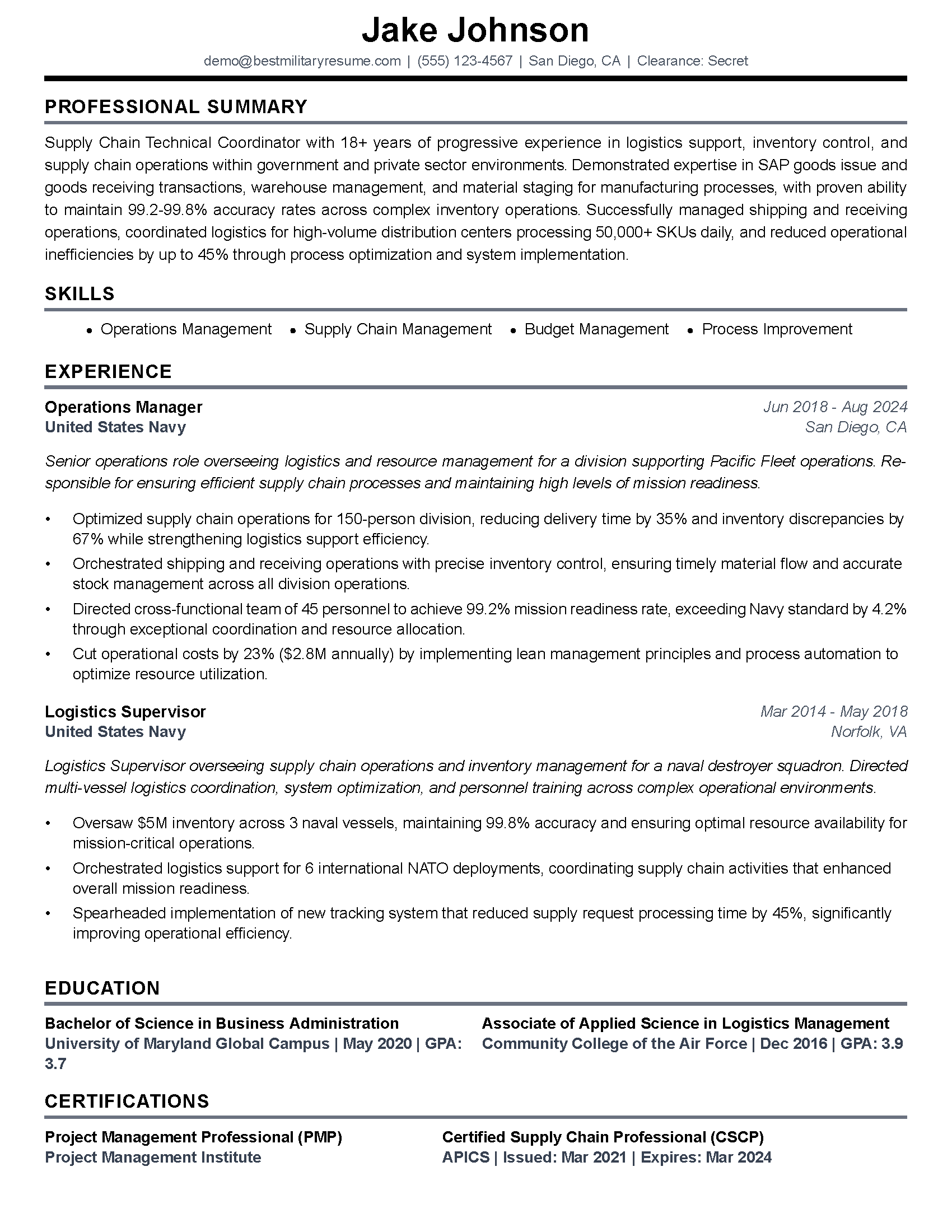
On the resume, give the gap a short line of its own. A labeled break reads better than a silent hole in the dates. A recruiter who sees two blank years will fill them in. Their version is usually worse than the real one.
Medical Leave, 2023 to 2025. Out of work following a lumbar injury from active duty. Three surgeries and eighteen months of physical therapy before clearance to return.
Career Break, 2023 to 2025. Medical recovery. Returned to work part-time in 2025 with a planned ramp back to full-time hours.
Our full walkthrough on disabled veteran resumes and employment gaps goes deeper. It covers the wording and where to place the line.
When Should You Bring Up Work Restrictions?
In most cases, after you have an offer in hand.
You can screen a job for fit without opening a medical conversation. Ask about the schedule, the physical demands, and whether hours flex. Any candidate asks those questions.
Sometimes you need a change to the job to do the job. That is an accommodation request. The EEOC guidance on reasonable accommodation says an employer may have to allow a modified or part-time schedule. The limit is undue hardship on the business.
The underlying rule sits in the ADA at 42 USC 12112, subsection (b)(5)(A). Coverage depends on employer size and on whether your injury counts as a disability under the law. Do not assume every job qualifies.
When you do ask, use job language instead of medical language. "I need a 24-hour week and a seated station" lands better than a list of symptoms.
If you are still weighing the timing, read our piece on disclosing a disability to an employer.
How Do You Make the Part-Time Step Read as Progress?
A hiring manager scanning fast wants one answer. Is this person heading up or heading down?
That call takes seconds. The basics of listing a part-time job live in the guide linked up top. Four moves add the ramp on top of those basics.
Writing the part-time step so it climbs
Put the hours on the line
Write it as Operations Coordinator (part-time, 24 hrs/week). A number stops the guessing.
Write bullets about scope
Say what you owned and what changed because of you. Nobody hires you for your schedule.
Show the ramp in the dates
If hours went from 20 to 32, put both numbers in. Movement is the story you want told.
Aim the title forward
Match the wording to the full-time role you want next, as long as it stays honest.
Numbers do the heavy lifting here. Take a line like "cut order errors from 9 percent to 3 percent over four months." That line reads the same at 24 hours as it does at 40.
Veterans moving from an hourly seat to a salaried one hit a similar wall. Our guide on the hourly to salaried resume rewrite covers that language shift.
You do not have to fight the wording alone. BMR's resume builder tailors your resume to a specific job posting. The free tier covers two tailored resumes and two cover letters.
How Do You Move From Part-Time to Full-Time at the Same Employer?
The easiest full-time job to land is often the one you already do part-time.
They have watched you work. You already know the systems and the people. The risk a manager prices in is much smaller than it is for a stranger.
Five habits move that along.
- Say it in week one: Tell your manager your plan is full-time by a specific month.
- Ask what full-time means here: Which duties, which shift, and whether the headcount exists.
- Take one full-time task early: Own something that usually sits with a 40-hour person.
- Put a check-in on the calendar: A real date beats a vague promise to revisit it later.
- Bring numbers to that meeting: Show what you handled.
A lot of managers will not guess. Some assume part-time is your preference and never bring it up at all.
What If the Ramp Is Not Working?
Two things go wrong most often. The hours never go up, or they go up and it turns out to be too much.
Neither one means the plan failed. It usually means one number needs to change.
If the employer keeps stalling, hold your hours and start looking while you are still employed. A part-time job you already have puts you in a stronger spot.
If the hours climbed too fast, back them down and hold longer before the next step. Talk to your doctor before you change anything on the medical side.
Two other doors are worth knowing about.
Federal hiring has a separate appointment path for people with disabilities. Our Schedule A hiring authority guide walks through how it works and what paperwork it takes.
VA also runs an employment program called Veteran Readiness and Employment, often called VR&E or Chapter 31. It covers training, job-search help, and in some cases help returning to work you did before. Eligibility rules apply, so check with VA directly.
Your First Tuesday Back
Picture a Tuesday in March. You work 9 to 2. You drive home and the day is behind you.
Your manager catches you on the way out and asks if you could cover a Friday next month. You say yes, because you already planned for it.
That is the ramp working. It does not look dramatic from the outside. It is four more hours a week than last quarter and a paycheck that grew.
Key Takeaway
A part-time return only reads as a step down when there is no plan attached to it. Decide your starting hours, your hold time, your step-up trigger, and your target month before you apply. Then write the resume so the direction shows.
Start with the sheet of paper. Four answers, twenty minutes. Then get the resume in shape so the part-time step points where you are going.
When you are ready to put it on paper, build it here. Free for veterans, military spouses, and dependents. No credit card needed.
Frequently Asked Questions
Should I go back to work part-time first after an injury?
How do I explain a long gap caused by an injury?
Do I have to tell an employer about my injury?
Does part-time work look bad on a resume?
Will part-time work affect my VA disability rating?
How do I ask my part-time employer for full-time hours?
What if my employer will not increase my hours?
About the Author
Brad Tachi is the CEO and founder of Best Military Resume and a 2025 Military Friendly Vetrepreneur of the Year award recipient for overseas excellence. A former U.S. Navy Diver with over 20 years of combined military, private sector, and federal government experience, Brad brings unparalleled expertise to help veterans and military service members successfully transition to rewarding civilian careers. Having personally navigated the military-to-civilian transition, Brad deeply understands the challenges veterans face and specializes in translating military experience into compelling resumes that capture the attention of civilian employers. Through Best Military Resume, Brad has helped thousands of service members land their dream jobs by providing expert resume writing, career coaching, and job search strategies tailored specifically for the veteran community.
