Virginia Veteran Employment Resources: V3, MMAC, Virginia Works and More
"Still getting interviews left and right. Now I have to say no."
Taranjeet, E-5, Army, optimized her LinkedIn and resume with BMR
The Virginia veteran employment resources below sit mostly with Virginia Works and the Department of Veterans Services (DVS). Virginia Works says vets "from all periods of military service" can get job, training and placement help. Its vet page also lists a case manager who checks in each month for up to six months.
You'll get 11 programs for Virginia vets, who each one serves and where each one starts.
Virginia's veteran job programs side by side
| Program | Run by | Open to | Where to start |
|---|---|---|---|
| Veteran career support | Virginia Works | Vets from all periods of service, plus those now transitioning | A Virginia Works office, or the Virginia Workforce Connection |
| Priority of Service | Virginia Works | Vets and eligible spouses | Any Virginia Works local office |
| V3 Transition Services | DVS | Transitioning service members, vets and spouses | Request Services on the Virginia Veterans Network, or join the Transition Connection list |
| Boots to Suits | DVS, a V3 Transition partner | Virginia vets within 60 days of separation. Spouses who are job seeking and the main household provider. | The application on the V3 Transition page |
| Military Medics and Corpsmen (MMAC) | DVS | Medics, corpsmen and medical techs, if under 18 months from hands-on clinical care. Military spouses seeking healthcare jobs. | The intake form on the Virginia Veterans Network |
| Hire Vets Now events | DVS and the Virginia Chamber of Commerce Foundation | Transitioning service members, vets and military spouses | The Hire Vets Now events page |
| Registered Apprenticeship | Virginia Works | Individuals who want to learn an occupation as paid employees | Information for Individuals |
| Military Spouse Services | DVS | Military spouses | The intake form on the Virginia Veterans Network |
| DoD SkillBridge | Department of Defense, listed by DVS | Active duty members in their last 180 days of service | The SkillBridge locations page |
| Military Education and Workforce Initiative (MEWI) | DVS | Virginians who served and their spouses | The MEWI page |
| State job preference | Commonwealth of Virginia | Vets, Virginia National Guard members, and the surviving spouse or child of a vet killed in the line of duty | jobs.virginia.gov |
Virginia Works gives vets a case manager for up to six months
Virginia Works lists eight services for vets:
- A check of how ready you are for work, with interviews and tests.
- An Individual Employment Plan made for you.
- Career advice on training and job choices.
- Facts on the job market and occupations, including training.
- Leads to job boards and open jobs.
- Leads to employers and to firms that run apprenticeships.
- Leads to training from WIOA-funded or other outside providers.
- A case manager who checks in each month for up to six months.
Virginia Works also helps those still getting out. To start, go to any office on the Virginia Works locations page. Virginia Works "provides veterans assistance at all of its offices."
The same page sends you to the Virginia Workforce Connection to register as a job seeker. There, vets can search jobs by military occupation. Click "Click Here" next to the American flag, just below the Search button.
One naming note. The DVS Employment and Transition page says this help comes through the Virginia Employment Commission (VEC). The Virginia Works page says the same help comes "through Virginia Works." So if a DVS page says VEC, the Virginia Works offices page is where to look.
Priority of Service puts vets ahead of non-vets
The Priority of Service page covers job and training programs paid for by the U.S. Department of Labor. In those, vets and eligible spouses go first. That covers help to find a job, train and get placed.
For this rule, a vet is someone who served in the active military, naval or air service. The discharge must be under conditions other than dishonorable. Full-time Guard or Reserve duty counts. Full-time duty for training does not.
An eligible spouse is the spouse of one of these:
- A vet who died of a disability linked to service.
- A vet VA rates as totally disabled because of service.
- A vet who died while that total disability was in place.
- An active duty member listed as MIA, captured by a hostile force or held by a foreign power. The listing must total more than 90 days.
Staff "will file search all new job orders" for vets and eligible spouses who qualify. Then they "contact them immediately." It also says "some programs may have additional eligibility requirements."
V3 Transition Services offers peer help on Virginia bases
DVS runs V3 Transition Services. It serves the transitioning service member, vet or spouse. V3 staff work with you and make referrals that fit your needs. These could include:
- Resume review.
- Career coaching and a mentor.
- Hands-on training.
- Paths to earn a credential.
- A link to V3 certified companies for jobs.
Its staff hold office hours and lead classes on bases. They include Fort Gregg-Adams, Fort Belvoir, Quantico and Joint Base Myer-Henderson Hall. They also include Naval Station Norfolk, Joint Base Langley-Eustis and Joint Base Little Creek-Fort Story.
To start, click Request Services. It opens the Virginia Veterans Network. V3 training "is always free and virtual." You can also join its job list newsletter, the Transition Connection.
Boots to Suits gives two career outfits
Boots to Suits is a V3 Transition partner. It gives two free career outfits to Virginia vets moving to civilian jobs. Military spouses who are job seeking and the main household provider can get them too.
The timing rule is tight. You must be "within 60 days of your separation date." To ask, use the Boots to Suits application on the V3 Transition page.
MMAC lets medics and corpsmen keep working on credentials
The MMAC page sets a time rule. It asks if it has been "less than 18 months" since your last hands-on clinical care in uniform. It says a "Combat Medic/68W, Corpsman or Medical Technician/4N0X may be MMAC Qualified."
DVS makes one Virginia-only claim for MMAC:
"Only in Virginia you can continue to practice your clinical skills without the required civilian healthcare credentials"
You do that while you work to earn those credentials. The MMAC team recruits, reviews and refers you to healthcare employers. But DVS says "hiring decisions and scope of practice are up to the employers." Military spouses who want healthcare jobs can use MMAC too.
To apply:
- Click Request Services to open the intake form.
- Click "Employment."
- Pick "Yes" for "Employment Resources and Assistance."
- Pick "Healthcare" or "Healthcare Pharmaceuticals" as your "Industry of Interest."
DVS says MMAC staff reply within 48 hours. Our medic and corpsman resume guide helps with the resume side.
Hire Vets Now runs hiring events on Virginia bases
DVS and the Virginia Chamber of Commerce Foundation host Hire Vets Now. Transition offices on bases help. DVS says the events bring vets, spouses and those still in uniform together with V3 certified firms.
The Hire Vets Now events page lists a Dec 3, 2026 event at Naval Station Norfolk. It runs from 11:00 to 1:00. The page also lists nine bases with their own pages, from Quantico to Oceana. Our job fair prep guide covers what to bring.
Registered Apprenticeship pays you while you learn
Virginia Works says Virginia firms train about 14,000 apprentices each year. They work in over 300 approved jobs. Those run from building and plant work to health care and IT.
For you, that means a full-time, paid job. You learn next to the employer's skilled workers. Your pay goes up as you learn. You also earn a certificate known across the nation. Start with the Information for Individuals page. Our vet apprenticeship guide compares trade paths.
Military spouses get their own V3 and license help
The DVS spouse page says V3 can help spouses look at new careers. It can also help them get back to work. To get matched with a coordinator, fill out the intake form on the Virginia Veterans Network.
The DVS Military Spouse Services team helps spouses get a professional work license in Virginia. It explains the licensing compacts Virginia is part of. It also points you to the right board and its forms. You ask for this help through the same intake form.
SkillBridge and MEWI round out the DVS list
DVS lists DoD SkillBridge. It says active duty members can gain civilian work experience in their last 180 days of service. Find Virginia openings on the SkillBridge locations page. Our SkillBridge resume guide covers the application.
DVS also lists the MEWI page. DVS says MEWI helps Virginians who served, and their spouses, find better jobs. It does that through school, training, certs and tech.
State jobs with a written exam add 5 or 10 percent to a passing score
Code of Virginia 2.2-2903 covers state jobs. Some state jobs use a written exam. On those, a vet who passes gets five percent added to the grade. A vet with a VA service-connected rating gets 10 percent instead.
For a job with no exam, a vet gets preference in the selection. The vet must meet "all of the knowledge, skill, and ability requirements."
A vet needs an honorable discharge. You also need one of two things. One is more than 180 days in a row of full-time active duty. The other is a VA service-connected rating.
Virginia National Guard members have their own rules. The surviving spouse or child of a vet "killed in the line of duty" also qualifies. A child must be under 27.
Our guide to how Virginia veterans preference works on a state application walks through each question.
Pages checked November 2026. DVS program details come from 2026 copies of its pages.
Several programs above lead to a job posting. Paul, an Air Force Master Sergeant (E-7), told BMR:
"I landed a recruiting role for an international electronics company. I used your site to build a resume that reflected my recruiting and mechanical/electrical background."
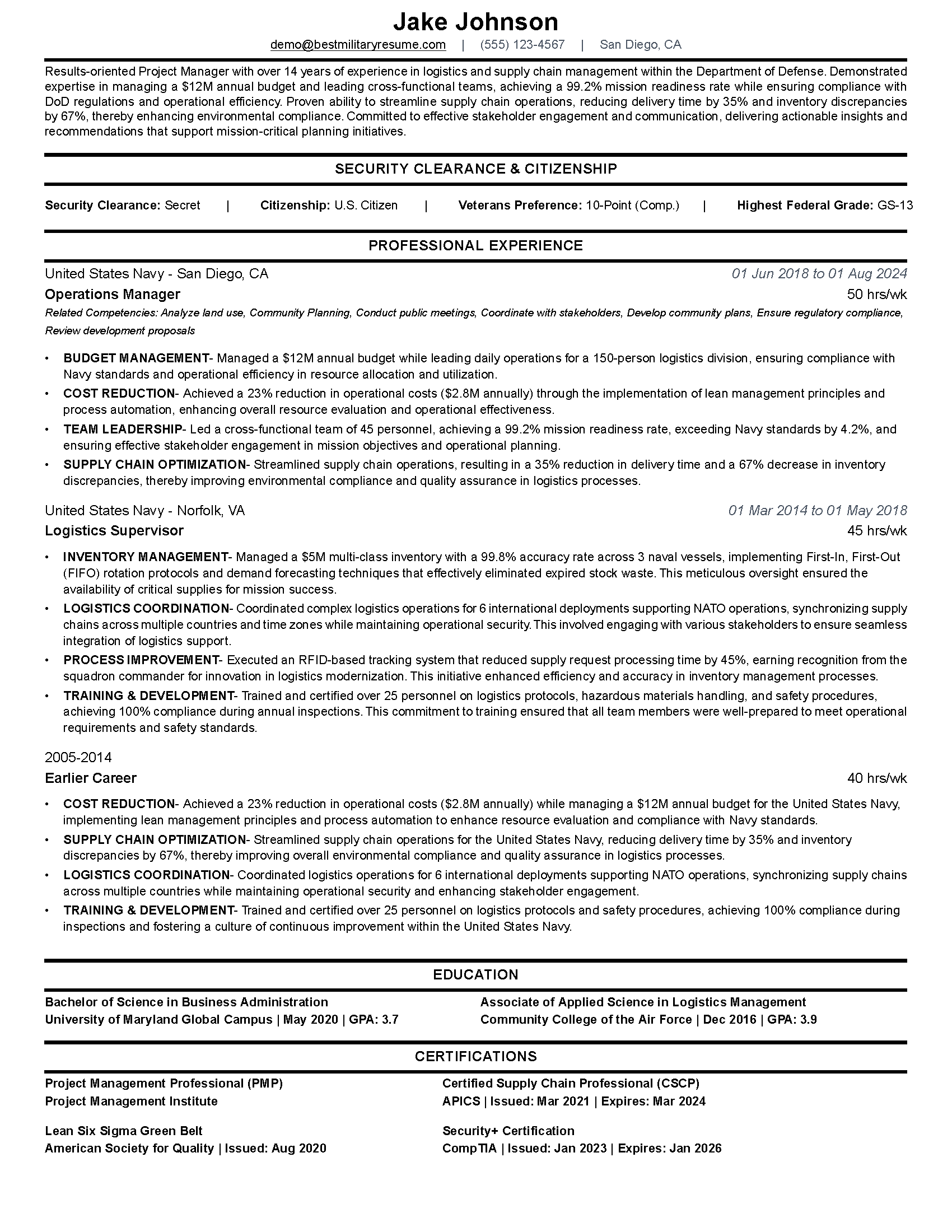
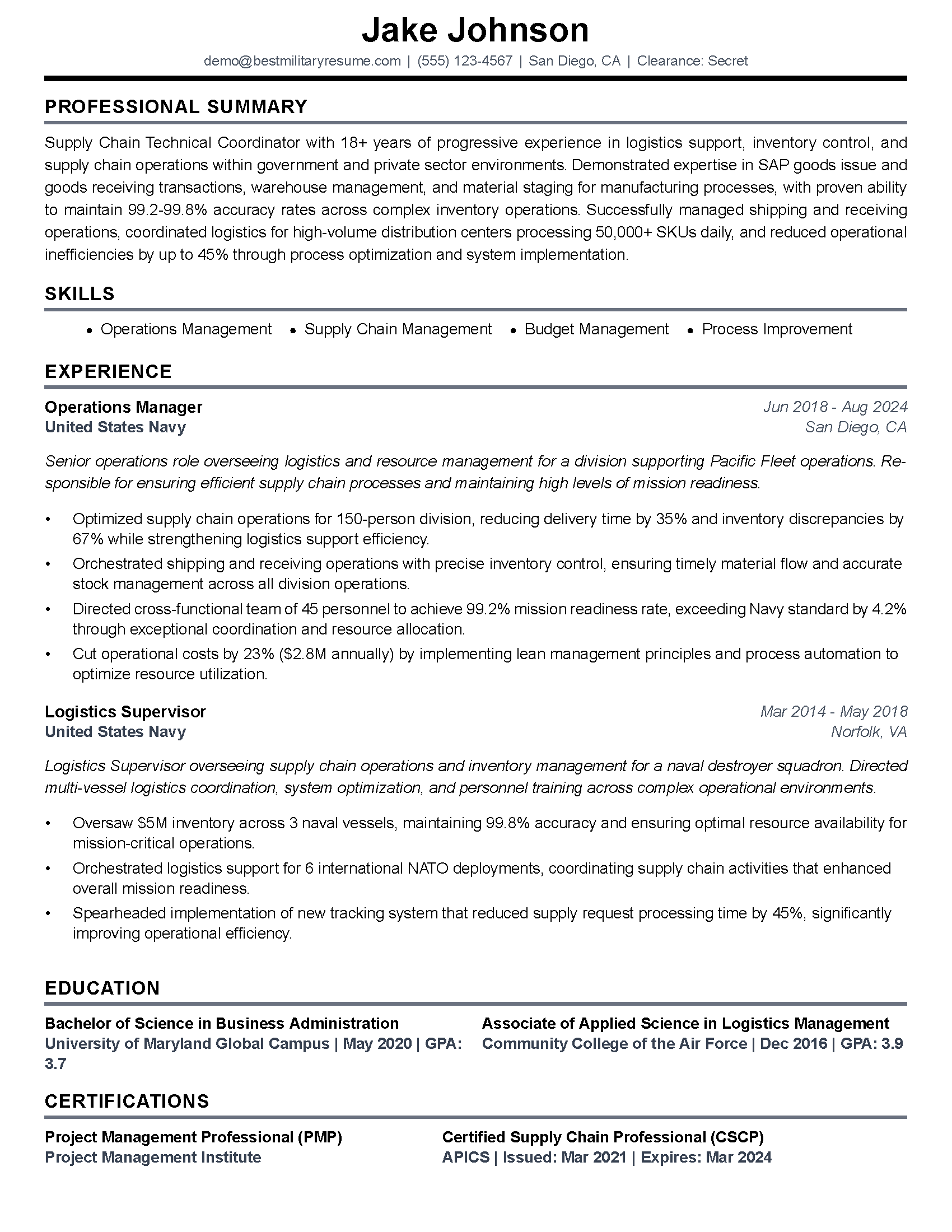
Save one full Virginia Works, Transition Connection or Hire Vets Now employer posting. Then open the military resume builder, sign in and paste the posting. From the posting, the builder tailors your resume for that one Virginia job.
Frequently Asked Questions
What does V3 certified mean on a Virginia job post?
Who handles unemployment claims for Virginia vets?
Can a military spouse use an out-of-state license in Virginia?
Does Virginia law ban job bias against military spouses?
About the author
Brad Tachi is the CEO and founder of Best Military Resume and a 2025 Military Friendly Vetrepreneur of the Year award recipient for overseas excellence. A former U.S. Navy Diver with over 20 years of combined military, private sector, and federal government experience, Brad brings unparalleled expertise to help veterans and military service members successfully transition to rewarding civilian careers. Having personally navigated the military-to-civilian transition, Brad deeply understands the challenges veterans face and specializes in translating military experience into compelling resumes that capture the attention of civilian employers. Through Best Military Resume, Brad has helped thousands of service members land their dream jobs by providing expert resume writing, career coaching, and job search strategies tailored specifically for the veteran community.
