Insurance Producer License for Military Spouses: Two Routes After a Move
Luana, a military spouse, landed a Staff Policy and Procedures Analyst role.
Luana, military spouse, policy and procedures analyst
A military spouse who moves can keep an insurance producer license and add a new state's nonresident license. Or ask the new state's insurance department whether it will honor your license under federal law, 50 U.S.C. 4025a, which names no insurance rule. You get both routes, one state's reciprocity text, Texas's spouse rules, the online form and a move checklist.
Nonresident license or federal law: which route fits your move?
The nonresident route keeps your old state as home. You add the new state on top. The application path is the National Insurance Producer Registry (NIPR). Its site takes applications for your home state or added states.
The federal route asks the new state to treat your license as valid there. It covers a spouse who moves because the service member got military orders.
Our advice: if your old state stays your legal home, start with the nonresident license. If you are changing your home state, ask about the federal route too. You can ask the new state about both on the same call.
How reciprocity works between two insurance departments
Reciprocity means a state eases its rules for you if your home state returns the favor. Each state writes its own version. Our state-by-state license reciprocity guide covers the wider rules for spouses in many professions.
Arizona's text is a clear example. Under Arizona Revised Statutes 20-300, part A says the director "shall waive any requirements" for a nonresident applicant. You need two things. You must hold "a license in good standing from the applicant's home state." Your home state must also issue nonresident licenses to Arizona residents "on the same basis."
Part B covers continuing education (CE). If you meet your home state's CE rules, Arizona counts them too. That holds only when your home state treats Arizona's producers "on the same basis."
Part A still keeps the rules in section 20-287. So read the fine print in any state's text, not just the waiver.
So good standing at home opens the nonresident door. Keep that license active and your CE current before you pack.
What 50 U.S.C. 4025a adds for a licensed spouse
The federal law is part of the Servicemembers Civil Relief Act (SCRA). Congress rewrote it on December 23, 2024. Its core line is in section (a). A covered license "shall be considered valid for the scope of practice in the State of the new residence."
That holds once you file the papers the law lists. Our dental hygiene license transfer guide lists that packet in full, so it is not repeated here.
Say the state cannot act within 30 days of your application. Then it "may issue" a temporary license. It carries the same rights as a full one.
Does the law reach insurance? Section (f)(2) calls a license "any license, certificate, or other evidence of qualification." It means one you must hold to work in "a particular profession." That's broad. But the law names no insurance rule.
So confirm with the new state's insurance department that it applies this law to producer licenses. Do it before you quote policies there. That step is BMR's advice, since the law is silent on insurance.
Texas, worked through: fees, papers and speed for a spouse
The Texas Department of Insurance (TDI) has a page for military families in insurance. TDI's page shows "Last updated: 10/9/2026." Four lines on it matter to a spouse.
- No application fee. TDI says "military spouses don't have to pay Texas insurance license application fees." The same goes for members and veterans.
- A route for nonresidents. "Nonresidents deployed in Texas can qualify for licensure." You need "a similar license in good standing in another state." Your application must show "the relocation orders." The line speaks of people deployed, not spouses, so ask TDI if it covers you.
- What to send. TDI asks for "proof of Texas residency, your military identification, and your insurance license from your home state."
- How fast. TDI says to email it for a copy of the military application, then adds, "It typically takes one business day to process." The page does not say whether that is the copy or the license. Ask TDI when you request it.
The same page lists a CE break and an exam-fee refund. Those two are for service members and veterans, not spouses.
Notice the mix. TDI's route speaks of nonresidents, but its list asks for proof of Texas residency. Our advice: ask TDI which papers fit your case before you mail anything.
Filing the nonresident license through NIPR
NIPR's apply page explains the split between "a license as a resident versus a non-resident." It also lists what the form will ask you for:
- Your license number or National Producer Number, if you were licensed before.
- Your Social Security Number (SSN) if this is your first license. Or give a Federal Employer Identification Number (FEIN) instead.
- Your date of birth.
- Your applicant, license and residency type.
- A way to pay online, such as a card or an electronic check.
NIPR says, "States typically take 7 to 10 days to review applications." If a state asks for papers, such as your orders, you upload them through NIPR's Attachment Warehouse.
Fees differ by state. Our guide to license transfer reimbursement covers who may pay some of them back.
Your move checklist, from orders to a new home state
This list is BMR's advice, in the order a move happens.
Before the move
- Write down your license number and National Producer Number.
- Finish any CE due in your home state, so your license stays in good standing.
- Keep copies of the orders and your marriage certificate in one folder.
- Read the new state's insurance page for a spouse route.
The week you arrive
- File the nonresident application through NIPR, or the federal law application with the department.
- If you filed through NIPR, upload any papers the state asks for through the Attachment Warehouse. If you filed under the federal law, send them the way the department tells you.
- If you filed under the federal law, ask whether a temporary license is an option.
When you change your resident state
- Ask the new state how to switch from a nonresident to a resident license.
- Ask your old state what happens to the license you leave behind.
- Update your address with every state that licenses you.
Show every state license on the resume you send
O*NET puts the 2025 median wage for insurance sales agents at $62,280. It rates growth through 2035 as "Average (3% to 4%)." Our military-to-insurance career guide covers the career side.
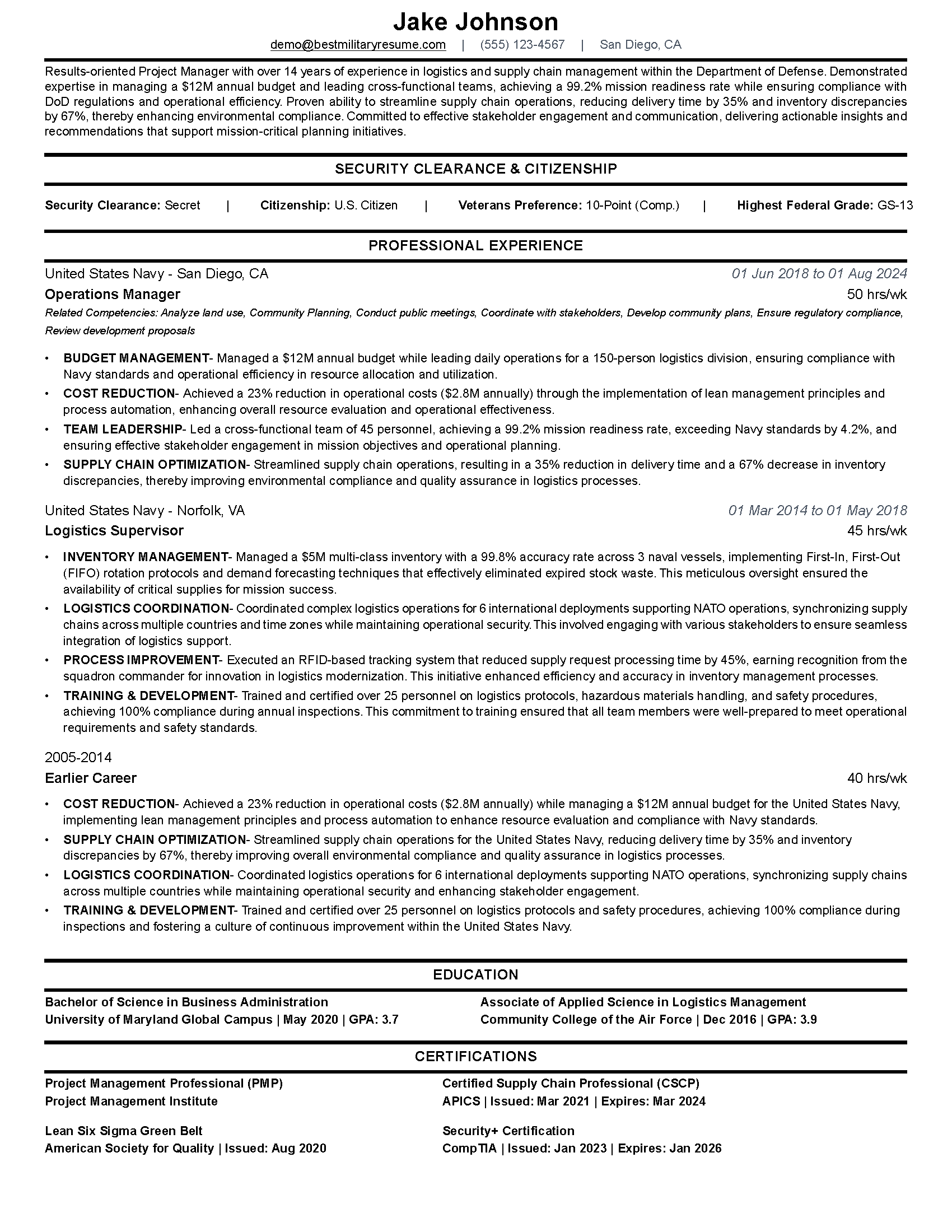
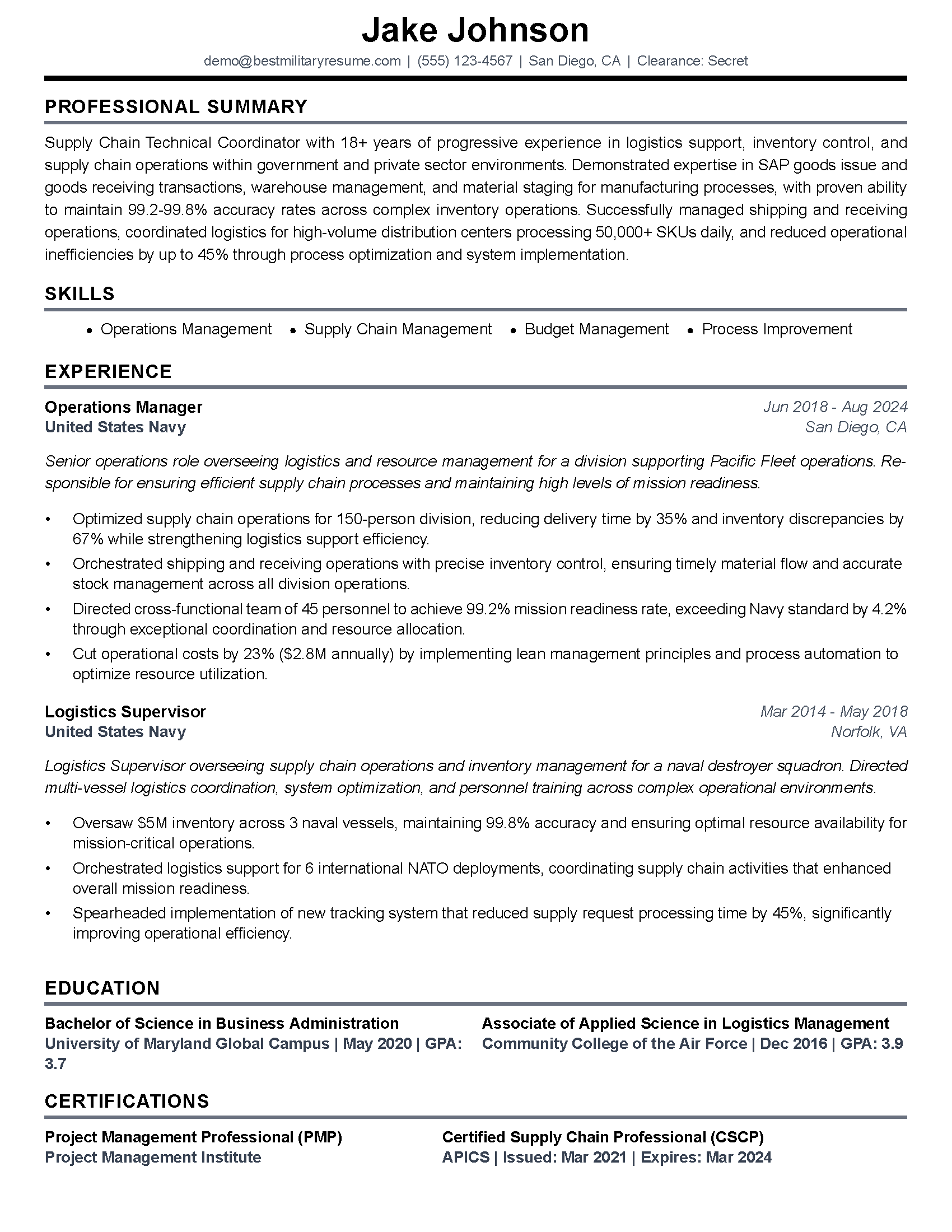
On the resume, name each state, the license type and whether it is active. A hiring agency can then see where you can sell today.
BMR has helped 25,721 veterans and military spouses, and 79,061 resumes have been built on it. Open BMR's Resume Builder with an agency's posting in hand. It lines up your state licenses and sales wins with that job. A spouse's free start covers one federal and one private tailored resume.
Sources, as of November 2026: the U.S. Code on govinfo, Arizona's legislature, TDI, NIPR and O*NET.
Frequently Asked Questions
What makes a license a covered license under 50 U.S.C. 4025a?
Can a state run a background check before it honors my license under the federal law?
Can I take a Texas insurance exam on a military base?
About the author
Brad Tachi is the CEO and founder of Best Military Resume and a 2025 Military Friendly Vetrepreneur of the Year award recipient for overseas excellence. A former U.S. Navy Diver with over 20 years of combined military, private sector, and federal government experience, Brad brings unparalleled expertise to help veterans and military service members successfully transition to rewarding civilian careers. Having personally navigated the military-to-civilian transition, Brad deeply understands the challenges veterans face and specializes in translating military experience into compelling resumes that capture the attention of civilian employers. Through Best Military Resume, Brad has helped thousands of service members land their dream jobs by providing expert resume writing, career coaching, and job search strategies tailored specifically for the veteran community.
