How to Start SFL-TAP Early: Getting Command Approval 24 Months Out
Justin was hired during terminal leave. "The best resume I have ever seen."
Justin, E-7, Air Force, network engineering, named his number and got it
I separated from the Navy in 2015. My transition plan started about 90 days before my EAS, which is roughly when somebody in my chain mentioned SFL-TAP. Ninety days. That gave me enough time to attend one rushed class, produce a generic resume that did nothing for me, and walk out the gate with zero job prospects. I spent the next year and a half applying to federal jobs with no callbacks.
If you are reading this with 18 to 24 months left on your contract, you have something I did not have: time. And the single best thing you can do with that time is start the formal transition process now, not when your command gets around to mentioning it.
This article breaks down exactly when you can start SFL-TAP (and its branch-specific equivalents), how to get command approval early, and the milestone timeline that puts you in the strongest possible position on separation day. Whether you are Army, Navy, Marines, or Air Force, the framework is the same -- the paperwork just has different names.
What Is SFL-TAP and When Can You Actually Start It?
SFL-TAP stands for Soldier for Life -- Transition Assistance Program. That is the Army name. The Navy calls it TAPS (Transition Assistance Program Seminar). The Marine Corps runs TRS (Transition Readiness Seminar). The Air Force has TAP as well, though the approval chain looks different.
Regardless of your branch, the Department of Defense policy under DoDI 1332.35 says you can -- and should -- begin the transition process no later than 365 days before your separation date. But the policy also allows you to begin up to 24 months out with command approval. That second part is the key. Most commands will not volunteer this information. You have to ask for it and know the policy well enough to push back if someone tells you it is too early.
At the 24-month mark, you will not be sitting in a classroom yet. What you will be doing is completing your Individual Transition Plan (ITP), getting your initial counseling, and setting the administrative wheels in motion. The formal classroom instruction (the 5-day TAP workshop) typically happens within 12 months of separation. But the earlier you establish your timeline with your command, the more flexibility you have for everything that comes after -- including SkillBridge command approval.
Why Starting at 24 Months Changes Everything
There is a compounding effect to starting early that people underestimate. At 24 months, you are not panicking. You are not trying to squeeze a career change into a 90-day window while still closing out your division. You have breathing room to do this right.
Here is what early starters can do that 90-day starters cannot:
- Stack credentials. Twenty-four months is enough time to finish a certification, a degree program, or both. If you are an E-5 Logistics Specialist eyeing supply chain management jobs, you can complete a PMP or CSCP before you separate. Try doing that in 90 days.
- Build a real network. Not the LinkedIn-spray-and-pray kind. Attending industry events, connecting with hiring managers in your target field, and doing informational interviews -- all while you still have a stable paycheck.
- Apply to SkillBridge programs with time to spare. SkillBridge eligibility requirements include having 180 days of service remaining. But the application and approval process can take 4-6 months. If you start that conversation at 12 months out, you are already behind. At 24 months, you can research programs, talk to alumni, and have your application ready before the clock even matters.
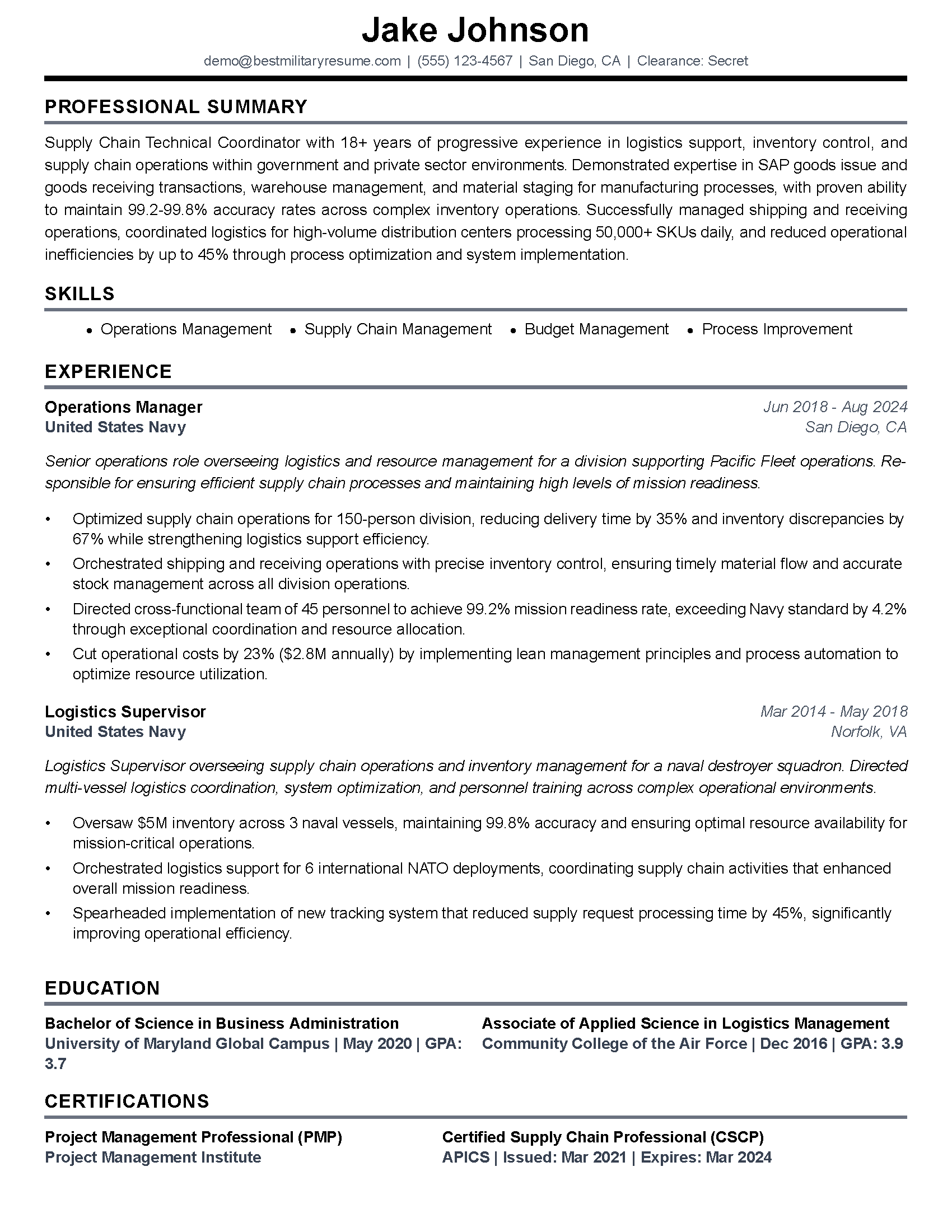
- Write a resume that actually works. I have seen thousands of veterans through BMR rush their resumes in the last two weeks before separation. Those resumes read like they were written in two weeks. Starting early means you can tailor your resume to specific roles, test it against real job postings, and refine based on what gets responses.
"I built BMR because my own transition was a disaster. Ninety days is not enough time to figure out what you want to do, learn how to communicate it, and land a job. Twenty-four months is."

How to Get Command Approval to Start Early
This is where people get stuck. Your first sergeant, chief, or OIC may not be familiar with the 24-month provision. They may tell you to wait. That does not mean you have to.
Know the Policy Before You Ask
DoDI 1332.35 (Transition Assistance Program for Military Personnel) is your reference. It establishes that service members may begin transition activities up to 24 months before separation. Your command can approve early participation -- they cannot deny the mandatory components within 365 days, but the 24-month window is commander-discretionary. Having the instruction number ready when you walk in matters.
Frame It as Mission Readiness
Nobody wants to hear "I am checking out early." That is not what starting SFL-TAP at 24 months means, but that is how some leaders will interpret it. Frame your request around readiness: you want to complete administrative requirements ahead of time so that your final months are focused on mission, not on scrambling through transition paperwork. Most commanders respond well to that approach because it is true -- early starters are less distracted in their final year, not more.
Put It in Writing
A verbal conversation is a start. But get something on paper. In the Army, this means a DA-4187 (Personnel Action) requesting early SFL-TAP enrollment. Navy uses a special request chit. Marines use the same IPAC-routed request process. Air Force members route through their chain using the appropriate AF Form series. The key is documentation. A signed approval memo protects you if leadership changes midway through your timeline.
Command Approval Uses Military Forms, Not Resumes
Your resume is for employers. Command approval for SFL-TAP, SkillBridge, and other transition programs uses military administrative forms (DA-4187, special request chits, etc.). These are two separate processes -- do not confuse them.
The 24-Month Transition Timeline: What to Do and When
Here is a milestone-by-milestone breakdown. Your branch-specific paperwork will vary, but these benchmarks apply across all services.
24 Months Out -- Initiate and Plan
Request command approval to start early. Complete initial counseling with your installation transition office. Begin your Individual Transition Plan (ITP). Start researching target careers and required credentials.
18 Months Out -- Build Credentials
Enroll in certification programs or college courses using TA. Begin networking in your target industry. If SkillBridge is your plan, start identifying specific programs and talking to participants who have completed them.
12 Months Out -- Formal TAP and Resume Work
Attend the 5-day TAP workshop. Start building your civilian resume (not the TAP version -- a real, tailored resume). Complete any elective tracks (Higher Education, Career Technical Training, Entrepreneurship). Submit SkillBridge application if applicable.
6 Months Out -- Apply and Interview
Begin active job applications. Tailor your resume to each specific posting. Practice interviews. If doing SkillBridge, you should be approved and preparing to start your program. File for VA disability evaluation if applicable.
90 Days Out -- Finalize Everything
Complete final out-processing. Confirm job offer details and start dates. Finalize housing, benefits enrollment, and any remaining administrative items. You should be wrapping up, not starting.
If you are in the Army and want the detailed month-by-month breakdown, I wrote a full guide on the SFL-TAP Army timeline from start to finish.
How Each Branch Handles Early Transition Differently
The DoD policy is the same across branches, but execution varies. Knowing your branch-specific process saves you from getting the runaround.
Army: SFL-TAP
The Army has the most structured transition program. SFL-TAP centers exist on most major installations. You will complete a pre-separation counseling session (DD Form 2648), build your ITP, attend the 5-day workshop, and choose an elective track. The Army mandates that soldiers begin no later than 365 days out, but 24-month early starts require first-line leader approval routed through your battalion. The DA-4187 is your friend here -- get it signed and filed.
Navy: TAPS
The Navy calls it TAPS and runs it through Fleet and Family Support Centers. Navy-specific: your Career Development Board should incorporate transition planning, and your command career counselor (CCC) is supposed to help coordinate your timeline. In practice, some CCCs are excellent and some have never processed an early start. If yours has not, bring the DoDI 1332.35 reference and a special request chit already drafted. Navy also has unique considerations around sea duty rotations -- if you are deploying within your final 24 months, starting early is even more critical because you may miss your window otherwise.
Marine Corps: TRS
Marines complete the Transition Readiness Seminar (TRS) through Marine Corps Community Services (MCCS). The Marine Corps has historically been the tightest on early releases, and getting command buy-in for starting at 24 months can require more effort. The key is your unit readiness. If you can show that early planning does not impact your unit, most company-grade commanders will approve. Submit through your administrative chain and make sure your IPAC is tracking.
Air Force: TAP
The Air Force runs TAP through the Airman and Family Readiness Centers. Recent Air Force SkillBridge timeline changes have shifted some approval requirements. For TAP itself, the AF is generally more flexible with early starts, especially for members with confirmed separation dates. Route your request through your supervisor and ensure your vMPF reflects your separation date accurately -- the system uses that date to determine eligibility windows.
- •Time to earn certifications while on active duty
- •SkillBridge application submitted with zero rush
- •Resume tested against real postings before separation
- •Network built over months, not days
- •Generic TAP resume with no tailoring
- •SkillBridge window already closed
- •Applying to jobs cold with no industry contacts
- •Scrambling through final outprocessing and job search simultaneously
How SFL-TAP Connects to SkillBridge (and Why the Timing Matters)
SFL-TAP and SkillBridge are separate programs, but they overlap in your timeline. SFL-TAP is the mandatory transition training. SkillBridge is an optional internship program that lets you work with a civilian employer during your last 180 days of service while still receiving military pay and benefits.
Here is why the timing connection matters: many commands will not approve SkillBridge until you have completed your SFL-TAP requirements. If you wait until 12 months out to start TAP, and then start your SkillBridge application at the same time, you are compressing two major processes into one window. Commands get nervous about that. They see an unfinished transition checklist and a request to leave the unit for 6 months, and the answer becomes no.
By starting SFL-TAP at 24 months, you can have your mandatory TAP requirements complete by the time you submit your SkillBridge application at 12 months. That gives your command confidence that you are squared away and makes the approval conversation much easier. For a deeper look at the full SkillBridge application process, check out our complete SkillBridge program guide.
The resume you use for SkillBridge applications goes to the employer, not your command. That is an important distinction. Your command approval process uses military forms -- DA-4187, special request chits, or the equivalent for your branch. Your SkillBridge resume targets the company you want to intern with, and it needs to be translated from military to civilian language just like any other employer-facing resume.
What TAP Actually Gives You (and Where It Falls Short)
TAP instructors are trying. Many of them are veterans themselves, and they genuinely want to help. The curriculum covers resume basics, interview preparation, financial planning, VA benefits briefings, and the DoL Employment Workshop. You will walk away with a first draft of a resume and some understanding of how civilian hiring works.
Where it falls short is customization. TAP produces one generic resume. One. It does not teach you how to tailor that resume to specific job postings, which is the single most important thing you can do to get interviews. The resume you build in TAP class will cover your duties in broad strokes. What it will not do is match keywords from a specific GS-11 Logistics Management Specialist announcement or a project manager role at a defense contractor.
That gap between "I have a resume" and "I have a resume that gets me interviews" is exactly why starting early matters. You need time after TAP to refine, tailor, and test your resume against real postings. If TAP is the last thing you do before separating, that refinement never happens.
Key Takeaway
TAP gives you a foundation. It does not give you a finished product. The veterans who land jobs before separation day are the ones who used TAP as a starting point and then spent months refining their materials for specific roles.
Common Mistakes That Delay Your SFL-TAP Start
After helping over 15,000 veterans through BMR, I see the same patterns from people who started late and wished they had not.
Waiting for someone to tell you. Your chain of command is focused on mission. Transition planning is on their radar, but it is not their top priority. If you wait for your platoon sergeant or chief to bring it up, you will be at 6 months or less before anyone mentions it. Own your timeline.
Assuming you cannot start before 365 days. The 365-day mandatory window is when your command must allow you to begin. The 24-month window is when they can allow you to begin. These are different things. Some commands will push back on early starts because they do not know the policy allows it. Come prepared with the DoDI reference.
Not documenting your approval. Verbal approvals mean nothing when your platoon leader PCSes and the new one has no idea you were approved to start TAP early. Get it in writing. Every time.
Treating TAP as the whole plan. TAP is one component. It checks an administrative box. Your actual transition plan should include networking, credential stacking, resume tailoring, interview practice, and job applications -- all of which happen outside the TAP classroom. If your entire plan is "attend TAP," you are underprepared.
What to Do Next
If you have 18 to 24 months left, here is your immediate action list:
- Look up DoDI 1332.35 and identify the section on early transition participation. Have it ready before you talk to your chain.
- Draft your request. DA-4187, special request chit, or whatever your branch uses. Have it pre-filled before you walk in. Make it easy for your commander to say yes.
- Schedule your initial counseling with your installation transition office. This is the first administrative step and it locks your timeline into the system.
- Start building your resume now. Not after TAP. Now. Use BMR's SFL-TAP transition resources to understand what your resume actually needs to say. Then use the Resume Builder to translate your military experience into language that hiring managers and ATS platforms can actually work with.
- Research SkillBridge programs if an internship fits your goals. Our list of best SkillBridge programs ranked by hire rate is a good starting point. Get familiar with what is available before you need to apply.
The difference between veterans who land jobs before separation and veterans who spend months unemployed after is almost always timing. Not talent, not qualifications -- timing. Start your SFL-TAP process now, and you give yourself the one thing that makes everything else work: enough time to do it right.
Frequently Asked Questions
Can you start SFL-TAP 24 months before separation?
How do you get command approval to start TAP early?
What is the difference between SFL-TAP, TAPS, TRS, and TAP?
Does SFL-TAP give you a finished resume?
How does SFL-TAP connect to SkillBridge?
What happens if you wait until 90 days before separation to start TAP?
Do you need a resume for SFL-TAP command approval?
About the Author
Brad Tachi is the CEO and founder of Best Military Resume and a 2025 Military Friendly Vetrepreneur of the Year award recipient for overseas excellence. A former U.S. Navy Diver with over 20 years of combined military, private sector, and federal government experience, Brad brings unparalleled expertise to help veterans and military service members successfully transition to rewarding civilian careers. Having personally navigated the military-to-civilian transition, Brad deeply understands the challenges veterans face and specializes in translating military experience into compelling resumes that capture the attention of civilian employers. Through Best Military Resume, Brad has helped thousands of service members land their dream jobs by providing expert resume writing, career coaching, and job search strategies tailored specifically for the veteran community.
