Loading...
Loading...
The civilian and federal jobs that hire Air Force Aircrew Flight Equipments — with real salaries and the resume that gets callbacks.
Every 1P0X1 has more options than a Google search will tell you. Below: career paths, BLS salary data, federal GS series, certifications by target career, and how to translate your experience without losing what made you valuable to the Air Force in the first place.
Free · No credit card · Tailored resume in under 5 minutes
After the Navy I got hired into 6 federal career fields and tech sales, and sat on federal hiring panels along the way. I spent the last 2 years rebuilding everything I learned into BMR, tuned for how AI actually screens resumes today. This is the system I wish I'd had on day one.
If you held the 1P0X1 Aircrew Flight Equipment (AFE) AFSC, you owned the gear that keeps aircrew alive when the aircraft stops cooperating. You inspected, packed, fit, and maintained the full life-support inventory: ejection-seat and personnel parachutes, oxygen masks and aircrew oxygen systems, flight helmets and helmet-mounted devices, night-vision goggle mounts, anti-G suits, life rafts and life preservers, survival kits and survival vests, and aircrew chemical-biological defense ensembles. Every one of those items is a life-critical system inspected on a published schedule, documented to the serial number, and signed off under your name.
The work runs on hard technical knowledge, not generic "attention to detail." You learned how temperature and humidity change parachute fabric, how heat and solvents degrade rubber components in oxygen and flotation gear, how to safely handle pyrotechnics in survival kits and rafts, and how to torque, leak-check, and flow-test an oxygen regulator before it ever reaches a cockpit. The training pipeline runs through the AFE technical school at Sheppard AFB, then hands-on upgrade training tracked in the CFETP at your first AFE shop, supporting platforms from fighters and bombers to airlift, tankers, and helicopters.
Civilian employers value this background because it is equipment-systems work performed against a documented compliance standard, where a missed step has a body count. That maps cleanly onto aircraft maintenance, calibration, safety, and equipment-engineering roles. If you want to see how your specialty lines up against other paths, start with the military career crosswalk tool. AFE shops sit inside the broader maintenance world, so it is worth looking at adjacent Air Force maintenance paths too, and the EPR/OPR translation guide helps you pull accomplishments off your evaluations.
My federal background was in environmental and engineering work, and that is exactly the lens I would point a 1P0X1 through. Life-support equipment maintenance is engineering-technician work with a safety mandate. You inspect to a spec, document to a serial number, and certify a system as airworthy. Federal equipment-services and safety series exist for precisely that discipline, and the clearance plus the airworthiness paper trail is a combination hiring managers rarely see from a civilian applicant. — Brad Tachi, Navy Diver veteran & BMR founder
The number that matters when you're deciding what's next: how does civilian pay compare to what you make now?
Military comp is approximate (varies by location/dependents). Civilian is BLS median. Federal includes locality pay. Your real number depends on duty station, family status, GS step, and overtime.
The most direct civilian translation of AFE work is aircraft and equipment maintenance under an airworthiness or quality standard. Aircraft Mechanics and Service Technicians earned a median of $78,680 in May 2024 (BLS OEWS), and Avionics Technicians a median of $81,390, both strong fits for someone who already works to maintenance specs and signs inspection records. An FAA Airframe rating opens these doors fastest.
Outside aircraft, the same inspection-and-certification skill set pays in calibration, manufacturing quality, and industrial maintenance. Calibration Technologists and Technicians earned a median of $65,040, Industrial Machinery Mechanics $63,510, and Quality Control Inspectors $47,460 (all BLS OEWS May 2024). Medical Equipment Repairers, a precision role inspecting and certifying life-critical devices that closely mirrors AFE oxygen and life-support work, earned a median of $62,630. The safety side of the house translates too: Occupational Health and Safety Technicians earned a median of $58,440.
Be honest about the market. The strongest aircraft-maintenance hiring sits near major airline hubs, MRO (maintenance, repair, and overhaul) centers, and defense aviation depots, so geography matters. Calibration and quality roles are spread more evenly across manufacturing regions. Many of these jobs reward the FAA A&P certificate or a metrology/quality credential more than a four-year degree, which favors a veteran who can stack experience and a cert quickly. Aviation veterans from other branches compete for the same roles, so it is worth seeing how the field looks from the Navy Aircrew Survival Equipmentman (PR) and Coast Guard Aviation Survival Technician paths, which share the life-support equipment mission. When you are ready to put this on paper, the military resume builder turns AFE inspection work into civilian maintenance language, or you can build your resume now.
| Civilian Job Title | Industry | BLS Median Salary | Outlook | Match |
|---|---|---|---|---|
Aircraft Mechanic and Service Technician O*NET: 49-3011.00 | Aviation Maintenance | $78,680 | 5% (Faster than average) | strong |
Avionics Technician O*NET: 49-2091.00 | Aviation Maintenance | $81,390 | 5% (Faster than average) | strong |
Calibration Technologist and Technician O*NET: 17-3028.00 | Metrology & Quality | $65,040 | 4% (As fast as average) | strong |
Industrial Machinery Mechanic O*NET: 49-9041.00 | Industrial Maintenance | $63,510 | 13% (Much faster than average) | strong |
Medical Equipment Repairer O*NET: 49-9062.00 | Healthcare Equipment | $62,630 | 17% (Much faster than average) | strong |
Occupational Health and Safety Technician O*NET: 19-5012.00 | Safety & EHS | $58,440 | 5% (Faster than average) | moderate |
Quality Control Inspector O*NET: 51-9061.00 | Manufacturing | $47,460 | -3% (Decline) | moderate |
BMR rewrites your 1P0X1 experience for any of the civilian roles above — keywords, achievements, and language hiring managers actually scan for.
Free · No credit card · 2 tailored resumes included
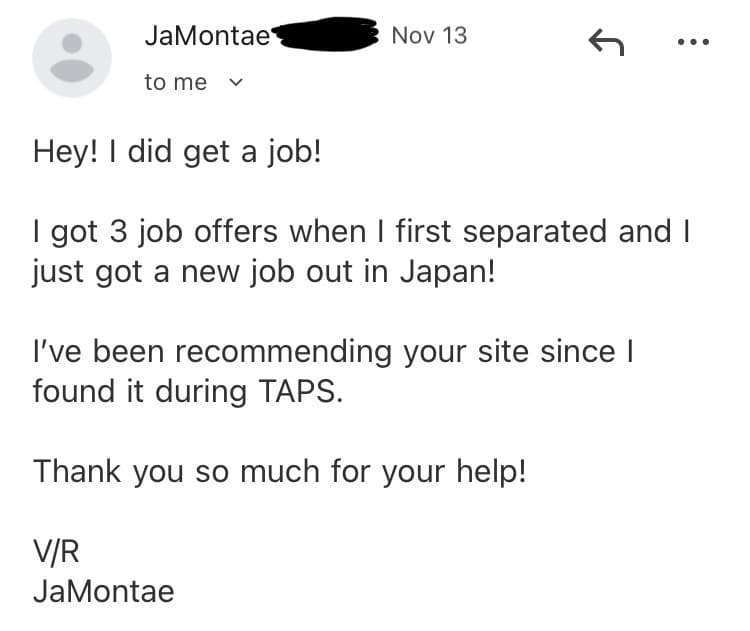
“Hey! I did get a job! I got 3 job offers when I first separated and I just got a new job out in Japan! I’ve been recommending your site since I found it during TAPS. Thank you so much for your help! V/R JaMontae ”
Federal service is where AFE experience converts with the least friction, because the government already classifies equipment-inspection and safety work into defined series. The cleanest match is GS-1670 Equipment Services, which covers the inspection, fitting, maintenance, and accountability of personal protective and life-support equipment. That is the AFE job, reclassified onto the federal pay scale, and it sits across DoD components that operate aircraft.
On the aircraft side, the WG-8852 Aircraft Mechanic wage-grade series covers hands-on airframe and component work at depots and air logistics complexes. If you lean toward the safety and engineering-technician path, GS-0019 Safety Technician and GS-0018 Safety and Occupational Health Management reward the hazard-control and airworthiness-compliance side of AFE, while GS-0802 Engineering Technician and GS-0803 Safety Engineering fit those who pursue an associate degree or build documented technical depth. For the optics and night-vision portion of the inventory, GS-3306 Optical Instrument Repair is a genuine match, and GS-1601 General Facilities and Equipment covers broader equipment-program roles.
Veterans' Preference adds 5 or 10 points to your rated score and can be decisive at the referral stage, but it never replaces specialized experience. Federal resumes are graded on whether your described experience meets the qualification standard for the grade, which means the AFE work has to be written in OPM terms with hours, scope, and outcomes. The specialized experience guide shows how to phrase it, and the GS technician federal resume guide is a useful model for the technician series. Aviation maintainers from other branches target several of the same series, so the Navy AME (Safety Equipment) page is worth a look. The federal resume builder formats to the 2026 OPM standard, or you can start your federal resume here.
| GS Series | Federal Job Title | Typical Grades | Match | Explore |
|---|---|---|---|---|
| GS-8852 | Aircraft Mechanic | WG-8, WG-10, WG-12 | View Details → | |
| GS-1670 | Equipment Services | GS-7, GS-9, GS-11 | View Details → | |
| GS-0802 | Engineering Technician | GS-7, GS-9, GS-11 | View Details → | |
| GS-0018 | Safety and Occupational Health Management | GS-7, GS-9, GS-11 | View Details → | |
| GS-0019 | Safety Technician | GS-5, GS-7, GS-9 | View Details → | |
| GS-1601 | General Facilities and Equipment | GS-5, GS-7, GS-9 | View Details → | |
| GS-2003 | Supply Program Management | GS-5, GS-7, GS-9 | View Details → | |
| GS-3306 | Optical Instrument Repair | WG-8, WG-10 | View Details → | |
| GS-0803 | Safety Engineering | GS-9, GS-11, GS-12 | View Details → |
Federal hiring uses keyword-matching and structured experience. BMR builds federal-format resumes (USAJobs-ready) with the right keywords, hours/week, and supervisor info — for any GS series above.
Free · No credit card · Federal + civilian resume formats included
Not everyone wants to stay in a related field. These career paths leverage your transferable skills — leadership, risk management, logistics, project planning — in completely different industries.
AFE veterans already understand oxygen delivery, regulators, masks, and the physiology of breathing under pressure. That hands-on respiratory-systems fluency is a head start most students do not have when they enter the field.
Designing protective and wearable products demands exactly the materials intuition AFE builds: how fabric, webbing, and rubber behave under stress and environment, and how gear must fit a human body to function.
Fitting an anti-G suit or survival harness to a body is closer to orthotics than people realize. AFE veterans already custom-fit life-critical wearable equipment and fabricate to spec, which is the core of the orthotic and prosthetic craft.
AFE veterans who maintained night-vision goggles, helmet-mounted displays, and aircrew ocular systems already work with precision optics and user fitting, which transfers into the dispensing-optician trade.
The technical sewing, materials work, and precision fabrication that AFE veterans use to build and repair survival gear and harnesses maps onto fabricating custom medical appliances and supports.
The CBRN defense and contamination-control responsibilities inside the AFE mission line up with emergency-management planning, training, and response coordination.
Running an AFE shop is operations management: scheduling inspections, accounting for equipment, supervising technicians, and owning a compliance program with no room for error.
The skills that made you a good Marine, Sailor, Airman, or Soldier transfer further than you think. BMR rewrites your bullets for any of the pivot careers above — without making you sound like you've never done the work.
Free · No credit card · Try unlimited career angles
If you are staying in aircraft maintenance, aviation safety, or life-support equipment, your terminology already translates and you can skip this section. The MRO and AFE-adjacent world uses the same words you do. This section is for 1P0X1 veterans targeting careers outside aircraft and aircrew equipment, where "AFE shop" and "egress" read as noise to a hiring manager.
The translation rule is simple: name the discipline, not the gear. "Inspected and certified life-support equipment" becomes "performed scheduled inspection and compliance certification of safety-critical equipment to documented standards." Pull the real accomplishments off your evaluations using the EPR/OPR translation guide, and check terms against the 50 military terms glossary.
Before: "Managed AFE for a fighter squadron, performed 180-day and annual inspections on parachutes, oxygen masks, and survival kits."
After: "Owned the inspection and recertification program for 200+ pieces of safety-critical equipment, executing scheduled compliance checks and maintaining a 100% airworthiness documentation record across two audit cycles."
Before: "Packed parachutes and flow-tested oxygen regulators per tech data."
After: "Performed precision assembly, leak testing, and functional verification of pressure and respiratory systems against published technical specifications, with full traceability to component serial numbers."
When you are ready to convert the whole record, the military resume builder does this systematically, or you can get started here.
BMR turns your 1P0X1 duties and accomplishments into civilian bullets that match the job you're applying for — no manual translation, no rewriting.
Free · No credit card · Tailored to each job posting
Which certifications you need depends on where you're headed. Find your target career path below.
The wrong placement can sink an otherwise strong application. BMR knows where each cert ranks, what to call it, and how to frame it for ATS keyword matching and hiring manager attention.
Free · No credit card · Built around your real certs and clearance
The fastest credential for aircraft work is the FAA Airframe certificate, which many AFE veterans can pursue through experience-based eligibility plus the FAA exams. Air Force SkillBridge can place you with an MRO, airline, or defense aviation employer in your final months of service, so review the SkillBridge guides early. For the safety track, the Board of Certified Safety Professionals (BCSP) and OSHA training paths are the recognized standard. Industry associations worth joining include the Professional Aviation Maintenance Association (PAMA) and SAFE (the survival-equipment professional association) for the life-support niche.
If you are leaving aviation entirely, lean on the transferable inspection, calibration, and safety discipline. The career crosswalk tool helps you scope options, and American Corporate Partners (ACP) offers free veteran mentorship for the pivot. For federal applicants, study Veterans' Preference and the qualification standards before you apply, and use the SFL-TAP transition resources to time your job search against your separation date.
Build the document with the military resume builder for private-sector roles or the federal resume builder for USAJOBS, and when you are ready to apply, build your resume now. Helpful reading: the 2026 federal resume guide and the EPR/OPR translation guide.
See also: Navy Aircrew Survival Equipmentman (PR), Coast Guard Aviation Survival Technician, and Army Parachute Rigger (92R).
Most veterans do this backwards — they wait until terminal leave to start, then panic. Here's the actual sequence that works.
Print this. Tape it to your monitor. Veterans who treat the transition like a 90-day op get hired faster than the ones who treat it like an emergency.
Stop rewriting from scratch every time you apply. BMR turns your military experience into civilian and federal resumes — tailored to each job.