Loading...
Loading...
The civilian and federal jobs that hire Air Force Aircrew Egress Systemss — with real salaries and the resume that gets callbacks.
Every 2A6X3 has more options than a Google search will tell you. Below: career paths, BLS salary data, federal GS series, certifications by target career, and how to translate your experience without losing what made you valuable to the Air Force in the first place.
Free · No credit card · Tailored resume in under 5 minutes
After the Navy I got hired into 6 federal career fields and tech sales, and sat on federal hiring panels along the way. I spent the last 2 years rebuilding everything I learned into BMR, tuned for how AI actually screens resumes today. This is the system I wish I'd had on day one.
As a 2A6X3 Aircrew Egress Systems specialist, you owned the one system on the aircraft that has to work perfectly the first time, every time: the ejection seat. You inspected, tested, troubleshot, and repaired ejection seats, canopy and hatch jettison systems, and the explosive cartridge-actuated and propellant-actuated devices (CAD/PAD) that drive the entire escape sequence. Before any maintenance, you confirmed those CAD/PAD and electro-explosive devices were safe or de-armed. That is live ordnance bolted into a cockpit, and the pilot's life depends on your sign-off.
The training pipeline runs through Basic Military Training, then the Aircrew Egress Systems apprentice course at the 82d Training Wing, Sheppard AFB, Texas (roughly a month of resident training) to earn the 3-skill level, followed by 5-, 7-, and 9-level upgrade training on the job. Entry requires a Mechanical ASVAB score of 57 and a strength factor of "N" (100-pound lift). You worked egress on platforms like the F-15, F-16, F-22, F-35, A-10, and trainer fleets, often inside the cockpit with explosive components inches from your hands.
Here is what civilian employers should understand and usually do not: this is precision mechanical work, electrical troubleshooting, and explosive-device handling fused into one job, with a documented safety sign-off on every task. That combination is rare. The challenge is that "egress systems" and "CAD/PAD" mean nothing on a civilian resume until they are translated. If you want to see how your AFSC maps to civilian and federal work, start with our military-to-civilian career crosswalk. Two closely related Air Force fields are 2W1X1 Aircraft Armament Systems and 2A5X1 Aerospace Maintenance. For the resume mechanics, our guide on translating your EPR/OPR to a civilian resume is built for Air Force maintainers.
When I separated from the Navy I spent 18 months applying with no callbacks, and the work I did was every bit as technical as egress. Here is the trap for a 2A6X3: handling live CAD/PAD, signing off an ejection seat that a pilot will bet their life on, that is some of the most precise safety-critical work in the military, and on a civilian resume it still reads as "military only" until you translate it. The skill is real. The words are the problem. Fix the words and the callbacks come. — Brad Tachi, Navy Diver veteran & BMR founder
The number that matters when you're deciding what's next: how does civilian pay compare to what you make now?
Military comp is approximate (varies by location/dependents). Civilian is BLS median. Federal includes locality pay. Your real number depends on duty station, family status, GS step, and overtime.
Your egress background opens doors in three civilian directions: aircraft and aerospace maintenance, manufacturing where explosive or energetic components are built and tested, and any field that pays for documented safety-critical inspection. Salary figures below are BLS Occupational Employment and Wage Statistics, May 2024.
Aircraft and avionics maintenance. Aircraft mechanics and service technicians earn a median of $79,140 (BLS OEWS May 2024), and aerospace primes hire egress-trained maintainers directly. Avionics technicians, who do the electrical and electronic side of aircraft systems, earn a median of $77,420. The civilian airline and defense-MRO market is steady, but it is geographically concentrated around major maintenance hubs and military depot towns. Expect to chase the work to where the fleets are.
Explosive and energetic-device manufacturing. This is the underrated lane. Companies that build ejection seats (Collins Aerospace/Martin-Baker), pyrotechnic initiators, airbag inflators, and rocket motors need people who can handle CAD/PAD-class components without incident. Industrial production roles and quality inspection roles in these plants value the exact discipline you already have. BLS tracks quality control inspectors at a median of $48,510 and industrial engineering technologists/technicians at $64,020.
Defense MRO and field service. Field service technicians who travel to maintain installed systems draw on your "diagnose it on the flightline, fix it, document it" workflow. Many of these jobs reward the security clearance you may already hold. If you would rather leave aircraft entirely, the "Want to Change Careers Entirely?" section below maps your skill signature to genuinely different industries. For the resume itself, build it with our resume builder so the egress language comes out in terms a civilian recruiter actually scores. Two cross-branch fields share these civilian paths: Navy AME Aviation Structural Mechanic (Safety Equipment), which is the closest cross-branch egress equivalent, and Coast Guard AMT.
| Civilian Job Title | Industry | BLS Median Salary | Outlook | Match |
|---|---|---|---|---|
Aircraft Mechanic and Service Technician O*NET: 49-3011.00 | Aviation Maintenance | $79,140 | 4% (As fast as average) | strong |
Avionics Technician O*NET: 49-2091.00 | Aviation Maintenance | $77,420 | 4% (As fast as average) | strong |
Quality Control Inspector O*NET: 51-9061.00 | Manufacturing | $48,510 | -3% (Decline) | strong |
Industrial Engineering Technologist and Technician O*NET: 17-3026.00 | Manufacturing | $64,020 | 5% (Faster than average) | moderate |
Calibration Technologist and Technician O*NET: 17-3028.00 | Manufacturing | $64,020 | 5% (Faster than average) | moderate |
Industrial Machinery Mechanic O*NET: 49-9041.00 | Industrial Maintenance | $62,760 | 13% (Much faster than average) | moderate |
Electro-Mechanical and Mechatronics Technologist and Technician O*NET: 17-3024.00 | Manufacturing | $66,920 | 2% (Slower than average) | moderate |
Occupational Health and Safety Technician O*NET: 19-5012.00 | Safety | $58,000 | 7% (Faster than average) | moderate |
BMR rewrites your 2A6X3 experience for any of the civilian roles above — keywords, achievements, and language hiring managers actually scan for.
Free · No credit card · 2 tailored resumes included
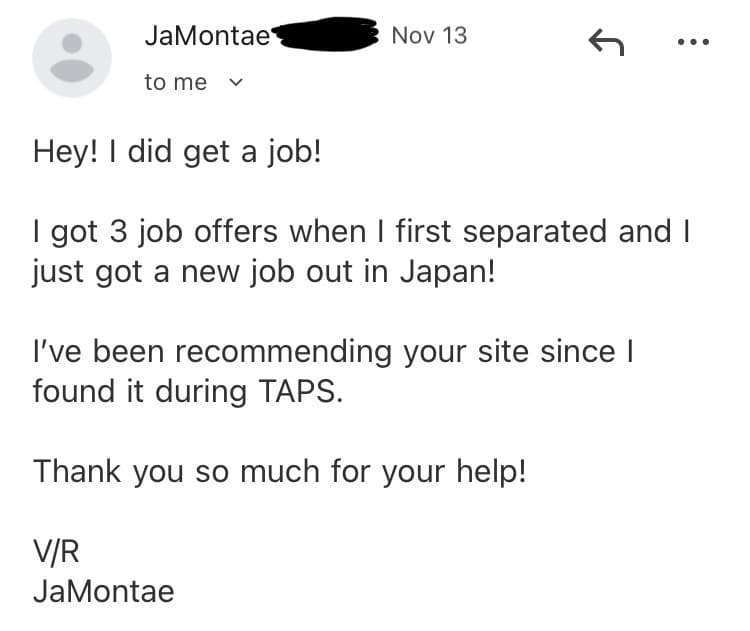
“Hey! I did get a job! I got 3 job offers when I first separated and I just got a new job out in Japan! I’ve been recommending your site since I found it during TAPS. Thank you so much for your help! V/R JaMontae ”
Federal service is one of the strongest landing spots for an egress background, because the government runs the same depots, ranges, and arsenals you supported in uniform. Air Logistics Complexes (Hill, Tinker, Robins), Navy and Army depots, and DoD ammunition plants all hire civilians to do egress, ordnance, and safety work. Veterans' Preference applies (5 or 10 points), and your time at a depot or on a flightline counts as qualifying specialized experience, so document it in detail.
The most direct match is the WG-6502 Explosives Operating wage-grade series, which covers assembling, disassembling, and handling explosive and propellant-actuated components, the literal civilian version of CAD/PAD work. GS-0018 Safety and Occupational Health Management and GS-0803 Safety Engineering fit the inspection and sign-off discipline you already practice. On the mechanical side, the WG-8852 Aircraft Mechanic series and GS-0802 Engineering Technician series are common targets. For broader program and integration roles tied to mechanical and electronics systems, look at GS-0830 Mechanical Engineering support and GS-0855 Electronics Engineering technician work.
Federal grade tends to track your skill level and years: a fresh 3- or 5-level often qualifies for WG-08 to WG-10 trade roles or GS-7, while a 7-level with depot experience can compete for GS-9 to GS-11. To read announcements correctly, our walkthrough on decoding a USAJOBS announcement and the OPM qualification standards guide save you from screening yourself out. Build the application with our federal resume builder, which formats to OPM length and content rules. The Air Force 2W1X1 Aircraft Armament Systems page shares several of these same GS and WG targets.
| GS Series | Federal Job Title | Typical Grades | Match | Explore |
|---|---|---|---|---|
| GS-6502 | Explosives Operating | WG-08, WG-09, WG-10 | View Details → | |
| GS-8852 | Aircraft Mechanic | WG-08, WG-10, WG-11 | View Details → | |
| GS-0803 | Safety Engineering | GS-9, GS-11, GS-12 | View Details → | |
| GS-0018 | Safety and Occupational Health Management | GS-7, GS-9, GS-11 | View Details → | |
| GS-0802 | Engineering Technician | GS-7, GS-9, GS-11 | View Details → | |
| GS-0830 | Mechanical Engineering | GS-9, GS-11, GS-12 | View Details → | |
| GS-0855 | Electronics Engineering | GS-7, GS-9, GS-11 | View Details → |
Federal hiring uses keyword-matching and structured experience. BMR builds federal-format resumes (USAJobs-ready) with the right keywords, hours/week, and supervisor info — for any GS series above.
Free · No credit card · Federal + civilian resume formats included
Not everyone wants to stay in a related field. These career paths leverage your transferable skills — leadership, risk management, logistics, project planning — in completely different industries.
Egress work trains the exact temperament an operating room needs: methodical setup, zero-defect tolerance, and calm focus when the stakes are a human life. The seat shop and the OR both run on procedure and verification.
Your understanding of how energetic devices ignite, plus a career of inspecting for hazards and signing off on safety, maps directly to fire-cause investigation and code enforcement.
Film and live-event pyrotechnics is a genuine career for people who can make energetic materials do exactly what is planned, safely. Few civilians have hands-on explosive-initiation experience; you do.
Crime-lab and post-blast work rewards people who understand how devices function and who document every step precisely. Your CAD/PAD background is uncommon and directly relevant to explosives forensics.
Elevators are a public life-safety system that must work every time, maintained to code with a documented sign-off. That is the same mindset and the same electromechanical skill set egress demands, just in a building.
Your years of signing off life-or-death systems and controlling explosive hazards are the foundation of system-safety engineering, the discipline of designing the hazard out before anyone is hurt.
It is an unexpected fit, but egress troops carry the composure, procedural exactness, and steadiness that funeral service requires. The work is technical, regulated, and unforgiving of shortcuts.
The skills that made you a good Marine, Sailor, Airman, or Soldier transfer further than you think. BMR rewrites your bullets for any of the pivot careers above — without making you sound like you've never done the work.
Free · No credit card · Try unlimited career angles
If you are staying in aircraft maintenance or aviation safety, your terminology already translates. Egress shops, MRO floors, and seat manufacturers use "CAD/PAD," "ejection seat," and "canopy jettison" every day. This section is for 2A6X3s targeting careers OUTSIDE aircraft egress, where a hiring manager has never heard those words and will skim past them unless you reframe.
The principle: lead with the transferable action (precision repair, explosive-safety control, documented inspection sign-off, electromechanical troubleshooting) and put the system in plain terms. Our 50 military terms translated to civilian language glossary and the military skills translation list are good companions. When you are ready to draft, our resume builder turns these bullets into recruiter-ready language automatically.
BMR turns your 2A6X3 duties and accomplishments into civilian bullets that match the job you're applying for — no manual translation, no rewriting.
Free · No credit card · Tailored to each job posting
Which certifications you need depends on where you're headed. Find your target career path below.
The wrong placement can sink an otherwise strong application. BMR knows where each cert ranks, what to call it, and how to frame it for ATS keyword matching and hiring manager attention.
Free · No credit card · Built around your real certs and clearance
Here is where to go next, split by whether you are staying near aircraft and explosives or pivoting out entirely.
Most veterans do this backwards — they wait until terminal leave to start, then panic. Here's the actual sequence that works.
Print this. Tape it to your monitor. Veterans who treat the transition like a 90-day op get hired faster than the ones who treat it like an emergency.
Stop rewriting from scratch every time you apply. BMR turns your military experience into civilian and federal resumes — tailored to each job.