Home / Military to civilian jobs / Marines / 2336

MarinesMOS 2336

Explosive Ordnance Disposal Technician

That is Marines MOS 2336. Civilian jobs, federal paths, and how the work reads on a resume.

What is in this guide

Salary range
$46K to $123K
Career paths
14
Federal GS series
10
Companies hiring
12
Resume examples
8
Certification paths
8
Questions answered
10

What the translation looks like

How it reads in service

Executed render-safe procedures on 15 IEDs during combat deployment, coordinating with intelligence and maneuver elements

How a hiring manager reads it

Developed and executed systematic hazard mitigation protocols for 15 critical incidents, coordinating cross-functional teams and real-time intelligence to eliminate threats with zero safety incidents


Roles this background maps to

  • Hazardous Materials Removal Worker (UXO Technician)$48,560
  • Occupational Health & Safety Specialist$83,910
  • Emergency Management Director$86,130

Median pay, BLS OEWS May 2024

Build a resume for a real job

You pick the job. We write it from your 2336 experience. Free to start.

Brad TachiNavy Diver · BMR founder

After the Navy he was hired into six federal career fields and tech sales, and sat on federal hiring panels along the way. The last two years went into rebuilding all of it into BMR, tuned for how resumes get screened today. 71,892 resumes built so far.

Get a free 2336 Explosive Ordnance Disposal Technician sample resume

One page, built in our template, with the military experience translated into the civilian terms hiring managers and screening software read. Use it as a reference for your own. Leave an email and the download link comes to you.

Free. Occasional job-search tips come with it. Unsubscribe anytime.

What the job actually is

Marine Corps Explosive Ordnance Disposal Technicians (MOS 2336) are trained to identify, render safe, recover, and dispose of all types of ordnance — conventional, nuclear, chemical, biological, and improvised explosive devices (IEDs). EOD techs operate across the full spectrum of military operations, from controlled demolitions on training ranges to downrange IED defeat in active combat zones.

The training pipeline is one of the longest and most academically rigorous in the military. NAVSCOLEOD at Eglin AFB is a joint-service school with a historically high attrition rate. Marines who complete it emerge with deep knowledge of electronics, chemistry, mechanical systems, radiological hazards, and robotics. Many EOD techs go on to advanced courses in counter-IED operations, weapons of mass destruction (WMD) disposal, and explosive breaching.

What makes Marine EOD techs uniquely marketable in the civilian world is the combination of technical precision under extreme pressure, independent decision-making authority, and specialized knowledge that few civilian training programs can replicate. An EOD tech who has rendered safe a device in a combat zone has demonstrated composure, analytical thinking, and risk management at a level that translates across industries — not just in explosive-related fields.

EOD techs are some of the most direct hires in federal law enforcement — ATF, FBI, DHS, and Department of State diplomatic security all recruit EOD veterans actively. From the federal hiring side, the credentialed-EOD background plus clearance is the package civilian-side bomb tech roles can rarely match. — Brad Tachi, Navy Diver veteran & BMR founder

Security clearance
Secret (minimum); many hold Top Secret
ASVAB requirement
GT 110+
Training
Naval School Explosive Ordnance Disposal (NAVSCOLEOD) at Eglin AFB, FL — joint service school (~44 weeks). Includes Phase 1 (basic EOD procedures), Phase 2 (tools and equipment), Phase 3 (demolition and IED defeat), followed by Marine-specific training. Advanced training in WMD, CBRN, and robotics available.
Certs earned in service
HAZMAT Technician, Radiological safety qualifications, UXO identification and disposal, Demolition certifications, First Aid/CPR/AED

Pay reality check

The number that decides most of this: how does civilian pay compare to what the paycheck looks like now?

Marines mid-career

$58K to $82K

E-5 to E-7 total comp: base plus BAH, BAS and the tax advantage.

Civilian Explosive Ordnance Disposal Technician

$46K to $98K

BLS median across the direct-match civilian roles on this page.

Federal, GS-9 to GS-13

$58K to $120K

10 matching GS series, plus locality pay and step increases.

Comparable on average

Civilian pay for Explosive Ordnance Disposal Technicians lands in the same range as mid-career enlisted total comp.

Military comp is approximate and moves with location and dependents. Civilian is the BLS median. Federal includes locality pay. The real number depends on duty station, family status, GS step and overtime.

Private sector career paths

The civilian explosive ordnance disposal and UXO remediation industry is a specialized but well-paying field. According to BLS, the broader category of hazardous materials removal workers earns a median of $48,560 (O*NET 47-4041.00, May 2024), but this figure significantly understates what experienced EOD-qualified technicians earn in specialized UXO remediation and defense consulting roles.

Beyond direct EOD work, former techs move into defense contracting, physical security consulting, emergency management, and safety engineering. The analytical and electronics troubleshooting skills developed through years of diagnosing and defeating complex devices open doors in quality assurance, industrial safety, and even robotics.

Security clearance is a major asset. Many EOD techs hold Top Secret or TS/SCI clearances, which saves employers months of processing and thousands of dollars. Defense contractors and three-letter agencies actively recruit from the EOD community for this reason alone.

Civilian job title translations

Civilian job titleIndustryBLS median salaryOutlookMatch
Hazardous Materials Removal Worker (UXO Technician)O*NET 47-4041.00Environmental Remediation / Defense$48,560About as fast as average (5%)strong
Occupational Health & Safety SpecialistO*NET 19-5011.00Government / Manufacturing / Construction$83,910Faster than average (12%)strong
Emergency Management DirectorO*NET 11-9161.00Government / Healthcare / Education$86,130About as fast as average (3%)strong
Criminal Investigator (Federal)O*NET 33-3021.00Federal Law Enforcement$97,500About as fast as averagestrong
Industrial Engineering TechnologistO*NET 17-3026.00Manufacturing / Defense / Energy$60,200Little or no changemoderate
Quality Control InspectorO*NET 51-9061.00Manufacturing / Defense / Aerospace$45,680Little or no changemoderate
Security Management SpecialistO*NET 33-9032.00Government / Corporate / Defense$66,650About as fast as averagemoderate
First-Line Supervisor of Protective Service WorkersO*NET 33-1099.00Government / Security / Law Enforcement$59,400About as fast as averagemoderate

Companies that hire this background

Parsons CorporationMilitary Hiring Program

Major counter-IED and explosive hazard remediation contractor. Hires EOD techs for UXO projects, weapons technical intelligence, and threat assessment roles worldwide.

Tetra Tech

One of the largest UXO remediation contractors in the U.S. Active projects on former military installations nationwide. Formerly TtEC.

AECOMMilitary & Veteran Hiring

Global engineering firm with significant UXO remediation and environmental cleanup contracts. SkillBridge partner.

Northrop GrummanMilitary Veteran Careers

Counter-IED technology development, robotics systems, and defense electronics. Values TS/SCI clearances.

L3Harris Technologies

EOD robotics, sensor systems, and counter-threat technology. Direct application of electronics troubleshooting and ordnance knowledge.

ATF (Bureau of Alcohol, Tobacco, Firearms and Explosives)Explosives Enforcement Officer

Primary federal agency for explosives enforcement. Certified Explosives Specialist and Special Agent positions directly leverage EOD background.

FBI (Federal Bureau of Investigation)Hazardous Devices School

FBI Bomb Data Center and Hazardous Devices School at Redstone Arsenal. Special Agent and bomb technician positions.

DTRA (Defense Threat Reduction Agency)

WMD defeat, counter-proliferation, and threat reduction. Directly aligned with EOD WMD training. Civilian and contractor positions.

Battelle Memorial Institute

Non-profit research organization with significant DOD contracts in counter-WMD, chemical demilitarization, and explosive hazard research.

Raytheon (RTX)Veteran Hiring

Missile systems, electronic warfare, and defense electronics. EOD techs with electronics and weapons systems knowledge are strong candidates.

U.S. Army Corps of Engineers (USACE)FUDS Program

Formerly Used Defense Sites (FUDS) program manages UXO cleanup nationwide. Hires EOD-qualified personnel as project managers and technical leads.

U.S. Secret ServiceCounter Assault / Technical Security

Protective intelligence, technical security countermeasures, and explosive detection. EOD background highly valued.

See a salary you want? Build a resume aimed at it.

BMR rewrites your 2336 experience for any of the roles above, in the language the people reading actually scan for.

Free to start. 2 tailored resumes included.

Build My Resume Free

Already have a resume? Get it graded straight.

Upload it and get a number in about a minute, plus the 2336 lines a civilian hiring manager will not follow and what to write instead. No account.

Free. Your file is never stored.

Score my resume free

A Marines story from the same road

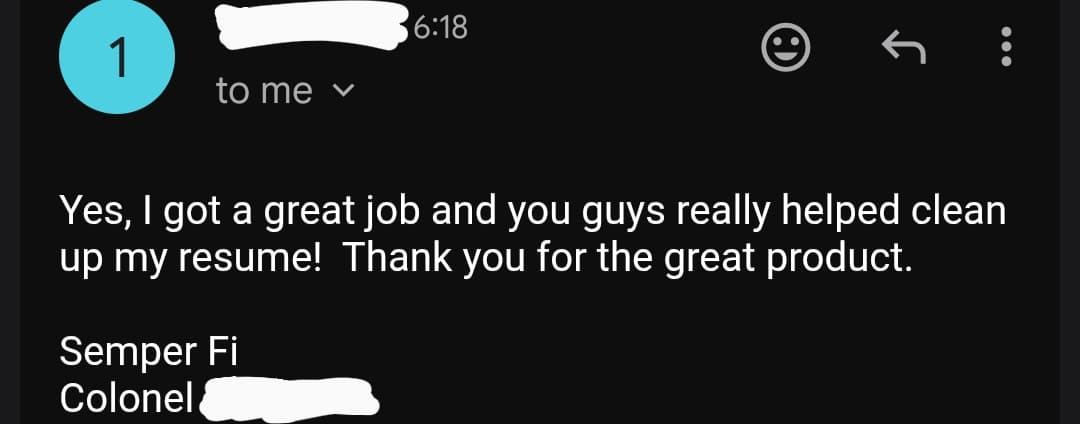
Eli, success story
I used the resume program to transition a very government centric resume into one that could be easily understood and appreciated in the civilian sector. I applied to several government and corporate jobs using the resume builder to adjust my details according to the job I was applying for. I…

Eli · Colonel (O-6) · Marines · Operations and Intelligence

Read the full story

Federal career paths

Federal agencies aggressively recruit former EOD technicians. The ATF, FBI, Secret Service, and Department of State all maintain bomb technician programs that value military EOD experience. Many of these positions use Direct Hire Authority for veterans, which can accelerate the hiring process significantly.

Beyond law enforcement, agencies like DTRA (Defense Threat Reduction Agency), DOE (nuclear security), and DHS need personnel with WMD and CBRN expertise. The explosives safety series (GS-0017) is a direct match, while safety management (GS-0018) and emergency management (GS-0089) roles leverage the hazard analysis and risk mitigation training that defines EOD operations.

Intelligence community positions (GS-0132) are another strong path, particularly for techs who deployed with intelligence fusion cells or conducted post-blast analysis. The technical intelligence gathered during IED defeat operations — circuit analysis, signature identification, network mapping — is directly applicable to counterterrorism intelligence roles.

Federal series and position matches

SeriesFederal job titleTypical gradesMatchExplore
GS-0017Explosives SafetyGS-9, GS-11, GS-12, GS-135 of 5View details
GS-0018Safety and Occupational Health ManagementGS-9, GS-11, GS-124 of 5View details
GS-0019Safety TechnicianGS-7, GS-9, GS-114 of 5View details
GS-0089Emergency ManagementGS-9, GS-11, GS-124 of 5View details
GS-1811Criminal InvestigatorGS-7, GS-9, GS-11, GS-134 of 5View details
GS-0132IntelligenceGS-9, GS-11, GS-123 of 5View details
GS-0301Miscellaneous Administration and ProgramGS-7, GS-9, GS-113 of 5View details
GS-0340Program ManagementGS-11, GS-12, GS-133 of 5View details
GS-1801General Inspection, Investigation, EnforcementGS-7, GS-9, GS-113 of 5View details
GS-0080Security AdministrationGS-7, GS-9, GS-112 of 5View details

Federal resumes follow different rules. We know them.

Federal raters match your record against the announcement's specialized experience statement. BMR writes the federal format for any GS series above, with the hours per week and supervisor detail a rater looks for.

Free to start. Federal and private sector formats included.

Build My Federal Resume Free

Want to change careers entirely?

Not everyone stays in a related field. These paths run on the transferable half of the job: leadership, risk, logistics, planning.

Nuclear Power Reactor Operator$122,610 median · Utilities · O*NET 51-8011.00

Operating a reactor is the same psychology as a render-safe procedure: follow the steps precisely, never improvise, and own a decision where a mistake is irreversible. The Nuclear Regulatory Commission values that temperament more than any single technical skill.

Transfers: Executing render-safe-style procedures exactly, every step, High-consequence decision-making where error is catastrophic, Calm operation under sustained pressure, Strict procedural and checklist discipline.

How to get there: Most operators start as non-licensed plant operators, then complete utility-sponsored training and pass the NRC licensing exam over 1-2 years. Veterans with reactor or EOD discipline are actively recruited.

BLS OEWS May 2024 · 2% (Little or no change)

Electro-Mechanical and Mechatronics Technologist$70,760 median · Robotics and Automation · O*NET 17-3024.00

EOD techs run robots and teleoperated tools to handle what they cannot touch by hand, which is exactly what mechatronics work is on a factory floor. The robot-handling instinct that kept a Marine at standoff distance transfers straight into automation.

Transfers: Operating and maintaining robotic and teleoperated systems, Integrated electronics and mechanical troubleshooting, Remote manipulation of equipment in hazardous settings, Methodical fault isolation under pressure.

How to get there: Earn an associate degree in mechatronics or robotics technology, GI Bill eligible. Some automation integrators hire veterans with robot-operation experience into field technician roles and train on specific platforms.

BLS OEWS May 2024 · 2% (Little or no change)

Forensic Science Technician$67,440 median · Forensic Laboratory · O*NET 19-4092.00

Post-blast analysis and device exploitation are forensic work: reconstruct what happened from fragments, preserve evidence, and document it to a standard that holds up later. That deliberate, methodical mindset is what forensic labs hire for.

Transfers: Methodical processing of a sensitive scene, Evidence handling and chain-of-custody discipline, Reconstructing how a device or event was built, Precise documentation under scrutiny.

How to get there: Earn a bachelor degree in forensic or natural science, GI Bill eligible. Some crime labs hire veterans with evidence-handling backgrounds into technician roles and train on specific disciplines.

BLS OEWS May 2024 · 14% (Much faster than average)

Power Plant Operator$99,670 median · Energy · O*NET 51-8013.00

A control-room operator keeps a dangerous process inside safe limits and acts decisively the instant something drifts, which is the same composure an EOD tech brings to an unstable device. The stakes-aware discipline carries directly.

Transfers: Operating high-risk systems by strict procedure, Continuous monitoring and rapid response to abnormal conditions, Calm judgment in a control environment, Lockout and safety-interlock discipline.

How to get there: Enter as a plant operator trainee at a generation facility. A power technology certificate or associate degree accelerates promotion, and utilities recruit veterans for the temperament the work demands.

BLS OEWS May 2024 · 4% (As fast as average)

Surgical Technologist$62,830 median · Healthcare · O*NET 29-2055.00

Standing at an operating table demands the same steady hands and procedural exactness as defeating a device: no shortcuts, full focus, and ownership of a high-stakes outcome. The composure transfers even though the field is entirely new.

Transfers: Manual precision where one error has serious consequences, Following an exacting procedure step by step, Sterile and tool discipline under time pressure, Staying composed inside a high-stakes environment.

How to get there: Complete a 1-2 year surgical technology program, GI Bill eligible, then earn the CST credential. The clinical rotation builds the operating-room experience employers want.

BLS OEWS May 2024 · 6% (Faster than average)

Commercial Pilot$122,670 median · Aviation · O*NET 53-2012.00

Flying rewards the exact habits EOD builds: run the checklist, assess the risk honestly, and make a committed decision you cannot take back. The cockpit and the render-safe procedure ask for the same discipline.

Transfers: Disciplined checklist execution before every action, Decisive judgment in high-consequence situations, Calm performance under physical and mental stress, Methodical risk assessment.

How to get there: Earn FAA private, instrument, and commercial certificates at a Part 141 or 61 school, GI Bill eligible for approved programs. Build hours as a flight instructor before charter or regional flying.

BLS OEWS May 2024 · 5% (Faster than average)

Pivoting industries does not mean starting from scratch.

The skills behind the specialty carry further than the specialty. BMR rewrites your bullets for any of the paths above without making it sound like you have never done the work.

Free to start. Try as many angles as you want.

Tailor My Resume to a New Career

Skills translation guide

If you are applying to defense contractors, law enforcement bomb squads, or UXO remediation companies, your EOD terminology translates directly — those employers know exactly what render-safe procedures and post-blast analysis mean. This section is for Marines targeting careers outside of explosive ordnance work.

The challenge for EOD techs moving into non-EOD careers is that your most impressive skills sound like action movie dialogue to a civilian hiring manager. The key is reframing the underlying competencies — methodical analysis, electronics troubleshooting, independent decision-making under pressure, team leadership in hazardous environments — using language that resonates in corporate, industrial, or government settings outside the defense world.

Resume bullet examples

Before, in service

Executed render-safe procedures on 15 IEDs during combat deployment, coordinating with intelligence and maneuver elements

After, on the resume

Developed and executed systematic hazard mitigation protocols for 15 critical incidents, coordinating cross-functional teams and real-time intelligence to eliminate threats with zero safety incidents

Before, in service

Conducted post-blast analysis on 8 IED incidents, identifying device components, signatures, and threat network indicators for intelligence exploitation

After, on the resume

Led root cause analysis investigations for 8 critical technical failures, identifying contributing factors, documenting findings, and producing actionable intelligence reports for senior leadership

Before, in service

Served as EOD team leader for 12-month deployment, directing 3-person teams on 45+ EOD responses with full tactical authority

After, on the resume

Led specialized technical operations team through 45+ critical response scenarios over 12 months, exercising independent decision authority and maintaining 100% mission success rate

Before, in service

Developed and executed counter-IED tactics that reduced IED effectiveness by 40% across the AO during deployment

After, on the resume

Designed and implemented technical problem-resolution methodologies that reduced critical incident impact by 40% across the operational area, briefing results to senior leadership weekly

Before, in service

Operated TALON and PackBot robotic systems for 30+ remote reconnaissance and render-safe missions in complex urban environments

After, on the resume

Operated advanced robotic inspection systems for 30+ remote assessment missions in challenging environments, reducing personnel risk exposure while maintaining operational effectiveness

Before, in service

Led range clearance operations on 200+ acres, identifying and disposing of UXO items IAW DDESB standards with zero incidents

After, on the resume

Managed environmental hazard remediation across 200+ acres, conducting systematic site assessments, documenting findings per regulatory standards, and achieving zero safety incidents throughout the project

Before, in service

Delivered pre-mission briefs to 15-person elements covering threat assessment, movement plans, contingency procedures, and abort criteria before every operation

After, on the resume

Conducted comprehensive risk assessments and delivered operational briefings to cross-functional teams of 15, covering threat analysis, mitigation strategies, contingency procedures, and success criteria

Before, in service

Trained and qualified in WMD response procedures including chemical agent identification, radiological survey, and biological hazard containment

After, on the resume

Certified in hazardous materials incident response including chemical identification, radiological monitoring, and biological containment protocols, maintaining qualifications through annual recertification

Get bullets like these written from your own record.

BMR turns your 2336 duties and accomplishments into civilian bullets aimed at the job you are applying for. No manual translation.

Free to start. Tailored to each posting.

Generate My Resume Bullets

Certifications by career path

Which ones you need depends on where you are headed.

Cybersecurity

CompTIA Security+CompTIA

BeneficialCost $400 - $500Time 2-3 months studyGI Bill eligibleEntry point for cybersecurity careers. DoD 8570 compliant — valid for DOD IT security positions. Leverages the threat assessment mindset from EOD.

Emergency Management

Certified Emergency Manager (CEM)IAEM

BeneficialCost $300 - $500Time 3-6 months prepFor emergency management career path. Requires documented emergency management experience — CBRN response and EOD emergency planning count toward requirements.

Environmental & HAZMAT

UXO Technician I/II/IIIDDESB-approved programs

RequiredCost $2,000 - $5,000Time 2-6 weeksGI Bill eligibleIndustry standard for UXO remediation work. Military EOD qualification covers much of the material. Level depends on supervisory responsibility.

HAZWOPER 40-HourOSHA

RequiredCost $500 - $1,000Time 1 weekRequired for UXO/environmental remediation sites. Some EOD techs complete this during service. Annual 8-hour refresher required.

Law Enforcement

IABTI Membership + Continuing EducationInternational Association of Bomb Technicians and Investigators

RecommendedCost $75 - $150/yearTime OngoingProfessional networking and continuing education for bomb techs. Annual conference connects you with federal, state, and local bomb squad recruiters. Join before separating.

Operations Management

Six Sigma Green BeltASQ or IASSC

BeneficialCost $300 - $500Time 2-4 monthsGI Bill eligibleProcess improvement methodology used across industries. Analytical problem-solving from EOD diagnostics provides a strong foundation.

Project Management

Project Management Professional (PMP)PMI

BeneficialCost $400 - $600Time 3-6 months studyGI Bill eligibleFor transition to project management. EOD operational planning hours count toward the experience requirement. Widely recognized across industries.

Quality Assurance

Certified Quality Engineer (CQE)ASQ

BeneficialCost $400 - $600Time 3-6 months studyGI Bill eligibleFor quality assurance career path. Technical inspection precision from EOD translates to QA methodology. Requires qualifying experience.

Safety & EHS

OSHA 30-Hour General Industry or ConstructionOSHA

RecommendedCost $150 - $300Time 4 daysStandard safety certification. Available online. Many employers require it. Quick win before separation.

Certified Safety Professional (CSP)Board of Certified Safety Professionals (BCSP)

BeneficialCost $300 - $500 (exam)Time 3-6 months studyGI Bill eligibleGold standard for safety careers. Requires bachelor's degree or equivalent experience plus qualifying safety experience. EOD safety program management counts.

Got a cert? Do not bury it.

Placement decides whether a screener ever sees it. BMR knows where each one ranks, what to call it, and how to frame it.

Free to start. Built around your real certs and clearance.

Build My Resume the Right Way

Transition resources

For Staying in the EOD / UXO / Explosives Field

SkillBridge Programs: Several defense contractors and UXO remediation firms participate in DOD SkillBridge, including Parsons, Tetra Tech, and AECOM. Check the SkillBridge database 180 days before separation. Some federal law enforcement agencies also offer SkillBridge-like pathways for bomb technician roles.

IABTI Membership: The International Association of Bomb Technicians and Investigators (IABTI) is the professional organization for bomb techs worldwide. Join before separating — the networking alone is worth it. Annual conferences connect you with federal, state, and local bomb squad recruiters.

UXO Technician Certification: For UXO remediation work, the UXO Technician I/II/III certifications through DDESB-approved programs are the industry standard. Your military EOD qualification covers much of the material.

For Careers Outside of EOD

Project Management: The PMP certification (PMI) validates your planning and execution skills for any industry. EOD operations — pre-mission planning, resource coordination, risk assessment, after-action reporting — map cleanly to PMP methodology. Cost: ~$555 (PMI member).

Safety & EHS Careers: Start with OSHA 30-Hour ($150-300, can do online). For the long game, target the CSP (Certified Safety Professional) — your EOD safety experience counts toward requirements.

Federal Law Enforcement: USAJobs is your gateway. Key agencies: ATF (Special Agent or Explosives Enforcement Officer), FBI (Bomb Technician), Secret Service, U.S. Marshals, CBP. Apply 6+ months before separation — federal hiring is slow. Federal resumes are 2 pages max. Build yours here.

Veteran Networking: American Corporate Partners (ACP) provides free mentorship from executives in your target industry. Completely free for veterans.

Clearance Leverage: Your TS or TS/SCI clearance has significant market value. ClearanceJobs.com lists positions requiring active clearances. Start leveraging this before it lapses — you have up to 24 months after separation.

Education Benefits: Use the GI Bill Comparison Tool to verify program approval before enrolling. For EOD techs, certifications often provide faster ROI than a 4-year degree.

BMR Career Resources

Marine Infantry Resume Guide | Complete Military Resume Guide | Top Companies Hiring Veterans | Build Your Resume Free

Your 30, 60, 90-day transition plan

Most people do this backwards: wait for terminal leave, then panic. This is the sequence that works. Already out? Same plan, day one is today.

Days 0 to 30

Set the foundation

  • Pull your DD-214 (request it from milConnect if you are already separated)
  • List your top three civilian roles and your top three GS series
  • Build your tailored 2336 resume, free
  • Write one strong LinkedIn headline, not "veteran seeking opportunities"
  • Gather your evals and performance reports for the accomplishments
Build my resume free

Days 30 to 60

Apply with intent

  • Apply to five to ten jobs a week, quality over volume
  • Tailor every resume to the announcement (BMR does this part for you)
  • Connect with five people a week on LinkedIn, not a spray
  • Set up a USAJOBS profile and a saved search for your GS series
  • Say your bullets out loud to a civilian friend and fix what they do not follow
Tailor my next resume

Days 60 to 90

Close the offer

  • Track every application: date, status, contact, notes
  • Follow up seven to ten days after each one
  • Prep behavioral interviews with the STAR method
  • Negotiate. The BLS median is your floor, not the offer
  • Keep applying after the first offer. Options are the leverage
Track my applications

Questions about 2336

What civilian jobs can a Marine EOD tech get?

Direct paths include UXO remediation technician, federal law enforcement bomb technician (ATF, FBI, Secret Service), defense contractor (counter-IED advisor, weapons technical intelligence analyst), and explosives safety specialist. Beyond the explosives field, EOD techs move into project management (BLS median $100,750, O*NET 13-1082.00), safety management (BLS median $83,910, O*NET 19-5011.00), emergency management (BLS median $86,130, O*NET 11-9161.00), and quality assurance. Your electronics troubleshooting background also opens doors in industrial maintenance and engineering technology roles.

What is the salary for former EOD technicians in civilian roles?

It varies widely by career path. BLS reports hazardous materials removal workers (which includes UXO techs) at a median of $48,560 (May 2024, O*NET 47-4041.00), but this aggregates many different specialties. Experienced UXO project managers and defense consultants earn well above this figure. For non-EOD paths: project managers earn a BLS median of $100,750, safety specialists $83,910, and emergency management directors $86,130. Federal law enforcement positions (GS-1811 Criminal Investigator) typically start at GS-7/9 with Law Enforcement Availability Pay (LEAP) adding 25% above base.

Do I need additional certifications after leaving the Marines?

Depends on your target career. For UXO remediation, your military EOD qualification is your strongest credential — some firms require DDESB-approved UXO Tech certifications. For federal law enforcement, each agency has its own academy (FLETC for most). For safety careers, OSHA 30-Hour and eventually the CSP are the benchmarks. For project management, the PMP certification validates your skills to civilian employers. Check with your target employer before paying for certifications — your military training may already satisfy their requirements.

What if I want to leave the explosives field entirely?

Many former EOD techs successfully transition into completely different careers. The analytical reasoning, electronics knowledge, independent decision-making, and leadership under pressure transfer to project management, operations management (BLS median $102,950), quality assurance ($100,560), IT management, and consulting. The key is reframing your experience — see the Skills Translation and Career Change Paths sections above for specifics on how to translate EOD experience for non-defense employers.

Is my security clearance valuable?

Extremely. An active Top Secret or TS/SCI clearance saves employers $5,000-15,000+ and months of processing time. Defense contractors, intelligence agencies, and federal law enforcement all require clearances. ClearanceJobs.com lists positions specifically. Your clearance stays active for up to 24 months after separation if not renewed, so begin your job search before it lapses.

How does Veterans Preference work for federal jobs?

Veterans Preference gives you 5 or 10 extra points on federal hiring assessments. Disabled veterans get 10 points. You need your DD-214 (Member 4 copy) and SF-15 form for documentation. Some positions use Direct Hire Authority which can bypass normal competitive processes — ATF, FBI, and DHS frequently use this for veteran hires. Apply to positions at or below GS-11 initially where VPref is strongest. Build your federal resume at bestmilitaryresume.com — federal resumes follow different rules than private sector.

Should I use my GI Bill for a degree or certifications?

Depends on your target career. For UXO remediation, certifications and your military quals are enough — save the GI Bill. For federal law enforcement, each agency has its own training; a criminal justice degree helps but is not always required. For project management or safety, certifications (PMP, CSP) give faster ROI than a 4-year degree. For engineering or highly technical corporate roles, a degree may be required. Use the VA GI Bill Comparison Tool to verify program approval before enrolling anywhere.

Where are the best job markets for former Marine EOD techs?

For UXO remediation: Former military installations nationwide (there is remediation work in virtually every state). For defense contracting: DC Metro, San Diego, Tampa (SOCOM), Huntsville, and anywhere with major military installations. For federal law enforcement: DC Metro and major field offices (NYC, LA, Chicago, Miami). For non-EOD careers leveraging your skills: any major metro area works, but defense hubs give you the best clearance leverage.

Can I start job searching while still on active duty?

Yes — and you should. Start 12 months before your EAS. At 180 days out, you may be eligible for DOD SkillBridge to work full-time at a civilian employer while still receiving military pay. At minimum: have your resume ready 6 months out, start networking on LinkedIn 6 months out, apply to federal positions 6 months out (federal hiring takes 3-6 months). Use terminal leave strategically — it is your transition runway.

How do I explain EOD experience in a non-defense job interview?

Focus on the transferable competencies, not the ordnance. Instead of describing render-safe procedures, talk about systematic problem analysis under time pressure. Instead of IED defeat, explain how you assessed unknown technical problems with incomplete information and developed solutions in real time. Quantify everything — number of operations led, team sizes, dollar values of equipment managed, training programs developed. The EOD context is interesting background, but the analytical and leadership skills are what get you hired outside of defense.
Turn your 2336 Explosive Ordnance Disposal Technician experience into a resume that gets callbacks

Stop rewriting from scratch every time you apply. BMR turns your military experience into civilian and federal resumes, tailored to each job.

2

Tailored resumes

Rewritten for each job posting

2

Cover letters

Matched to the role

LinkedIn optimization

Profile rewrite for civilian recruiters

Elevator pitch generator

For interviews and networking

2

Company research reports

Know who you are applying to

Job tracker

Every application in one place

Start My Free ResumeFree for every veteran. Built by a Navy Diver veteran, 71,892 resumes built for the military community.