Best Job Boards for Veterans in 2026 (Ranked and Compared)
 Brad Tachi10 min read
"Still getting interviews left and right. Now I have to say no."
Taranjeet, E-5, Army, optimized her LinkedIn and resume with BMR
There are dozens of job boards that claim to serve veterans. Most of them are just regular job boards with a flag on the homepage. A few actually connect veterans with employers who want to hire them. The difference matters — posting your resume on the wrong platform wastes time you do not have during a transition.
BMR has helped 25,926 veterans and military spouses. We see which platforms generate callbacks and which ones generate silence. The patterns are clear. Some platforms work because they have real employer relationships. Others exist to collect resumes and sell access to recruiters.
This guide ranks the job boards that actually produce results for veterans in 2026 — federal, private sector, and defense industry. Each one includes what it does well, where it falls short, and whether it is worth your time based on what we have seen from real veteran job seekers.
What Makes a Job Board Actually Work for Veterans?
Before we rank platforms, you need to understand what separates a useful job board from a resume graveyard. The factors that matter are employer engagement, veteran-specific features, and job freshness.
Employer engagement means companies are actively posting roles and reviewing applications on the platform — not just syndicating the same job listing across many boards. When a company posts directly on a veteran-focused board, it signals they specifically want veteran candidates.
Veteran-specific features include MOS or AFSC translation tools, military skills matching, and filters for security clearance requirements. These save you from manually searching for civilian equivalents of your military job.
Job freshness is critical. Some boards pull postings from other sites. A listing can be weeks old or already filled by the time you see it.
Watch Out for Resume Harvesting
Some job boards exist primarily to collect resumes and sell access to staffing agencies. If a site asks you to upload your resume before showing you any jobs, that is a red flag. Legitimate job boards let you search listings first.
Which Federal Job Boards Should Veterans Use?
USAJOBS (usajobs.gov)
If you are considering federal employment, start with USAJOBS. It is the official U.S. government job board. Agencies must list most competitive-service openings for outside applicants here. Some excepted-service jobs do not have to be posted, so check agency career pages too. Eligible veterans get 5 or 10 preference points. Five points can come from qualifying service dates or a campaign badge. Ten points can come from a Purple Heart or a service-connected disability. That means your application can outrank non-veteran candidates with identical qualifications.
The platform has a built-in resume builder, but it produces generic output. For federal applications, you need a properly formatted federal resume. It should show the specialized experience the announcement asks for, with specific accomplishment metrics and the right structure. Separate KSA essays are no longer required when you first apply for most federal jobs. A May 2010 presidential hiring-reform memo ended them at that stage.
Best for: Any veteran targeting federal GS positions, especially those with 5 or 10 preference points.
ClearanceJobs (clearancejobs.com)
If your clearance is active or current, ClearanceJobs is essential. Current means you held a job that required a clearance within the past two years. Every listing requires some level of clearance, which means you are competing only against other cleared candidates — a much smaller pool. Defense contractors, intelligence agencies, and government-adjacent companies post heavily here.
Candidates enter their own clearance details, and ClearanceJobs warns that lying about a clearance is a felony.
Best for: Cleared veterans (active or current Secret, TS, or TS/SCI) targeting defense, intelligence, or government contractor roles.
Which Private-Sector Job Boards Work Best for Veterans?
LinkedIn is not veteran-specific, but it is where you can reach recruiters and hiring managers directly. The platform's strength is direct access to recruiters and hiring managers — you can find who posted a job, message them, and follow up, all in one place. See our guide on how veterans actually get hired through LinkedIn for tactical advice.
Best for: Every veteran, regardless of target industry. Use it alongside veteran-specific boards, not instead of them.
Hire Heroes USA (hireheroesusa.org)
Hire Heroes USA is a nonprofit that provides free career coaching, resume assistance, and a job board for veterans and military spouses. They partner directly with employers who have committed to hiring veterans. The job board is smaller than Indeed. It connects veterans and military spouses with employers that partner with Hire Heroes USA.
Their career coaching service is genuinely useful — dedicated coaches help with resume review, interview prep, and job search strategy at no cost. The combination of coaching plus partner job listings makes this one of the most effective platforms for veterans who want hands-on support.
Best for: Veterans who want personalized job search support alongside a partner job board.
RecruitMilitary (recruitmilitary.com)
RecruitMilitary operates one of the largest veteran-specific job boards and hosts career fairs across the country. Their career fairs are their biggest differentiator — you meet hiring managers face-to-face, which shortens the path from application to interview. The online job board aggregates veteran-friendly listings from employers who pay to recruit on the platform.
The career fairs are especially valuable for veterans who struggle with online applications. A resume tailored for career fairs and a solid elevator pitch can produce same-day interviews at these events.
Best for: Veterans who prefer in-person networking and career fair events.
Indeed
Indeed calls itself the world's #1 job site, based on Comscore visit data from March 2026. It is not veteran-specific. But its sheer volume of listings makes it a necessary part of any job search.
The downside is volume. A search for "project manager" in a major metro area returns a flood of results. You need to use detailed filters (location, salary range, experience level, and date posted) to narrow the field. Sort by date to see the freshest postings first. Apply directly through company websites when possible rather than through Indeed's one-click apply.
Indeed also has a salary comparison tool and company review section. Use the salary data to calibrate your expectations before negotiating, and read company reviews from employees to identify red flags before you invest time in an application.
Best for: Casting a wide net across all industries and locations.
VET TEC 2.0 Training Providers
If you are considering a tech career, look at VA's VET TEC 2.0 program. It is open to veterans not dishonorably discharged and to service members within 180 days of separating. You need at least 36 months of active duty, and you must be under 62. VA limits the program to 4,000 paid participants each fiscal year. VA pays tuition and fees directly to the training provider. It also pays a housing allowance during training. Do you still have Post-9/11 GI Bill, Montgomery GI Bill Active Duty, or DEA entitlement? VA charges one month of it for each month of full-time training. If you have none left, you can still take part. When you finish, your training provider helps you find a job in your field. VET TEC 2.0 is not a job board. But if technology is your target industry, the provider's employer network is worth exploring.
Quick Platform Comparison
USAJOBS
Federal jobs only. Veterans preference applies. Essential for GS positions.
ClearanceJobs
Cleared positions only. Smaller, cleared-only candidate pool. Requires an active or current clearance.
Direct access to hiring managers. Use actively, not passively.
Hire Heroes USA
Free coaching + partner job board. Best hands-on veteran support. Nonprofit.
RecruitMilitary
Career fairs nationwide. Great for in-person networking. Face-to-face with employers.
How Should Veterans Use Multiple Job Boards at Once?
Using one job board is a mistake. Using ten is a waste of time. The right strategy is picking 4-5 platforms based on your target sector and working them consistently.
If you are targeting federal jobs: start with USAJOBS. Add ClearanceJobs if your clearance is active or current. Add LinkedIn for networking with people already in federal agencies.
If you are targeting private sector: LinkedIn is your primary platform. Add Indeed for volume, Hire Heroes USA or RecruitMilitary for veteran-specific connections, and one industry-specific board for your target field.
If you are targeting defense contractors: ClearanceJobs and LinkedIn are your core platforms. Add the career pages of your top 5-8 target companies (Lockheed, Northrop, Raytheon, SAIC, Booz Allen, L3Harris, General Dynamics, Leidos). Many defense contractors post roles on their own career sites.
From a Veteran Who Built the Tool
"I spent 18 months applying through USAJOBS with zero callbacks after separating from the Navy. The resume was the problem — not the platform. Once I fixed the resume, the same platforms started producing interviews. The job board matters, but the resume you upload to it matters more. A bad resume on the best platform still loses to a good resume on any platform."
— Brad, Navy Diver veteran and founder of BMR
One approach that works well: create a master spreadsheet with columns for platform name, login date, roles applied, and follow-up dates. This prevents the common trap of applying everywhere and tracking nothing. When you apply to 50 roles across 8 platforms with no tracking, you cannot tell which platforms produce results and which waste your time.
Set a schedule: check each platform on specific days. Monday and Wednesday for USAJOBS. Tuesday and Thursday for LinkedIn and Indeed. Friday for follow-ups on pending applications. A structured approach prevents the "apply everywhere, track nothing" trap that eats months of transition time. Discipline in your job search matters as much as it did on active duty.
What Job Board Mistakes Do Veterans Make?
Applying Without Tailoring
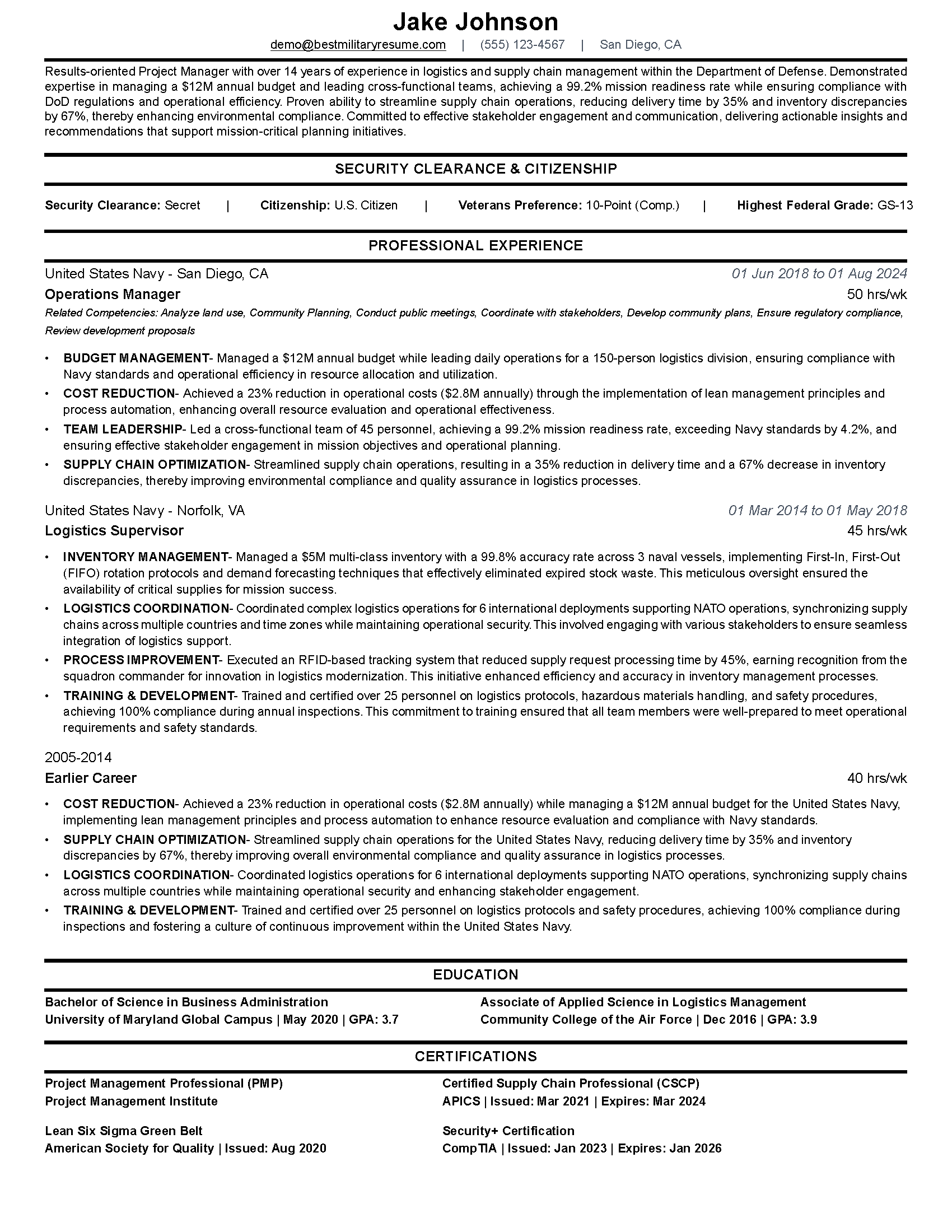
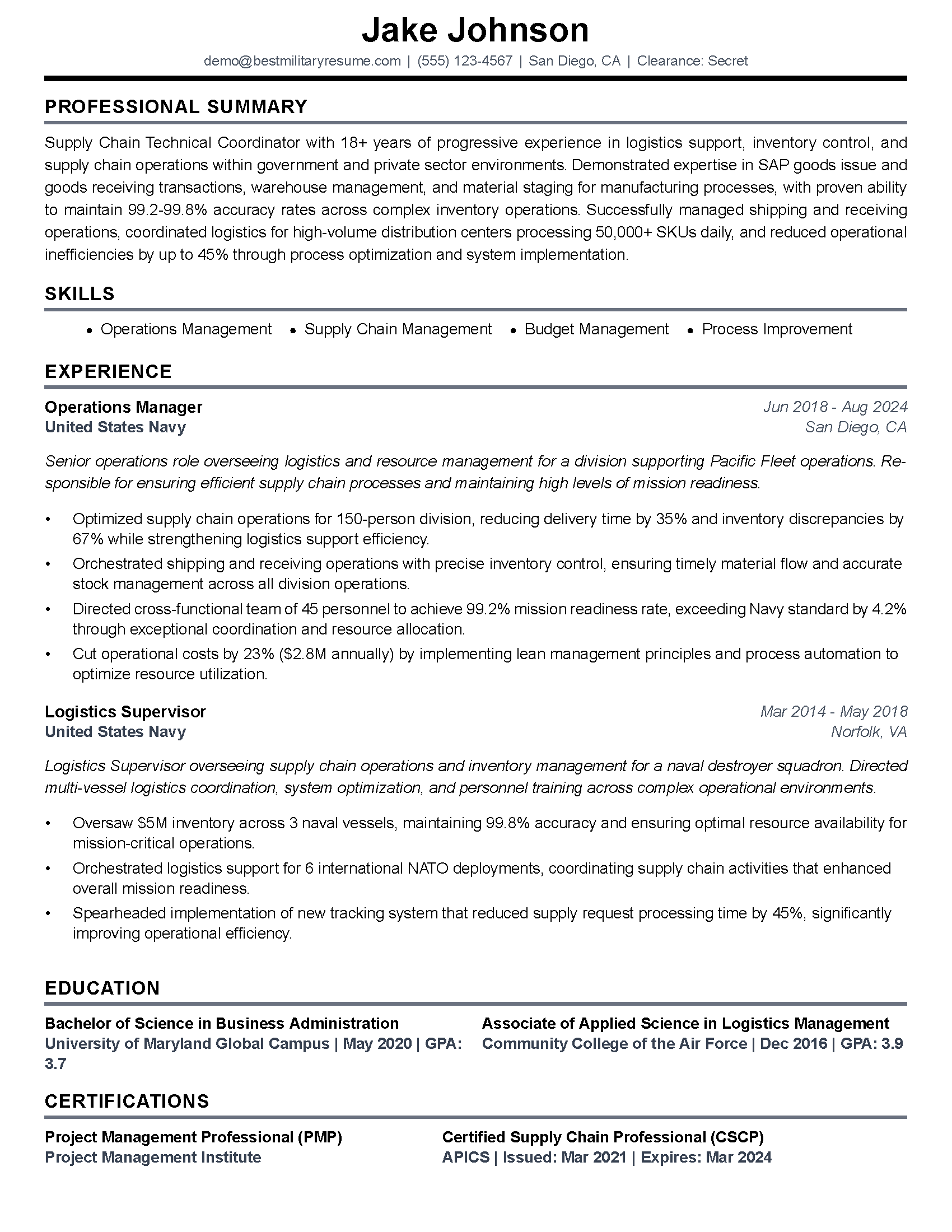
Uploading one generic resume to every job board and mass-applying is the fastest way to get ignored. Each application should be tailored to the specific role with keywords from the job description. This is especially critical on USAJOBS. Since September 30, 2025, agencies cannot use self-assessment questionnaires to rate and rank applicants for most jobs. Your resume has to show the specialized experience the announcement asks for. BMR's career crosswalk tool can help you identify the right civilian keywords for your military background.
Ignoring Company Career Pages
Many veterans rely entirely on aggregator sites and miss jobs that companies post on their own career pages. Bookmark the career pages of your top 10 target companies and check them weekly.
Not Tracking Applications
If you cannot tell me which jobs you applied to last week, you are not running a job search — you are throwing darts in the dark. Use a spreadsheet or job tracker to log every application: company, role, date applied, platform used, and follow-up status. This turns a scattered effort into a measurable process.
Relying Only on Veteran-Specific Boards
Veteran-focused job boards are valuable, but they are not the whole job market. Many open positions sit on general platforms like LinkedIn and Indeed, or on company career pages. Use veteran boards as a supplement, not a substitute, for a broader search strategy.
Key Takeaway
The best job board is the one where you show up with a tailored resume and follow up consistently. Pick 4-5 platforms based on your target sector, tailor each application, and track every submission. That structured approach beats mass-applying on 15 platforms with the same generic resume.
Conclusion
The veteran job board landscape in 2026 has strong options if you know where to focus. USAJOBS is the starting point for federal positions. ClearanceJobs is essential if your clearance is active or current. LinkedIn is the most powerful platform for any sector if you use it actively. Hire Heroes USA and RecruitMilitary offer veteran-specific value that general boards cannot match.
Pick your platforms based on your target sector. Tailor every application to the specific role. Track every submission so you know when to follow up. And remember that the platform is only as good as the resume you upload to it — a common resume mistake will sink your application on any board.
When you are ready to build a resume that performs on these platforms, use BMR's resume builder. It builds a resume tailored to each posting's own words. Your military experience is the foundation — the resume is what gets it through the door.
More job search resources: working with a recruiter, Indeed vs USAJOBS, LinkedIn headline examples, career fair prep checklist, finding veteran-friendly recruiters, defense contractor jobs, thank you email templates, work from home for spouses, spouse employment resources, and free LinkedIn Premium for veterans.
Browse openings: Search veteran-friendly job postings on the BMR Job Board.
Frequently Asked Questions
What is the best job board for veterans?
Is USAJOBS the only way to get a federal job?
Do veteran job boards actually work?
Should I use Indeed or LinkedIn for my job search?
How many job boards should I use at once?
Are military skills translators on job boards accurate?
About the author
Brad Tachi is the CEO and founder of Best Military Resume and a 2025 Military Friendly Vetrepreneur of the Year award recipient for overseas excellence. A former U.S. Navy Diver with over 20 years of combined military, private sector, and federal government experience, Brad brings unparalleled expertise to help veterans and military service members successfully transition to rewarding civilian careers. Having personally navigated the military-to-civilian transition, Brad deeply understands the challenges veterans face and specializes in translating military experience into compelling resumes that capture the attention of civilian employers. Through Best Military Resume, Brad has helped thousands of service members land their dream jobs by providing expert resume writing, career coaching, and job search strategies tailored specifically for the veteran community.