Nevada Veterans Preference: Pools, the 22% Interview Rule and Your DD214 Copy
Taylor sent 200+ applications for 5 interviews. With BMR, 20 resumes all hit.
Taylor, E-7, Army, defense industry
Nevada veterans preference for state jobs is a preference in "pools of eligible persons," under NRS 284.260. The current official text, in the NRS chapter 284 copy revised April 15, 2026, states no point number.
So if a search showed you a 10, I get the mix-up. That number comes from an old copy of the law that still ranks. By the end, you'll know how to claim the preference on your Nevada application.
The Current Law Gives a Preference, Not a Number
NRS 284.260 says the hiring agency "must give a preference" to four groups. It does this when it builds its pools:
- Veterans: as the law defines them (see below).
- Line-of-duty widows and widowers: of people killed in the line of duty on active duty.
- Widows and widowers of veterans: listed as their own group.
- Nevada Guard members: who submit a letter of recommendation from their unit's commanding officer.
That's the whole rule. It doesn't say how big the preference is. It doesn't say if it covers a first hire, a promotion, or both. NRS 284.250 says pools are used for appointment and promotion. Check the posting to see how it scores.
The state's own forms still talk about points. The State of Nevada Hiring Process sheet covers postings with a Training and Experience Exam. For those, it says the hiring list is ranked, and that's "where the veterans' preference points are considered."
One rule comes first, though. NAC 284.338 sets the order. You need a final passing score "exclusive of preferences for residents or veterans" first. Then the preference counts. Pass first. Preference second.
Why You Keep Seeing Old Point Numbers
A mirror site, nevada.public.law, still ranks with an older text of NRS 284.260. That version talked about "lists," not pools. It added 10 points for veterans and 10 for line-of-duty widows and widowers. It added 5 for veterans' widows and widowers.
That point text is not in the current law. Some other sites still give a point figure the current law doesn't state. Don't plan around those numbers. Plan on the law as it reads now, and read the posting to see how it scores.
Points Still Appear in the Rule You Must Follow
The law dropped the numbers, but one rule kept the word. NAC 284.325, in the NAC chapter 284 copy revised November 10, 2026, says this:
"An applicant must declare his or her intention to request veterans' preference points pursuant to NRS 284.260 at the time of application. Proof of eligibility for preference as a veteran must be submitted at the time of application."
So the rule says "points," but the law it cites has none. No current Nevada source gives a point value. The rule is clear on timing, though. You declare when you apply. You prove it when you apply, too. Not after.
The state's application FAQ for veterans shows where. You select your preference under the "Other Information" tab in your profile. You upload papers to the "Attachments" tab.
The same FAQ says "Preferences cannot be combined." Pick the highest one that fits you.
The Interview Rule and the 22 Percent Floor
NRS 284.265 sets interview rules for jobs in the classified service.
- Service-connected disability: the agency must interview each one of these veterans who is a qualified applicant.
- Other veterans: they must be at least 22 percent of all qualified applicants interviewed.
- Too few veterans: if there aren't enough to reach 22 percent, every qualified veteran gets an interview.
A "service-connected disability" here means a VA rating of at least zero percent, under NRS 338.13843. Under NRS 417.0187, a VA or DoD certificate is enough proof. It has to show the disability and its total percentage or compensation.
The key word is "qualified." You have to meet the job's minimum rules first. The state's hiring preference flyer says the same.
Who Counts as a Veteran for Nevada State Jobs
NRS 284.015, subsection 10, sets two tests. You must pass both.
Test one: your service. You were regularly enlisted, drafted, inducted or commissioned into one of these:
- Armed Forces: and accepted for and assigned to active duty.
- Guard or a reserve component: and accepted for and assigned to duty for at least 6 continuous years.
- PHS or NOAA Commissioned Corps: as a commissioned officer on active duty in defense of the United States.
Test two: your separation. You were separated under conditions other than dishonorable.
There's no minimum length of active duty. The state's July 2026 guide says so in plain words.
Guard members have a second door. A current Nevada Guard member with a letter from the unit commander gets the preference too. The state's guide calls this one of two ways to qualify, under NRS 284.260.
Widows and widowers are covered, as listed above. A spouse of a living veteran isn't on the list.
The DD214 Copy That Gets Turned Down
The copy matters. The DHRM Eligibility and Documentation Guide (Version 1.0, July 2026) lists which papers work.
- DD214 copies that work: Member 4, Service Copy, or a Certified Copy.
- DD214 copies that don't: Member 1, the DD214WS worksheet, or a draft.
- Must show: your character of service, on the final issued form.
- Service-connected disability: a VA Benefits Summary Letter, Rating Decision or Award Letter.
- Guard or Reserve: an NGB Form 22, a Statement of Service, or other official records.
- Still serving: a Statement of Service. It should be on official letterhead and list your dates of service. It states your character of service (or expected). An authorized official signs it.
- Widows and widowers: papers such as a DD Form 1300, a marriage certificate and the DD214.
The guide says Member 1 copies often leave out the character of service. The FAQ says it plainly: "anything but the Member-1 copy."
The guide also has a "NOT Sufficient" list. It includes a CAC, a retiree ID, dog tags, awards, challenge coins and uniform photos.
Your DD214 proves the preference. It's not a resume source, though.
Applying for a federal job too? That system is different. Read how federal veterans preference works and which DD-214 to use for federal jobs.
Law text: NRS chapter 284 (rev. 4/15/2026) and NAC chapter 284 (rev. 11/10/2026). Both come from archived copies of the official pages. Papers from the DHRM guide (July 2026) and the state FAQ. Checked November 2026.
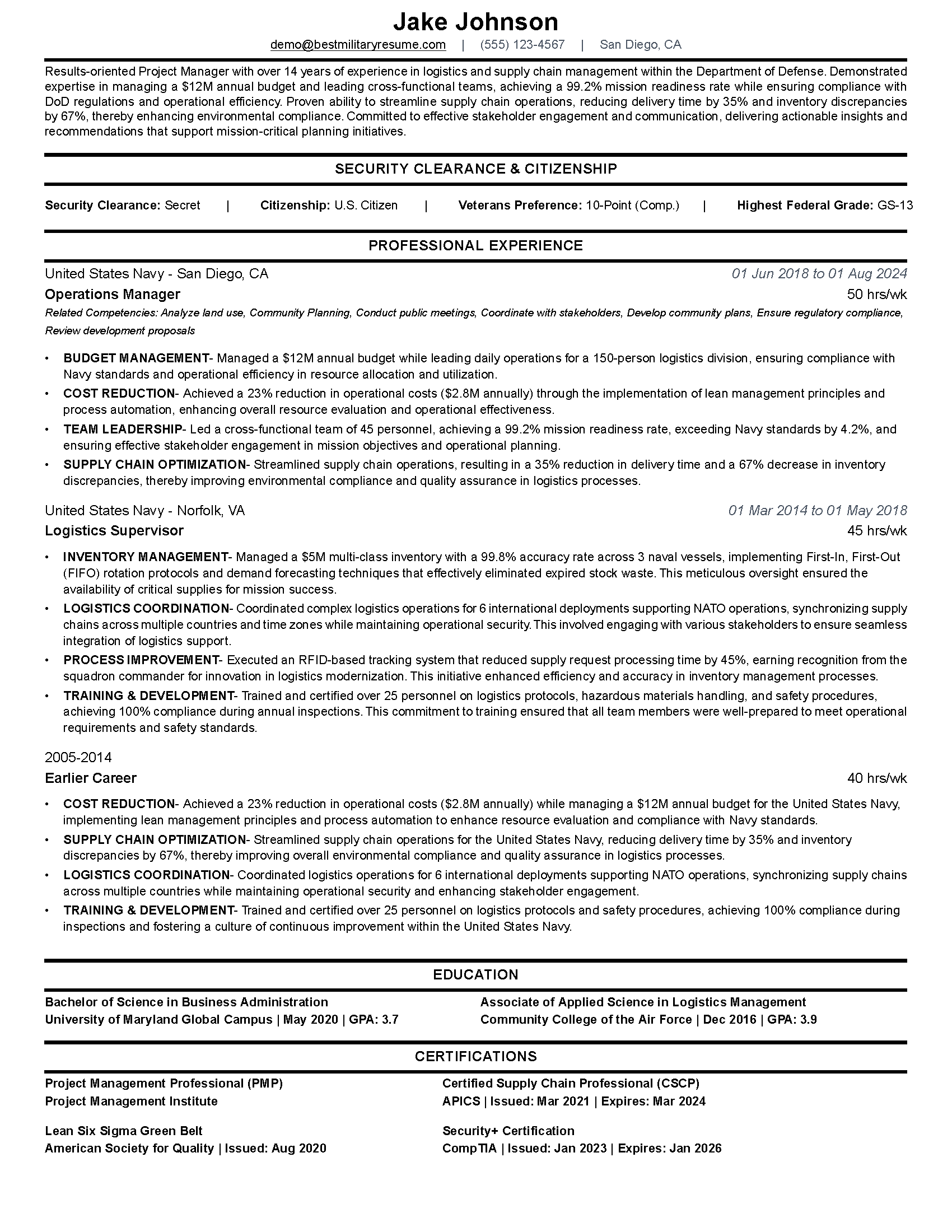
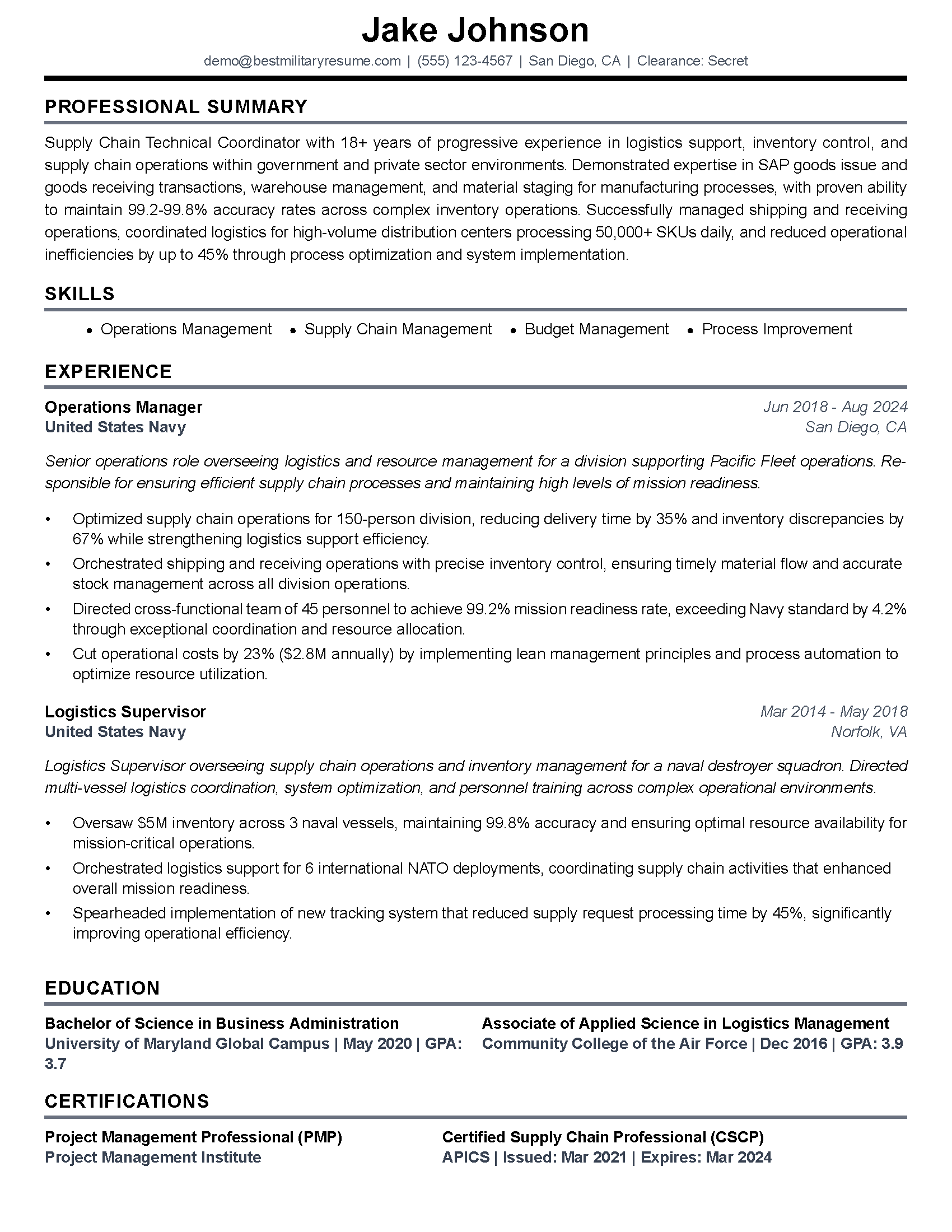
Show the Minimum Rules on Your Resume
The preference can get you to the interview. You still have to qualify, and then win the room. Practice your answer to "tell me about yourself". If it's a panel, use these panel interview tips.
Clifton, an Air Force Technical Sergeant (E-6), used BMR in his job search. He wrote: "Two interviews and job offer of 140K later! Thank you for the help guidance and building BMR!!!"
Sign in to the military resume builder and paste the Nevada posting. It tailors your resume to that job.
Frequently Asked Questions
How long does my spot on a Nevada state list last?
What if my Nevada state application is denied?
Does Nevada's preference apply to county and city jobs?
Do unclassified Nevada state jobs use the preference?
My DD214 is an old version and looks different. Will it work?
About the author
Brad Tachi is the CEO and founder of Best Military Resume and a 2025 Military Friendly Vetrepreneur of the Year award recipient for overseas excellence. A former U.S. Navy Diver with over 20 years of combined military, private sector, and federal government experience, Brad brings unparalleled expertise to help veterans and military service members successfully transition to rewarding civilian careers. Having personally navigated the military-to-civilian transition, Brad deeply understands the challenges veterans face and specializes in translating military experience into compelling resumes that capture the attention of civilian employers. Through Best Military Resume, Brad has helped thousands of service members land their dream jobs by providing expert resume writing, career coaching, and job search strategies tailored specifically for the veteran community.
