Military Spouse Vet Tech License: Move Your VTNE Score and State Credential
Luana, a military spouse, landed a Staff Policy and Procedures Analyst role.
Luana, military spouse, policy and procedures analyst
Your Veterinary Technician National Examination (VTNE) score moves, but the American Association of Veterinary State Boards (AAVSB) "does not license, certify, or register veterinary technicians." On permanent change of station (PCS) orders, the AAVSB will help a member "or their spouse" transfer that score "at no cost to you."
You'll see the free help, the federal law, three state routes and the resume step.
You still have to move each state license. Each new state can mean a new form. It can mean a new fee and a new wait, too. Plan for all three. We found no interstate compact for vet techs. Each board sets its own rules.
How the VTNE differs from a military spouse vet tech license
The VTNE is the national exam. Most boards use your score to grant their own license. The AAVSB lists the regulated places in its jurisdiction list, updated August 2026. It counts "51 regulated jurisdictions." That total is 42 states, 6 provinces, 1 district and 2 territories.
The title changes with the state. Three titles show up:
- Certified Veterinary Technician (CVT), as in Wisconsin.
- Licensed Veterinary Technician (LVT), as in Texas and Virginia.
- Registered Veterinary Technician (RVT), as in California.
So one tech can hold an LVT in one state and a CVT in the next. The AAVSB says to check with each state to learn its rules. Our pharmacy tech license guide shows a similar split between a national exam and a state card.
Free AAVSB help with your exam record on PCS orders
The AAVSB runs a PCS help page. It says it "will help gather and transfer your national exam score and professional record." The help is "at no cost to you."
The page lists three conditions:
- An active duty member of the US military, Coast Guard or Public Health Service, "or their spouse."
- "Relocating due to PCS orders."
- "Applying for licensure in the state listed on the orders."
A job in a third state may not fit that last line. The AAVSB help covers the score and record. The state's own fee is a separate cost. Our license fee reimbursement guide shows how some of it may come back to you.
The federal license rule when your spouse gets orders
A federal law can help a spouse who already holds a license. It is 50 U.S.C. 4025a, part of the Servicemembers Civil Relief Act. Read the law on govinfo. Pub. L. 118-159 amended it on December 23, 2024.
- Part (a): after orders move you, your license "shall be considered valid for the scope of practice" in the new state. You must apply first.
- Part (b): if the board can't act in 30 days, it "may issue" a temporary license. The board decides.
- Part (c): you send proof of the orders and your marriage certificate. You add a notarized affidavit.
The affidavit swears to several things. One is that "the applicant is in good standing in all States in which the applicant holds or has held a license." So keep every old license clean. Our state guide to spouse license reciprocity covers more state rules.
Moving your vet tech license to Texas, Virginia or Wisconsin
Each state handles a moving tech in its own way. This table uses each state's own page or rule, checked November 2026.
| Item | Texas (LVT) | Virginia (LVT) | Wisconsin (CVT) |
|---|---|---|---|
| Who can use it | A military spouse who "holds a current license issued by another jurisdiction" with Texas rules: a VTNE pass and a vet tech program degree. See the Texas rule. | A tech "licensed, certified, or registered" in another state. The rule is open to any mover, not only spouses. | A spouse with a "current unrestricted" license in another state. The service member can be in the regular forces, Reserve or Guard, while on active duty. |
| What it grants | A Texas license. The board "shall issue" it unless its denial rules bar you. A Texas license given up to avoid discipline in the past five years also bars you. | A license by endorsement, granted "in its discretion." See the Virginia rule. | A temporary spousal reciprocal license. |
| How long it lasts | It is "valid for 12 months." Then you show you meet "all requirements for regular licensure." | The rule sets no time limit. It needs clinical work "for at least two of the past four years." | It "expires 180 days after the grant date." The form lets you ask for more time and give a reason. |
| Cost | The fee page lists "Veterinary Technician License $65." | Its fee rule lists "Veterinary technician application for licensure $65." | "$141.00 Reciprocal Initial Credential Fee." |
| Papers | The Texas vet group lists "Spouse's current military orders and military ID." | Proof of your practice and "at least 16 hours of continuing education" in the past four years. | The Wisconsin form, signed in front of a notary. It needs "A notarial seal or stamp." |
Our advice is to ask each board which route fits you before you pay.
States where the vet tech credential is voluntary
Some places have no state vet tech credential at all. The AAVSB list calls them "Non-regulated Jurisdictions with Voluntary Credential." There, "The VTNE is used as part of the voluntary credential process." It counts 12 such places.
Florida is one. Its CVT comes from two Florida groups, per the AAVSB table. New Jersey also has a CVT. A move there means no state board to apply to. Ask the clinic which credential it wants. Then keep your old state license current for your next move.
Before orders, when orders come and the first month
This route is BMR advice built from the sources above, not a board rule.
Before orders
- Keep a copy of your VTNE result and each license card.
- Log your clinical work by year. Virginia asks about the past four years.
- Save proof of every continuing education hour.
When orders come
- Find the new state on the AAVSB list. Note its title.
- Ask the AAVSB for PCS help if the state is on the orders.
- Get a copy of the orders and your marriage certificate.
The first month
- Send the state form with your papers. Write down the date.
- Ask for a temporary license if the board offers one.
- Apply to clinics while you wait. Name the credential as pending.
The vet tech resume a new clinic reads
O*NET lists vet techs at a $47,380 median for 2025. It rates growth from 2025 to 2035 as "Much faster than average (7% or higher)." So the field is growing. A new clinic still needs to see your state status fast.
Put your credentials near the top. Then list the work, like anesthesia, lab tests and emergency care. Our guide to portable healthcare careers covers more jobs that move well.
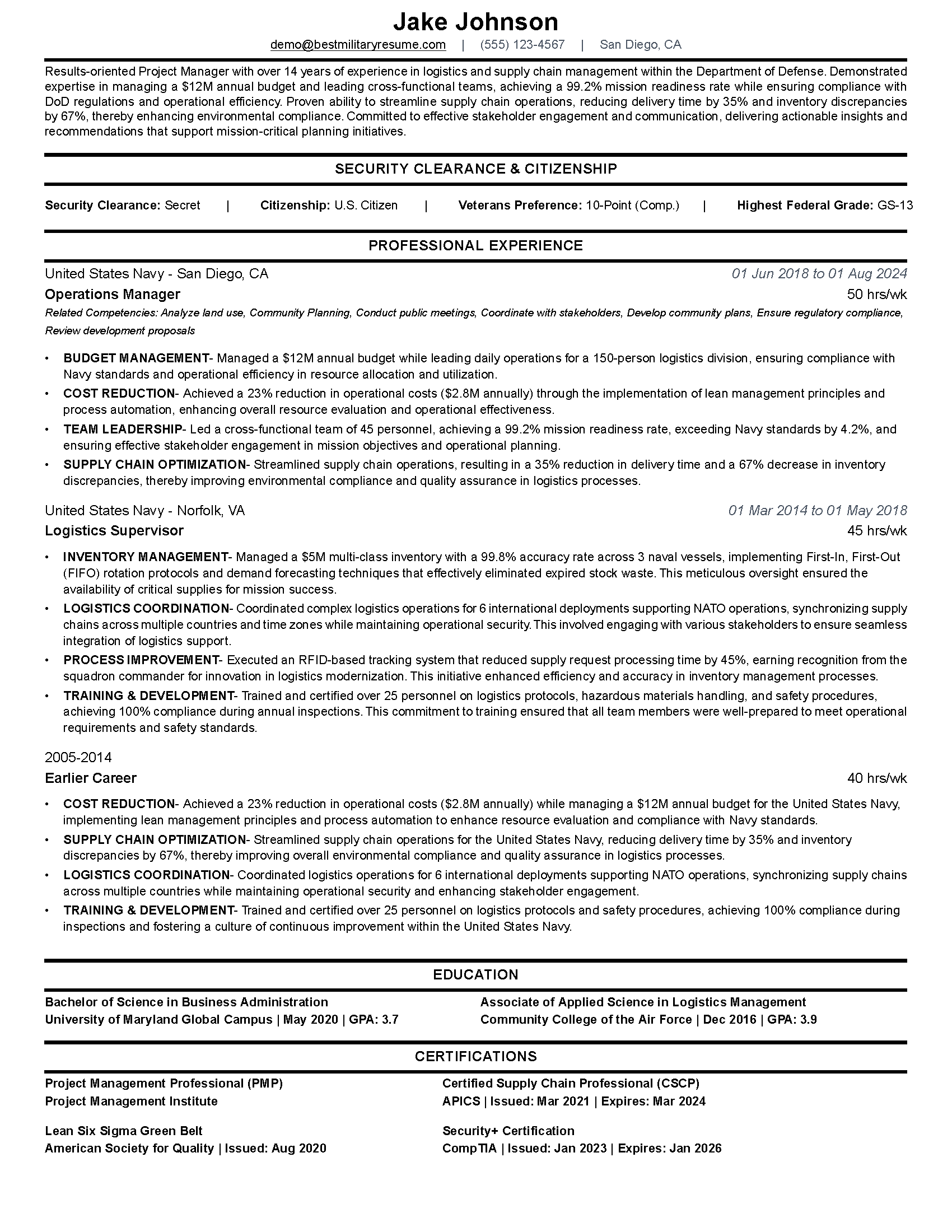
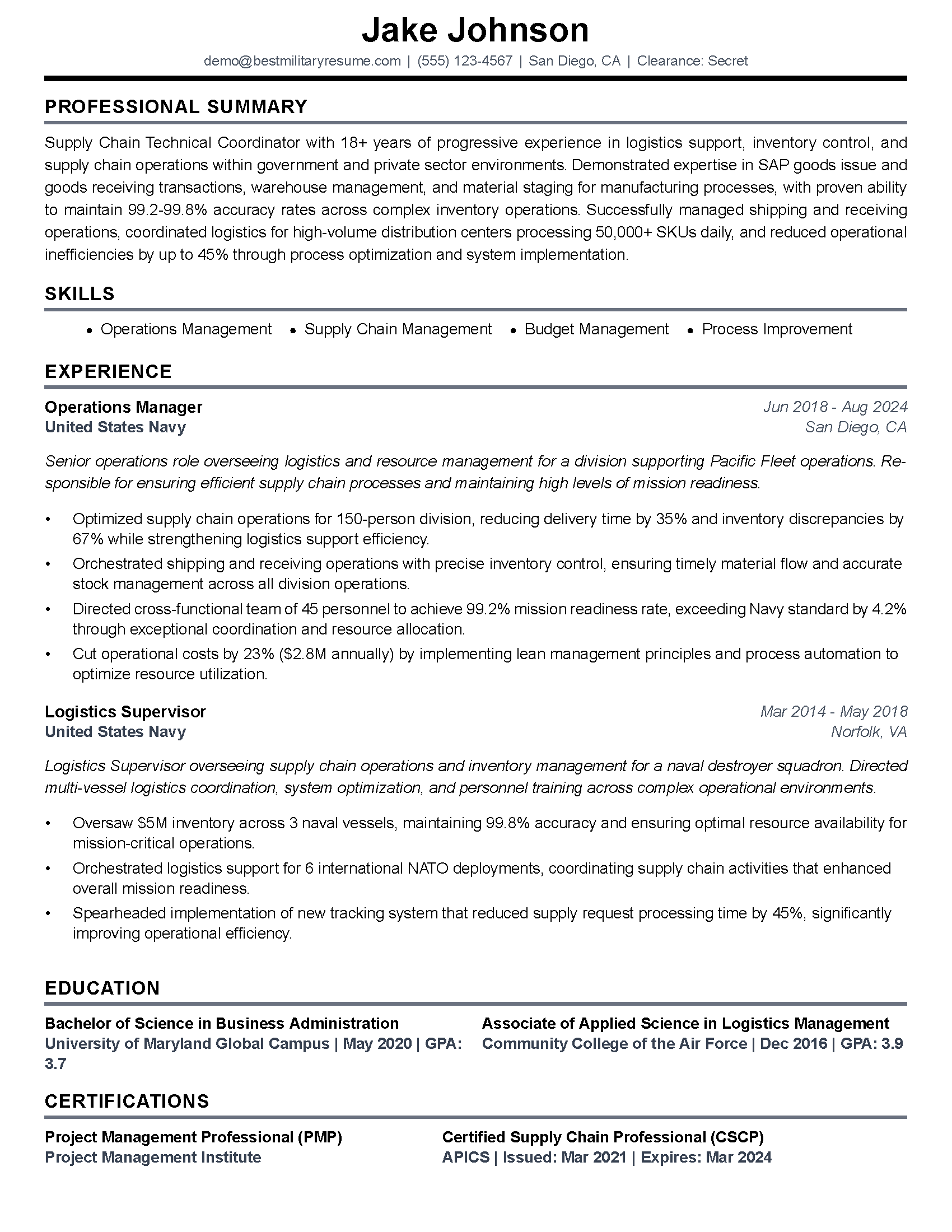
In November 2026, resumes built on BMR totaled 79,061. In BMR's Resume Builder, show each state credential as CVT, LVT or RVT with its status. Add your VTNE pass and the practice types you worked, like small animal or emergency. Then match your skills to what the clinic posting asks for.
Tailoring is free for a spouse's first private resume and first federal one.
Fees and rule words reflect each state's page in November 2026.
Frequently Asked Questions
Do I need the VTNE to be a vet tech in Puerto Rico?
Can a state board run a background check before it honors my vet tech license?
Will vet tech titles like CVT, LVT and RVT change to veterinary nurse?
About the author
Brad Tachi is the CEO and founder of Best Military Resume and a 2025 Military Friendly Vetrepreneur of the Year award recipient for overseas excellence. A former U.S. Navy Diver with over 20 years of combined military, private sector, and federal government experience, Brad brings unparalleled expertise to help veterans and military service members successfully transition to rewarding civilian careers. Having personally navigated the military-to-civilian transition, Brad deeply understands the challenges veterans face and specializes in translating military experience into compelling resumes that capture the attention of civilian employers. Through Best Military Resume, Brad has helped thousands of service members land their dream jobs by providing expert resume writing, career coaching, and job search strategies tailored specifically for the veteran community.
