Loading...
Loading...
The civilian and federal jobs that hire Marines Telephone Systems/Personal Computer Repairers — with real salaries and the resume that gets callbacks.
Every 2847 has more options than a Google search will tell you. Below: career paths, BLS salary data, federal GS series, certifications by target career, and how to translate your experience without losing what made you valuable to the Marines in the first place.
Free · No credit card · Tailored resume in under 5 minutes
After the Navy I got hired into 6 federal career fields and tech sales, and sat on federal hiring panels along the way. I spent the last 2 years rebuilding everything I learned into BMR, tuned for how AI actually screens resumes today. This is the system I wish I'd had on day one.
If you held the 2847 MOS, you were the Marine who kept the wires talking and the workstations running. Telephone Systems and Personal Computer Repairers in the 28xx Ground Electronics Maintenance field fixed the everyday hardware a unit cannot operate without: desktop and laptop computers, peripherals like printers, monitors, and scanners, telephone switchboards and handsets, and the cabling and end-user devices that tie an office, a COC, or a command post together. When a workstation died before a brief, a printer jammed during pay processing, or a phone line went silent in the S-shop, you were the one with the multimeter, the spare boards, and the technical manual.
The work sits at the help-desk-adjacent end of electronics maintenance. You diagnosed at the component and board level, swapped power supplies, drives, and memory, reseated and reterminated cabling, traced telephone faults back through distribution frames, and logged every repair against a work order or maintenance ticket. Training ran through the basic electronics and computer repair pipeline at Marine Corps Communication-Electronics School (MCCES) at Marine Corps Air Ground Combat Center Twentynine Palms, and you carried that skill set across the FMF, base communications shops, and supporting establishment billets.
Civilian employers value this background because it is the exact daily reality of an IT support floor and a field-service route. You already know how to take a ticket, isolate a hardware fault, fix it under a deadline, document the fix, and hand the user back a working machine. That is desktop support, computer hardware repair, and field service, minus the civilian job title. If you want to see how related Marine electronics jobs translate, the 2841 Ground Radio Repairer and 2862 Electronics Maintenance Technician pages cover the adjacent paths, and you can browse every branch through the military career crosswalk. For the broader move into civilian IT, the break into IT without a degree guide is a solid starting point.
BMR has built more than 60,000 resumes across every MOS, and 2847s convert into civilian IT support and field-service roles faster than the title suggests once the resume names the systems by their civilian terms and counts the tickets closed and machines returned to service. The repair work is real. The job description just has to read like a help desk and a hardware bench, not a maintenance shop. — Brad Tachi, Navy Diver veteran & BMR founder
The number that matters when you're deciding what's next: how does civilian pay compare to what you make now?
Military comp is approximate (varies by location/dependents). Civilian is BLS median. Federal includes locality pay. Your real number depends on duty station, family status, GS step, and overtime.
The civilian roles that map most directly to 2847 experience are IT support, computer and hardware repair, and field service. According to BLS Occupational Employment and Wage Statistics (May 2024), computer user support specialists earned a median of $60,340, computer network support specialists earned $73,340, telecommunications equipment installers and repairers earned $64,310, and the broader electrical and electronics repairers for commercial and industrial equipment sat around a $71,270 median. Network and computer systems administrators, a realistic growth target once you add certifications, earned a median of $96,800.
Be honest about how the market is moving. BLS projects overall employment of computer support specialists to dip slightly through 2034, but the field still turns over roughly 50,000 openings a year because people leave and retire, so entry and replacement hiring stays steady. Desktop and field-service hardware work is geographically tied to where the offices, hospitals, schools, and data closets are, so metros and government-heavy regions hire more than rural areas. Managed service providers (MSPs), hospital systems, school districts, and federal contractors are reliable volume employers for break-fix and deskside support. The telephone-systems half of your background also lines up with VoIP and unified-communications field installs, which the telecom installer numbers above reflect.
Marines from the comms and IT side of the house compete for many of the same jobs, so it helps to see how the field looks across branches. The Army 25B Information Technology Specialist, Air Force 3D0X2 Cyber Systems Operations, and Navy IT Information Systems Technician pages all land in the same civilian hiring pool. For the strategy side of the move, read best tech careers for veterans with no degree and military IT skills that actually get interviews. When you are ready to translate the experience onto paper, the military resume builder is built for exactly this.
| Civilian Job Title | Industry | BLS Median Salary | Outlook | Match |
|---|---|---|---|---|
IT Support Specialist O*NET: 15-1232.00 | Information Technology | $60,340 | -3% (Decline, but ~50,500 openings/yr) | strong |
Help Desk Technician O*NET: 15-1232.00 | Information Technology | $60,340 | -3% (Decline, steady replacement hiring) | strong |
Computer Network Support Specialist O*NET: 15-1231.00 | Information Technology | $73,340 | -3% (Decline, steady openings) | strong |
Telecommunications Equipment Installer and Repairer O*NET: 49-2022.00 | Telecommunications | $64,310 | -7% (Decline, VoIP/UC installs offset) | strong |
Field Service Technician (Electronics) O*NET: 49-2094.00 | Field Service | $71,270 | 2% (As fast as average) | moderate |
Network and Computer Systems Administrator O*NET: 15-1244.00 | Information Technology | $96,800 | 2% (As fast as average) | emerging |
BMR rewrites your 2847 experience for any of the civilian roles above — keywords, achievements, and language hiring managers actually scan for.
Free · No credit card · 2 tailored resumes included
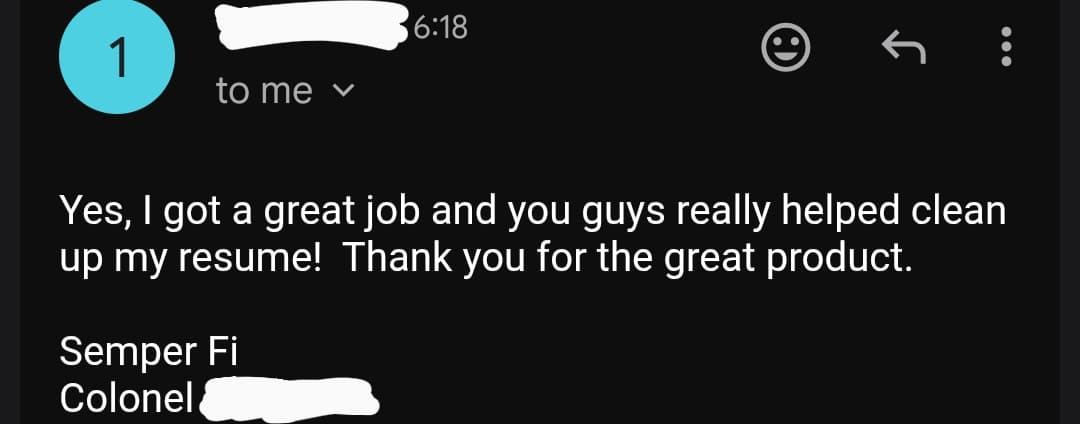
“Hey Brad, Just wanted to send out a quick thank you. You've created something amazing with BMR and your continued advocacy for transitioning service members does not go unnoticed. It was the most effective resource I used in my transition and I know it played a key role in landing a six figure…”
Federal service is one of the cleaner landing zones for a 2847 because the work maps onto several specific GS series, and your hands-on repair record is the kind of specialized experience OPM standards reward. The strongest fit is the GS-2210 Information Technology Management series, which covers help desk, customer support, and systems administration work. Most transitioning Marines qualify at the GS-7 to GS-9 entry band, and a current Security+ or A+ plus documented ticket-closure volume can move you toward GS-9 and GS-11 over time.
Two electronics-and-telecom series sit right next to it. GS-0856 Electronics Technician fits the board-level diagnostics and component repair half of your job, and GS-0391 Telecommunications fits the phone-systems, switching, and cabling half. The administrative and operations side of an IT shop opens GS-0332 Computer Operations and GS-0335 Computer Clerk and Assistant for entry roles, and GS-0301 Miscellaneous Administration and Program for hybrid support-plus-coordination billets. Agencies that run large end-user device fleets and call centers (DISA, the VA, the military departments, DHS components) staff all of these.
Veterans preference applies on top of qualifications, and your service connection can add 5 or 10 points to your rated score depending on your situation. If you are new to USAJOBS, the GS-2210 IT Specialist resume guide and the GS-0856 Electronics Technician federal resume guide walk through the qualification language line by line, and 10 federal job series every veteran should search widens the net. You can start your federal resume here.
| GS Series | Federal Job Title | Typical Grades | Match | Explore |
|---|---|---|---|---|
| GS-0391 | Telecommunications | GS-7, GS-9, GS-11 | View Details → | |
| GS-0856 | Electronics Technician | GS-6, GS-7, GS-9 | View Details → | |
| GS-2210 | Information Technology Management | GS-7, GS-9, GS-11 | View Details → | |
| GS-0301 | Miscellaneous Administration and Program | GS-5, GS-7, GS-9 | View Details → | |
| GS-0332 | Computer Operations | GS-5, GS-6, GS-7 | View Details → | |
| GS-0335 | Computer Clerk and Assistant | GS-4, GS-5, GS-6 | View Details → |
Federal hiring uses keyword-matching and structured experience. BMR builds federal-format resumes (USAJobs-ready) with the right keywords, hours/week, and supervisor info — for any GS series above.
Free · No credit card · Federal + civilian resume formats included
Not everyone wants to stay in a related field. These career paths leverage your transferable skills — leadership, risk management, logistics, project planning — in completely different industries.
Avionics work is the same precision electronics troubleshooting you did on computers and telephone systems, applied to aircraft systems instead of office hardware.
Line work rewards the same methodical fault-finding and hazardous-environment discipline a 2847 used daily, with strong pay and a clear apprenticeship ladder.
Factory automation and robotics need technicians who can isolate faults across electronics and mechanics, exactly the diagnostic habit a 2847 built on repair benches.
Aircraft maintenance values the same manual-driven, document-everything repair discipline a 2847 used, with a regulated career ladder and steady demand.
Broadcast operations run on the same signal-chain electronics and cabling skills a 2847 used, in a media setting instead of a comm shop.
Marines who ran a busy repair section already managed throughput, parts, and people against deadlines, which is the core of civilian operations management.
The skills that made you a good Marine, Sailor, Airman, or Soldier transfer further than you think. BMR rewrites your bullets for any of the pivot careers above — without making you sound like you've never done the work.
Free · No credit card · Try unlimited career angles
If you are applying to a help desk, an MSP, or a hardware-repair shop, the people reading your resume already speak this language, so keep the technical terms. This section is for the careers OUTSIDE end-user IT and telecom repair, where a hiring manager has never read a Marine Corps work order and needs your experience in plain business terms.
The translation problem is that military maintenance language hides civilian-recognizable skills. "Performed organizational-level maintenance on AN/UYK end-user devices" tells a civilian recruiter nothing. "Diagnosed and repaired 40-plus desktop and laptop systems per month, returning each to service the same day" tells them you are a productive technician. Below are the term swaps and before/after bullets that carry weight outside the field.
Before: "Conducted org-level repair of PCs and telephone systems IAW technical manuals."
After: "Resolved 500-plus hardware and telephone-system service tickets annually, diagnosing component-level faults and restoring equipment to operation within same-day service targets."
For more on turning maintenance experience into resume language a civilian reads instantly, see the 50 military terms translated to civilian language glossary and how to translate military experience to a civilian resume. The military resume builder applies these swaps for you.
BMR turns your 2847 duties and accomplishments into civilian bullets that match the job you're applying for — no manual translation, no rewriting.
Free · No credit card · Tailored to each job posting
Which certifications you need depends on where you're headed. Find your target career path below.
The wrong placement can sink an otherwise strong application. BMR knows where each cert ranks, what to call it, and how to frame it for ATS keyword matching and hiring manager attention.
Free · No credit card · Built around your real certs and clearance
Use these resources to plan the next step, whether you are staying in IT and electronics or moving into a different field entirely.
Staying in IT support, computer repair, and telecom: Stack a CompTIA A+ (the entry credential most break-fix and help-desk roles ask for) and Network+ on top of your repair record, then add Security+ if you are targeting cleared or federal work. The CompTIA veteran discount and free Security+ training guides cut the cost. SkillBridge can place you on a help desk or field-service team before you separate, see the best tech careers for veterans overview and the break into IT guide.
Careers outside the field: If you are done with end-user hardware, your electronics diagnostics and ticket discipline open aviation, utilities, manufacturing, and media roles. American Corporate Partners (ACP) offers free veteran mentorship to map the jump, and the GI Bill or VR&E can fund a bridge certificate. Start with the SFL-TAP transition resources and the best certifications by career field guide.
See also: Marine 0671 Data Systems Administrator, Navy ITN Information Systems Technician (Network), and Air Force 3D1X2 Cyber Transport Systems for related electronics and IT paths. To build the resume itself, the military resume builder handles civilian roles and the federal resume builder handles USAJOBS, or you can build your resume now.
Most veterans do this backwards — they wait until terminal leave to start, then panic. Here's the actual sequence that works.
Print this. Tape it to your monitor. Veterans who treat the transition like a 90-day op get hired faster than the ones who treat it like an emergency.
Stop rewriting from scratch every time you apply. BMR turns your military experience into civilian and federal resumes — tailored to each job.