Colorado Veterans Preference: Constitution Points for State Jobs
"Still getting interviews left and right. Now I have to say no."
Taranjeet, E-5, Army, optimized her LinkedIn and resume with BMR
Colorado's veterans preference is written into the state Constitution, in Article XII, Section 15. It adds 5 or 10 points to your comparative analysis score for a state job.
No number score in the hiring process? Then the same section puts you on the interview list. The state's own careers page lists the veteran groups but no spouses. It never says how many points you get.
You'll leave with your group, its points, and the papers that prove it.
Scored hiring adds points, unscored hiring adds you to the interview list
Colorado calls its hiring test a comparative analysis. A state law, C.R.S. 24-50-112.5, says it "may include, but is not limited to, a written examination, oral board, or search committee." Your preference works one of two ways. It depends on whether the analysis gives a number.
When the analysis gives a number
Your points go on top of your score. The total then sets your place on the eligible list.
That place matters because of a top-six rule. Under C.R.S. 24-50-112.5(2)(b), the person hired "shall be one of the six persons ranking highest on the eligible list." The State Personnel Board Rules, 4 CCR 801-1 agree. Rule 4-36 says a numerical referral list "shall only be composed of the six (6) highest ranking individuals."
When it gives no number
You get no points there. Instead, the Constitution says you "shall be added to the interview eligible list." Board Rule 4-36 says the referral list "should be comprised of the top six (6) individuals plus any eligible veterans." The same rule covers a mix of numbered and unnumbered steps.
Both rule quotes come from the board rules effective September 15, 2025. Other states handle this in their own way. Washington adds a percent to your passing score, for one.
The four groups, their points and the papers for each
The Constitution names three groups. C.R.S. 24-50-112.5(7) adds a fourth. You need every condition in your row, not just one of them.
| Group | Points | Every condition the law sets | Papers that prove it |
|---|---|---|---|
| Veteran with war or campaign service | 5 | Separated "under honorable conditions." The service was not "for training purposes." You served during a declared or undeclared war, or "other armed hostilities against an armed foreign enemy." Or you served on active duty in a campaign or expedition "for which a campaign badge is authorized." | Your DD-214 Member 4 showing the character of service. |
| Disabled veteran | 10 | You served in the war or campaign way the 5-point row describes, other than for training. You have a "disability incurred in the line of duty." Because of it, you are "receiving monetary compensation or disability retired benefits." Those payments come under laws run by the Department of Defense or the VA. | Your DD-214 Member 4 plus a VA letter showing a service-connected disability. |
| Surviving spouse | 5 | Your spouse "was or would have been entitled" to the 5 or 10 points. Or your spouse died during that service, or from a service-connected cause while on active duty. Training-only service doesn't count. | The careers page names no spouse papers. Ask the agency on the posting what to attach. |
| Spouse of a disabled veteran who can't work | 5 | The veteran is a disabled veteran "unable to work" and is eligible for preference under the Constitution. This group gets no points on promotions. | A VA letter from the last 12 months saying the veteran is disabled and unable to work. Also, proof you are the veteran's legal spouse. |
Disability pay alone doesn't earn the 10. The war or campaign service and the training rule apply too. Working with a VA rating is a separate question.
The spouse letter must show the veteran is "unable to work due to the nature of his or her disability." It's valid "for twelve months following the date of issuance."
There's a ceiling. The Constitution caps its points: "No more than a total of ten points" goes to any one candidate. So a disabled veteran's total stops at 10.
A note on the careers page. It cites the Constitution and lists the veteran groups. Hold it next to the Constitution's text and you find five gaps. It gives no point values. It leaves out the honorable condition, both spouse groups and the interview list.
The fifth gap is the badge. The careers page says "campaign badge or service medal." The Constitution says "campaign badge" only. Where the two differ, trust the Constitution's words.
This is state law, not the federal rule. Federal veterans preference has its own groups and its own papers.
Claiming points on a Colorado state application
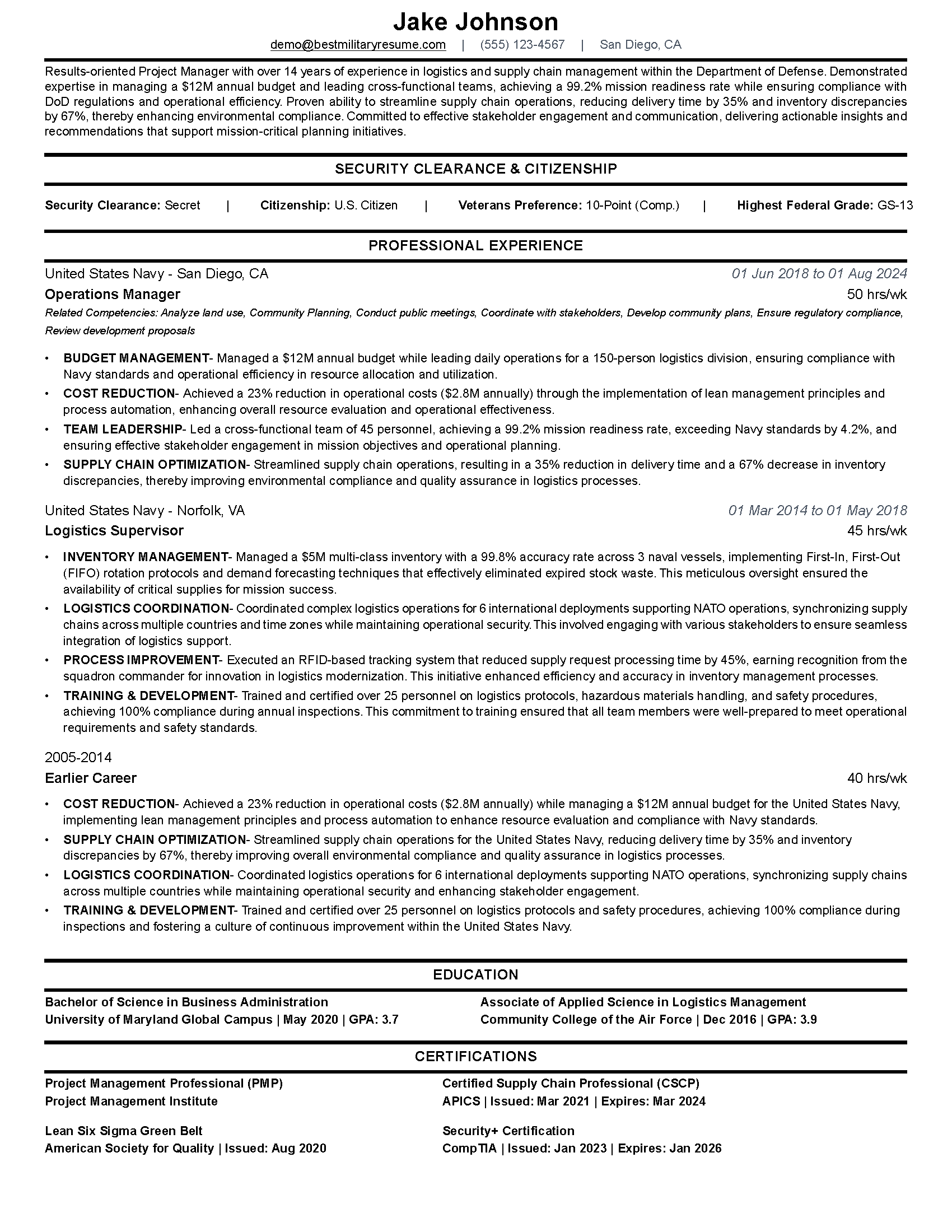
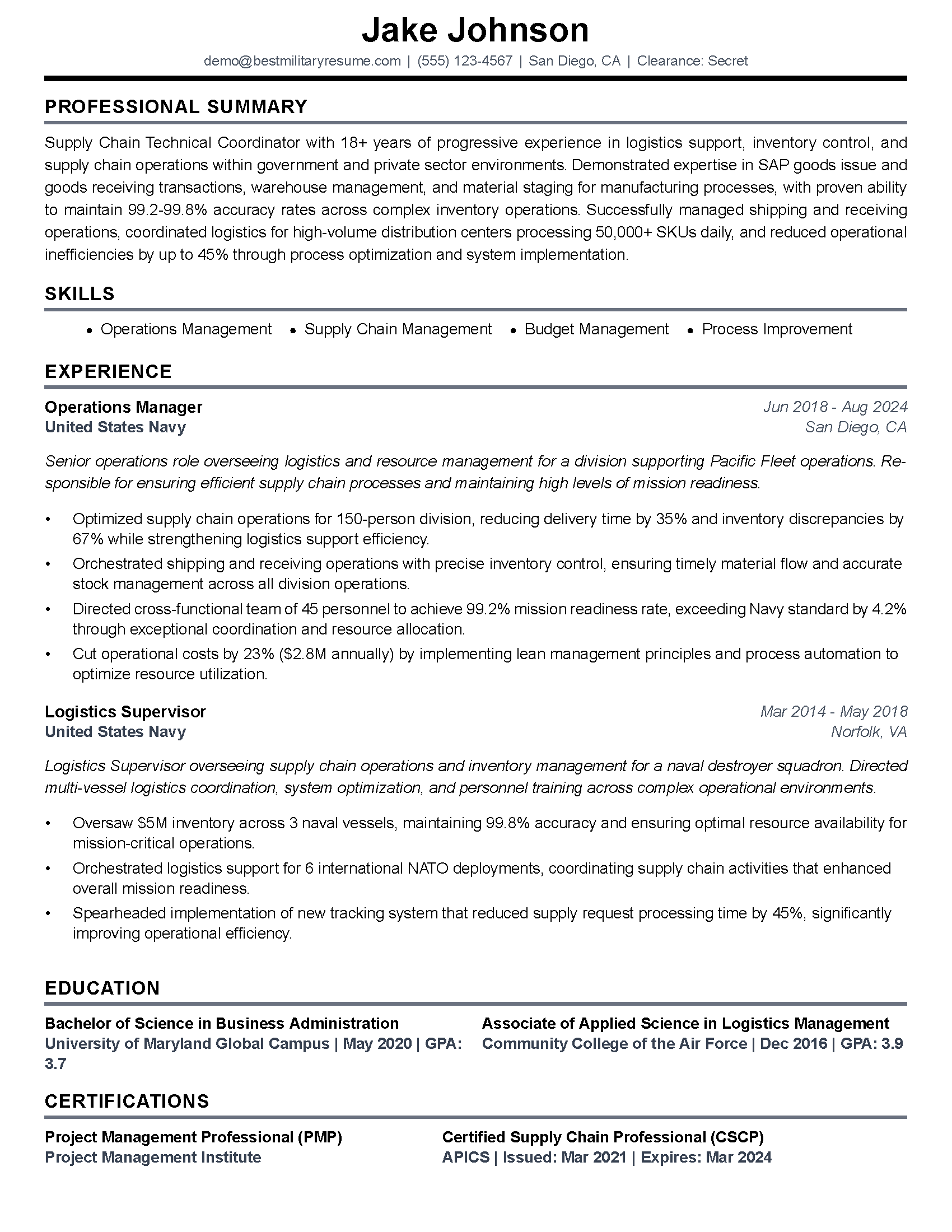
The careers page gives the claim steps in its own words: "If you believe you are eligible for Veterans' Preference, attach documentation to your application including a DD-214, Member 4 showing the character of service."
For a disability claim, it adds: "along with the DD-214, your application should also include a letter from the U.S. Department of Veterans Affairs (VA) showing a service-connected disability."
The Constitution backs those papers. A Department of Defense or VA certificate is "conclusive proof" of honorable service. It also proves a disability or death in the line of duty.
The state page sets no deadline for those papers. CU Boulder, one state-system employer, does. Its applicant instructions say "you must submit your DD214 no later than the posting/application deadline." That's CU Boulder's rule. The state careers page and Board Rules checked here set no deadline.
Your DD-214 proves your points. It's a poor source for your resume, and discharge papers leave out most of your work.
Preference still counts in a state layoff
The Constitution's preference doesn't end on your first day. It covers a layoff that comes from "lack of work or curtailment of funds." Then employees without preference go first. That holds when the preference holder has the same or more service, counting military service.
Board Rule 7-10 in the State Personnel Board Rules ranks a layoff on seniority, performance and veterans' preference. Rule 7-11 says seniority is "the total number of years of state service plus any veterans' preference."
Your years of active service set how much counts. Under 20 years, Rule 7-11 adds your active military years, "up to ten (10) years." At 20 or more years, the Constitution says "no military service shall be counted" for these retention rights.
Promotions get no points, even open ones
Section 15(5) is short and strict: "No person shall receive preference pursuant to this section with respect to a promotional opportunity."
The next line closes a gap. "Any promotional opportunity that is also open to persons other than employees for whom such appointment would be a promotion, shall be considered a promotional opportunity."
So no applicant gets points on a promotional posting. That holds even when the posting is also open to the public. The spouse rule in C.R.S. 24-50-112.5(7) has the same limit.
Colorado city and county jobs
The Constitution reaches past state jobs. It covers "any comparable civil service or merit system" of a state agency or local government. That includes "any municipality chartered or to be chartered under article XX."
A second law sets the floor for local systems. C.R.S. 29-5.5-104 says each applicant in a comparable local system "shall be awarded, at a minimum, the appropriate veterans preference points." Each city or county runs its own process, so read its civil service rules for the claim steps.
Checked November 2026. The Constitution text is a FindLaw copy, current as of January 1, 2022. The two statutes are public.law copies, current through Fall 2025. The Board Rules took effect September 15, 2025. The careers page text is from November 2025.
Meet Colorado's minimum requirements, then claim your points
Points sit on top of a score you still have to earn. The Constitution sets the same "minimum requirements" for every candidate to reach the eligible list. Your resume has to show you meet them.
Christopher, a Coast Guard Chief Petty Officer (E-7), built a resume in BMR. The result was a federal job, not a Colorado one.
In Christopher's words: "I used the resume your site built for me to apply for my first-ever position on USAJOBS, and I was selected for a GS-13 position writing policy for the same type of work I did while on active duty."
Open the military resume builder, sign in, and paste the Colorado posting you want. Then attach your DD-214 Member 4 and any VA letter to the same application.
Frequently Asked Questions
Do National Guard or Reserve members qualify?
Can I appeal my comparative analysis result?
Can I get veterans preference and the disability hiring pilot?
About the author
Brad Tachi is the CEO and founder of Best Military Resume and a 2025 Military Friendly Vetrepreneur of the Year award recipient for overseas excellence. A former U.S. Navy Diver with over 20 years of combined military, private sector, and federal government experience, Brad brings unparalleled expertise to help veterans and military service members successfully transition to rewarding civilian careers. Having personally navigated the military-to-civilian transition, Brad deeply understands the challenges veterans face and specializes in translating military experience into compelling resumes that capture the attention of civilian employers. Through Best Military Resume, Brad has helped thousands of service members land their dream jobs by providing expert resume writing, career coaching, and job search strategies tailored specifically for the veteran community.
