Defense Contractor Job While Drilling: Rights and Clearance
Corey landed a federal security specialist role.
Corey, E-7, Air Force, translated military security experience that actually got read
Under 38 USC 4311(a), a Guard or Reserve member "shall not be denied initial employment" because of that service. Section 4303(4)(A) of the same law calls any entity "that pays salary or wages for work performed or that has control over employment opportunities" an employer. By that reading, a contractor deciding whether to hire you counts as an employer.
A defense contractor job while drilling comes down to five hiring questions and two clearance checks. Each answer quotes its rule. For a government job instead, see our federal jobs guide for Guard and Reserve.
Your questions at the hiring stage
These rules come from the Uniformed Services Employment and Reemployment Rights Act (USERRA) and its Labor Department rules. The last column is BMR advice.
| Your question | What the rule says | What to do (BMR advice) |
|---|---|---|
| Can they turn me down for drilling? | No. Section 4311(a) bars denying "initial employment" on the basis of membership, service or an "obligation" to serve. | Apply like any other candidate. You owe no one an apology for drill. |
| Do I need their permission to go to drill or orders? | No. 20 CFR 1002.87 says you are "not required to ask for or get his or her employer's permission." You owe notice. | Tell them. Don't ask them. |
| How do I give notice? | Rule 1002.85(c) says notice "may be either verbal or written... may be informal." Part (d) says USERRA sets no deadline. It quotes the Defense Department, which "strongly recommends that advance notice to civilian employers be provided at least 30 days prior to departure for uniformed service when it is feasible to do so." | Send a short email the day your dates are set. Keep a copy. |
| How fast must they put me back to work after a drill weekend? | Fast. Rule 1002.181 says "prompt reinstatement after a weekend National Guard duty generally means the next regularly scheduled working day." | If they keep you off the schedule after drill, ask why in writing. |
| Can they make me burn vacation? | No. Section 4316(d) says "No employer may require any such person to use vacation, annual, or similar leave during such period of service." | You may use paid leave if you ask. That choice is yours. |
The permission, notice, reinstatement and leave rows apply once you are on the payroll. Knowing them early lets you answer calmly if a recruiter asks. For a notice email to copy, use our drill and annual training notice guide.
Will a contractor pay you during drill?
The rules on this page protect your job and your leave. They do not set your pay during drill or orders. OPM's paid military leave of "15 days per fiscal year" is for "Federal employees." A contractor job is a private job, even on a base.
BMR advises asking HR one question after the offer: does the company pay anything during drill or orders? Get the answer in writing.
What does a contractor need before you see classified work?
The contractor rules live in 32 CFR 117.10. First, the company "must determine that access to classified information is essential" to a classified contract. Then it may give you access if you have three things:
- "A valid need-to-know for the classified information."
- "A USG favorable eligibility determination for access to classified information at the appropriate level."
- A "non-disclosure agreement" you have signed.
USG means the U.S. government. The access can't go above the level of the company's own entity eligibility determination. The government decides your eligibility. The company must first find that your tasks on a classified contract need access.
The law firm Tully Rinckey puts the sponsor side plainly: "your employer will sponsor you for clearance." That is the firm's summary, not a rule. Rule 117.10(a)(7) adds that contractors will not submit requests for people "who are not their employees or consultants."
Rule 117.10(f) makes one exception for job candidates. It covers a job where you need access "immediately upon commencement of employment." The company may then "submit a request for investigation prior to the date of employment."
Two things must be true first: "A written commitment for employment has been made by the contractor." "The candidate has accepted the offer in writing." The offer must also say you start "within 45 days" of being granted eligibility.
Will your military clearance carry over to the contractor?
The rule leans toward reuse. Under 117.10(a)(6), a contractor will not file a new eligibility request in one case. That is when you are "known to be cleared or in process" by another CSA. A CSA is one of the government agencies the rule puts in charge of clearances. Instead, reciprocity under Security Executive Agent Directive 7 (SEAD 7) "shall be used."
That is all the rule says on this point. It does not say how your military eligibility moves to a contractor job in your case. So ask the contractor's security officer, whom the rule calls the FSO, which record they see for you. Ask before you accept.
Our guide to the clearance record an FSO sees explains that record. For moves between agencies, read our clearance reciprocity guide.
When should you tell a contractor you drill?
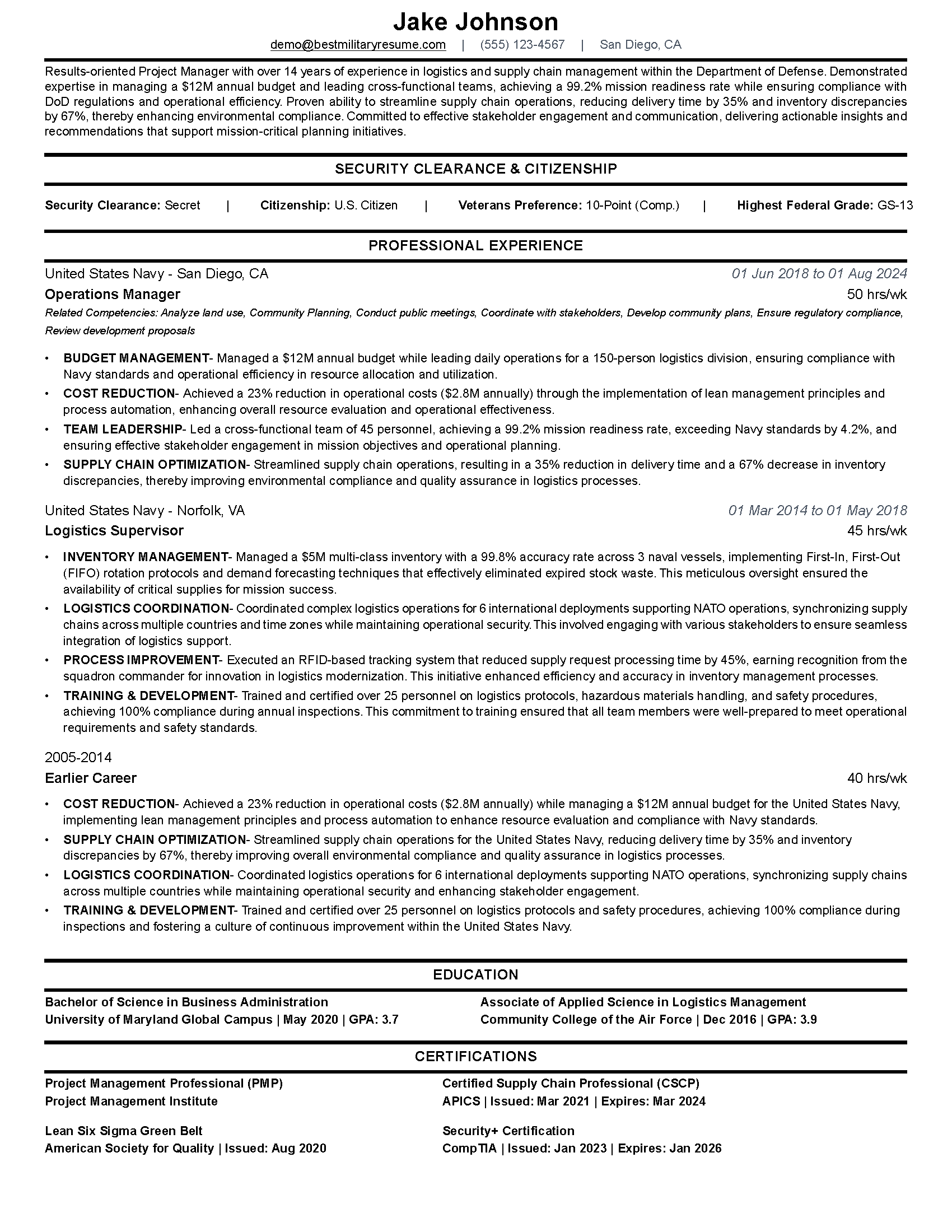
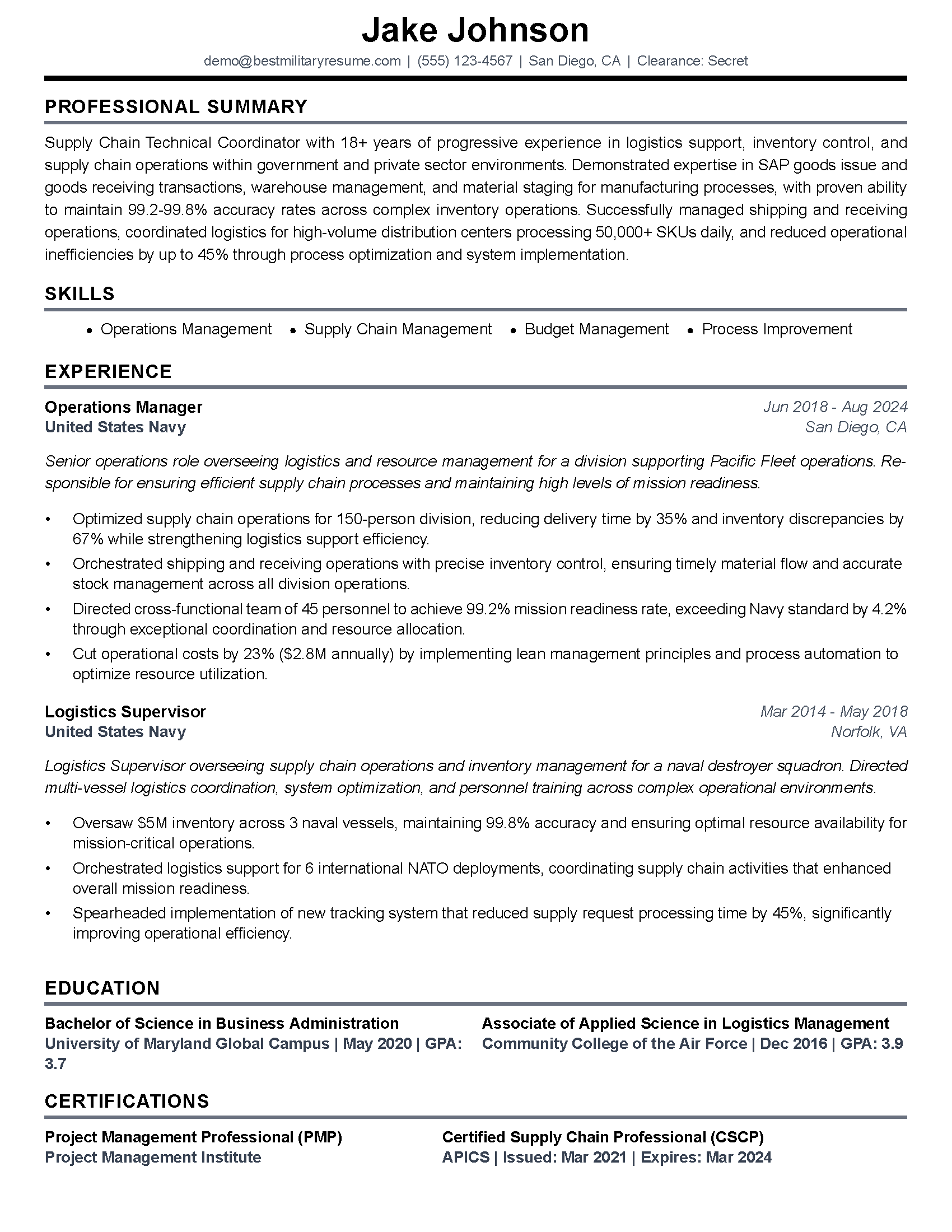
When to mention drill is a judgment call, so this is BMR advice. Say it on the resume, and say it plainly. Our defense contractor resume guide shows where your clearance goes.
Some advice tells reservists to keep their status quiet until hired. BMR sees it the other way for cleared work. Your unit and clearance may be part of why a contractor calls. Hiding the unit can hide the reason.
If a recruiter asks about drill, give one calm sentence and move on. Our Guard and Reserve interview answer helps with the follow-up question. To lay out drill beside your civilian jobs, use our reserve resume guide.
Rules checked November 2026 in the US Code and Code of Federal Regulations on govinfo. OPM's Guard and Reserve page was checked the same month.
What to Do Next
"I got my top choice working as a contractor for Space Operations Command. BMR made a world of a difference for me in this competitive market."
Mikaela, Captain (O-3), Space Force
List your current drilling unit, your role and your clearance status in BMR's Resume Builder. Now make a tailored copy for a defense contractor opening you want. BMR rewrites that copy's summary, skills and work bullets in the opening's wording. It won't add work you didn't do. Your own resume does not change.
Frequently Asked Questions
Does USERRA cover a small defense contractor?
Does USERRA cover a recruiting firm that hires for the contractor?
What if my orders come too fast to give notice?
I applied to join the Guard but have not shipped yet. Am I covered?
About the author
Brad Tachi is the CEO and founder of Best Military Resume and a 2025 Military Friendly Vetrepreneur of the Year award recipient for overseas excellence. A former U.S. Navy Diver with over 20 years of combined military, private sector, and federal government experience, Brad brings unparalleled expertise to help veterans and military service members successfully transition to rewarding civilian careers. Having personally navigated the military-to-civilian transition, Brad deeply understands the challenges veterans face and specializes in translating military experience into compelling resumes that capture the attention of civilian employers. Through Best Military Resume, Brad has helped thousands of service members land their dream jobs by providing expert resume writing, career coaching, and job search strategies tailored specifically for the veteran community.
