Idaho Veterans Preference: Who Counts and What You Get
"Still getting interviews left and right. Now I have to say no."
Taranjeet, E-5, Army, optimized her LinkedIn and resume with BMR
Idaho veterans preference adds 5 points to a veteran's civil service rating under Idaho Code 65-504. A disabled veteran gets 10 points. One rated 30% or more who qualifies must be offered an interview. Employers need not interview more than ten.
The catch is who the law calls a veteran. Idaho's definition includes a residency test, and the state's veterans services page still lists old federal war dates.
Each rule below comes with the Idaho law section that sets it, so you can check it yourself.
Law text checked November 2026 from web.archive.org copies of the official pages. Idaho Code Title 65, Chapter 5 and 65-203 were captured August 10, 2026. The IDAPA 15.04.01 rules PDF was captured November 26, 2025.
Idaho's Definition of a Veteran Has Four Parts
The 5 points rest on the word "veteran" in Idaho Code 65-203. You need all four of these:
- Residency: you are a bona fide resident of the state of Idaho.
- Active duty: you served on active duty in the military, naval or air service.
- Discharge: you left under honorable conditions.
- Time: you served 90 days of continuous active duty. Less counts only if a service-connected disability ended your service.
The residency part matters most. The state's Division of Human Resources careers page doesn't mention it. So if you're moving to Idaho, settle your residency before you count on the points.
The law sets no war era for the 5 points. Any era works if you meet the four parts.
Guard and Reserve service
Idaho's definition of "armed forces" in Idaho Code 65-502 includes the reserve components. But 65-203 still needs active duty. And 65-502(8) leaves a call "for training only" out of its definition of military duty.
The law doesn't say training-only orders count toward the 90 days. Active duty that meets the four parts does. The statute sections linked here say nothing more about Guard or Reserve orders. If your orders are unclear, ask the hiring agency before the posting closes.
The 5 Points, the 10 Points and the 30% Interview
Who gets what under 65-504, in the law's own terms:
- 5 points: any veteran, and the widow or widower of any veteran while unmarried.
- 10 points: a veteran with a current service-connected disability of 10% or more. Also the unmarried widow or widower of any disabled veteran. A spouse qualifies too if the veteran "cannot qualify for any public employment because of a service-connected disability".
- Interview: a veteran rated 30% or more for a current service-connected disability. The veteran must be one of the qualified applicants on the register.
You're a disabled veteran in Idaho if you left under honorable conditions. Under 65-502(4), you also need a current service-connected disability of 10% or more, or a Purple Heart. The term also covers a veteran paid for a service-connected disability, including military or VA retirement or pension.
The ten point text in 65-504(2)(b) names only the 10% rating. For state jobs, Rule 021.04.c also lists Purple Heart recipients.
The interview rule has a limit. The cap: "employers shall not be required to interview more than a total of ten (10) applicants". If applicants are not ranked, the interview goes to those veterans who fully meet all qualifications.
The state rule, IDAPA 15.04.01 Rule 021.04.d, words it a little differently. It covers a list with more than ten veterans rated 30% or more. Then "at least ten (10) will be offered an interview". To get ready for yours, practice your answer to "tell me about yourself".
Where the Division of Veterans Services page is behind
The Idaho Division of Veterans Services page is behind the law. It lists federal war dates, such as December 7, 1941 to July 1, 1955. It also lists the Armed Forces Expeditionary Medal.
The current 65-203 asks for none of that. The page also says "top ten" for the interview, which the statute doesn't say. And it leaves out the residency and 90-day parts. When the two disagree, read the statute.
Federal jobs follow a different law. For that system, see how federal veterans preference points work.
The Points Count on Your First Hire Only
Both point levels in 65-504 are "used only for the purpose of initial appointment". They never count for a promotion, transfer or reassignment.
Initial appointment means your first hire by the state, a county or a city. Temporary or casual work doesn't count. Neither do elected offices or jobs held by patients, inmates or students at a state institution.
For state jobs, the points also can't carry a failing score. Rule 021.04.a says they "must not be used to achieve a passing score". They're added to your final exam score after you pass.
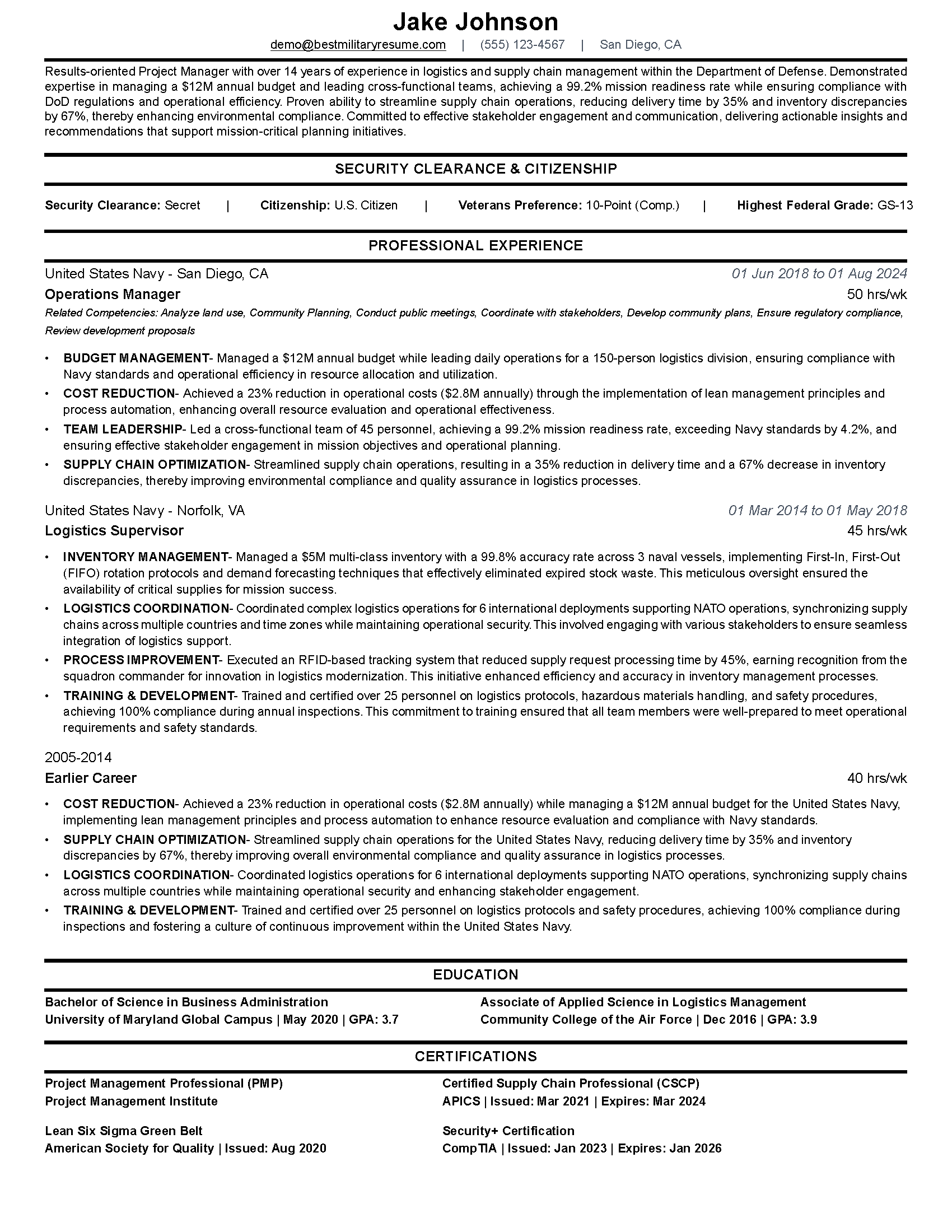
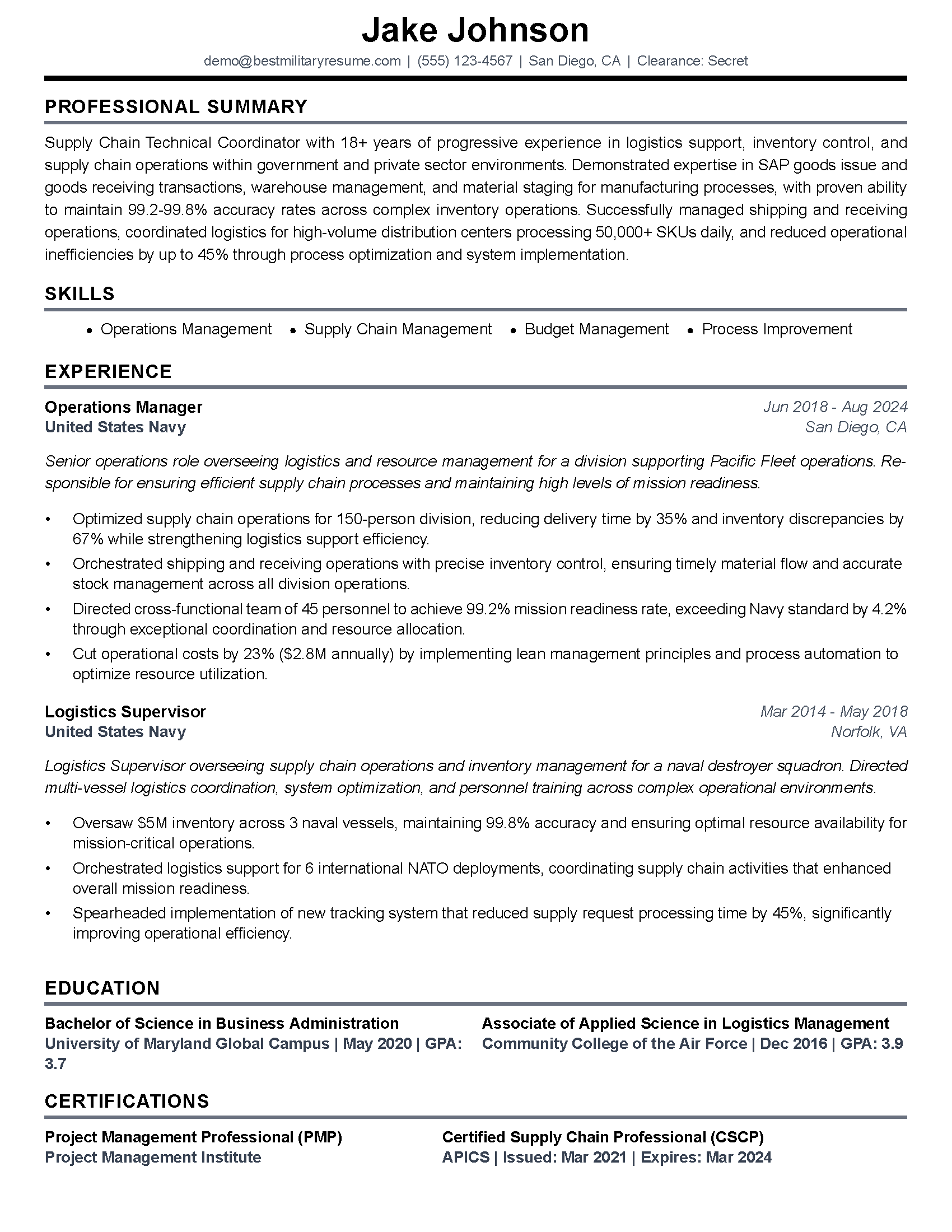
Idaho law says a civil service job is filled by an exam, a merit system or another rating. That rating can be based on experience and qualifications. Your experience may be what gets rated, so write each duty in civilian terms with a result. This guide on translating military experience for a civilian resume shows how.
Jobs the law leaves out
- Key employee jobs: certain at-will jobs outside civil service (65-502(7)). Examples include running a department or advising an elected official in confidence.
- Some federally funded work: where federal rules limit who may be hired (Idaho Code 65-507).
When a State Agency Lays Off: Three Years of Retention Points
Preference also matters in a layoff. Idaho Code 65-505 tells public officials to use it in a layoff. The law calls that a reduction in force.
For classified state employees, IDAPA 15.04.01 Rule 141.03 adds retention points "equivalent to three (3) years of service". They count as if your work met the standard. It uses the Title 65, Chapter 2 meaning of veteran, so the four-part test applies again.
For how another state treats layoffs, see this Mississippi layoff points guide.
Claim It When You Apply, Not After
Idaho Code 65-503A(1) puts the paperwork on you. It says: "An applicant claiming preference is responsible for providing required documentation at the time of making application".
The same section tells employers to say what papers they need. Every application form must ask if you're claiming preference. It must also ask if you've claimed it before.
For state jobs, you apply online at statecareers.idaho.gov. The DHR page says the hiring list "is where veterans' preference points are added to qualifying veterans' scores". The Division of Veterans Services adds that your DD214 "may be requested" at appointment.
The state's preference form sits inside the online application. Follow the form's own steps.
Rated for a disability? This page on working with a VA disability rating covers the job side.
Applying after the closing date
- Still serving or in the hospital: you may apply late if you were serving. The same goes for service-connected hospital care up to one year after discharge. File within 120 days of separation or release, before the register expires and before a selection.
- Disabled veterans: you may apply any time until a selection is made. The limits: you weren't examined twice for that job and grade already. You aren't on that register now. And you aren't serving in a competitive position in that grade.
If You Were Denied Preference: 35 Days to Appeal
Idaho Code 65-506 lets you appeal to the governing body within 35 days. The clock starts when the employer gives notice of the appeal process. With no notice, it starts when you learn you weren't picked.
A court case must start within 180 days of the denial. If an appeal process is in place, that clock waits until it ends. Damages and costs top out at $5,000 or 10% of the job's yearly salary, whichever is higher. Applicants for classified state jobs stay subject to the steps in Idaho Code 67-5316.
Counties, Cities and Districts Use the Same Points
Idaho's rule isn't just for state agencies. Under 65-502(13), public employment includes any county, city or other political subdivision. And 65-505 binds county and city officials who hire.
Their civil service jobs use the same 5 and 10 point scheme. Under 65-503A(1), each employer's application form must ask if you're claiming preference. Check the posting for the papers it wants.
Make the Score Worth the Points
Idaho's preference adds to a score you earn first. So the application has to carry you to that score.
Kenneth, an Air Force Senior Master Sergeant (E-8), wrote: "Your product helped me secure my interview. Thank you again!" His story doesn't say if that job was state, federal or private.
Sign in and paste the Idaho posting. The military resume builder then turns your service into a resume built for that job.
Frequently Asked Questions
Does Idaho's preference guarantee me the job?
Does a general discharge count in Idaho?
If I leave an Idaho public job and come back, do I get the points again?
Can an Idaho employer refuse my application even if I'm preference eligible?
Does Idaho's preference apply to emergency hires?
About the author
Brad Tachi is the CEO and founder of Best Military Resume and a 2025 Military Friendly Vetrepreneur of the Year award recipient for overseas excellence. A former U.S. Navy Diver with over 20 years of combined military, private sector, and federal government experience, Brad brings unparalleled expertise to help veterans and military service members successfully transition to rewarding civilian careers. Having personally navigated the military-to-civilian transition, Brad deeply understands the challenges veterans face and specializes in translating military experience into compelling resumes that capture the attention of civilian employers. Through Best Military Resume, Brad has helped thousands of service members land their dream jobs by providing expert resume writing, career coaching, and job search strategies tailored specifically for the veteran community.
