Mississippi Veterans Preference: The Hiring List, and the Layoff Points
"Still getting interviews left and right. Now I have to say no."
Taranjeet, E-5, Army, optimized her LinkedIn and resume with BMR
Mississippi veterans preference for State Personnel Board jobs works through your place on the hiring list. The State Personnel Board's veterans page says disabled veterans go first and veterans go next. The Board says it built its job site this way after a 2019 law, SB 2863. That law took effect July 1, 2019.
You may have seen "4 points" or "8 points" online. Those numbers are real, but they come from the layoff rules. By the end, you'll know your place on the list, who counts and what proof works.
Disabled veterans first, then veterans, on the Referred List
An agency posts a state job. After the job closes, the Board sends the agency a list of eligible applicants. The Board's manual calls it a Referred List. Under rule 4.9.9, first hires into full-time state service jobs come from it, unless the job is exempt.
The Board's veterans page puts it this way:
"When an agency receives a list of eligible applicants, disabled veterans and veterans are listed at the top of the list with disabled veterans listed before veterans. MSPB also requires that all applicants indicate veteran status on their applications."
So you have to be qualified first. Then, per that page, your status moves your name up. If you don't mark veteran status on the application, the Board has nothing to act on.
The law behind it is section 25-9-303. It tells the Board to give each fully qualified veteran preference "for an initial or promotional appointment." Disabled veterans get "additional preference." So the rule covers a first state job and a promotion. Section 25-9-305 lets the Board set the details by rule.
The Board's manual words the list order another way
The full name is the MSPB Policy and Procedures Manual. The version effective July 1, 2023, says it another way. Rule 4.9.2 B reads:
"The names of referred applicants shall be placed on the list in alphabetical order. Applicants who have a Veterans or Disabled Veterans status will be designated as such on the Referred List."
Rule 4.6 also speaks only of a designation. It marks your status on the list. It says nothing about moving your name.
So the two sources don't match. The web page says veterans go on top. The manual says names go in A to Z order with a veteran tag. Either way, the list carries your veteran mark. Neither text says which one the job site follows today.
The 4 and 8 points are for layoffs
The manual does give points. They sit in the layoff rules. When a layoff hits only some employees, the agency ranks state service staff with a retention formula. Seniority counts for 40%. Performance counts for 40%. Veterans preference counts for 20%.
The rule says: "Veterans shall be awarded four (4) points, and disabled veterans shall be awarded eight (8) points."
The people with the fewest retention points leave first. That gives you an edge only if you already hold a state job and a layoff comes.
A U.S. Army benefits page on Mississippi, reviewed April 17, 2026, applies these points to hiring. It says veterans get four and disabled veterans eight. In the 2023 manual, those numbers show up only in the layoff formula. Go with the manual.
One more conflict. The Mississippi Military Department's state job packet (Rev 08.2025) talks about 5 and 10 points. That's one agency's own form, not the Board's manual. Its veteran definition also differs from the state law. Follow the posting you apply to, and ask that agency if the two disagree.
Who counts under section 25-9-301
The definitions come from section 25-9-301, as changed by Senate Bill 2863 (2019, effective July 1, 2019). You count as a veteran if one of these fits:
- Wartime: you served 90 days in the active U.S. Armed Forces during a period of war or armed conflict. You also got an honorable discharge.
- Injury discharge: you were discharged for a service-connected injury in less than 90 days.
You count as a disabled veteran if you are a veteran and one of these fits:
- VA rating: the VA certified a service-connected rating of at least 30% within the last 90 days.
- Purple Heart: you got the Purple Heart for wounds received in combat.
The Purple Heart line came in with the 2019 bill. The law and the manual don't list the war periods. Ask the agency on your posting which dates it uses.
If you're Guard or Reserve, read rule 4.6 closely. It gives no designation for active duty "for 'training purposes only'" to meet Reserve or Guard duty. So training-only active duty does not count. Those words exclude only training duty. A wartime call to active duty still must meet the 90-day and discharge tests.
For the resume side, see writing a National Guard resume for civilian jobs.
Spouses, cities and the Highway Patrol
The state hiring law names no spouse or widow preference. The Board does run a Military Spouse Transition Network. It is only for spouses who already work in a state job and face a PCS move. It helps them find job leads in the state they move to.
Local, apart from the state rule: nothing here says the Board's rule covers cities or counties. Some cities have fire and police civil service. The law, section 21-31-17, covers people who left those jobs for the armed forces. They get a rehire preference. Section 21-31-1 says which cities have it.
State, but separate: section 45-3-15 covers the Highway Patrol. It says patrolmen called to the armed services "shall be given preference in employment upon their return." So it only helps a patrolman coming back from service.
The proof the Board takes
Rule 4.6 C names two ways to prove veteran status. One is a certified copy of your discharge papers and separation record. The other is a certification from the VA or the Department of Defense.
For disabled status, the rule asks for "proof of disability certified by the Veterans Administration." It goes "on such forms as may be required by the MSPB Executive Director."
This check did not cover the Board's job site for that form or the upload steps. Ask the hiring agency which form it uses and how to send it. The Board's page says only that you must mark your status on the application.
A plain photocopy may not meet the rule. The rule says certified. Claiming disabled status by VA rating? Get a VA certification dated within the last 90 days. Not sure how a rating and a job fit together? Read whether you can work with a VA disability rating.
Before you submit, look at three things. Each comes from the Board's page or rule 4.6.
- Status: did I mark veteran or disabled veteran status on the application?
- Proof: is my discharge copy certified, or do I have a VA or DoD certification?
- Rating date: if I claim disabled status by rating, is my VA certification from the last 90 days?
Then check the qualifications. Rule 4.6 marks your status only if you qualify for the list. Our guide on how to read a job posting and decide if you qualify walks through it. Federal jobs run on a different system. See how federal veterans preference works.
Last checked November 2026: the MSPB veterans page. Also checked: the MSPB manual effective July 1, 2023 and the 2019 text of SB 2863. The statute text came from FindLaw copies and the bill, not the official code. FindLaw dates those copies January 2018 to January 2024.
A Cornell copy of rule 4.6 is labeled effective until 7/1/2025. So a newer manual may exist. This check found none, and no 2024 to 2026 change in the law.
Your name still has to make the Referred List
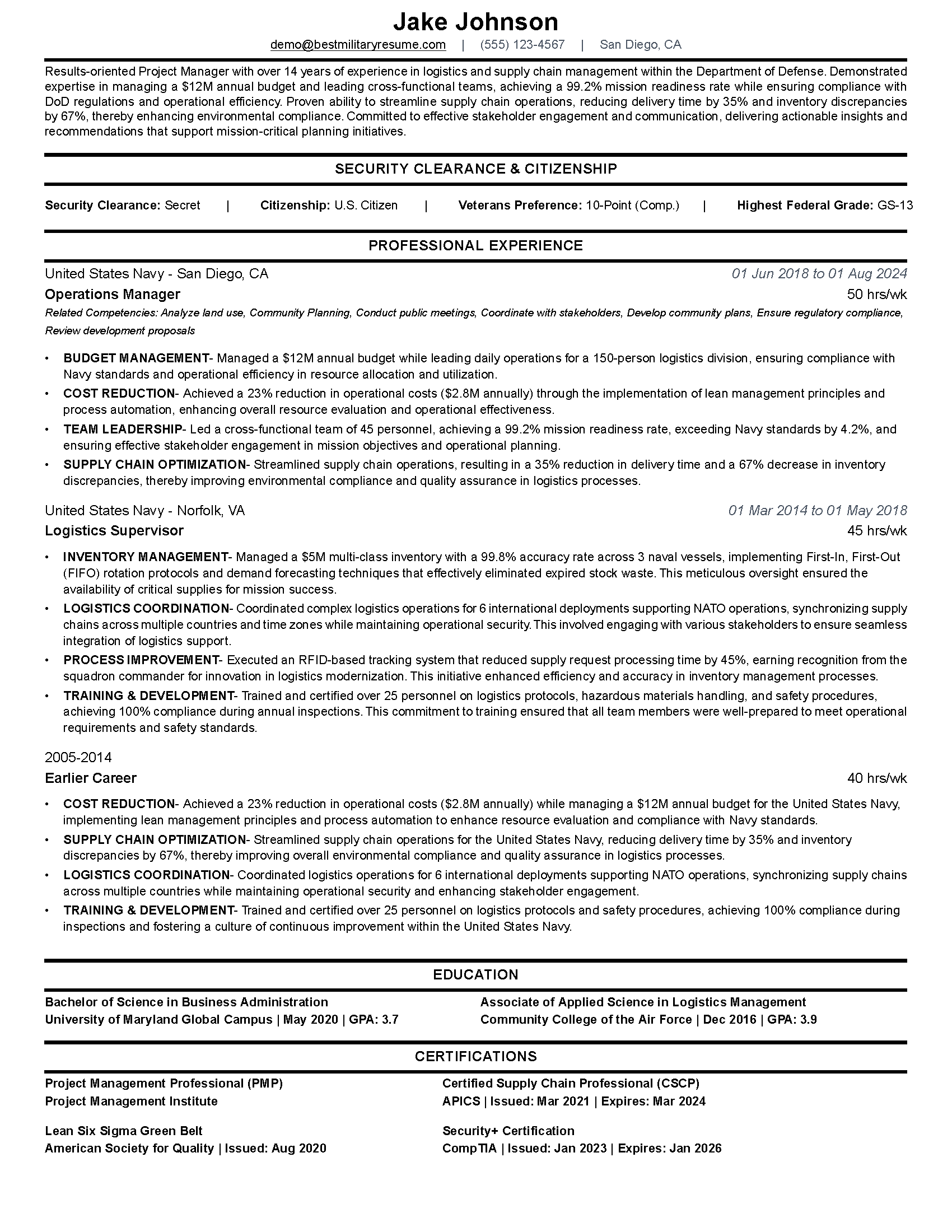
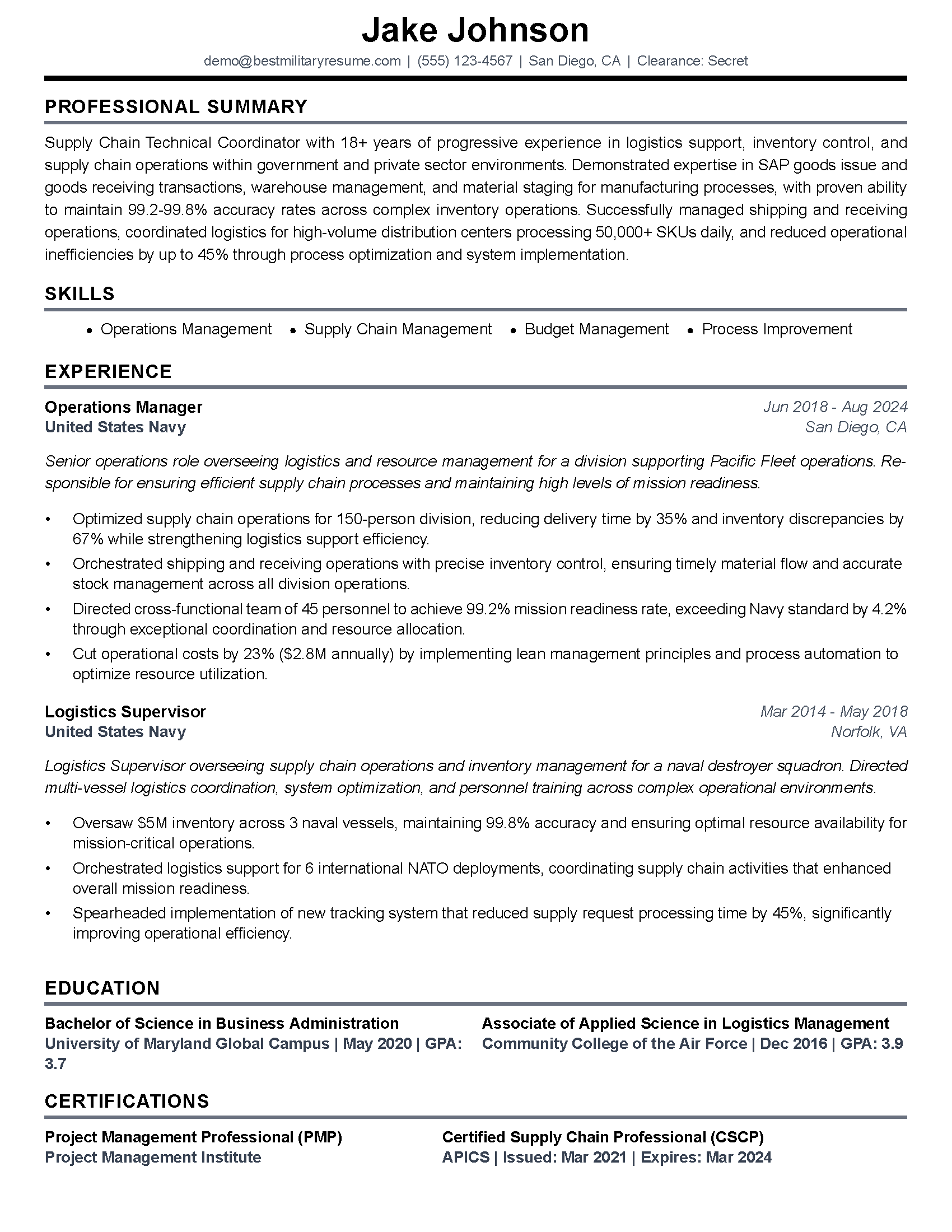
Your status gets you a mark on the list. You still have to make the list, and then win the interview. That part is your resume, matched to the posting.
Matthew, a Marine Master Sergeant (E-8), got a local job, not a Mississippi state one. He wrote: "Today, I was offered a job to work for my city in the Human Resources department." He added: "With BMR, I instantly began to get job interviews."
Open the military resume builder, sign in, and paste the Mississippi posting.
Frequently Asked Questions
Do part-time or time-limited Mississippi state jobs use the Referred List?
Did Mississippi add NOAA Corps service to the veteran definition?
Who goes first in a Mississippi state layoff?
Why did Mississippi change its veteran definitions in 2019?
About the author
Brad Tachi is the CEO and founder of Best Military Resume and a 2025 Military Friendly Vetrepreneur of the Year award recipient for overseas excellence. A former U.S. Navy Diver with over 20 years of combined military, private sector, and federal government experience, Brad brings unparalleled expertise to help veterans and military service members successfully transition to rewarding civilian careers. Having personally navigated the military-to-civilian transition, Brad deeply understands the challenges veterans face and specializes in translating military experience into compelling resumes that capture the attention of civilian employers. Through Best Military Resume, Brad has helped thousands of service members land their dream jobs by providing expert resume writing, career coaching, and job search strategies tailored specifically for the veteran community.
