Rhode Island Veterans Preference: Entrance Exam Points and the V/DV List
"Still getting interviews left and right. Now I have to say no."
Taranjeet, E-5, Army, optimized her LinkedIn and resume with BMR
Rhode Island veterans preference adds 5 points to a veteran's final earned rating. A disabled veteran gets 10 points, under R.I. Gen. Laws 36-4-19. The points count only on competitive tests for entrance into the classified service. They do not count for promotion, and you must pass first.
The Office of Veterans Services summary page names entrance exams but never says promotion exams get no credit. It also leaves out that a 0% rating counts. You will see which tests decide the 5 or 10 points, and where the laws disagree.
Entrance Tests Only, and Only After You Pass
The points help you get a state job. They do not help you move up once you are in. The law gives the credit to veterans:
- "in competitive tests for entrance into the classified service, but not for promotion in the service"
The promotion exam section, 36-4-22, has no veteran credit in it. If you already hold a classified job, plan any promotion without the points.
You also need a passing score first. You must reach the minimum final earned rating in the public notice. Then the 5 or 10 points are added. They never lift a failing score to a pass.
Your name then goes on the employment list with a mark beside it. The law puts the letter "V" next to each veteran. It puts "DV" next to each disabled veteran.
Three Ways to Count as a Veteran
Rhode Island's veteran test is short. Section 36-4-19(b)(2) gives three ways to qualify:
- Active duty: You served on active duty for other than training for more than 30 days. You left with other than a dishonorable discharge.
- Disability discharge: You were discharged or released from active duty because of a service-connected disability.
- Guard or Reserve retiree: You served at least 20 honorable years in the Guard or Reserve. You have a certificate of retirement. You were honorably or generally discharged.
Note the first route's words. The law says "other than a dishonorable discharge," not "honorable." A general discharge fits that wording.
The Guard route needs all three parts. Twenty years alone is not enough without the retirement certificate and the discharge.
A Guard or Reserve member with fewer than 20 years can still qualify through the first route. That takes more than 30 days of active duty other than training. It also takes an other than dishonorable discharge or release. The law does not say how call-ups count. Ask the state office about your orders.
To put your Guard years on paper, see this guide to a National Guard resume for civilian jobs.
Disabled Veteran Means a War Veteran With a 0% or More Rating
The 10 points go to a disabled veteran as chapter 3 defines one. That chapter, 36-3-3, sets the conditions in item (7). You must be a war veteran. The VA must certify your disability as service connected. The rating must be 0% or more.
So a 0% rating counts. The Office of Veterans Services hiring preference page leaves the 0% out. It says only "VA service-connected rating."
The war veteran part matters too. Section 36-4-19(b)(1) asks for a campaign ribbon or expeditionary medal. It covers any conflict, war, undeclared war or contingency operation. Accepted military papers must note the award. The discharge must be honorable or general.
The law does not name which paper counts. Keep your rating letter and your award records together before you apply.
Where Rhode Island's Laws Disagree
Watch four spots where the laws clash or confuse. Know them before you count on the points.
- Two veteran tests: Section 36-4-19(a) marks a V for each veteran as chapter 3 defines one. But part (b) defines "veteran" itself, with the 30-day test. Chapter 3, item (21), uses set war dates and service periods instead.
- Two war veteran tests: Item (21) of 36-3-3 lists war eras by date. Section 36-4-19(b)(1) uses the campaign ribbon or expeditionary medal test.
- A second points section: Another section, 36-5-6, also gives 5 and 10 points. It uses a 90-day active duty test tied to a war or campaign. That service must have earned a campaign ribbon or expeditionary medal. Ask the state office before you count on it.
- An old WWI-era section: 30-21-8 still shows up when you search. It covers only disabled veterans of the Spanish-American War through World War I. It does not apply to today's veterans.
Rhode Island gives no spouse or widow preference in 36-4-19, 36-3-3 or 36-5-6. None of the three mentions spouses or widows.
If your case falls in a gap, write to the Office of Classification and Examination. Keep the reply with your exam papers.
Stay Reachable for Five Business Days
A spot on the list helps only if the state can reach you. Section 36-4-26 sets how names go from the list to the hiring office. Two 2024 laws changed it, effective June 26, 2024.
Under that section, your name comes off the list if you say you are unavailable. It also comes off if the state cannot reach you within five business days. Either the state's personnel chief or the hiring office may try to reach you.
The hiring office then picks "in ranked standing order" from the names it gets. Your V or DV points sit inside that ranking.
- Contact details: Keep your phone number and email current on every exam application.
- Voicemail: Clear it and check it daily while a list is open.
- Drill weekends and orders: Plan who checks your messages while you are away.
Claiming the Credit With Classification and Examination
The state's Division of Human Resources runs the Office of Classification and Examination. Its exam form is CS-9, the Examination Application. A current copy of the form and a claim deadline were not found.
Ask Classification and Examination which papers to attach, and when, before your exam date.
Federal jobs run on a different system. Read how federal veterans preference works if you apply to both. For a neighboring state's list rules, see Massachusetts veterans preference.
Law text: 36-4-19, 36-3-3, 36-4-22, 36-4-26, 36-5-6 and 30-21-8, from the Rhode Island General Laws. The last change to 36-4-19 listed is P.L. 2012. Checked November 2026.
After the V or DV Mark, the Resume
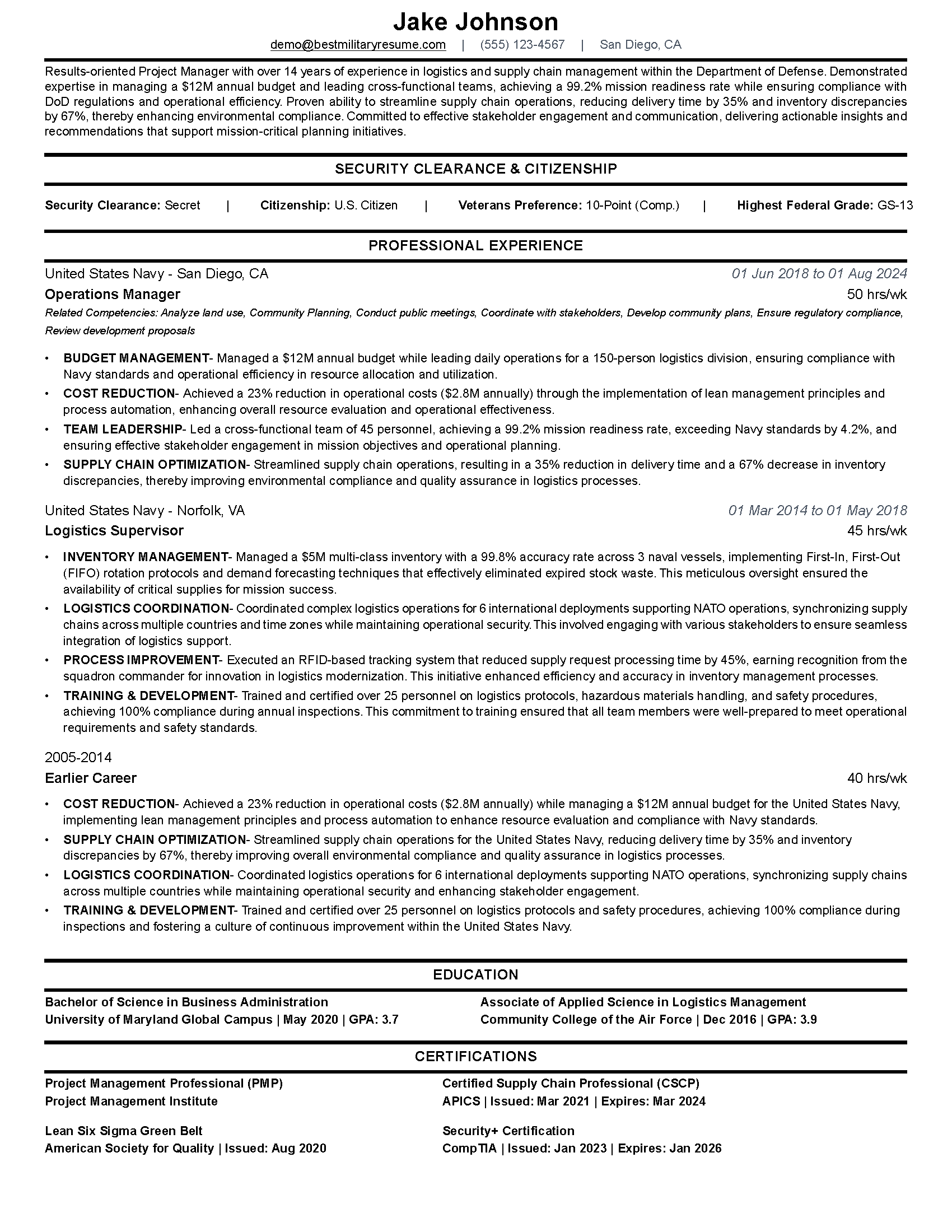
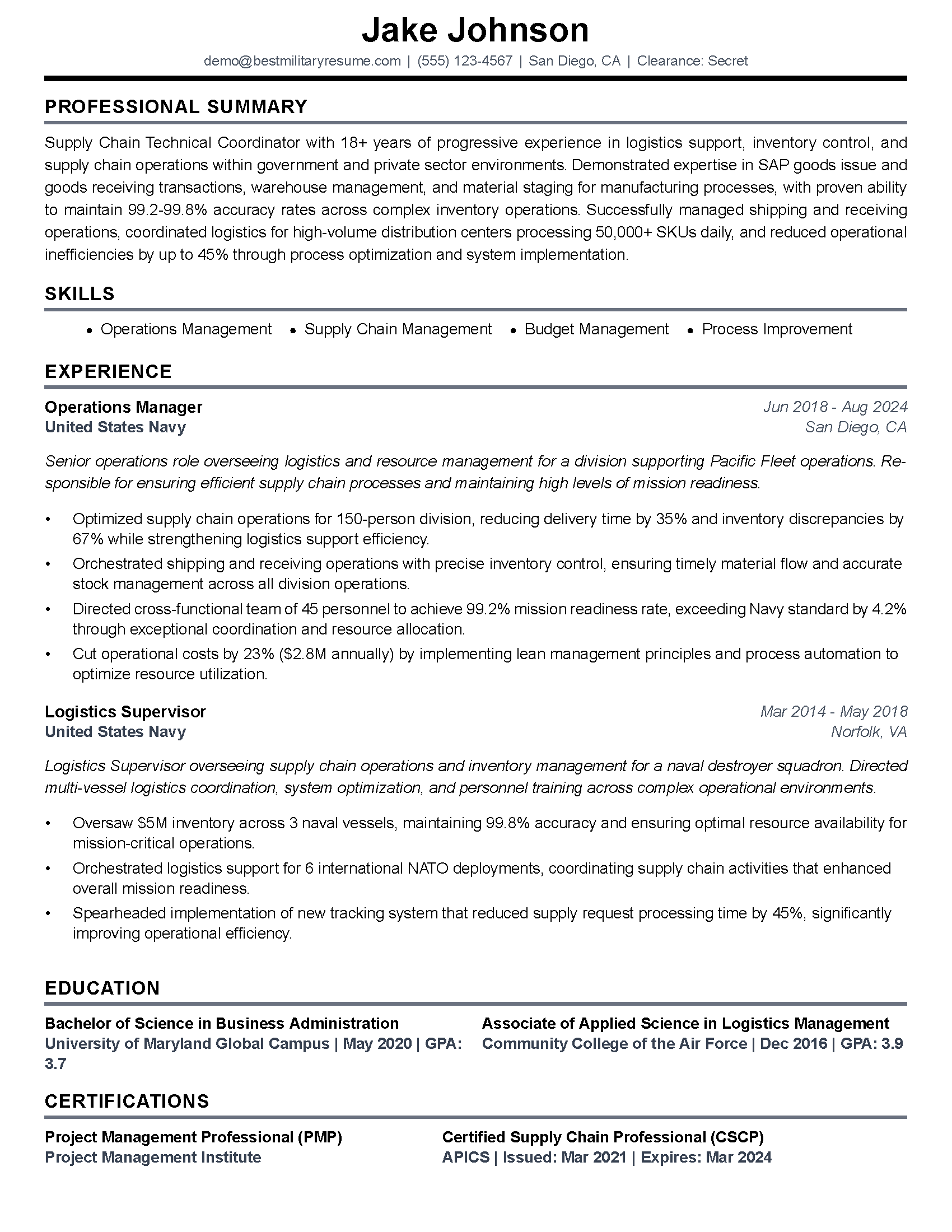
The exam gets you on the list. After that, you still compete with the people ranked near you. Put your service in plain civilian words. This guide shows how to translate military experience for a civilian resume. This one covers where to list your military service.
Jethro, a Navy Chief Petty Officer (E-7), used BMR. His story does not name a job, an employer or a hire. He wrote: "This product was great at rewriting the resumes that I had."
Sign in to the military resume builder and paste the Rhode Island posting. The builder tailors your resume to that job.
Frequently Asked Questions
Do I need a campaign ribbon to get the 5 points?
Can I get both the 5 and the 10 points?
Does the credit apply to jobs filled without a competitive test?
Do veterans keep their state job in a layoff?
Does Rhode Island make private employers give veterans preference?
About the author
Brad Tachi is the CEO and founder of Best Military Resume and a 2025 Military Friendly Vetrepreneur of the Year award recipient for overseas excellence. A former U.S. Navy Diver with over 20 years of combined military, private sector, and federal government experience, Brad brings unparalleled expertise to help veterans and military service members successfully transition to rewarding civilian careers. Having personally navigated the military-to-civilian transition, Brad deeply understands the challenges veterans face and specializes in translating military experience into compelling resumes that capture the attention of civilian employers. Through Best Military Resume, Brad has helped thousands of service members land their dream jobs by providing expert resume writing, career coaching, and job search strategies tailored specifically for the veteran community.
