Montana Veterans Preference: Claim It Before the Job Closes
"Still getting interviews left and right. Now I have to say no."
Taranjeet, E-5, Army, optimized her LinkedIn and resume with BMR
Montana veterans preference must be claimed in writing before the job closes. A late claim is "a complete defense" for the employer under MCA 39-29-103. Miss the date, and you can't win a preference case in court over that job.
A claim on time earns points on a scored step. You must be a citizen who meets the minimums. With no score, it puts you ahead of others about as qualified.
This page lists the papers to send, who counts, the points and the appeal clock.
Law text is from the Montana Code Annotated 2025 on the Legislature's site, checked November 2026. Rule text is from the Administrative Rules of Montana. The copy used is from a web archive of the state site, dated May 25, 2024.
The written claim is due by the closing date
The State HR careers page says a claim is your choice. Your papers are due "by the closing date for the position". The page allows "an alternate date" if the agency sets one.
The page lists these papers:
- Proof of service: a DD-214 "showing the character of discharge". Or a paper from the Montana Guard's Adjutant General "certifying service". This is for a veteran or a relative.
- Proof of disability: a VA letter for a service-connected disability. This is for a disabled veteran or a relative.
- Anything else: other papers, if the agency accepts them.
Send them to the contact person on the job listing. Use the state's file transfer service. Put the job title and listing number on it. The page also allows mail to the contact on the listing. Black out details you don't need, like your Social Security number.
The State HR page lists no claim form. The rules let an employer use one. Skipping it doesn't sink your claim if the claim is "reasonable and timely" (ARM 2.21.3616). A lie on the claim "is cause for immediate discharge," the rule says.
Scored hiring adds points, other hiring puts you ahead
MCA 39-29-102 splits hiring two ways. A "scored procedure" is a test, a set oral interview or a similar step. It ends in a number.
- Veteran: 5 percentage points of the total possible points.
- Disabled veteran or eligible relative: 10 percentage points.
- No stacking: a disabled veteran who gets the 10 can't add the 5.
Two gates come first. You must be a U.S. citizen. You must also meet the job's minimums. The rules put points on each scored step. That means each step that cuts or moves people on. When steps are combined into one total, the points go on the total.
No score? Then you go ahead of others who are about as qualified. The law calls that "substantially equal qualifications". The statute's order, top to bottom:
- Disabled veteran.
- Person with a disability.
- Veteran.
- Eligible relative.
- Eligible spouse.
The older rule lists a shorter order: disabled veteran, eligible relative, veteran. The law changed in 2013, so its order is the newer one. The rule also says "substantially equal" means a range, not an exact tie.
Initial hiring means the job is open to outsiders
Points apply only to an initial hiring. MCA 39-30-103 defines it as a job open "from outside the ranks of the current employees". A job only staff can apply for is not one. So a promotion open only to current staff gets no points.
The sources split here. The rule says a current employee "may claim and receive" it on a job open to outsiders. A guide from the MSU Extension Local Government Center disagrees. It says "Internal applicants may not claim preference". The statute excludes jobs limited to current staff. It says nothing about staff applying to open jobs.
Three ways to meet Montana's veteran test
MCA 39-29-101 gives three routes. You need one.
- Active duty: more than 180 days in a row of active federal military duty, "other than for training". You must have left under honorable conditions.
- Reserve: active duty under federal orders the law lists. The duty must fall in a war, or in a campaign or expedition with an authorized campaign badge. You must have been released under honorable conditions.
- Montana Guard: at least 6 years of service in the armed forces, satisfactorily completed. You're in, or were in, the Montana Army or Air Guard. The last 3 years must be in the Montana Guard.
An honorable or a general discharge both count. A dishonorable or other than honorable one does not. The statute's list of armed forces names the Space Force. The State HR page and the 2024 rule copy leave it out.
Guard service on a resume? See our guide to a National Guard resume for civilian jobs.
Disabled veterans and the relatives the law names
A disabled veteran left military duty under honorable conditions. The person also has a service-connected disability. Or they get disability pay, disability retirement or a pension under a VA, military or Montana law. A Purple Heart also qualifies.
The statute names four kinds of eligible relative:
- Surviving spouse: "the unmarried surviving spouse of a veteran or disabled veteran."
- Spouse: the spouse of a disabled veteran "who is unable to qualify for appointment to a position."
- Mother of a fallen veteran: the veteran died under honorable conditions while serving.
- Mother of a disabled veteran: the veteran has a service-connected disability. It is total and permanent.
Both mothers must also meet one more test. Her spouse is totally and permanently disabled. Or she is the widow of the veteran's father and has not remarried.
The wording is not the same everywhere. The statute says "unmarried" for the surviving spouse. The State HR page says "un-remarried" and the rule says "unremarried". The State HR page words the spouse test another way. It says the disability "prevents him or her from working."
The law names counties, schools and the university system
The law covers state offices and the Montana university system. It also covers school districts, community colleges, counties, cities and towns. MCA 39-29-112 says the state rules "apply to all local and state public employers."
One gap is worth knowing. The law borrows its "initial hiring" meaning from another act. That one names state branches, cities, towns and counties. It does not name school districts, community colleges or the university system. Ask the school, college or campus how it applies the rule.
A guaranteed interview is not part of the state law's promise. An employer may offer one "by rule or ordinance" if it chooses. You can't enforce that guarantee in court under the statute. Some jobs are left out too. Elected office, contractors and student interns are three.
The 30, 15 and 90 day clock after a no
If you claimed on time, the employer must tell you its choice in writing. If you believe you didn't get the preference, MCA 39-29-104 sets the steps.
- Within 30 days of the notice: ask the employer in writing to explain.
- Within 15 days of your request: the employer must answer in writing.
- Within 90 days of the notice: you may file in district court. Ask for the reason first. Use the county where your application went.
In court, the employer must prove two things. It applied the preference, and it made a reasonable decision. You must prove you're preference eligible. If it fails and you prove you're eligible, the court orders it to apply the law. With proper proof, the court also awards backpay, reasonable lawyer fees and costs.
Federal jobs use a different system. See how federal veterans preference works.
Points count once you meet the minimum, with one exception
The claim gets you points, or a place ahead of others about as qualified. It needs the job's minimums first. The one exception is a training position no one qualifies for. Your DD-214 proves the claim. It is not where your resume comes from. Our guide on what a DD-214 tells employers explains the difference.
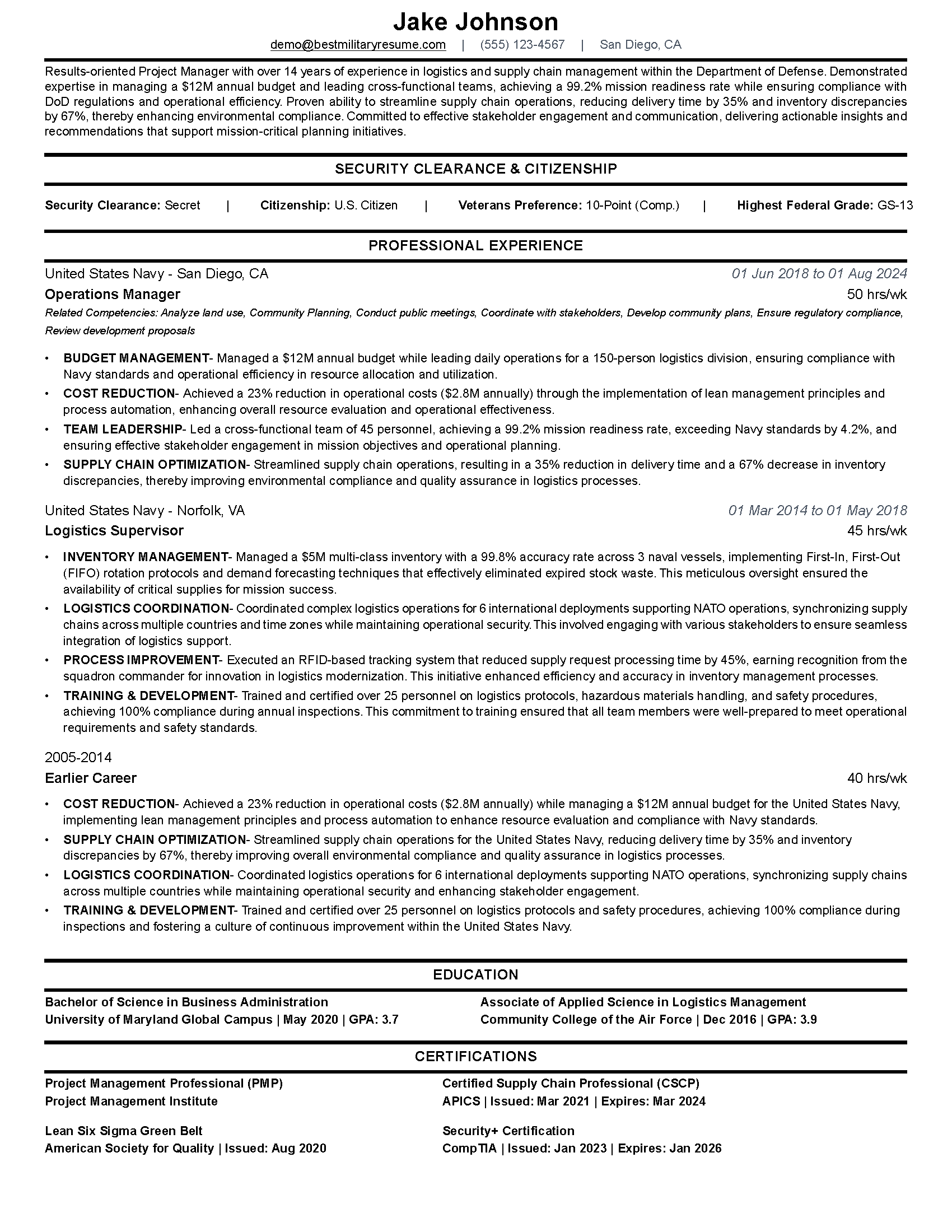
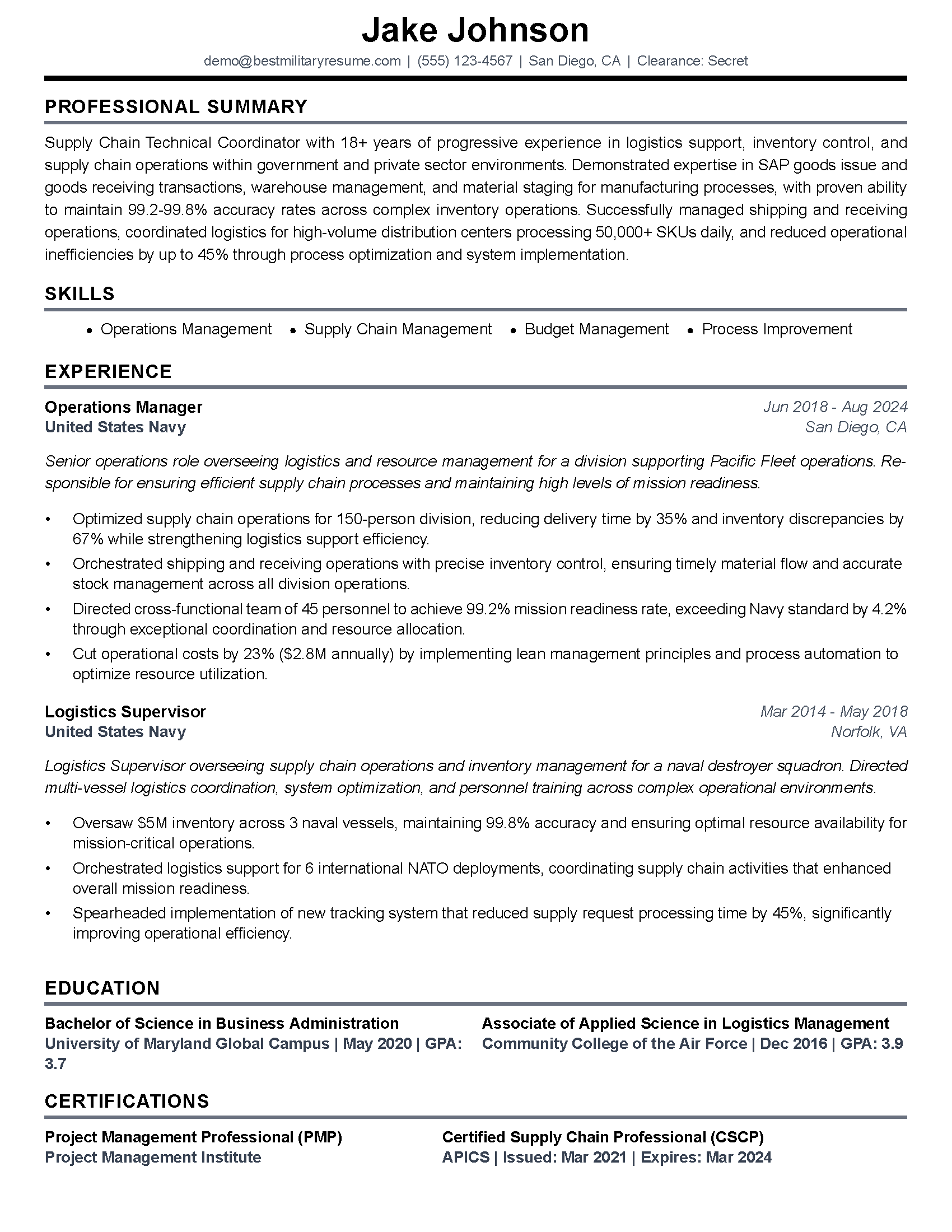
Your resume has to show each minimum the Montana posting lists. See how to tailor a military resume to a job posting.
Chen is a Senior Airman from the Air Force. In Chen's words: "Yes, I was able to land a job. BMR was a great tool to create my targeted resumes..."
Sign in to the military resume builder and paste the Montana posting. When you tailor, BMR reads the posting and copies your base resume. Then it rewrites your summary, work bullets and skills in the posting's own words.
Frequently Asked Questions
Does Montana veterans preference help in a layoff?
Is my preference paperwork kept private?
What if no applicant meets the minimum qualifications?
Does Montana also have a hiring preference for people with disabilities?
Does the employer have to tell me the preference exists?
About the author
Brad Tachi is the CEO and founder of Best Military Resume and a 2025 Military Friendly Vetrepreneur of the Year award recipient for overseas excellence. A former U.S. Navy Diver with over 20 years of combined military, private sector, and federal government experience, Brad brings unparalleled expertise to help veterans and military service members successfully transition to rewarding civilian careers. Having personally navigated the military-to-civilian transition, Brad deeply understands the challenges veterans face and specializes in translating military experience into compelling resumes that capture the attention of civilian employers. Through Best Military Resume, Brad has helped thousands of service members land their dream jobs by providing expert resume writing, career coaching, and job search strategies tailored specifically for the veteran community.
