Illinois Veterans Preference: 10, 5 or 3 Points and How to Claim Them
"Still getting interviews left and right. Now I have to say no."
Taranjeet, E-5, Army, optimized her LinkedIn and resume with BMR
Under the Illinois Personnel Code, qualified veterans get 10, 5 or 3 points on a state entrance exam. The higher score sets your rank order, under 20 ILCS 415/8b.7 as amended effective January 1, 2025.
Maybe you did four years in the Guard and never deployed. Maybe you've heard you don't count. You may count. By the end, you'll know your tier and how to claim it.
Checked against 20 ILCS 415/8b.7 (as amended January 1, 2025) and 80 Ill. Adm. Code 302.30 in November 2026. The CMS Veterans Outreach pages were checked the same month.
The Three Illinois Point Tiers and Every Condition
Illinois veterans preference works as points on top of a score you earn. The law adds them only "if they otherwise qualify." The state's personnel rule, 80 Ill. Adm. Code 302.30, says the points apply to "entrance examinations." The law then uses these "augmented ratings" to set "the rank order of persons to be appointed."
The rule also sets a floor for every tier. The "applicant must have received discharge under honorable conditions." You also need one of five kinds of service:
- At least six months in the armed forces, the Illinois National Guard, or a reserve component.
- Service in an ally's armed forces during a time of hostilities, while a U.S. citizen.
- A discharge on the grounds of hardship.
- A release from active duty because of a service connected disability.
- Service for the whole length of a time of hostilities, no matter how short.
10 points
You get 10 points if you currently hold proof of a service connected disability. That proof comes from the VA or an allied country. A Purple Heart also earns 10 points. Your math: [your passing score] + 10.
5 points
This tier is for service during a time of hostilities with a foreign country. You also need one of these four:
- You served a total of at least six months.
- You served for the whole length of the hostilities, no matter how short.
- You were discharged because of hardship.
- You were released from active duty for a service connected disability and discharged under honorable conditions.
Your math: [your passing score] + 5.
3 points
This tier is for anyone who doesn't qualify for 10 or 5. You served in the U.S. armed forces, the Illinois National Guard, or a reserve component. You also meet one of these:
- You served at least six months and were discharged under honorable conditions.
- You were discharged because of hardship.
- You were released from active duty for a service connected disability.
- You served at least four years in the Illinois National Guard or a reserve component.
Your math: [your passing score] + 3.
The words that decide who counts
A "time of hostilities" is a period with a declaration of war by Congress in effect. It can also be an emergency named by a Presidential proclamation or executive order. It counts only if the Armed Forces Expeditionary Medal or other campaign service medals are awarded.
The armed forces are the Army, Navy, Air Force, Space Force, Marine Corps and Coast Guard. Merchant Marine service also counts when it qualifies as active duty under the federal law the statute cites. A "veteran" in this law also covers the Illinois National Guard and the reserves.
Promotions are a different story. The Attorney General's brochure says, "The Illinois Personnel Code does not grant promotional preference points." So plan on using your points on entrance exams, not promotions.
Work Out Your Tier From Your Own DD-214
Pull out your long-form DD-214. CMS names the long version as the Member 2, Member 4 or Member 6 copy. Then answer these checks in order. Stop at the first tier that fits.
- Honorable floor: Does your discharge read under honorable conditions? If not, the rule's floor is not met. Ask the Veterans Outreach Program before you count on any points.
- VA letter or Purple Heart: Do you hold current VA proof of a service connected disability? Or a Purple Heart? Then you're in the 10-point tier.
- Dates during hostilities: Did your service fall in a time of hostilities, as defined above? Then check the four 5-point conditions.
- Everyone else: Meet any of the four 3-point conditions above and you get 3 points. Four years of Guard or reserve time counts.
Not sure your dates fall in a time of hostilities? Ask CMS's Veterans Outreach Program. CMS verifies your status before it grants points.
Guard and Reserve: The Four Year Line
The 3-point tier counts four years in the Illinois National Guard or a reserve component. It counts that time "regardless of whether or not the person was mobilized to active duty." You don't need a deployment.
You can still be serving, too. Current Guard and reserve members are eligible if they meet the 3-point service rules, the law says. CMS also lists "Currently Serving with at least 6 months of service" as a status that counts. Your proof for Guard time is the NGB-22 when you have one.
Still in uniform and applying? Our guide to a National Guard resume for civilian jobs covers how to write drill time and orders.
Spouses and Parents Who Can Claim the Points
Two kinds of spouses get "the same preference to which the veteran would have been entitled." That means the veteran's own tier, whether 10, 5 or 3. Under section 8b.7(h) they are:
- A surviving spouse who has not remarried, when the veteran's death was service connected.
- The spouse of a veteran whose service connected disability keeps the veteran from qualifying for civil service work.
The CMS rule adds civil union partners. It also says a surviving partner must not have "subsequently married or entered into a civil union."
Parents get a flat 10 points. That covers one parent of an unmarried veteran with a service connected death. It also covers a service connected disability that keeps the veteran from civil service work. "The first parent to receive a civil service appointment shall be the parent entitled to the preference."
The CMS spouse and parent page lists its own papers. It asks for a VA Award Letter "dated within the last year." That letter "must show the veteran is 100% service-connected disabled." That's CMS's document list, not the wording of the statute. CMS also wants a marriage license, a death certificate when it applies, and its CMS255 form.
Certify Your Papers, Then Upload Them
The law says CMS "must verify that status before granting a veteran preference." It asks for a certified copy of your most recent DD-214 or NGB-22. CMS gives three steps on its Veterans Outreach Program page:
- "Download the Guide for Veteran Document Verification and complete it carefully."
- "Certify your documents for Veterans preference points using one of the two approved options."
- "Attach certified documents, review application for accuracy, and submit application."
On the application itself, CMS says: "Just check the box on your application."
The two ways to certify
The CMS certification page accepts only two options.
- IDVA: Ask the Springfield IDVA Records Office by phone or online. Online, the State Employment box "must be selected for Veterans Preference Points to be applied." For online requests, IDVA sends the certified papers straight to CMS.
- County Clerk: Bring your long-form DD-214 and your NGB-22 if you have one. Ask the clerk to check them in, then check them out. Photo or scan them. Then "upload acceptable documents to the Veterans Outreach Self-Service Portal."
Two versions won't work. CMS does not accept the DD-214 "Member 1 (short version)." It also rejects a DD-214 showing "Release from Active-Duty Training."
The law gives no calendar deadline for this. My advice: certify before you apply. That way your points are on file when your score is set.
Where the Attorney General Brochure Differs From the Law
The Attorney General brochure is dated 12/23. Three lines in it don't match the statute as amended through January 1, 2025.
- 5-point tier: The brochure's six-month bullet adds "discharged under honorable conditions." The statute's six-month condition says only "served a total of at least 6 months."
- 3-point tier: The brochure's disability bullet adds "discharged under honorable conditions." The statute's condition says only "released from active duty because of a service connected disability."
- Spouses: The brochure says "10 points will be given to the spouse." The statute gives a spouse the veteran's own tier, which may be 10, 5 or 3.
The first two gaps may not change much for you. The CMS rule still sets an honorable discharge floor for every tier.
Federal jobs run on a separate system. Next door, Missouri uses a tie-breaker instead of points. Two states over, Ohio adds 20% to a passing exam grade for resident veterans. See our guide to how federal veterans preference works. Each state writes its own rules too, as our Florida veterans preference guide shows.
Illinois City Jobs Follow a Separate Rule
City civil service jobs are not under the Personnel Code. Cities under Division 1 of the Illinois Municipal Code follow 65 ILCS 5/10-1-16. It's a state law for city jobs, not a rule for state agencies.
- Who: You served at least one year of active military or naval service and were honorably discharged. People who served and are now on inactive or reserve duty count too.
- Who doesn't: Anyone convicted by court-martial for refusing to serve on religious or conscientious grounds against war.
- Fit for the job: An exam still must show you have "the business capacity necessary" for the job.
- Deployed members: Active duty includes training and school time under 10 U.S.C. 101(d) ordered under 10 U.S.C. 12301(d).
- First hire: 5 points go on your final grade average for an original entrance exam.
- Promotion: "seven-tenths of one point for each 6 months or fraction thereof of active military or naval service not exceeding 30 months."
- Promotion limit: You lose it after one promotion from a list where you used it.
- Proof timing: You don't have to show your discharge before the list is posted. The points apply after posting and before anyone is certified or hired.
Next Step: Paste the Illinois Posting
Your points sit on top of your grade, so the grade comes first. Some jobs use a test. An IDVA tip sheet says "grades for other jobs are based on your training and experience."
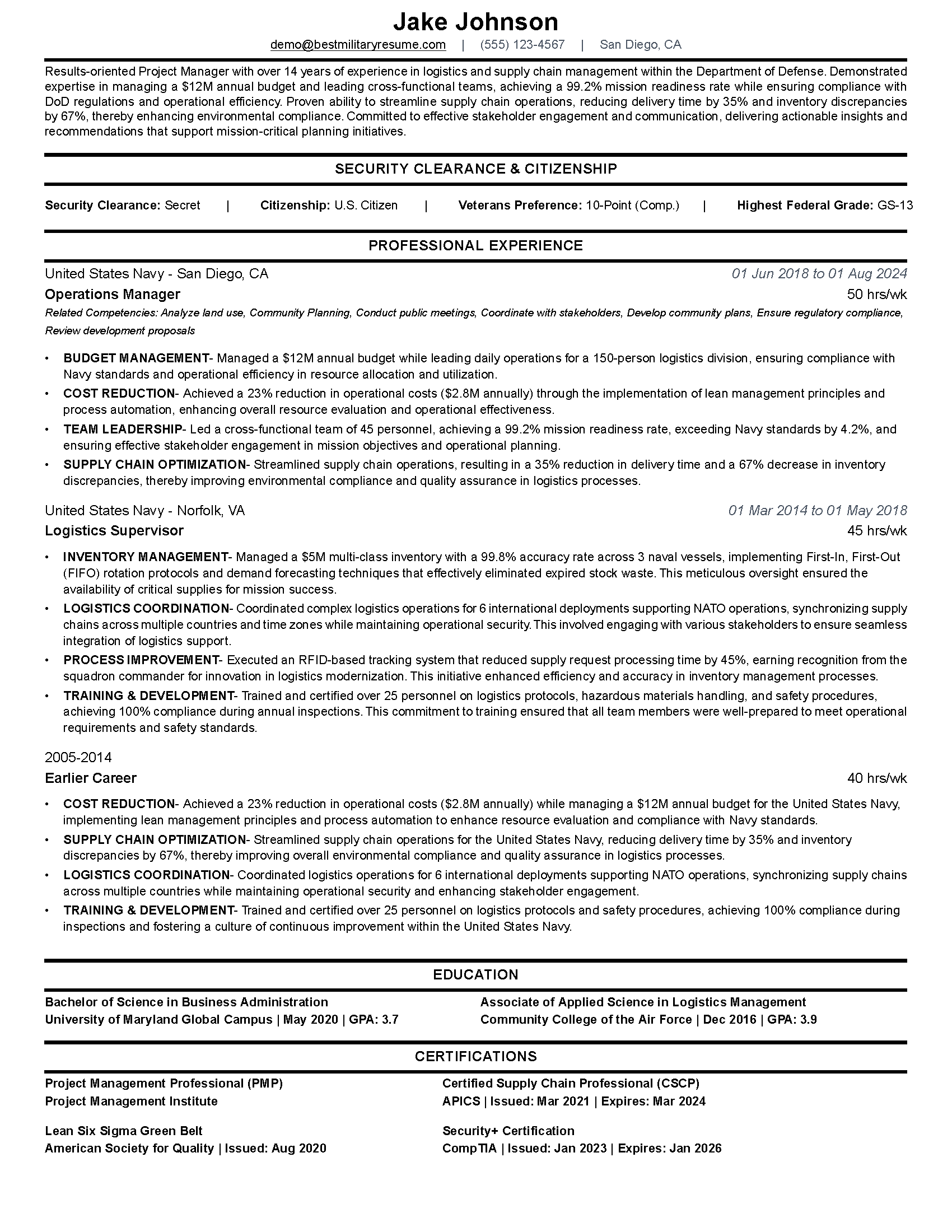
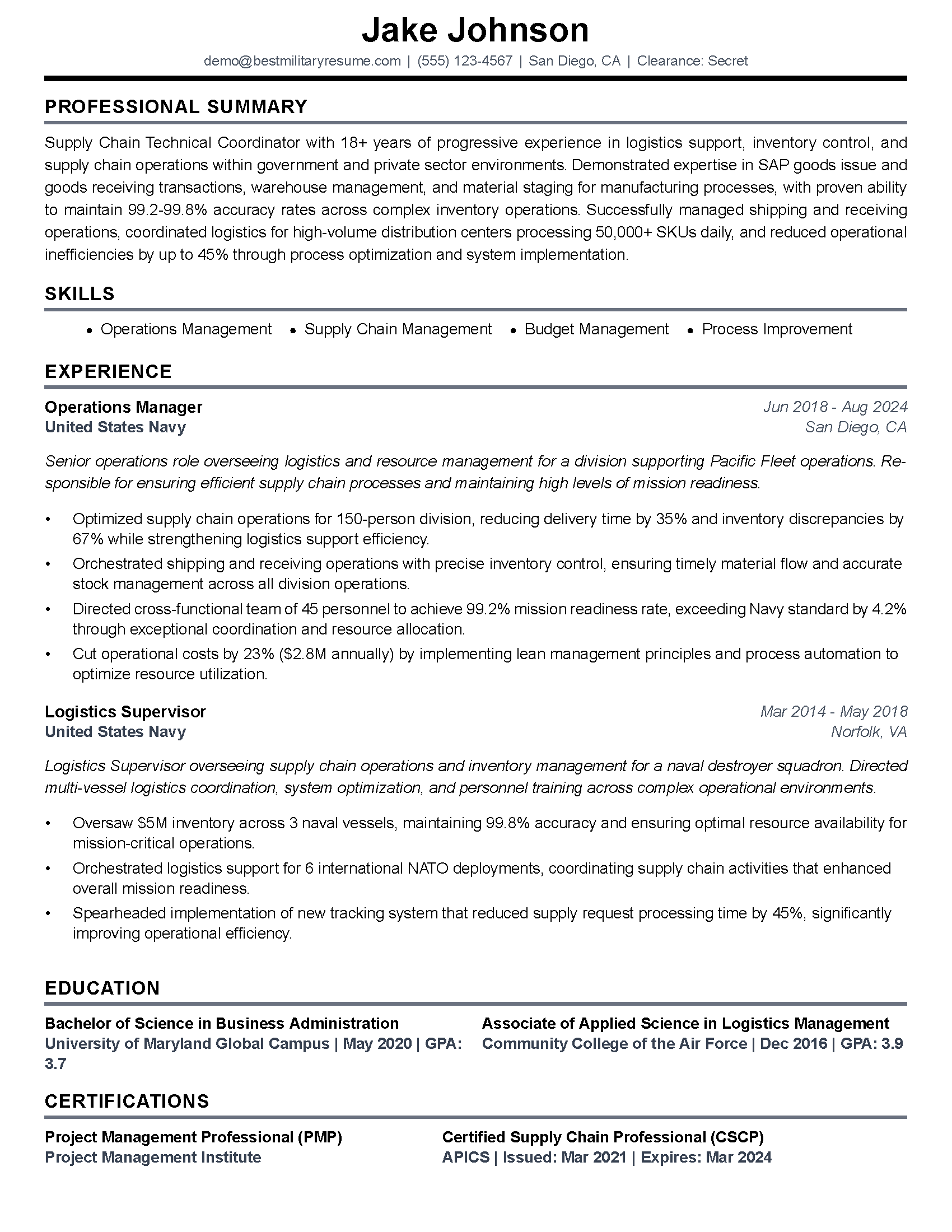
Open the military resume builder, sign in, and paste the Illinois job posting. BMR reads the posting and rewrites your summary, work bullets and skills in the posting's own words. It does not add work you never did.
Charles, an Air Force veteran, wrote this to us: "I got a job for the State of (Redacted). Keep up the good work!"
Frequently Asked Questions
Do the Illinois Personnel Code points apply to private companies?
Can my spouse or parent use my points if I already used them?
What if IDVA can't find my military records?
I changed my legal name. Do I need to tell CMS?
I served in another state's National Guard. Does that count in Illinois?
Does a state employee get seniority credit for military service?
Is there free help with a State of Illinois job application?
About the author
Brad Tachi is the CEO and founder of Best Military Resume and a 2025 Military Friendly Vetrepreneur of the Year award recipient for overseas excellence. A former U.S. Navy Diver with over 20 years of combined military, private sector, and federal government experience, Brad brings unparalleled expertise to help veterans and military service members successfully transition to rewarding civilian careers. Having personally navigated the military-to-civilian transition, Brad deeply understands the challenges veterans face and specializes in translating military experience into compelling resumes that capture the attention of civilian employers. Through Best Military Resume, Brad has helped thousands of service members land their dream jobs by providing expert resume writing, career coaching, and job search strategies tailored specifically for the veteran community.
