Arkansas Veterans Preference: Policy 13 Rules and a Posting Check
"Still getting interviews left and right. Now I have to say no."
Taranjeet, E-5, Army, optimized her LinkedIn and resume with BMR
Arkansas veterans preference adds 5 points to a qualified veteran's passing score on a scored state hiring test. Disabled veterans and two other groups get 10 points, under the state's Policy 13, effective May 26, 2026.
Preference works one way on a scored job. A job with no test score runs on a different rule.
You get a three-part check for your Arkansas posting first, then the rules behind it.
Where this comes from: Policy 13 is from the state's Office of Personnel Management. That office sits in the Department of Shared Administrative Services. The policy cites Arkansas Code 21-3-301 and the sections after it.
Run This Check on Your Arkansas Posting
Pull up the one Arkansas job you want. Run these three checks before you submit. Skip the proof, and you get no preference.
- Did I mark my status? To indicate your status is one of the conditions Policy 13 lists. Find that spot on the application and fill it in.
- Is my official proof in? The rule says you submit it yourself. Ask what this agency takes. Send it before the posting closes.
- Is this job scored? A scored job adds 5 points to a passing score. It adds 10 points for disabled veterans and the two other 10-point groups. On an unscored job, the agency must show how it used your preference. Know which one you're in, so you know what to ask for if you're not picked.
Five or Ten Points, Added to a Scored Test
You only get points when the agency scores you with a number. That can be a test, an evaluation or a similar tool. That score builds the list of people who get an interview.
- 5 points: Pass the test, and 5 points go on your final earned rating.
- 10 points: Policy 13 gives 10 points to three groups, in its own words.
- "Disabled veterans"
- "veterans over the age of 55 who are disabled and entitled to a pension or compensation under law"
- "the spouse of a disabled veteran whose disability disqualifies him or her for selection"
The disability has to show up in your VA records. Policy 13 says VA records must prove it.
Each agency sets the total points on its own test. Policy 13 adds one limit to that. The total "should not be so great that it renders the veterans preference points as meaningless."
Notice the order. You pass first, then the points come. A failing score plus 5 points still fails. The 10-point line doesn't repeat that passing rule.
When the Job Has No Score at All
Some jobs don't use a numeric test. Policy 13 covers that case too. The person who picks must show how they used your preference. That covers two steps: building the interview list and picking the person who gets the job.
On a scored interview list, ties go in this order.
- 10-point names: placed at the top of the group with equal points.
- 5-point names: placed at the top of the group with equal points, after the 10-point names.
- Everyone else: placed by their ranking of points.
If you don't get the job
Ask for the record. On a scored job, you get your base score, your adjusted score and the winner's score. On an unscored job, you get the papers that show how your preference was applied.
The reasons come to you in writing. That written reason stays in the agency's hiring records. The agency doesn't have to give you test materials or details about other applicants, though. Those stay out unless the Veterans Preference Law or the Freedom of Information Act allows release.
Hiring Gets Points, Promotions and Layoffs Get Weight
Policy 13 names three things. Only hiring has a points rule.
- Hiring: Preference counts when the agency builds the interview list. It counts again when the agency ranks the people it met.
- Promotion: Your veteran status "must be considered." Policy 13 gives no promotion points.
- Retention: In a reduction in force, your veteran status counts as service with the agency. It goes into your seniority.
Policy 13 also lets you come back to an agency you left. You must have established your preference eligibility. You must also have quit in good standing or been separated without prejudice. The agency must confirm you meet the job's current minimum training and experience qualifications. It may ask you to pass a test first.
How long that door stays open depends on your service with the agency. Policy 13 says the window is "no less than the continuous period of service" there. Time in the Armed Forces does not count toward that window.
Every Condition Policy 13 Sets
The first two lines are either-or routes to veteran status. Miss any other line that fits you, and the preference does not apply. Here they are, in order.
- Active duty veteran: You were honorably discharged from a tour of active duty in the U.S. Armed Forces. Active duty for training only does not count.
- Guard or Reserve veteran: You served honorably in the National Guard or Reserve for at least 6 years. You count whether or not you've retired or been discharged.
- Speak up: Tell the agency your status. That means veteran, disabled veteran, or surviving spouse of a veteran who died.
- Surviving spouse: You're unmarried when you apply and stay unmarried until hired.
- Arkansas ties: You're a citizen and a resident of Arkansas.
- Equal footing: You're about as qualified as the others. Policy 13 says "substantially equal."
- Proof: You voluntarily submit official proof of your status.
The preference does not apply to elected officials or political appointees. It also skips strictly confidential administrative or secretarial jobs tied to the appointing officer.
One protection runs the other way. Age or a physical disability can't disqualify you from a job. That holds as long as it doesn't keep you from doing the job's duties properly.
Guard members with fewer than 6 years, read that first line closely. Policy 13 does not say whether a federal active duty tour counts for a Guard member. If you're building that resume, our National Guard resume guide shows how to list drill and active time.
Two sources disagree on surviving spouses
Policy 13's 5-point line covers any applicant entitled to preference, surviving spouses included. Its 10-point line never names them.
An older Department of Human Services policy from 2012 gives a surviving unmarried spouse 5 points. It gives 10 when the veteran was disabled or over 55. That rule covers one department only. If you're a surviving spouse, ask the agency which level it uses.
The Proof Step Has One Line of Instructions
Policy 13 gives one line on proof of status. You "must voluntarily submit official proof" of your status to get the preference. Beyond VA records for a disability, it names no form or document. It doesn't say where to send it.
That same 2012 Human Services policy says a bit more, for its own department. It says to send your papers with the online application. Or you can bring them to the interview when that applies. That's one department's rule from 2012. It is not a rule for the whole state.
Your best move is to ask the agency on the posting what proof it accepts. Ask before the posting closes.
Two more notes on scope. The 2025 Act 116 bars some state preferences. It says it does not affect veterans preference in state employment. And the sources here cover state agencies. Policy 13 says nothing about city or county jobs.
Rules from Policy 13, effective May 26, 2026, checked November 2026. We could not read the current statute from an official or current copy. The copies we found are old mirror copies from 2010 and 2020. So this page rests on Policy 13, which is how the state applies the law today.
If you also apply to federal jobs, the rules there are different. Read how federal veterans preference works. Next door, Missouri uses its own system.
Preference Starts at Substantially Equal
The whole Arkansas preference rule rests on one phrase. You must be "substantially equal" to the other applicants. Preference doesn't close a gap in skills. Your resume has to show you're in the same range first.
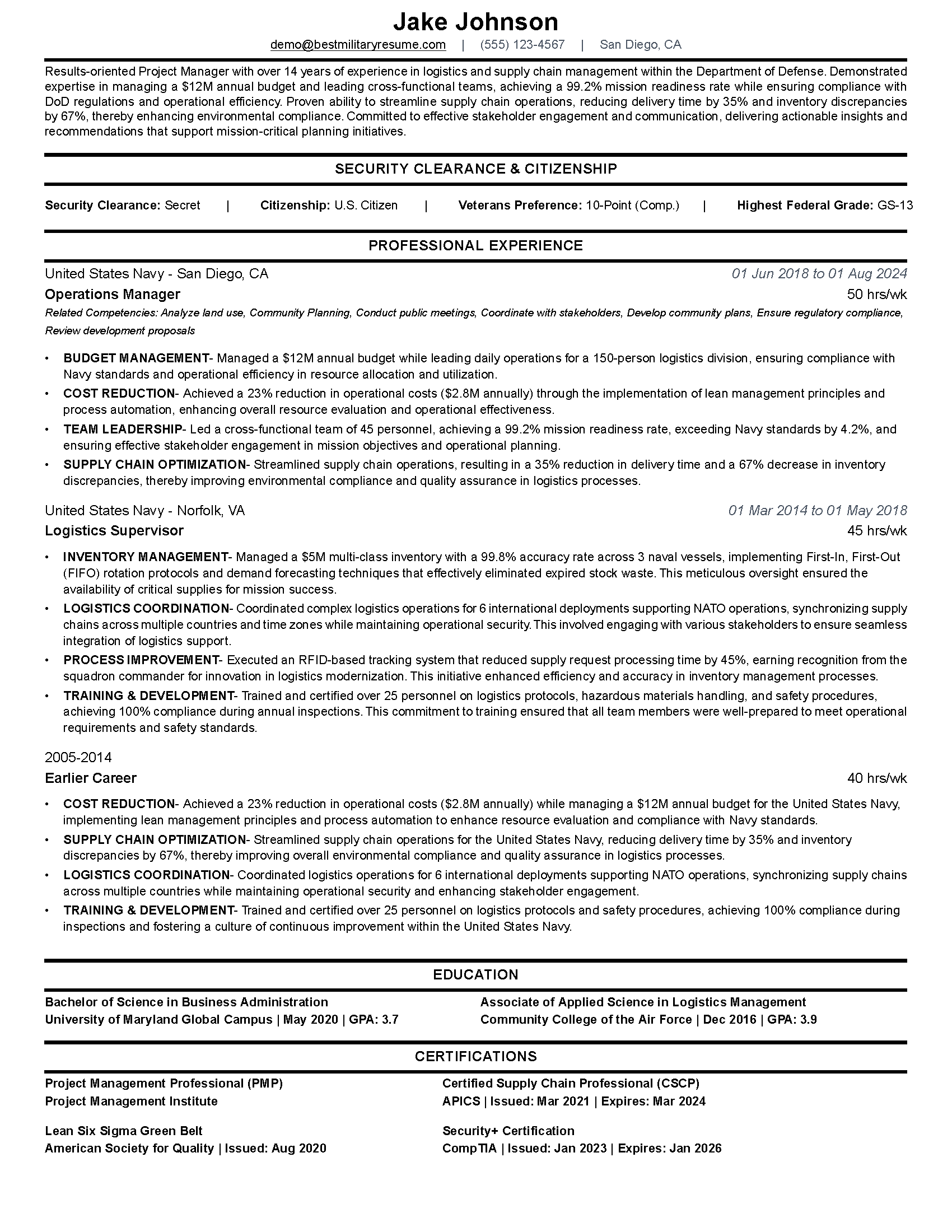
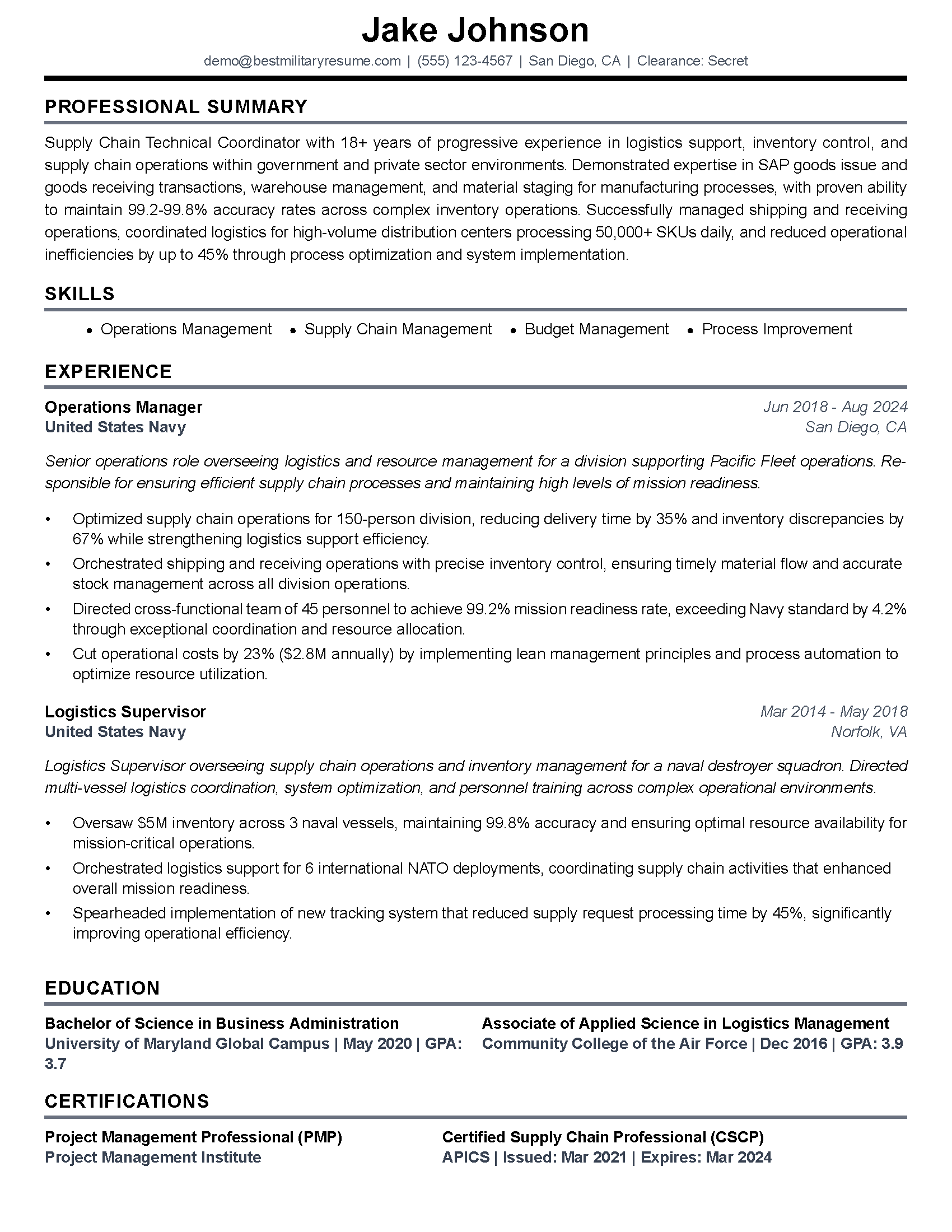
That means plain civilian words for the work you did. Our guide to translating military experience walks through it. When you get the interview, practice your answer to "tell me about yourself".
Kurtis is an Army Sergeant First Class (E-7). He wrote: "After finding this product and using it to help tailor my resumes, I started to get interviews where I was able to land a role with an employer that I like." His story doesn't say whether that job was state, federal or private.
Your next step: sign in to the military resume builder and paste the Arkansas posting. It tailors your resume to that one job.
Frequently Asked Questions
Does Policy 13 apply to federal jobs in Arkansas?
Which copy of Policy 13 is the current one?
What changed between the 2021 and 2026 copies of Policy 13?
How long must I live in Arkansas before I apply?
About the author
Brad Tachi is the CEO and founder of Best Military Resume and a 2025 Military Friendly Vetrepreneur of the Year award recipient for overseas excellence. A former U.S. Navy Diver with over 20 years of combined military, private sector, and federal government experience, Brad brings unparalleled expertise to help veterans and military service members successfully transition to rewarding civilian careers. Having personally navigated the military-to-civilian transition, Brad deeply understands the challenges veterans face and specializes in translating military experience into compelling resumes that capture the attention of civilian employers. Through Best Military Resume, Brad has helped thousands of service members land their dream jobs by providing expert resume writing, career coaching, and job search strategies tailored specifically for the veteran community.
