Massachusetts Veterans Preference: List Order on Open Exams
"Still getting interviews left and right. Now I have to say no."
Taranjeet, E-5, Army, optimized her LinkedIn and resume with BMR
On open civil service exams, Massachusetts veterans preference sets your place on the list. It adds no points. Under Chapter 31, Section 26, disabled veterans who pass list first. Then come veterans, certain widows and widowed mothers, and all others. Police and fire lists add residency and other groups.
So you can pass with a lower score and still sit above a civilian who beat you. Expected a few points on top of your grade? An open exam here does not work that way.
By the end you will know your list group, your hiring path and the claim steps.
The open exam list order, in the law's own words
Section 26 covers exams for "original appointment" to a job in the "official service." It puts all who pass in four groups. Each group is sorted by score:
- Group 1: disabled veterans.
- Group 2: veterans.
- Group 3: "widows or widowed mothers of veterans who were killed in action or died from a service connected disability incurred in wartime service."
- Group 4: "all others."
The state's Human Resources Division (HRD) calls this "a system of absolute veteran's preference." Its Civil Service overview for veterans gives one exception. That is residency preference on firefighter and police officer lists.
Some vet benefit sites repeat a points figure for this rule. The HRD pages and law text we read don't give one. Go by the law and HRD.
Who counts as a veteran under Chapter 4, Section 7
The rule sits in Chapter 4, Section 7, clause Forty-third. You count if you fit one of these three paths:
- Wartime path: your last discharge or release from wartime service was under honorable conditions. You served at least 90 days of active service. At least 1 day was wartime service.
- Merchant Marine path: you served in the American Merchant Marine in armed conflict. The dates are December 7, 1941 to December 31, 1946. You also hold honorable discharges from the Coast Guard, Army or Navy.
- 180-day path: your last discharge from active service was under honorable conditions. You served at least 180 days of active service.
The wartime path counts the Army, Navy, Marine Corps, Coast Guard and Air Force. It also counts full time National Guard duty under Title 10 or Title 32. Full time Guard duty under sections 38, 40 and 41 of chapter 33 counts too.
The day count has a waiver. On the wartime path, a service-connected disability or a Purple Heart waives the 90 days. On the 180-day path, a service-connected disability waives the 180 days. Death in service under conditions other than dishonorable waives both.
The clause also shuts some people out:
- Discharge: your last discharge or release was dishonorable.
- Desertion: you were "proved guilty of wilful desertion."
- Auxiliary only: you served only in the Coast Guard Auxiliary. Or you served only as a temporary Coast Guard Reserve member.
- Two old cases: you had declared intent to become a citizen when you entered. You withdrew it under a July 9, 1918 act. Or you sought your own discharge as an enemy alien.
Active duty for training does not count. That covers active duty for training in the Army or Air National Guard. Active duty for training as a reservist does not count either.
"Wartime" is defined in the same clause. It lists these periods:
- Spanish War: February 15, 1898 to July 4, 1902.
- World War I: April 6, 1917 to November 11, 1918. The World War I Victory Medal also counts. So does Massachusetts National Guard service from March 25, 1917 to August 5, 1917.
- World War II: September 16, 1940 to July 25, 1947, with a World War II Victory Medal. For chapter 31, it means all active service from September 16, 1940 to June 25, 1950.
- Korea: June 25, 1950 to January 31, 1955, both dates inclusive. The Korea Defense Service Medal also counts.
- Vietnam: August 5, 1964 to May 7, 1975, both dates inclusive. It also covers 180 days of active service from February 1, 1955 to August 4, 1964. A service-connected disability or a Purple Heart waives those 180 days. So does death in service under conditions other than dishonorable.
- Vietnam, chapter 31 only: it also covers active service from May 7, 1975 to June 4, 1976.
- Lebanon: from August 25, 1982 until the President withdraws the armed forces from Lebanon. A campaign medal is required.
- Grenada: October 25, 1983 to December 15, 1983, inclusive. A campaign medal is required.
- Panama: December 20, 1989 to January 31, 1990. A campaign medal is required.
- Persian Gulf: from August 2, 1990. The clause gives no end date yet. It ends on a date set by presidential proclamation or executive order and a concurrent resolution of Congress.
The clause adds one more group, the WAAC. It means any corps or unit "established for the purpose of enabling women to serve with, or as auxiliary to, the armed forces of the United States." A woman who "was discharged and so served" in one counts. The clause says "such woman shall be deemed to be a veteran."
The clause as archived names five branches. It does not name the Space Force. If that was your branch, ask HRD's Civil Service Unit how it reads your service.
Open exam, promotion or labor service: what preference does in each
Massachusetts uses a different tool on each of three paths. Find yours in this table first:
| Path | Exam? | What preference does |
|---|---|---|
| Open exam (new hire) | Yes, and you must pass | Places you in a higher group on the list |
| Promotion exam | Yes | Adds two points to your passing score |
| Labor service | No exam | Puts veterans at the top of the list for state agencies and the City of Boston |
Open exam
The groups sort only people who passed. The state's veteran self-ID FAQ says preference applies where an exam is given "and a passing score is achieved." So the exam comes first. You need a pass before the groups help you.
Promotion exam
This is where points show up. HRD's overview says, "Veterans will have two points added to their overall passing score." Already in civil service? This is your rule for moving up.
Labor service
Labor service jobs need an application and proof you are a veteran, but no exam. HRD puts veterans, "whether disabled or not," at the top of the labor service list. That applies to state agencies and the City of Boston. Spouses and single parents of vets go next. They sit above all others.
Three more rules on the same law
- Provisional jobs: with no list in place, the hiring office must appoint a veteran. It can skip a veteran only after three steps. It gets HRD's list of veterans who applied for that kind of work in the past 12 months. It mails each one the job opening. Then it finds none is qualified or willing.
- Layoffs: "A disabled veteran shall be retained in employment in preference to all other persons, including veterans."
- Medals: Medal of Honor, Distinguished Service Medal and Silver Star holders may apply without an exam. Distinguished Service Cross and Navy Cross holders can too. They need HRD's recommendation and the Civil Service Commission's approval.
Police and fire lists: where residency comes before veteran status
On police and fire lists, where you live changes the order. HRD's Learn about Civil Service guide sets the residency test. You must have lived in the town "for the entire twelve-month period immediately preceding the date of the examination."
The guide's order starts with three special groups. Those are Chapter 534, resident 402A and non-resident 402A people. Next come resident disabled veterans. Then come resident and non-resident 402B people. Then resident vets, then resident civilians.
So on these lists, where you live can change your place as much as your service. Testing for a town's police or fire list? Count back 12 months from the exam date. For that career, see the military to firefighter career guide or the military police to law enforcement guide.
Claim your status after the exam, while you are on the list
You have to claim your preference. HRD's Update Your Veteran Status page says to update it "after the exam." Your name must be on the eligible list. Have these ready:
- Out of service: a copy of your DD214 "(any Member except Member 1)." A State Director of Veterans' Affairs 6 Form works too. Use the papers from your most recent period of service.
- Still serving: a signed letter from your commanding officer on official letterhead. It lists your full-time active duty dates, current assignment, entry date and the date you expect to separate. It also confirms you will get a DD214 not for training.
- Disabled veterans: per HRD's Update Your Disabled Veteran Status page, a DD214 other than Member 1. Add written VA confirmation of a continuing service-connected disability rated at least 10% based on wartime service.
Then do the update online, using HRD's steps:
- Open your account: go to your Civil Service Account and choose Update Civil Service Account.
- Apply: click Apply in the upper right corner. Create an account if this is your first login.
- Upload: answer the questions and add each file it asks for.
- Submit: click Submit.
Once hired, give official proof of honorable discharge to the hiring department and the Civil Service Unit. HRD's disabled veteran page says so. Not sure what each block of your papers shows? Read what your DD-214 actually tells employers.
Where the official pages disagree
- Who gets the family preference: Section 26's order line says "widows or widowed mothers." Later it says "spouse or single parent" who has not remarried. HRD's overview uses the second wording.
- DD214 wording: the veteran status page says "any Member except Member 1." The disabled veteran page says "a DD214 except a Member 1." Both rule out Member 1. If Member 1 is the only copy you hold, get another member copy before you update.
- The short version: HRD's Learn about Civil Service guide gives only the 180-day and 90-day routes. The statute adds the Guard duty, Merchant Marine and day-count waiver routes above.
- Town pages: at least one Massachusetts town's employment page shows federal preference rules. Federal rules do not set the state civil service list.
Federal jobs in Massachusetts still use the federal system. That one works differently, and the federal veterans preference guide covers it. Other states differ too. New York adds exam credit instead of list groups.
Checked November 2026 against archived copies of the law and HRD pages. Chapter 31, Section 26 is the November 15, 2025 copy. Chapter 4, Section 7 is the December 30, 2025 copy. The state pages are from September 2025 to January 2026. HRD's overview says it was last updated November 6, 2023.
Once you're on the list, the application makes the case
Preference sets your place on the list. HRD says hiring offices then pick from the people who qualify. Your application still has to make the case for you.
Matthew, an Air Force Master Sergeant, wanted a private-sector HR job. He tailored a fresh resume for each posting. His note to us: "I did get hired! Also, I tell everyone about BMR!"
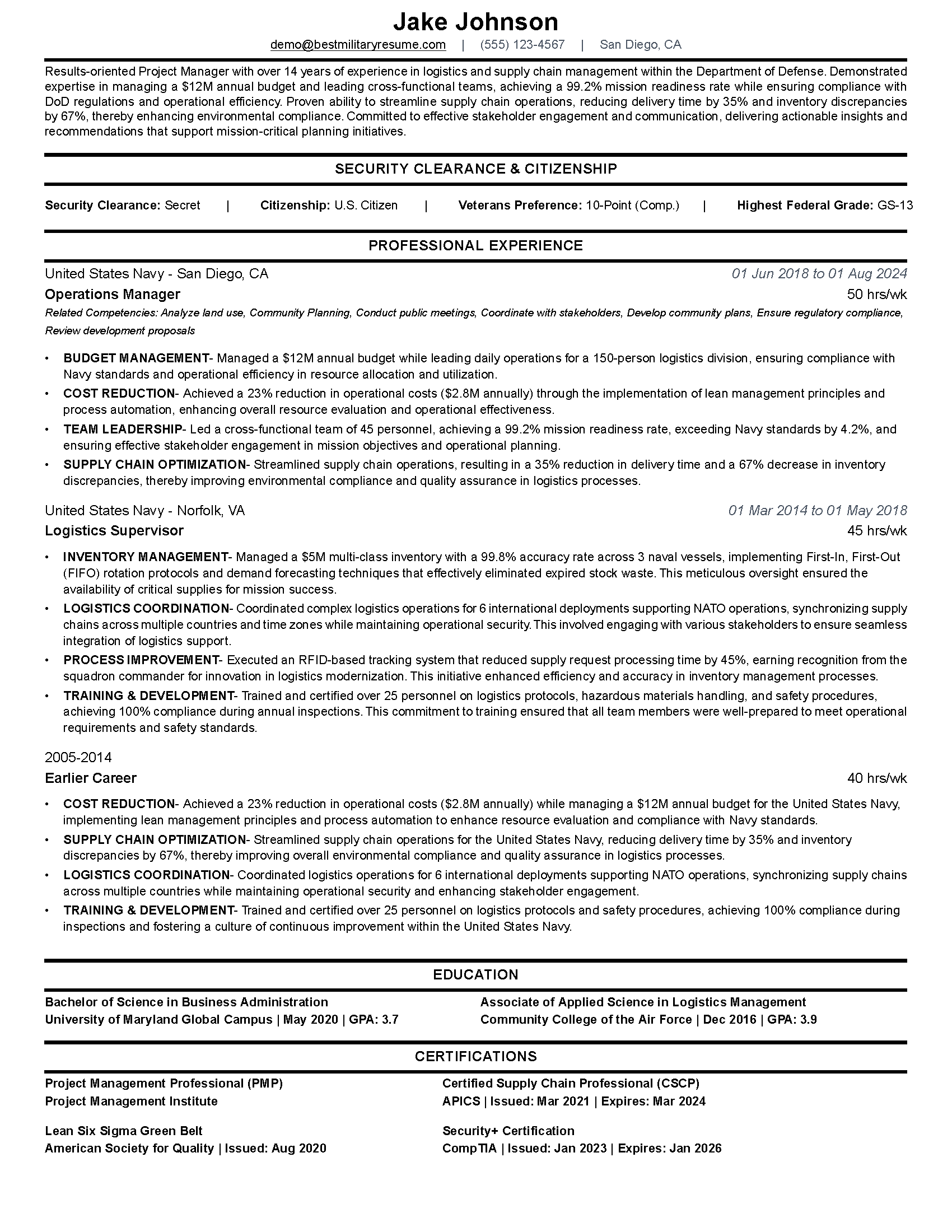
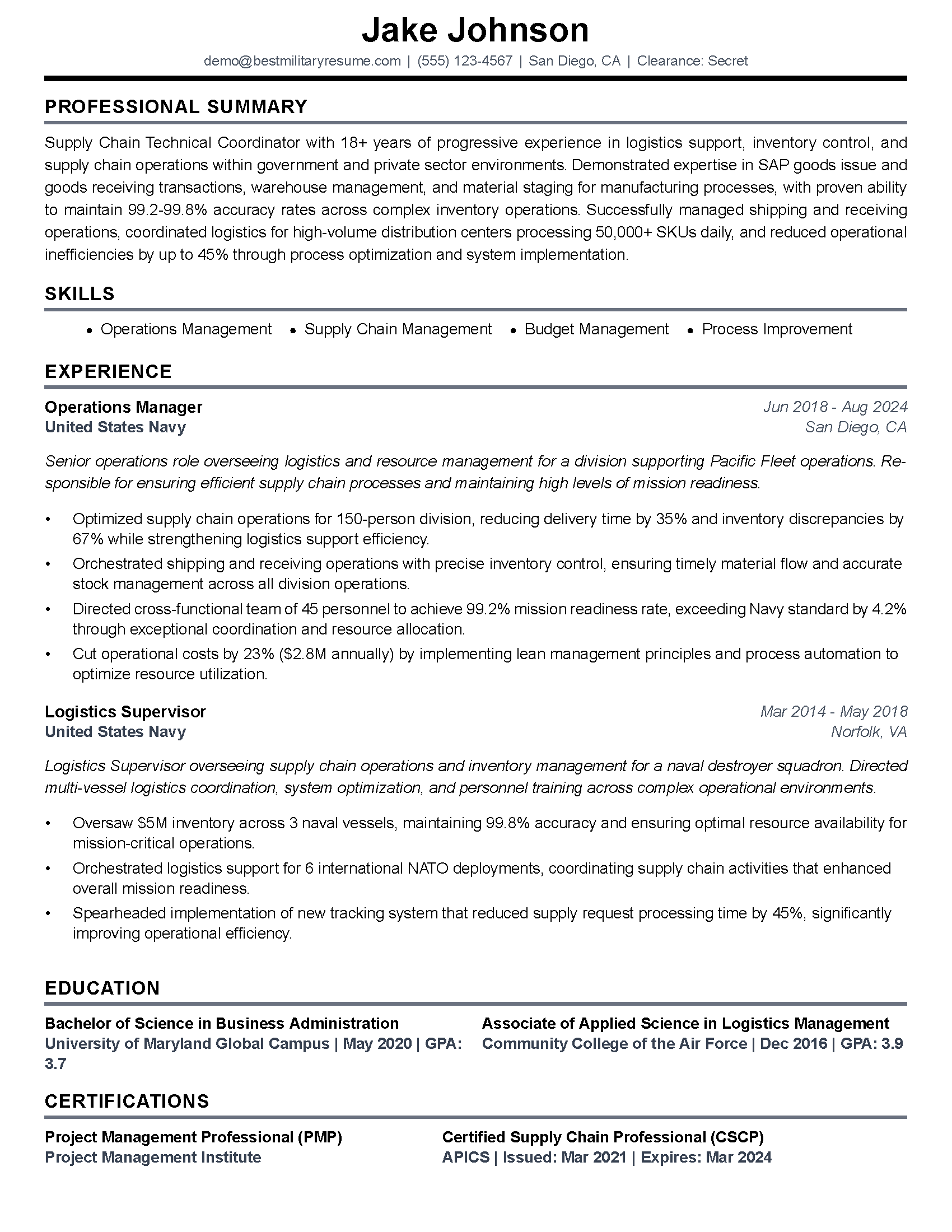
Open the military resume builder, sign in and paste the Massachusetts job posting. It builds a resume tailored to that posting.
Frequently Asked Questions
Does a veteran from another state get Massachusetts civil service preference?
Can a doctor's exam be required for a disabled veteran?
Can a civil service hiring office in Massachusetts ask for my full military medical or personnel record?
Do children of police officers or firefighters get list placement too?
Can I change my preference claim later?
About the author
Brad Tachi is the CEO and founder of Best Military Resume and a 2025 Military Friendly Vetrepreneur of the Year award recipient for overseas excellence. A former U.S. Navy Diver with over 20 years of combined military, private sector, and federal government experience, Brad brings unparalleled expertise to help veterans and military service members successfully transition to rewarding civilian careers. Having personally navigated the military-to-civilian transition, Brad deeply understands the challenges veterans face and specializes in translating military experience into compelling resumes that capture the attention of civilian employers. Through Best Military Resume, Brad has helped thousands of service members land their dream jobs by providing expert resume writing, career coaching, and job search strategies tailored specifically for the veteran community.
