New York Veterans Preference: Exam Points You Can Use Once
"Still getting interviews left and right. Now I have to say no."
Taranjeet, E-5, Army, optimized her LinkedIn and resume with BMR
New York adds 5 points to a veteran's passing score on an open civil service exam. On a promotion exam, it adds 2.5. A disabled veteran rated 10 percent or more gets 10 points, or 5 on a promotion exam. Both come from Civil Service Law §85.
The catch is that you get to use those points once. After one permanent job from a list where they counted, they are gone. This page shows if you qualify, when to spend the credit and how to claim it in time.
How many points does New York add, and when?
| Who | Open competitive exam (new hire) | Promotion exam |
|---|---|---|
| Veteran. | 5 points. | 2.5 points. |
| Disabled veteran. | 10 points. | 5 points. |
The points come from the state Constitution, Article V, §6, and §85 repeats them. You must pass the exam first. The law says the credit is added "after he or she has qualified in the competitive examination".
The points also wait for the list. Section 85 says the credit "shall be granted only at the time of establishment of the resulting eligible list". So the math is [your passing score] + 5 on an open exam. On a promotion exam it is [your passing score] + 2.5.
The same points apply to cities, counties and villages. The Constitution covers the state "and all of the civil divisions thereof, including cities and villages". The state Department of Civil Service veterans page lists the same numbers.
Rules checked against Civil Service Law §85, the state Constitution and state memo 21-01 in November 2026.
Who counts as a veteran for New York exam credit?
Section 85(1)(a) sets the conditions. You must meet each one.
- Service: you were a member of the armed forces of the United States.
- Discharge: you were "honorably discharged or released under honorable circumstances". Two more paths count. One is a "qualifying condition" as the Veterans' Services Law defines it. The other is a "discharged LGBT veteran" as that law defines it. Both need a discharge "other than bad conduct or dishonorable".
- Status: you are a US citizen or "a noncitizen lawfully admitted for permanent residence".
- Residence: you live in New York "at the time of application for appointment or promotion". Section 85(1)(c) defines that time as the date the eligible list is established. Memo 21-01 says you must also live in New York when appointed.
The state's municipal Veterans' Rights Manual adds the Restoration of Honor path. A veteran with a letter from the Division of Veterans' Services restoring access to state benefits can qualify.
Disabled veteran status
Section 85(1)(b) needs a certificate from the VA or a military department. It must show you are entitled to disability payments for a disability from your service. That disability must exist on the date the eligible list is established.
The certificate must say one of two things. One option: a VA doctor examined you within one year of your exam filing or the list date.
That exam found the disability, and it is rated at 10 percent or more. The other option: the VA states "a permanent stabilized condition of disability exists to an extent of ten per centum or more".
The state's Advisory Memorandum 21-01 adds two points. The disability must come from service in a designated time of war. You must also be receiving VA payment for it when you apply.
Guard and Reserve service
Memo 21-01 counts "the national guard when in the service of the United States pursuant to call as provided by law, on a full-time duty basis, other than active duty for training purposes". It says "Federal active duty for training or less-than-full-time duty" does not qualify.
State duty does not count. Orders that cite "Orders of the Governor," Title 32, or Military Law §6 "cannot be used".
A current Guard or Reserve member can still qualify. The manual says you may earn veteran status after "a release under honorable circumstances following a qualifying period of federal active military duty, even though he or she has not had a final separation". For drill years on a resume, see our National Guard resume guide.
Does your service fall inside a "time of war"?
The state Constitution still gives the credit to a member "who served therein in time of war". The current §85 text no longer lists war dates. The state's memo 21-01, dated February 2021, does.
Under that memo, the current time of war began August 2, 1990. The memo says it runs "until it is formally ended by action of the State Legislature with approval of the Governor". So service from August 2, 1990 on falls inside it.
You do not need to have deployed. The memo says service "is not limited to the Persian Gulf theater of operations and does not require an employee or examination applicant to possess a specific expeditionary medal or campaign ribbon".
The memo lists these earlier periods.
- Hostilities in Panama: December 20, 1989 to January 31, 1990.
- Hostilities in Lebanon: June 1, 1983 to December 1, 1987.
- Hostilities in Grenada: October 23, 1983 to November 21, 1983.
- Viet Nam Conflict: February 28, 1961 to May 7, 1975.
- Korean Conflict: June 27, 1950 to January 31, 1955.
- US Public Health Service commissioned corps: July 29, 1945 to September 2, 1945.
- US Public Health Service commissioned corps, second window: June 26, 1950 to July 3, 1952.
- World War II: December 7, 1941 to December 31, 1946.
- World War I: April 6, 1917 to November 11, 1918.
Panama, Lebanon and Grenada count only if you received "the armed forces, Navy, or Marine Corps expeditionary medal".
If you served only in peacetime before August 2, 1990
The state rules do not settle this cleanly. The Constitution says time of war. The statute text no longer defines it.
New York City took a stand for its own exams. Its November 10, 2022 DCAS release says the City is "expanding its Veteran or Disabled Veteran Credit to include all Veterans who served during both peacetime and times of conflict". That's a city rule. It does not bind a state or county exam.
If this is you, ask the civil service office that runs your exam. Put the question in writing and keep the answer.
Can you use the credit more than once?
No, with exceptions. Section 85(4)(a) covers anyone who gets "a permanent original appointment or a permanent promotion" from a list with the credit. That person gets no credit again. That covers state jobs and jobs in "any city or civil division".
The credit does not count as used in three cases.
- No change in rank: the points did not change your place on the list when it was set.
- Same standing at hiring: when picked, your place among willing eligibles was the same as without the points.
- Early exit: the job ended at the end of probation. Or you quit at or before the end of probation.
The manual puts the first two in plain words. Credits count as used only "if the addition of the credit changes the position of the veteran relative to any other candidate on the eligible list".
The 2014 disabled veteran exception
Say you used the regular veteran credit for a job. Later the VA certified you as a disabled veteran. Since January 1, 2014, the Constitution gives you "ten points additional credit less the number of points of additional credit allowed for the prior appointment".
So the math is 10 minus what you used. Someone who used 5 points on an open exam can get 10 minus 5. Someone who used 2.5 on a promotion can get 10 minus 2.5. The state's disabled veteran credit page explains it. It also says these credits "are not lost if they are not used".
When should you spend it, and when should you give it up?
Because the credit is once only, the real choice is which list gets it. You can claim it on as many exams as you like. The manual says a veteran may "apply for, be awarded and subsequently withdraw use of veterans credits on an unlimited number of examinations until the credit is used in gaining a permanent appointment".
The law gives you two exits.
- Before the list is set: you may withdraw your credit application "at any time prior to the establishment of the resulting eligible list," per §85(5).
- After the list is set: you may give up the credit and take your lower spot. You must do it before a permanent appointment. That choice must be "in writing and signed," and it is "irrevocable".
At hiring, state agencies use form S-203, Disposition of Veterans Credits. It shows your score with and without the credit. You sign to use the points or give them up. The form says "No such appointment will be accepted without this form".
S-203 also protects two cases. Say you give up the credit for a lower grade. You keep it for a higher grade from that same list. The same goes for a seasonal job versus a full-time job.
Ask yourself three things before you sign.
- Is this the job I want to keep? Using the points for a permanent stopgap job can end them for every later list. The three cases and the 2014 disabled veteran exception above are the only exceptions.
- Do I need them to get picked? Ask the hiring office for both scores on the S-203. If you are reachable without the points, giving them up keeps them for later.
- Am I saving them for a promotion? A promotion exam adds half as many points as an open exam. So the same one-time credit adds more points on an open list.
The manual recommends that agencies "discuss the effects of use and non-use of credits at the time of appointment". Ask for that talk if it doesn't happen.
How do you claim it before the list is set?
Section 85(3) sets the window. You may apply for credit "at any time between the date of his application for examination and the date of the establishment of the resulting eligible list". You get "a period of not less than two months from the date of the filing of his application for examination" to prove it.
Then the door shuts. A candidate who fails to prove eligibility "by the time an eligible list is established shall not thereafter be granted additional credit on such eligible list".
- Claim on the application: the state says to "request preference credits when completing their Civil Service examination application". Claim it there.
- Read the announcement: the manual says "Instructions for how to claim credits should be included on the exam announcement". Follow the steps it gives.
- Have your proof ready: the state's veterans page says "Supporting documentation may be required to verify eligibility." Memo 21-01 names the DD-214 as the usual proof of service dates and medals. It also accepts a signed summary on official letterhead or copies of orders when there is no DD-214.
- Disabled veterans: fill out Part 1 of form T-252, Authorization for Disability Record. Send it to your VA regional office for Part 2. The VA returns it to Civil Service.
- The 2014 case: complete the online Veteran Credit Use Questionnaire on the disabled veteran credit page. Add the T-252 and form T-252a. The form calls itself "time sensitive".
Questions on a state exam claim go to [email protected], the address printed on the T-252. Our DD-214 guide for applications covers how to use it with applications.
The points only help after you pass and land on the list. They are state and local preference. For a federal job, read our guide to federal veterans preference. Pennsylvania uses a rule of three. Georgia adds points on scored exams under its own rule.
Are there New York doors besides exam points?
Yes, two that the state runs.
- Section 55-c jobs: Civil Service Law §55-c lets the state set aside up to 500 noncompetitive positions. They go to disabled veterans under §85(1)(b), or veterans certified as "disabled but capable". A Purple Heart combat wound tied to the impairment gets priority. Postings must say "55-c Eligible".
- Veterans Temporary Hiring Program: the state's veterans page says it "provides veterans with access to temporary employment across New York State".
What to Do Next
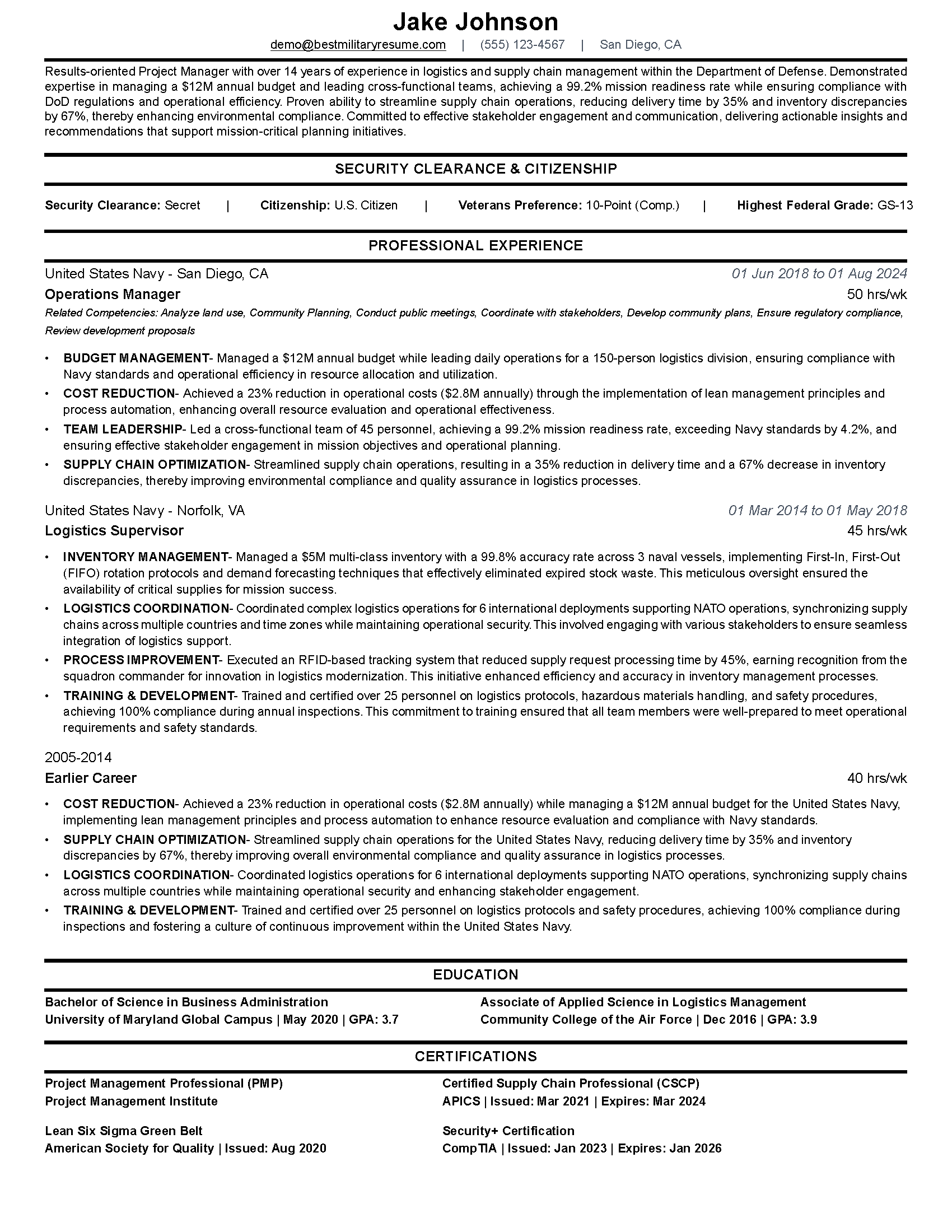
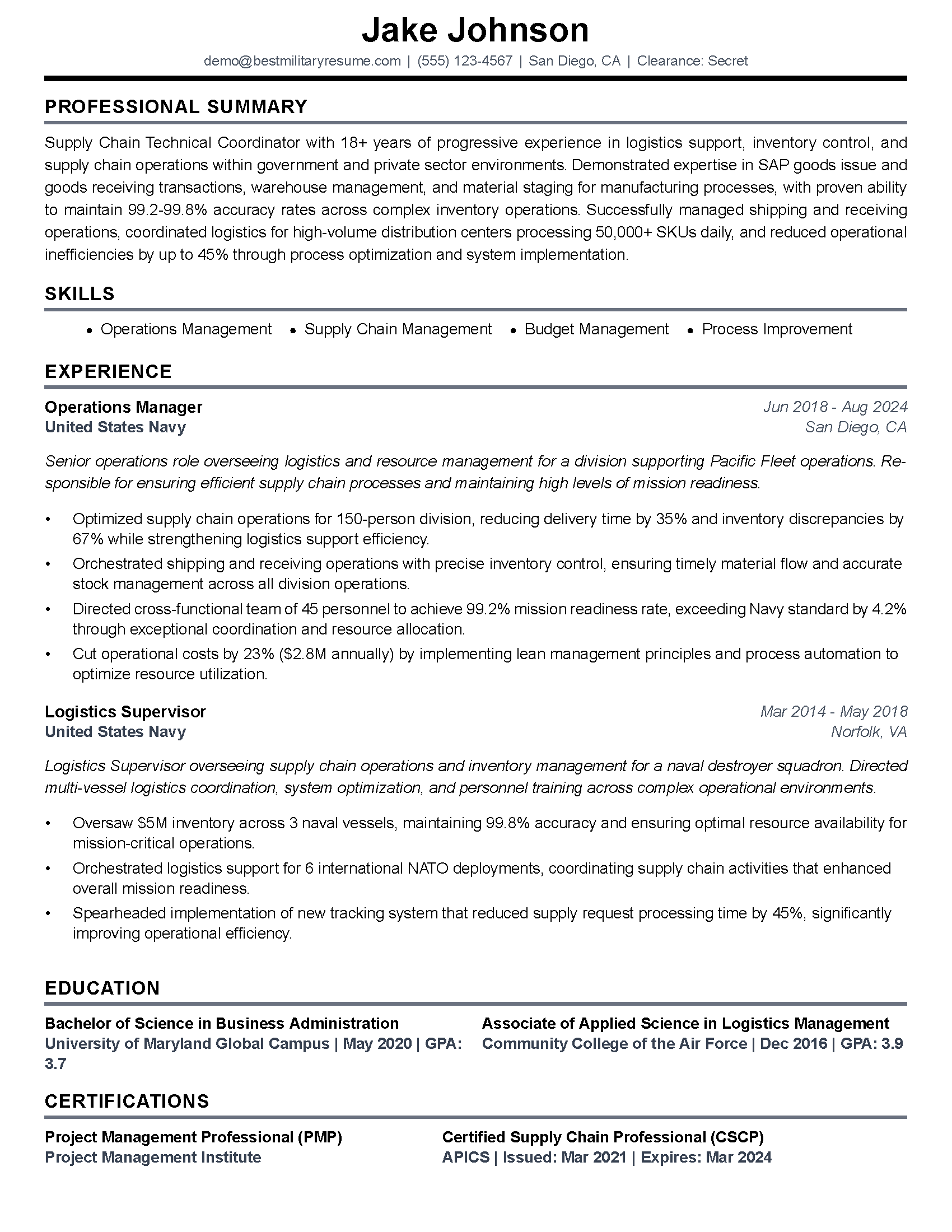
Pick the New York exam or posting you would keep for years. That's the list worth your New York veterans preference credit. Then build the application that gets you onto it.
Mark, a retired Coast Guard Master Chief Petty Officer, used BMR for a federal role. He wrote that "the resume was fantastic, got the interview, nailed the interview, and officially start onboarding today".
Open the military resume builder, sign in, and paste your New York exam announcement or job posting. Then line up your service under each qualification, in the posting's own words.
Frequently Asked Questions
Do New York veterans get extra protection in a layoff?
Can a military spouse get New York exam points?
Can I claim the credit while I am still on active duty?
Do I need a new T-252 for every exam?
About the author
Brad Tachi is the CEO and founder of Best Military Resume and a 2025 Military Friendly Vetrepreneur of the Year award recipient for overseas excellence. A former U.S. Navy Diver with over 20 years of combined military, private sector, and federal government experience, Brad brings unparalleled expertise to help veterans and military service members successfully transition to rewarding civilian careers. Having personally navigated the military-to-civilian transition, Brad deeply understands the challenges veterans face and specializes in translating military experience into compelling resumes that capture the attention of civilian employers. Through Best Military Resume, Brad has helped thousands of service members land their dream jobs by providing expert resume writing, career coaching, and job search strategies tailored specifically for the veteran community.
