Iowa Veterans Preference: Exam Points and the Tiebreaker Law
"Still getting interviews left and right. Now I have to say no."
Taranjeet, E-5, Army, optimized her LinkedIn and resume with BMR
Iowa veterans preference is two separate rules, and both are in state law right now. Iowa Code section 8A.413(23) adds 5 or 10 points to state job exams. Iowa Code section 35C.1 adds a tiebreaker.
By the end, you'll know which preference fits your posting and what proof must arrive before it closes.
A three line check for one Iowa posting
Run this before you apply.
- Exam or no exam: does the posting use a scored exam? If yes, the points can apply after you pass. With or without an exam, the "no greater qualifications" tiebreaker can still apply. Ask the agency to be sure.
- Close date: write it down. For a state job, proof goes to the Iowa Department of Administrative Services (DAS). DAS must receive it by that day, not just mailed.
- Letter date: claiming ten points? Check that your VA proof is under 24 months old.
Then ask for notice of any refusal when you apply. And the notice must tell you how to appeal.
Two preferences sit side by side in Iowa law
The points law covers exams for state jobs. It says veterans get five points added to their exam score.
The ten point level covers a "service-connected disability" or VA "compensation, disability benefits, or pension." A Purple Heart "for disabilities incurred in action" counts as a service connected disability.
The tiebreaker law is wider. It gives veterans preference "over other applicants of no greater qualifications." That means you don't jump a stronger applicant. You win when you're as qualified as the person next to you.
This is a state system, so it runs on its own forms and proof. For the federal side, read how federal veterans preference works. DAS says federal preference doesn't carry over on its own. You still send Iowa proof.
The tiebreaker reaches more employers than the points
Section 35C.1 covers every public department and public works job of the state. It also covers counties, cities and school districts.
The tiebreaker also has teeth. Under section 35C.3, the hiring official must look into a preferred applicant's qualifications. If you have good moral character and can do the job, the law says they "shall appoint" you.
They must also write down why they hired you or passed on you. That note is filed for the public to see. You can ask to be told of a refusal, or of a refusal and its grounds. Ask "at the time of application or at an interview."
The notice must go out within ten days after they pick someone. It has to tell you how to push back. The law gives three paths:
- Appeal: written notice to the hiring board within 20 days of the refusal, under section 35C.5.
- Arbitration: within sixty days after written notice of the refusal, under section 35C.5A.
- Mandamus: a court action within 300 days of the refusal, under section 35C.4.
Some jobs sit outside chapter 35C. Section 35C.8 leaves out a private secretary or deputy. It also leaves out anyone who works in strict confidence for the boss who hires.
The points: added once, after you pass
The how comes from a state rule, Iowa Administrative Code rule 11-54.5. Part (2) of it sets three limits on the points.
- A percent: the points are a percent of your exam score.
- After you pass: you get them only if you pass. They can't be what makes you pass.
- Once: they go on one time, to the final scores that rank people for an interview.
So the points help you get an interview. They can't rescue a failed exam. And they don't get the job for you. The state's own FAQ says you "may not receive an interview" even with points.
Two sources don't line up here. The Code says "points added." The rule says "a percentage." Neither shows the math. If the number matters to you, ask the hiring agency how it scores that exam.
One more mismatch. The rule points to section 8A.413(22). In the 2026 Code, the veterans part is subsection (23). The rule's cross reference looks out of date.
Who counts as a veteran under section 35.1
Both laws send you to Iowa Code section 35.1 for the definition. Most routes need a discharge "under honorable conditions." Current 20 year members, Title 10 retirees and WWII service pilots are exceptions. The state FAQ says a general or uncharacterized discharge does not qualify.
- Wartime service: an Iowa resident who served during a listed window. The newest is the Persian Gulf Conflict, from August 2, 1990, until hostilities are declared over. If Congress sets a different start date, that date applies.
- Active duty: an Iowa resident who "served on federal active duty, other than training." No date window applies.
- Disability: an Iowa resident from any component who receives VA service connected disability.
- Guard and Reserve: former Reserve or Iowa National Guard members with 20 years. Or 90 total days of federal active duty, not training, plus an honorable discharge or Title 10 retirement.
- Still serving: Reserve or Iowa National Guard members with 20 years who keep serving.
The list also covers some World War II groups, like oceangoing merchant marines.
Where the sources disagree on who counts
Residency is the big one. Section 35.1 says "resident of this state" for the wartime, active duty and disability routes. Section 35C.1 says that requirement "shall not apply" to the tiebreaker. You must still be a US citizen and US resident. Yet rule 11-54.5 and the state FAQ both describe Iowa residents for the points.
The rule was last amended in 2018, and its list is shorter than the 2026 Code. It skips the active duty, disability, still serving and Korean reserve option routes. It also adds "after January 28, 1973" to the Guard and Reserve 20 years. The Code has no such date.
The state page cites "Chapter 35.1" in one spot and "Chapter 35C" in another. The page says spouses and parents of veterans get no preference. These sources don't say whether points apply to state promotions. They also say nothing about widows. Ask the agency before you count on either.
The proof has to land before the posting closes
Preference isn't automatic. The state page says it's applied "upon request." So the claim is on you, and the details matter.
- Your DD Form 214: the Member 1 copy "does not provide the Character of Service." The page says any of the other seven copies should work.
- Still on active duty: send an original statement of service signed by your unit commander or higher headquarters. It must show your entry date, character of service and expected separation date.
- Guard or Reserve: send papers that show 20 years, character of service and any campaign medals. If discharged from the Army or Air Guard, you may send NGB Form 22.
- Ten points: send VA proof of your disability, or proof of a Purple Heart. The federal SF 15 form doesn't count. Neither does a driver's license with a veteran mark or a VA ID.
The disability proof expires. The rule wants proof "dated within the last 24 months and updated every 24 months after initial application." An old VA letter may cost you the higher level.
Timing is the wall. All documents "must be received in this office not later than the day of the post close date." Late papers only count for future jobs. Send them the ways the DAS Veterans Resources page lists. Leave your Social Security number off. Your papers won't come back, so keep a copy.
Lost your papers? The state page points to the National Archives veterans service records page. For more on the form itself, see how the DD Form 214 works in a job application.
City civil service runs on its own law (local)
This part is local, not state. Cities under municipal civil service use Iowa Code section 400.10. It gives "five percentage points" plus five more for a VA disability, compensation or pension. A Purple Heart incurred in action counts here too, for an honorably discharged veteran.
The same limits apply. You must pass first, and the points go on once, before interviews. Section 400.10 drops the Iowa residency rule. It still asks for US citizenship and residency.
It also leaves two things out. It doesn't apply to "promotions." It doesn't apply to picking a police chief or fire chief. Section 35C.1 adds that other local point rated exams use this same 400.10 level.
Applying in a neighbor state too? Each state sets its own rules. Compare how Illinois handles veterans preference and the Missouri tiebreaker.
Sources checked in November 2026: Iowa Code 2026 sections 8A.413, 35C, 35.1 and 400.10. Also rule 11-54.5, last amended in 2018. And the DAS Veterans Resources page, updated November 20, 2026.
Match the other applicants on paper
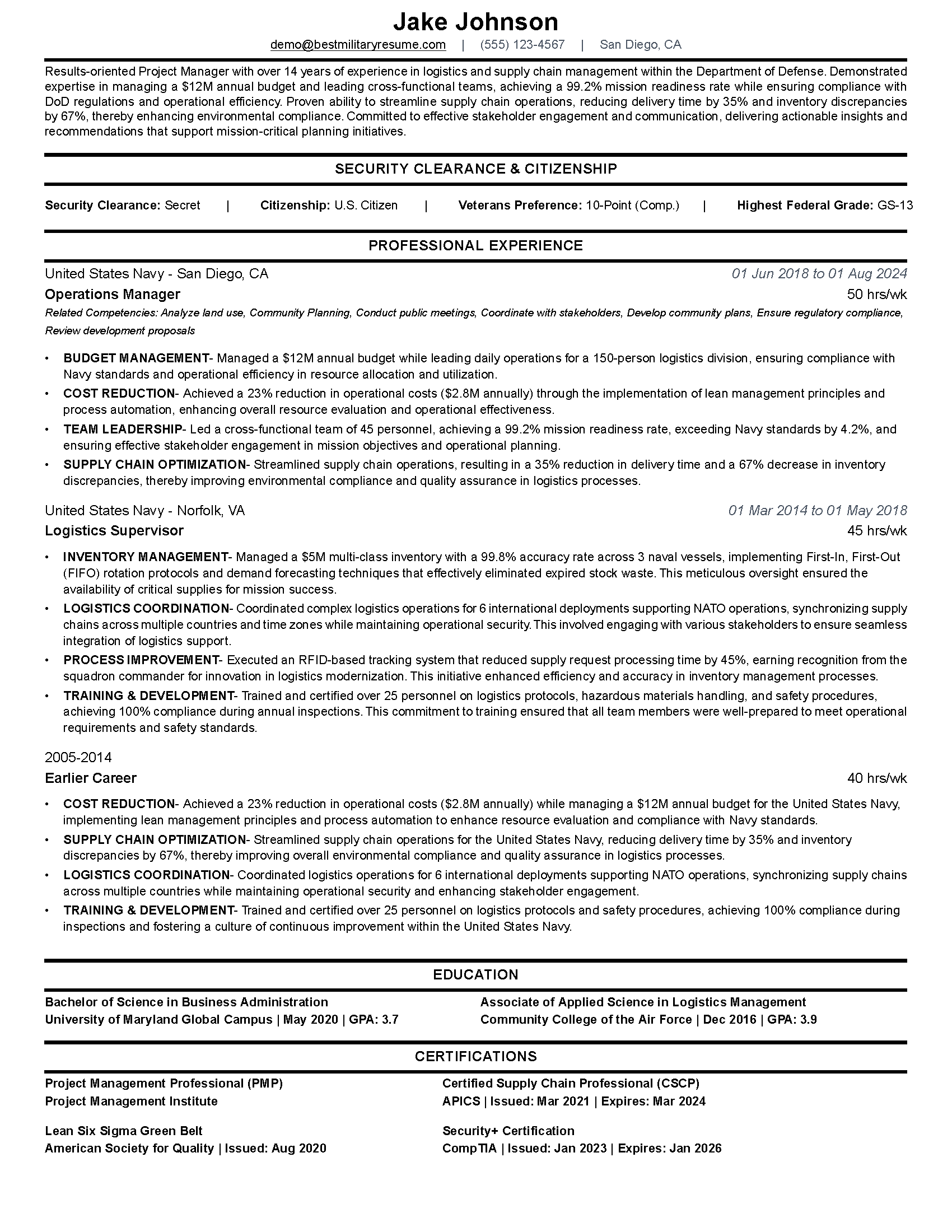
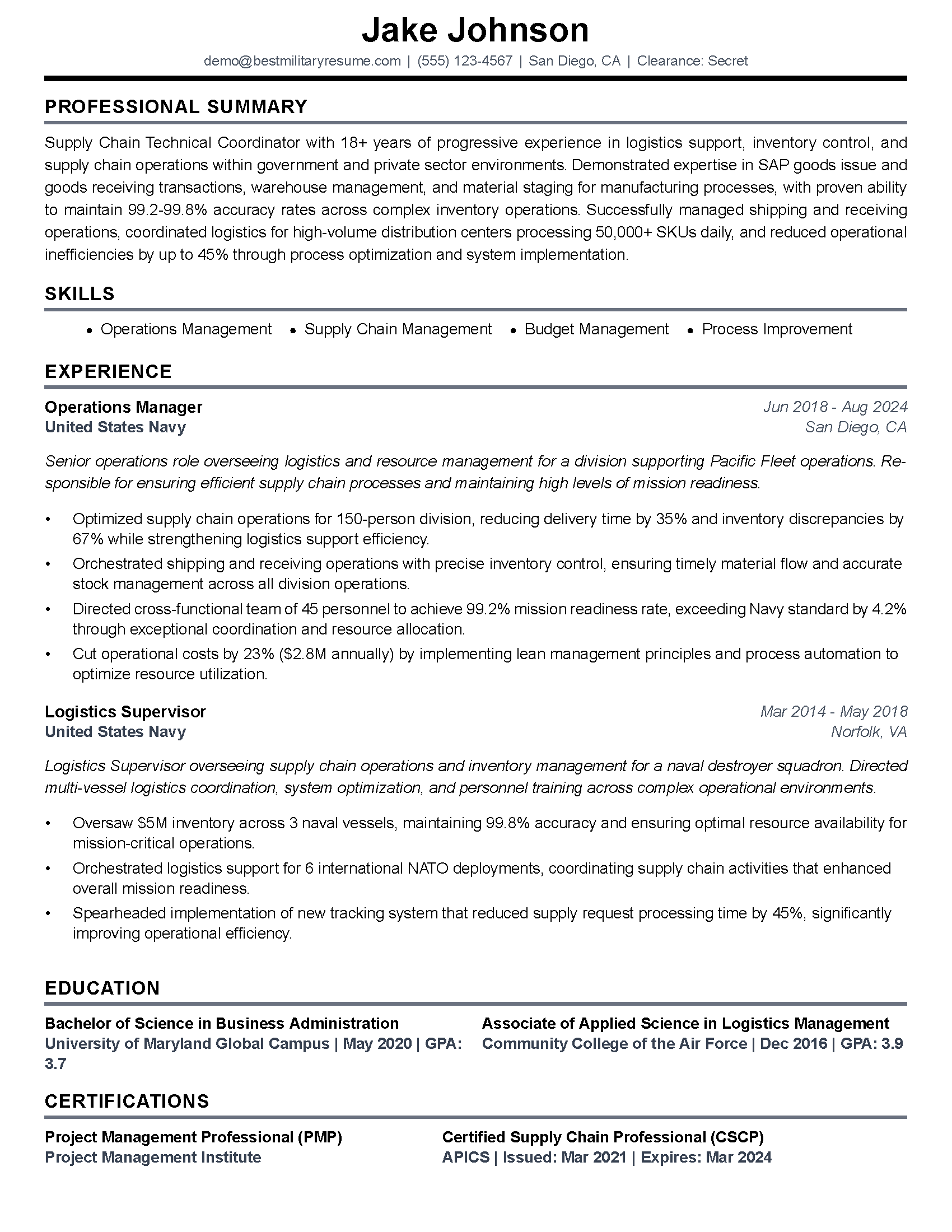
Points help only after you pass the exam. The tiebreaker helps against applicants of no greater qualifications. That part is your resume.
Kyle, a Navy Chief Petty Officer, tailored one resume to one job. He wrote that "within 24 hours of submitting the resume, I had a phone interview scheduled." A hiring interview was set for the following week, and he accepted the position. His story doesn't name the employer or sector.
Sign in to the military resume builder and paste the Iowa posting. It tailors your resume to that posting, so you start from the job, not a blank page.
Frequently Asked Questions
Does the Iowa state job application ask about military service?
Can my age or a disability keep me out of an Iowa public job?
Does veterans preference protect me after I'm hired in Iowa?
How long are Iowa public jobs posted before they close?
Do the University of Iowa and Iowa State use the same rules?
About the author
Brad Tachi is the CEO and founder of Best Military Resume and a 2025 Military Friendly Vetrepreneur of the Year award recipient for overseas excellence. A former U.S. Navy Diver with over 20 years of combined military, private sector, and federal government experience, Brad brings unparalleled expertise to help veterans and military service members successfully transition to rewarding civilian careers. Having personally navigated the military-to-civilian transition, Brad deeply understands the challenges veterans face and specializes in translating military experience into compelling resumes that capture the attention of civilian employers. Through Best Military Resume, Brad has helped thousands of service members land their dream jobs by providing expert resume writing, career coaching, and job search strategies tailored specifically for the veteran community.
