Vermont Veterans Preference: Promotional-Only Jobs and Exam Points
"Still getting interviews left and right. Now I have to say no."
Taranjeet, E-5, Army, optimized her LinkedIn and resume with BMR
Vermont veterans preference lets a veteran who qualifies apply for "State promotional only" jobs. The State's HR page says those jobs "normally are available only to current State employees" in Vermont.
The law also adds points on some State exams. A veteran who passes an open competitive, point-based exam gets 5 points. Some groups get 10.
A statewide promotional post can look closed if you never worked for the State. It is not closed to you if you qualify. Each Vermont rule below comes with the law's own text.
Checked November 2026: 3 V.S.A. § 310 and § 327 and 20 V.S.A. § 1543. Also checked: the Department of Human Resources veterans preference page.
Promotional-only postings are open to eligible veterans
Vermont opens that door by law. The text of 3 V.S.A. § 310(h) reads:
"Those individuals qualifying under subdivision (g)(1)(A) of this section shall be entitled to apply and compete for vacant positions for which recruitment is being conducted only on a statewide promotional basis."
Subdivision (g)(1)(A) covers applicants "who meet the definition of a veteran as defined by 38 U.S.C. § 101 and who received an honorable discharge" under the law. So the door in the statute is for veterans. The spouses named in (g)(1)(B) are not named in (h).
The DHR page words it more broadly:
"Individuals who are eligible for veteran's preference may also apply and compete for vacant positions that are recruited as "State promotional only"."
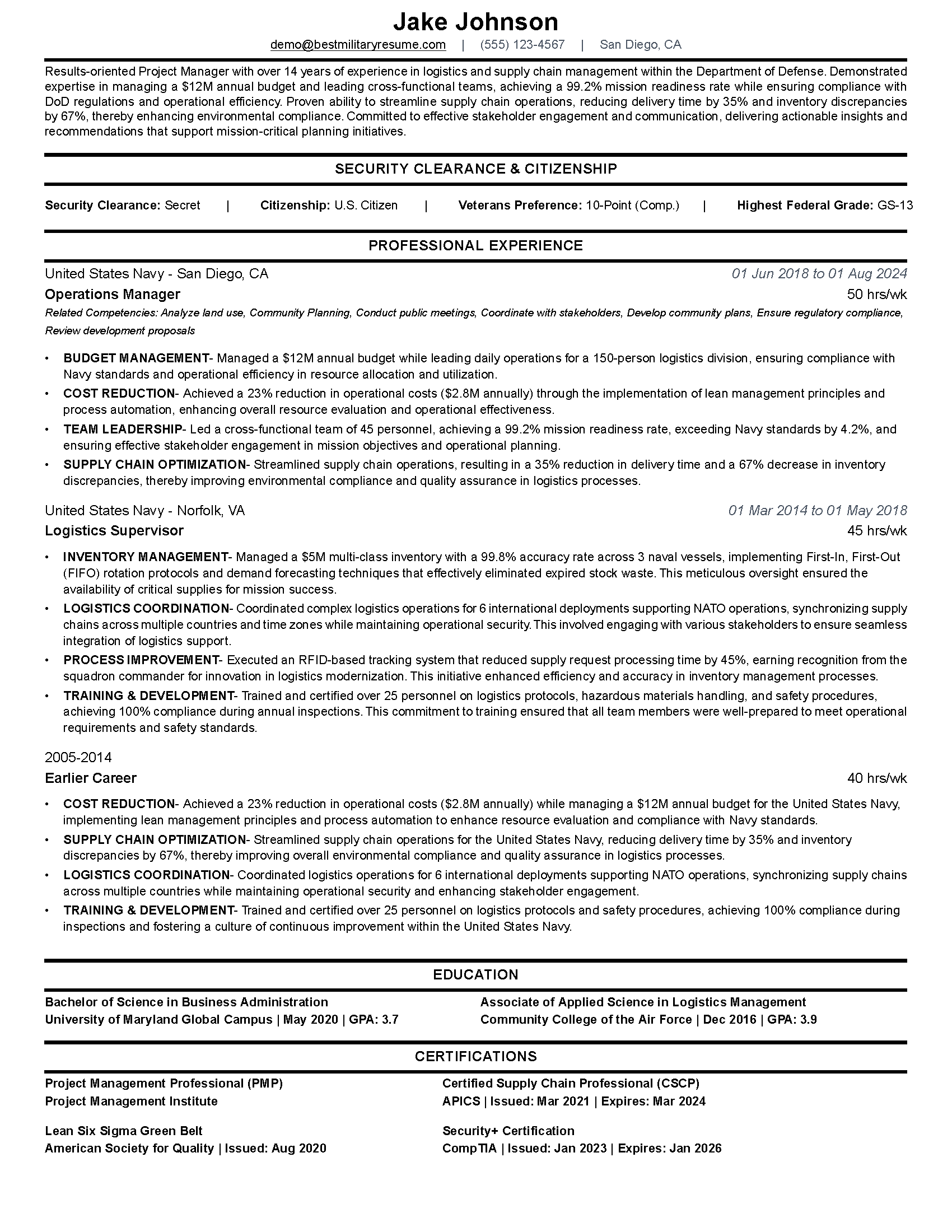
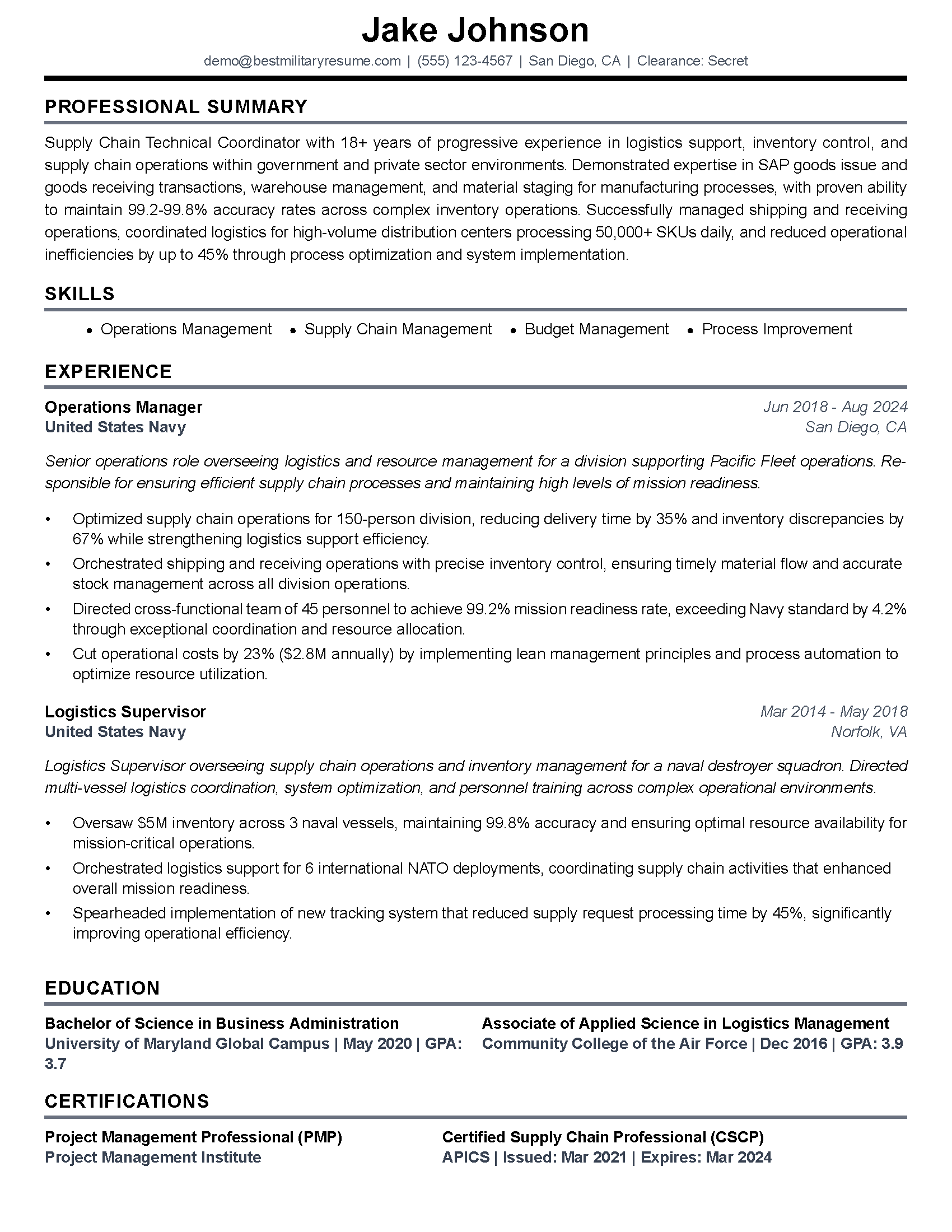
The law says you may "apply and compete" for the job. It does not say you get it. You still go up against State staff who already do the work. So a promotional post calls for a resume that fits its duties line by line. Our guide to a resume for an internal promotion shows how to frame it.
Five or ten points need a passing exam score
The points live in 3 V.S.A. § 310(g)(2). The full text reads:
"Veterans who apply for and meet the requirements for any open competitive recruitment that is conducted using a point-based examination and who receive a passing score shall have five points added to their competitive examination rating, and service-connected disabled veterans, veterans' unremarried widows or widowers, and spouses of totally service-connected disabled veterans who meet the requirements for any open competitive examination and who receive a passing score shall have ten points added to their competitive examination rating, subject to the provisions contained in 20 V.S.A. § 1543."
Three terms sit in that text for the 5 points:
- Open competitive: the job is open to the public.
- Point-based exam: the job uses a scored exam.
- Passing score: you pass first, and then the points are added.
The 10 points go to three groups. Group one is veterans with a service-connected disability. Group two is a veteran's widow or widower who has not remarried. Group three is the spouse of a totally service-connected disabled veteran. They need a passing score too.
The law does not say what happens when a job has no point-based exam. Ask DHR how a post is scored before you count on points. Federal points follow a different law, covered in our federal veterans preference guide. New Hampshire also uses 5 and 10 points, as the New Hampshire guide shows.
The State must make a diligent effort to hire you
Vermont also has a rule with no points in it. 3 V.S.A. § 310(g)(1) says "the State shall make a diligent effort to recruit, interview, and hire" two groups:
- Veterans: those who meet the 38 U.S.C. § 101 definition and got "an honorable discharge" too.
- Spouses and surviving spouses: the law's own text for them is below.
"(B) the spouses of veterans, as defined in subdivision (A) of this subdivision (1), who currently receive disability compensation or improved pension from the U.S. Department of Veterans Affairs and are unable to work due to disability and the surviving spouses of veterans in cases where the surviving spouse currently receives dependency indemnity compensation from the U.S. Department of Veterans Affairs."
That duty comes in a set order. First come the hiring terms of any union contract. Next comes § 327(a). It tells the appointing officer to look "from within the classified service" first. The effort must also fit State or federal affirmative action rules.
So "diligent effort" is a duty on the State. The text does not promise you an interview for every job.
Who counts under 20 V.S.A. § 1543
This law gives preference in hiring and in keeping a job. It reaches classified and unclassified jobs, short or long term. It applies "wherever State funds furnish the payroll" in Vermont. It names five groups:
- Disabled veterans: active duty, with a service-connected disability or VA or DoD compensation or disability retirement.
- Spouses of service-connected disabled veterans: when the disability keeps the veteran from any civil service job.
- Widows or widowers: unmarried, of veterans from a war, a badge campaign or since July 1, 1955.
- Wartime veterans: active duty in a war or a campaign with a badge.
- Veterans since 1955: active duty starting July 1, 1955, or later.
Groups 1, 3, 4 and 5 each need a separation "under honorable conditions". This law states no point figure. The points come from § 310(g)(2), which is "subject to" § 1543.
If your discharge type worries you, our guide to discharge types on a resume covers that side.
Discharge wording, 90 days, a stale citation and who may apply
The three sources do not use the same words. Know the gaps before you apply.
- Discharge: § 310(g)(1) says "honorable discharge" in its text. § 1543 says "honorable conditions" instead. The DHR page says "Honorable or other acceptable conditions" here.
- Time served: the DHR page says "at least 90 days" of service. Neither law states 90 days.
- Citation: the DHR page cites "3 V.S.A. Section 310(f)" for points. In the 2026 text, (f) is the merit system line. The points sit in (g).
- Promotional jobs: § 310(h) names only (g)(1)(A) veterans. The DHR page names everyone eligible for preference.
Ask the DHR Recruitment Services Division how they read your case before you apply.
Turn either Vermont door into a real application
Pick one Vermont post. It can be open competitive or "State promotional only" in type. Your resume has to match its duties before you apply.
Cal, a Navy Commander (O-5), sent us this note about his job search.
"Prior to using your site it was hit or miss. Now it's routine to get someone to answer."
Sign in to the military resume builder and paste the Vermont posting. The builder reads the posting and tailors your resume to it.
Frequently Asked Questions
Does Vermont veterans preference cover town or city jobs?
Do National Guard or Reserve members qualify in Vermont?
How do I claim veterans preference on a Vermont State job?
Can a widow or widower who remarried get the 10 points?
Where do I find Vermont State job postings?
About the author
Brad Tachi is the CEO and founder of Best Military Resume and a 2025 Military Friendly Vetrepreneur of the Year award recipient for overseas excellence. A former U.S. Navy Diver with over 20 years of combined military, private sector, and federal government experience, Brad brings unparalleled expertise to help veterans and military service members successfully transition to rewarding civilian careers. Having personally navigated the military-to-civilian transition, Brad deeply understands the challenges veterans face and specializes in translating military experience into compelling resumes that capture the attention of civilian employers. Through Best Military Resume, Brad has helped thousands of service members land their dream jobs by providing expert resume writing, career coaching, and job search strategies tailored specifically for the veteran community.