Individual Ready Reserve Job Search: Landing a Civilian Job
"Still getting interviews left and right. Now I have to say no."
Taranjeet, E-5, Army, optimized her LinkedIn and resume with BMR
You signed the separation paperwork. You turned in your gear. Then somebody told you you're not fully out yet. You're in the Individual Ready Reserve until your military service obligation ends.
A lot of people in that spot freeze up on the job search. They wonder if an employer will see "reserve" and pass. They wonder if they can get recalled in month three of a new job. They wonder if they should even mention it.
I went straight from the Navy into private-sector tech sales. That first civilian search taught me to have my answers ready. So this guide gives you plain answers for an Individual Ready Reserve job search. You'll see what the IRR asks of you and how to show it on a resume. You'll also get a recall answer and the laws that protect you. Just back from a mobilization with a drilling unit? Our guide to resources for demobilizing reservists covers that path. This one is for the IRR.
What does being in the IRR actually ask of you?
Less than most people expect. The law sets it up in 10 U.S.C. 10144. The IRR is part of the Ready Reserve. It sits outside the Selected Reserve and the inactive National Guard. In plain words, you're not in a unit. You don't drill. You don't get drill pay.
You still have a few jobs, though. They're small, but they matter.
- Keep your info current: Ready Reserve members must report changes to their address, family, and civilian job. That rule is in 10 U.S.C. 10205. Yes, that includes the new job you're hunting for.
- Report health changes: The same law asks you to report a health change that stops you from meeting your branch's standards.
- Show up if you're called to muster: Your branch may order you to muster duty once a year. The law caps it at one day a year, travel included. You serve at least two hours that day. That's 10 U.S.C. 12319.
- Answer your mail and email: Your branch reaches you through the contact info it has. If that info is old, you may miss an order you're still on the hook for.
Each branch runs its own IRR. The forms, the portal, and the screening steps can differ. So check with your own branch's IRR office for how it handles muster and contact updates. Don't go by what a buddy in another branch told you.
Can you job hunt full time while you're in the IRR?
Yes. This is the part people miss. The IRR gives you something a drilling reservist doesn't have. You get every weekend back.
A drilling Guard or Reserve member has to plan interviews around drill and annual training. You don't. Outside of a possible one-day muster, your calendar is yours. That makes the IRR a good time to run a real search, not a half one.
So treat it like a job. Set a weekly rhythm and stick to it.
- Find postings you'd actually take: Look for roles that fit your skills, pay, and location. Start with the ones that pay best or carry the best benefits.
- Tailor a resume to each one: Use the posting's own words for work you've really done. One generic resume can't match every posting.
- Apply and log it: Track the company, the role, the date, and who you talked to.
- Reach out to people: Message someone at the company or a friend from your old command who got out first.
- Repeat every week until the offer: Some weeks you'll find four good postings. Some weeks you'll find fifteen. Do the real ones.
Your volume should come from how many real postings you find. It shouldn't come from a quota. Still on terminal leave? Read how to land a job before separation on terminal leave first. It covers the weeks before the IRR starts.
Should you put the IRR on your resume?
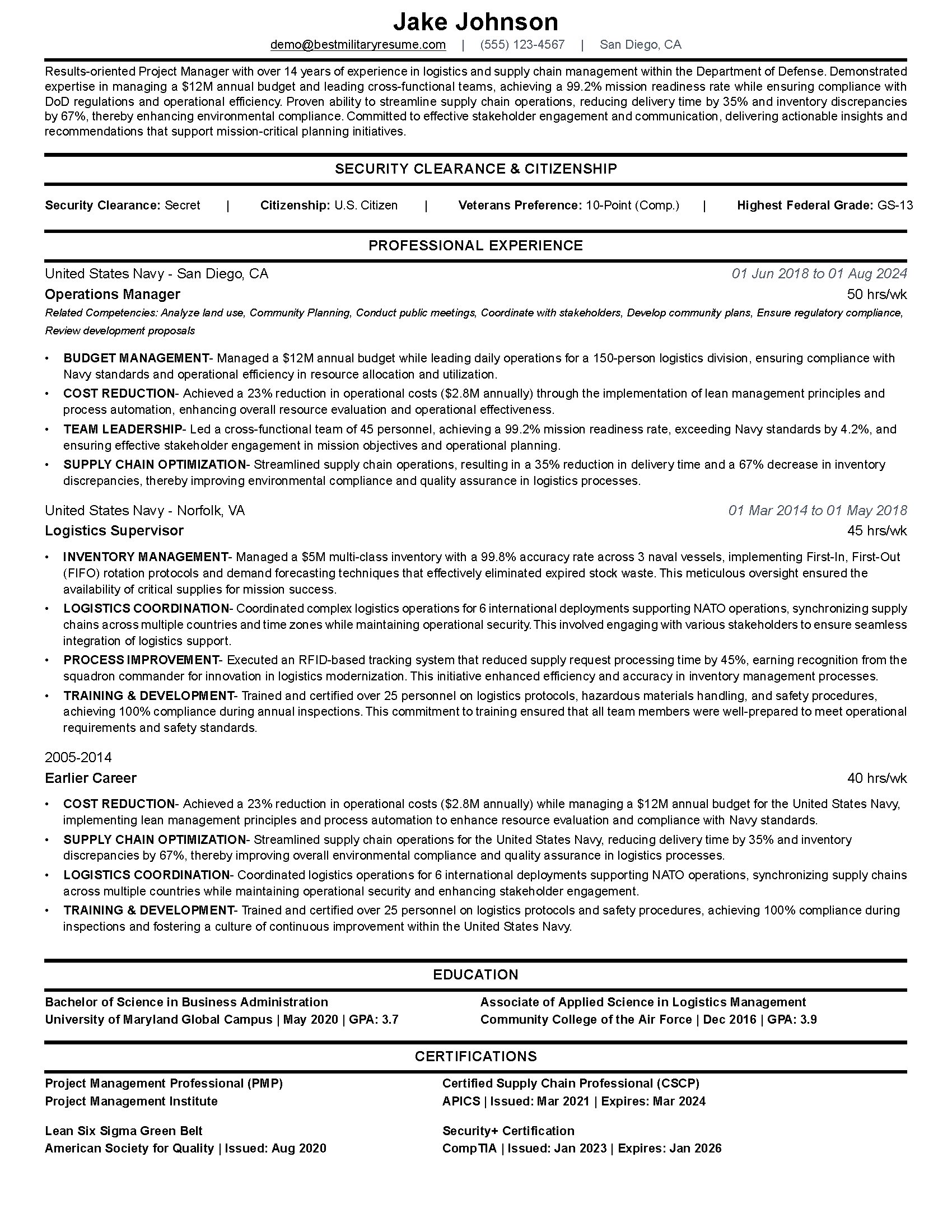
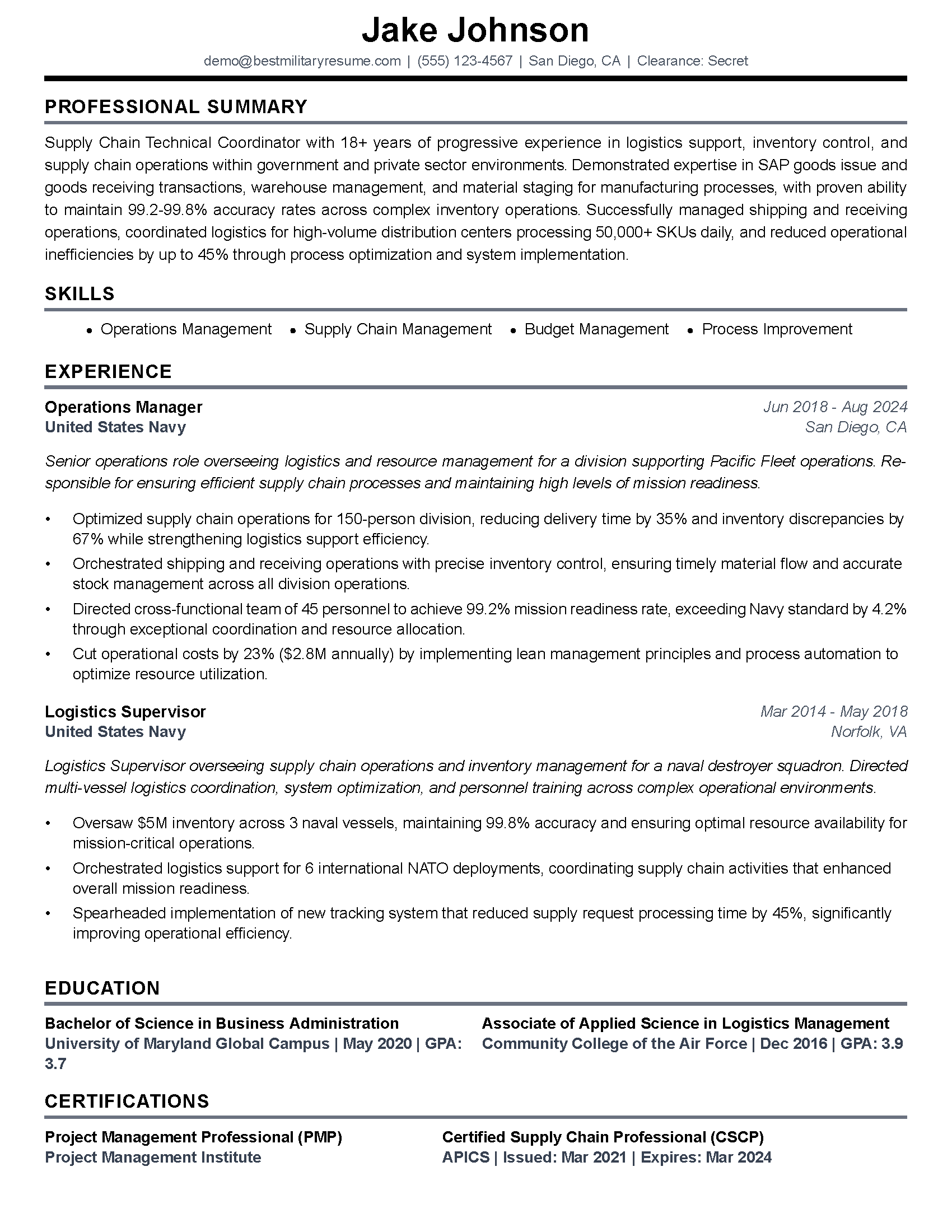
You can, but keep it short. Your resume is about the civilian job you want. The IRR is a status, not a job. It doesn't give you duties or results to write about.
Your military experience section should still carry your active duty time. That's where your real work lives. List your branch, your dates, your job title in civilian words, and the results you got. Then add one line for the IRR if you want to show it.
A simple way to write it:
- Short version: U.S. Navy, Individual Ready Reserve, 2026 to present
- Folded into service: U.S. Army, Active Duty, 2020 to 2026. Individual Ready Reserve, 2026 to present.
Don't write bullets under the IRR line. There's nothing to brag about there, and filler bullets hurt your credibility. Put your effort into the active duty bullets above it.
Some people leave the IRR off the resume completely. That can be fine too. The resume isn't a full record of your status. But if an interviewer asks, tell the truth in a sentence. Hiding it and getting caught later can look much worse than the IRR ever would.
What about the date gap?
Been out a few months with no job yet? Your end date will show a gap. That's normal. You were job hunting. You don't need to cover it with the IRR line. If someone asks, say you separated, took time to find the right fit, and you're ready now.
Want reserve and civilian work on one resume? Read our guide to a reserve resume with two careers.
What do you say when an employer asks about recall?
This is the question that scares people most. So prep the answer before you need it. Keep it short and honest.
Start with what's true in the law. For most IRR members, the main way to be called back without consent takes a big event. Under 10 U.S.C. 12302, the President has to declare a national emergency first. Then IRR members can be ordered to active duty for up to 24 months in a row.
There's a second path in 10 U.S.C. 12304. It reaches IRR members only if they volunteered for a special mobilization category and were picked for it. Section 10144 also says a member can't stay in that category past 24 months after leaving active service. If you never volunteered for that category, that path likely doesn't apply to you. Check with your branch if you're not sure.
The law also has shorter recall tools. One allows up to 15 days a year under 10 U.S.C. 12301(b). Another allows up to 120 days for a disaster response under 10 U.S.C. 12304a. That one covers the Army, Navy, Marine Corps and Air Force Reserves, not the Coast Guard Reserve. Ask your branch how it uses them.
Don't guess at odds. I can't give you a number, and you shouldn't make one up either. Just say what your status is and what you'd do.
An answer you can adapt:
"I'm in the Individual Ready Reserve until my service obligation ends. I don't drill, and I'm not in a unit. A major recall would take a national emergency or a war. If it happened, I'd give you all the notice I could. The law protects the job while I'm gone."
Then move back to the job. Talk about what you'd do in the first 90 days. The employer cares more about that than about a recall that may never come.
Is it legal for them to ask?
An employer can ask about your schedule and your obligations. What they can't do is turn you down because of your service. 38 U.S.C. 4311 covers people with an obligation to serve. They can't be denied initial employment because of it. That covers the hiring stage, not just people who already have the job.
If you think a company passed on you for that reason, write down what was said and when. Employer Support of the Guard and Reserve (ESGR) and the Department of Labor both help with these cases.
What does USERRA protect if you do get called back?
The Uniformed Services Employment and Reemployment Rights Act (USERRA) covers your civilian job if you're mobilized. The main rules sit in 38 U.S.C. 4312. Here's what they ask of you:
- Give notice: Tell your employer before you leave, in writing or out loud. The law excuses notice only when military needs or the facts make it impossible or unreasonable.
- Watch the five-year limit: Your total time away from one employer for service generally can't go past five years.
- Know the big exception: The same section leaves out time on orders under 12302 and 12304 from that five-year count. So an IRR recall under those sections doesn't eat into your limit.
- Report back on time: When you come home, you have to report back or apply to return within the legal window. The window depends on how long you served.
This is why you can answer the recall question with a steady voice. You aren't asking the employer to take a wild risk. The law already covers this case.
Save your orders and any letters about your service. If you ever need to use USERRA, those papers will help.
What happens to your clearance in the IRR?
Be careful here. A lot of people overstate their clearance on a resume. That can cost you an offer once the company checks it.
When you leave active duty, you leave the job that gave you access. Being in the IRR doesn't keep that access open on its own. A new employer that needs a clearance will check your record and decide what they can use.
So write it in a way that's true today. List the level and say it's not active:
- Clear and honest: Secret clearance (inactive since June 2026)
- Too vague: Clearance holder
- Wrong if it's not true: Active TS/SCI
Put the date in. It shows when your access ended. For more on wording, read how to list an inactive security clearance on your resume. Weighing cleared jobs against others? Read what a clearance is worth in the job market.
Can you apply for federal jobs from the IRR?
Yes. Being in the IRR doesn't stop you from applying on USAJOBS. You don't need your service obligation to end first.
Your veterans' preference comes from the active duty you already served, not from the IRR. The legal definition of a veteran for preference is in 5 U.S.C. 2108. It's built on active duty service and how you separated. You'll prove it with your DD-214. Our guide to using your DD-214 for veterans' preference covers how it fits into a federal application.
A federal resume is a different document from a private one. It needs month and year on every job and hours per week. Give each duty enough detail to show how it matches the announcement. It runs two pages for most federal jobs. Always check the announcement, because some are exceptions.
If you'd take either a federal or a private job, run both searches at once. The facts are the same. Only the shape of the resume changes.
Should the IRR go on the federal resume?
You can add the same one line. Don't add hours per week or duties under it, because you aren't doing work in that status. Your active duty jobs carry the specialized experience. Match it to the words in the announcement.
What do you owe the IRR once you land the job?
You got the offer. Good. Now close the loop on your end.
- Report your new job: 10 U.S.C. 10205 says Ready Reserve members report changes in civilian employment. Send your branch's IRR office your new employer's info.
- Update your address if you moved: Same rule. A move for a new job is a common reason people drop off the radar.
- Tell your new boss early: Mention your IRR status in your first week if you didn't in the interview. It builds trust, and it's one less surprise later.
- Keep a copy of your orders file: If muster or recall ever happens, you'll want your papers in one place.
- Know your end date: Find out when your service obligation ends. Put it on your calendar so you know when the IRR is behind you.
Then focus on the job. For most people in the IRR, the status stays in the background. The new career is what fills the days.
What to Do Next
Your next step is the resume. Build one master resume that holds every job, every result, and every number from your active duty time. Don't trim it. Then cut a tailored version from it for each posting you'd take.
That's what Best Military Resume's Resume Builder does. You build your base once. When you tailor, BMR reads the posting and copies your base. Then it rewrites your summary, work bullets, and skills in the posting's own words. Your base stays untouched. If you're open to federal work too, you can build a federal version from the same base.
The free tier lets you build your resume and tailor one private and one federal version. Start this week. The IRR gave you your weekends back. Put them to work on the resume first, then the applications.
Frequently Asked Questions
Can I apply for civilian jobs while I'm in the Individual Ready Reserve?
Do I have to tell an employer I'm in the IRR?
Can I get recalled from the IRR?
Does USERRA protect my new job if I'm recalled from the IRR?
Do I have to report my new civilian job to the military?
Does being in the IRR give me veterans' preference for federal jobs?
How do I list an IRR clearance on my resume?
About the Author
Brad Tachi is the CEO and founder of Best Military Resume and a 2025 Military Friendly Vetrepreneur of the Year award recipient for overseas excellence. A former U.S. Navy Diver with over 20 years of combined military, private sector, and federal government experience, Brad brings unparalleled expertise to help veterans and military service members successfully transition to rewarding civilian careers. Having personally navigated the military-to-civilian transition, Brad deeply understands the challenges veterans face and specializes in translating military experience into compelling resumes that capture the attention of civilian employers. Through Best Military Resume, Brad has helped thousands of service members land their dream jobs by providing expert resume writing, career coaching, and job search strategies tailored specifically for the veteran community.
