South Dakota Veterans Preference: Interview Rule, Promotions and Local Jobs
Taylor sent 200+ applications for 5 interviews. With BMR, 20 resumes all hit.
Taylor, E-7, Army, defense industry
South Dakota veterans preference guarantees a qualified veteran an interview for covered public jobs, with no added points. Under SDCL 3-3-2, a veteran who meets a covered public job's minimum qualifications must be interviewed. The preference in SDCL 3-3-1 reaches promotions and local jobs too. This page quotes the law behind each rule and lists the papers to attach.
The Law Promises an Interview, Not the Job
SDCL 3-3-2 has two steps. The person who hires must "investigate the qualifications of the applicant". Then, if you have "at least the minimum qualifications necessary to fill the position," they "shall interview the applicant".
The state hiring rule says the same thing in office terms. ARSD 55:10:02:08 covers a certified preference applicant who is otherwise qualified. The requisition list must identify you as one "who must be interviewed by the appointing authority".
South Dakota's preference laws and its state hiring rule give no points. The state pages mention points only for federal jobs. That system is different, so read how federal veterans preference works before a USAJOBS application.
The state's Bureau of Human Resources and Administration FAQ says it plainly. "The veteran does NOT have preference over a more qualified applicant". So the interview is where you win or lose it. These panel interview tips help if a board sits across from you.
Promotions and City, County and School Jobs Count Too
South Dakota's preference covers more than the first hire. SDCL 3-3-1 gives preference "for appointment, employment, and promotion". So a veteran already on staff keeps it when a higher job opens.
The same statute covers "all public departments and subdivisions". It names the state "and of the counties, municipalities, and school districts of this state". So a city, county or school district job can fall under it. Each local employer runs its own hiring steps, so read that posting closely.
The branch matters too. The FAQ says the executive branch "guarantees the applicant an interview or initial qualification screening". The judicial branch differs. There, a veteran "equally qualified as a non‐veteran" is guaranteed "appointment to the position".
Guard and Reserve Time Counts if You Finished the Obligation
The preference law points to the definition in SDCL 33A-2-1. You count as a veteran when you meet both parts:
- Service: you "served the full obligation for active duty, reserve, or National Guard service". An early discharge counts too. The reasons are "a medical condition, hardship, reduction in force, or at the convenience of the military".
- Discharge: you were separated "honorably or under honorable conditions".
Two more conditions apply. SDCL 3-3-1 says you must be "a citizen of the United States". SDCL 3-3-2 says you need "at least the minimum qualifications necessary to fill the position".
Watch one wording gap. The Department of Labor and Regulation page and the Department of Veterans Affairs page both say "Honorably discharged". The statute also counts a discharge "under honorable conditions". The statute is the law, so go by its words.
Age does not shut you out either. Under SDCL 3-3-1, a "physical impairment which does not in fact incapacitate" does not disqualify you. Neither does age or "loss of limb". That holds if you have "the qualifications and business capacity necessary" for the job.
A Service-Connected Disability Moves You Ahead of Other Veterans
SDCL 3-3-1 sets an order among veterans. "A veteran who has a service-connected disability shall be given a preference over a nondisabled veteran".
For state jobs, the rating has a floor. ARSD 55:10:02:08 asks for proof from the "United States Veterans Benefits Administration". The disability must be "at least ten percent". The FAQ calls it a "certificate of service-connected disability of at least 10% from the VA". Both ask for VA proof of a rating at that level.
A rating does not stop you from working. This guide covers working with a VA disability rating.
Two Kinds of Spouses Can Use It
- Surviving spouse: SDCL 3-3-7 covers the "unmarried spouse" of a veteran who "died while in service". It also covers one whose veteran "later died from a service connected cause". The FAQ lists the DD214, DD214R or NGB22 and the marriage certificate. It also asks for the veteran's "death certificate of casualty report" (as printed).
- Spouse of a disabled veteran: SDCL 3-3-8 applies when a veteran "disabled due to a service connected cause" is "unable to exercise the right" due to the disability. The FAQ asks for the marriage certificate, the veteran's discharge papers and the disability certificate.
Both spouses still need "the qualifications and business capacity necessary" for the job. Note one gap. The FAQ says the disabled veteran must be "considered unemployable". The statute says "unable to exercise the right". Go by the statute.
The state law names spouses only. Mothers of veterans are not in it. If you're moving with a service member, these military spouse interview tips help with the gaps question.
Four Kinds of Jobs Sit Outside the Law
SDCL 3-3-6 says the chapter does not apply to these jobs:
- Department heads: the person who runs a department.
- Policy-forming officials: jobs that set policy.
- Private secretaries: the "private secretary of any official or department".
- Confidential roles: anyone in "a strictly confidential relation to the appointing officer".
For state jobs, check the posting itself. The FAQ says eligible openings will say "Veterans Preference Eligible" in the job announcement. No label means you should ask before you count on it.
Ask for It on the Application and Attach Your Papers
The preference does not switch on by itself. SDCL 3-3-1 says each applicant must answer an application question on veteran status. For state jobs, ARSD 55:10:02:08 grants it to an applicant "who requests such preference on the application".
Then send proof. The rule names "form DD214, DD214R, or NGB22". The FAQ says first-time claimants send discharge papers "showing entry and discharge dates, type of discharge". It says "The copy should be submitted with your application". Do both: request it on the application and attach the copy.
Your DD-214 proves the claim. It doesn't write your resume. This guide on what discharge papers tell employers explains the difference.
The law has teeth. SDCL 3-3-3 lets you bring "an action of mandamus to right the wrong" after a refusal. Under SDCL 3-3-5, a public worker who refuses to comply "is guilty of a Class 1 misdemeanor".
Checked November 2026: statute and rule text comes from the official South Dakota Legislature files at sdlegislature.gov. Their source lines show SDCL 3-3-1 and 3-3-2 last changed in 2016. No later change appears in those source lines. The FAQ is the state's PDF as archived on May 27, 2025.
Make the Guaranteed Interview Count
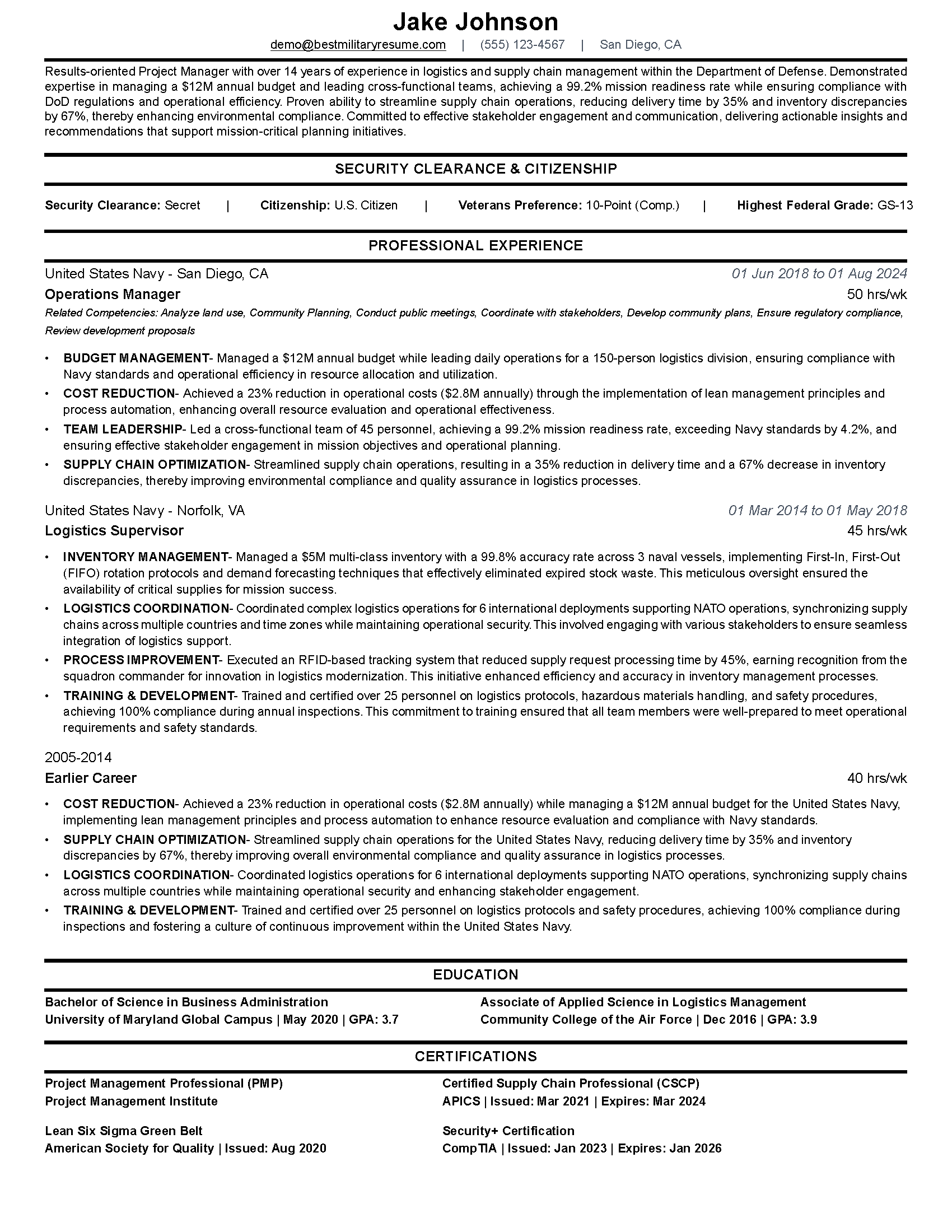
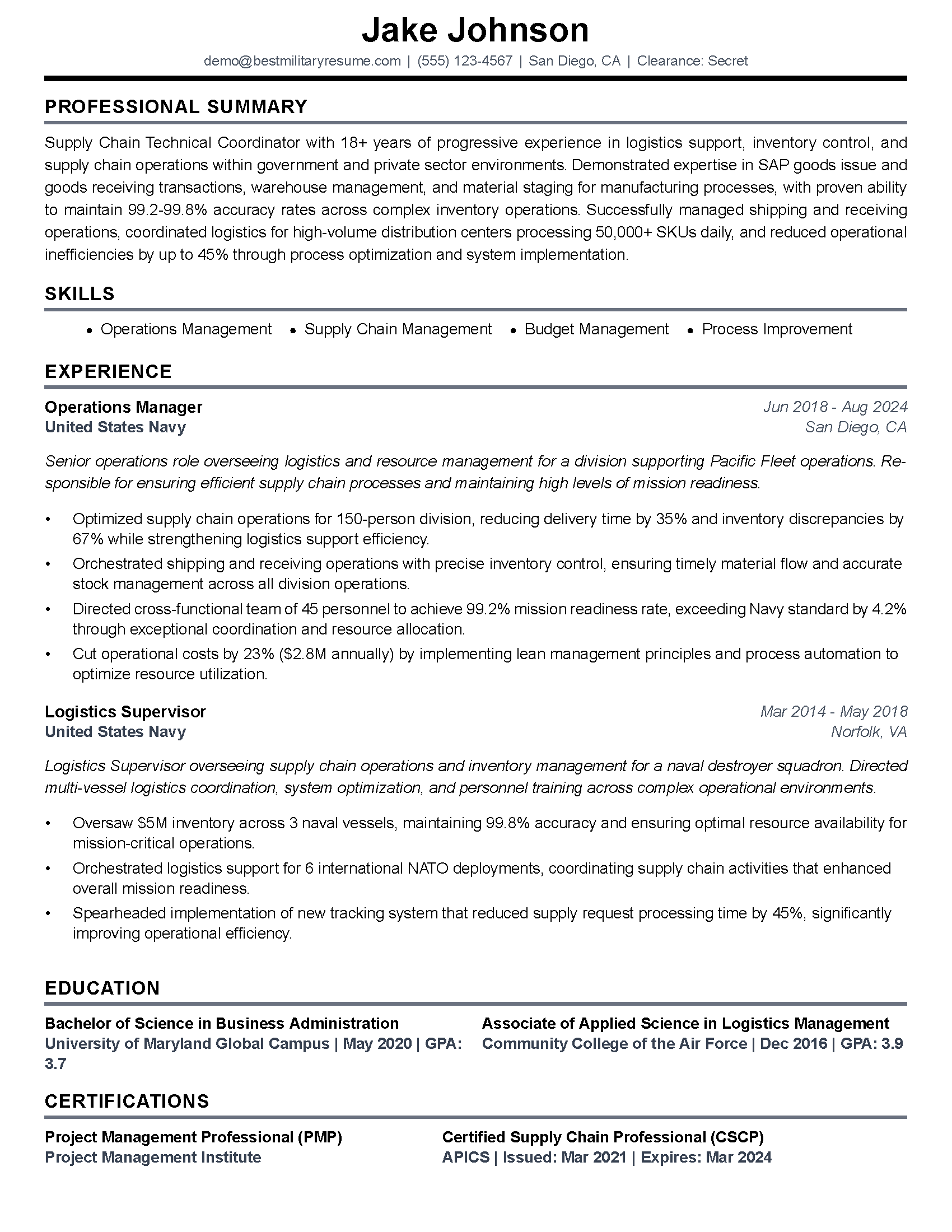
The law gets you in the room if you meet the minimums. Your resume has to show those minimums in the posting's terms first.
Michael, an Air Force Chief Master Sergeant (E-9), accepted a job after using BMR. His story doesn't say if the job was public or private. In his words: "Your resume builder landed several interviews and a job that pays more than I expected".
Sign in to the military resume builder and paste the South Dakota posting. The builder rewrites your summary, work bullets and skills in the posting's own words. Then check that each minimum shows before you apply.
Frequently Asked Questions
Can a South Dakota public employer remove a veteran from a job?
What if a South Dakota employer cuts my pay to push me out?
Does South Dakota veterans preference cover public works jobs?
Where can South Dakota veterans get job search help?
Why does South Dakota give veterans preference at all?
About the author
Brad Tachi is the CEO and founder of Best Military Resume and a 2025 Military Friendly Vetrepreneur of the Year award recipient for overseas excellence. A former U.S. Navy Diver with over 20 years of combined military, private sector, and federal government experience, Brad brings unparalleled expertise to help veterans and military service members successfully transition to rewarding civilian careers. Having personally navigated the military-to-civilian transition, Brad deeply understands the challenges veterans face and specializes in translating military experience into compelling resumes that capture the attention of civilian employers. Through Best Military Resume, Brad has helped thousands of service members land their dream jobs by providing expert resume writing, career coaching, and job search strategies tailored specifically for the veteran community.
