Air ForceAFSC: 2R1X1

Maintenance Management Production

The civilian and federal jobs that hire Air Force Maintenance Management Productions — with real salaries and the resume that gets callbacks.

Every 2R1X1 has more options than a Google search will tell you. Below: career paths, BLS salary data, federal GS series, certifications by target career, and how to translate your experience without losing what made you valuable to the Air Force in the first place.

Free to start · Tailored resume in under 5 minutes

$67K–$121K
Salary Range
BLS-verified median salaries
14
Career Paths
14
Companies Hiring
9
Resume Examples
7
Federal GS Series
7
Certification Paths
10
FAQs Answered
BT
Brad Tachi
Navy Diver · BMR Founder

After the Navy I got hired into 6 federal career fields and tech sales, and sat on federal hiring panels along the way. I spent the last 2 years rebuilding everything I learned into BMR, tuned for how AI actually screens resumes today. This is the system I wish I'd had on day one.

65,000+ resumes built·Success stories every week
Free Sample · Emailed to You

Get a free 2R1X1 Maintenance Management Production sample resume

One page, built in our template, with your military experience translated into civilian terms hiring managers and ATS systems read. Use it as a reference for your own. Drop your email and we'll send you the download link.

Free. We'll also send occasional job-search tips. Unsubscribe anytime.

Military Role Overview

If you held AFSC 2R1X1, Maintenance Management Production, you ran the schedule that kept aircraft flying. In the squadron you are known as PS&D, Plans, Scheduling and Documentation. You built the daily, weekly, monthly, quarterly and annual flying and maintenance schedules, balanced sortie requirements against inspection due dates, and tracked the Health of the Fleet so leadership knew which tails were mission capable and which were going to break next.

The work is production control in the truest sense. You coordinated across every backshop and flightline section, deconflicted maintenance windows against the flying schedule, and documented engine, AGE, munitions and support system status in the maintenance information system. You lived in IMDS and the move toward a single MIS, plus MGI and other status tools, turning raw maintenance data into the briefings that drove sortie production decisions.

2R1X1 is the current production-side code that came out of the split of the legacy 2R0X1, Maintenance Management Analysis. If you analyzed reliability and maintainability trends rather than ran the schedule, the sibling analysis path is the closer fit. You can compare the two on our 2R0X1 Maintenance Management Analysis page, and see where production control sits next to the wrench-turning AFSCs like 2A5X1 Aerospace Maintenance. To explore civilian matches across every branch, start with the military career crosswalk.

Civilian employers value this background because production scheduling, capacity planning and data-driven status reporting are exactly what runs a factory floor, a distribution network or a fleet operation. You already coordinated competing priorities against a hard deadline with assets that cost millions and lives on the line. That discipline transfers cleanly once the resume names it in language a civilian hiring manager understands.

Production control is one of the cleanest logistics translations I have seen. I spent years in federal supply, logistics and property management after the Navy, and the people who ran maintenance scheduling always had the strongest grasp of how parts, people and time actually move. A 2R1X1 already thinks in throughput and due-outs. Name that on the resume and the offers follow. — Brad Tachi, Navy Diver veteran & BMR founder

Security ClearanceSecret
ASVAB RequirementGeneral (G): 44
TrainingBasic Military Training at Lackland AFB, then approximately 33 days of technical training at Sheppard AFB, TX, followed by on-the-job upgrade training through the 7-skill level.
Certs Earned in ServiceCommunity College of the Air Force credits toward an Applied Science degree in Maintenance Production Management, Generic 7-skill-level management Career Development Course (CDC)

Pay Reality Check

The number that matters when you're deciding what's next: how does civilian pay compare to what you make now?

Air Force mid-career
$58K–$82K
E-5 to E-7 total comp (base + BAH + BAS + tax advantage)
Civilian Maintenance Management Production
$76K–$121K
BLS median across direct-match civilian roles
Federal (GS-9 to GS-13)
$58K–$120K
7 matching GS series + locality pay + step increases
+35% on average
Civilian roles for Maintenance Management Productions pay ~$24K more than mid-career enlisted total comp.

Military comp is approximate (varies by location/dependents). Civilian is BLS median. Federal includes locality pay. Your real number depends on duty station, family status, GS step, and overtime.

Private Sector Career Paths

2R1X1 experience maps to several civilian fields tracked by the Bureau of Labor Statistics (BLS OEWS, May 2024). The strongest fit is logistics and production coordination, where your scheduling and status-tracking work translates almost directly.

Logistician is the closest civilian title. BLS reports a median wage of $80,880 (May 2024), and the role centers on coordinating the supply, scheduling and movement of materiel against operational requirements, which is the civilian version of balancing parts and tails against the flying schedule. Defense contractors and federal agencies hire heavily here, and clearance-holding candidates are competitive.

Industrial production managers ($121,440 median) and transportation, storage and distribution managers ($102,010 median) run the throughput and capacity decisions you made at squadron level, scaled to a plant or a distribution center. General and operations managers ($102,950) sit one level up. These are growth roles you grow into after a few years in coordination or analyst seats.

Management analysts ($101,190) and cost estimators ($77,070) reward the data and metrics side of PS&D, while purchasing agents and buyers ($75,650) value the parts-ordering and demand-planning judgment you built tracking due-ins and cannibalization. Read more in our guides on veterans in logistics and supply chain careers and moving into logistics management.

Be realistic about the market. Manufacturing and distribution hiring is cyclical and concentrated near plants, ports and major freight hubs, so geography matters. Many production-coordinator roles start in the $50,000 to $70,000 band before the manager-level wages above come into reach. The cross-branch logistics community looks similar in the Army 92A Automated Logistical Specialist and Navy LS Logistics Specialist fields. When you are ready to put this on paper, the military resume builder structures it for you, or you can start building your resume now.

Civilian Job Title Translations

Logistician
Logistics & Supply Chain
strong
$80,880median
4% (As fast as average)
O*NET: 13-1081.00
Transportation, Storage and Distribution Manager
Logistics & Supply Chain
strong
$102,010median
6% (Faster than average)
O*NET: 11-3071.00
Industrial Production Manager
Manufacturing
strong
$121,440median
3% (As fast as average)
O*NET: 11-3051.00
Management Analyst
Professional Services
strong
$101,190median
11% (Much faster than average)
O*NET: 13-1111.00
General and Operations Manager
Operations
moderate
$102,950median
6% (Faster than average)
O*NET: 11-1021.00
Purchasing Agent / Buyer
Procurement
moderate
$75,650median
4% (As fast as average)
O*NET: 13-1023.00
Cost Estimator
Construction & Manufacturing
moderate
$77,070median
3% (As fast as average)
O*NET: 13-1051.00

Companies That Hire This Background

Sustainment, production scheduling and supply chain roles supporting aircraft programs.
Production planning, maintenance operations and logistics across commercial and defense aircraft lines.
Sustainment scheduling and logistics management on weapon-system support contracts.
Production control and supply chain roles supporting aircraft and missile programs.
Maintenance, repair and overhaul scheduling and logistics support.
Operations, production-flow and fulfillment scheduling roles across the fulfillment network.
Operations supervision, hub scheduling and distribution planning.
Hub operations, dispatch scheduling and logistics coordination roles.
Maintenance operations control and fleet scheduling for a commercial fleet.
Maintenance planning, production control and technical operations scheduling.
Production scheduling, plant operations and supply chain roles.
Federal logistics management, supply program and inventory roles in GS series.
Depot maintenance production scheduling and logistics management as Air Force civilians.
Production planning and aftermarket logistics for aerospace components.

See a salary you want? Build a resume targeting it.

BMR rewrites your 2R1X1 experience for any of the civilian roles above — keywords, achievements, and language hiring managers actually scan for.

Free to start · 2 tailored resumes included

Build My Resume Free
Real Air Force success story
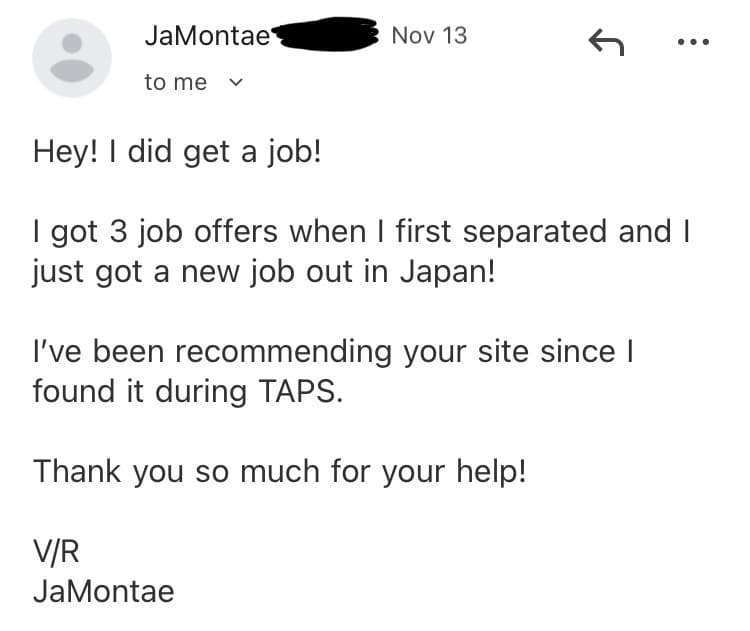
Hey! I did get a job! I got 3 job offers when I first separated and I just got a new job out in Japan! I’ve been recommending your site since I found it during TAPS. Thank you so much for your help! V/R JaMontae
JaMontae· Staff Sergeant (E-5)· Air Force
Information Technology and Computer Science
Read the full story

Federal Career Paths

Federal service rewards a production-control background, and Veterans preference plus any active clearance make you competitive on USAJOBS. The crosswalk below pairs 2R1X1 duties with the GS series where your experience qualifies you.

The GS-0346 Logistics Management series is the anchor. It covers integrated logistics support, maintenance planning and fleet sustainment, which is the federal expression of PS&D. Pair it with GS-0343 Management and Program Analyst, where your metrics, scheduling and Health of Fleet reporting qualify you to analyze program performance and resourcing.

On the supply and equipment side, look at GS-2003 Supply Program Management, GS-2010 Inventory Management and GS-1670 Equipment Services, all of which value the parts, due-in and accountability work behind the schedule. GS-1601 General Facilities and Equipment and GS-0301 Miscellaneous Administration and Program open doors at agencies that classify coordination roles broadly.

Most transitioning enlisted candidates target GS-7 through GS-11 depending on time in service and education, with GS-12 reachable for senior NCOs who can document program-level scope. Read our walkthroughs on writing a federal resume and the GS-7 to GS-9 qualification path. The federal resume builder handles the OPM format, or start your federal resume here. Veterans from the 2G0X1 Logistics Plans field target many of these same series.

GS Series & Position Matches

GS-0346
Logistics Management
Typical grades: GS-7, GS-9, GS-11, GS-12
View Details
GS-0343
Management and Program Analyst
Typical grades: GS-7, GS-9, GS-11, GS-12
View Details
GS-2003
Supply Program Management
Typical grades: GS-7, GS-9, GS-11
View Details
GS-2010
Inventory Management
Typical grades: GS-7, GS-9, GS-11
View Details
GS-0301
Miscellaneous Administration and Program
Typical grades: GS-7, GS-9, GS-11
View Details
GS-1601
General Facilities and Equipment
Typical grades: GS-7, GS-9, GS-11
View Details
GS-1670
Equipment Services
Typical grades: GS-7, GS-9, GS-11
View Details

Federal resumes follow different rules. We know them.

Federal hiring uses keyword-matching and structured experience. BMR builds federal-format resumes (USAJobs-ready) with the right keywords, hours/week, and supervisor info — for any GS series above.

Free to start · Federal + civilian resume formats included

Build My Federal Resume Free

Want to Change Careers Entirely?

Not everyone wants to stay in a related field. These career paths leverage your transferable skills — leadership, risk management, logistics, project planning — in completely different industries.

Operations Research Analyst

$91,290
Analytics and Decision Science(O*NET: 15-2031.00)BLS OEWS May 202423% (Much faster than average)
Maintenance metrics and MGI data analysisScheduling optimization against competing constraintsFleet status forecastingTranslating raw data into leadership decisions

PS&D work is applied operations research. You already optimized schedules against constraints and modeled how downtime ripples through production, which is the core of this analyst role.

How to get there: A bachelors degree helps, often in a quantitative or business field. Build out Excel, SQL and a statistics course, then target entry analyst roles. The GI Bill can fund a degree completion or analytics certificate.

Computer Systems Analyst

$103,790
Information Technology(O*NET: 15-1211.00)BLS OEWS May 202411% (Much faster than average)
IMDS and maintenance information system administrationData integrity and work-order trackingMapping operational processes to system workflowsTranslating user needs into system requirements

Years inside IMDS and the move toward a single MIS gave you real experience bridging operations and the systems that run them, which is exactly what a systems analyst does.

How to get there: A CompTIA or systems-analysis certificate plus an associate or bachelors degree gets you in the door. Business-analyst and ERP-support roles are common entry points. GI Bill eligible.

Medical and Health Services Manager

$117,960
Healthcare(O*NET: 11-9111.00)BLS OEWS May 202429% (Much faster than average)
Coordinating operations against capacity and demandStatus and availability reporting to leadershipScheduling resources across competing prioritiesCompliance and documentation discipline

Running a clinic or department is capacity planning and resource scheduling under regulation, the civilian mirror of keeping a fleet mission capable against competing demands.

How to get there: Usually requires a bachelors degree, with many employers preferring a healthcare-administration credential or masters for senior roles. Entry is often through a coordinator or operations-supervisor role. GI Bill eligible.

Health Information Technologist and Medical Registrar

$67,310
Healthcare Data(O*NET: 29-9021.00)BLS OEWS May 202416% (Much faster than average)
Maintenance data documentation and accuracyRecords management in a system of recordStatus and registry trackingData-quality auditing

You spent years keeping a maintenance system of record accurate and audit-ready. Health information work is the same documentation and data-integrity discipline in a clinical system.

How to get there: Requires an accredited health-information associate program, then the RHIT exam. A focused, GI Bill eligible path that does not require a four-year degree.

Market Research Analyst

$76,950
Marketing and Consumer Research(O*NET: 13-1161.00)BLS OEWS May 20248% (Faster than average)
Trend analysis from operational dataBuilding visual presentations for decision-makersForecasting from historical patternsTranslating numbers into a narrative

The skill of turning maintenance trend data into a clear leadership brief is the same skill behind market research. You already forecast from history and present findings that drive decisions.

How to get there: A bachelors degree is typical, often paired with a short analytics or research-methods certificate. Junior research-analyst roles are the entry point. GI Bill eligible.

Cost Estimator

$77,070
Construction and Manufacturing(O*NET: 13-1051.00)BLS OEWS May 20241% (Little or no change)
Resource and time forecastingReading technical requirements and specificationsTracking parts and labor against a planQuantifying production inputs

Estimating a project requires the same forecasting of time, parts and labor you did planning maintenance against a schedule. The technical-document fluency carries over directly.

How to get there: Entry often comes through an estimating-assistant role plus on-the-job training. A construction-estimating or cost-engineering certificate accelerates it. Some GI Bill eligible programs apply.

Management Analyst

$101,190
Professional Services(O*NET: 13-1111.00)BLS OEWS May 202411% (Much faster than average)
Process and efficiency analysisMetrics reporting and recommendationsCross-functional coordinationIdentifying bottlenecks in a workflow

You already found bottlenecks in the maintenance flow and recommended fixes. Management consulting packages that same analyze-and-improve instinct for a wider set of clients.

How to get there: A bachelors degree is typical. Some enter through an operations-analyst role and add a PMP or Lean Six Sigma credential. GI Bill eligible for many programs.

Pivoting industries? You don't need to start from scratch.

The skills that made you a good Marine, Sailor, Airman, or Soldier transfer further than you think. BMR rewrites your bullets for any of the pivot careers above — without making you sound like you've never done the work.

Free to start · Try as many career angles as you want

Tailor My Resume to a New Career

Skills Translation Guide

If you are staying in logistics, production control or supply, your terminology already matches the job postings and you can skip this section. This translation is for 2R1X1 veterans targeting careers outside maintenance and logistics, where hiring managers have never heard of PS&D or IMDS.

The goal is to keep the substance and drop the acronyms. A civilian recruiter does not know what a flying schedule deconfliction is, but they understand capacity planning against a deadline. Translate the system, not just the title.

For a deeper list see our 50 military terms translated to civilian language guide and the EPR and OPR translation guide for turning evaluations into civilian bullets. The military resume builder applies these translations for you, or you can build your resume now.

Resume Bullet Examples

Before (Military)
Served as PS&D scheduler building daily, weekly and monthly flying and maintenance schedules for a 24-aircraft squadron
After (Civilian)
Owned production planning and control for a 24-unit operation, building daily, weekly and monthly schedules that balanced output against capacity
Before (Military)
Tracked Health of the Fleet and briefed senior leaders on mission-capable rates and long-term fleet status
After (Civilian)
Produced status and capacity dashboards for leadership, reporting availability rates and forecasting downtime impacts
Before (Military)
Documented engine, AGE and support-system maintenance status in IMDS and the maintenance information system
After (Civilian)
Maintained asset status and work-order data in an enterprise asset management system supporting 200+ pieces of equipment
Before (Military)
Deconflicted maintenance windows against the flying schedule to maximize daily sortie production
After (Civilian)
Deconflicted maintenance and production windows against the operating schedule to maximize daily throughput
Before (Military)
Forecasted and scheduled phase and time-change inspections to prevent grounded aircraft and missed sorties
After (Civilian)
Scheduled preventive maintenance against forecasted due dates to prevent equipment downtime and missed production targets
Before (Military)
Tracked cannibalization actions and parts due-ins to keep priority aircraft mission capable
After (Civilian)
Managed parts allocation and prioritization across competing work orders to keep priority assets in service
Before (Military)
Analyzed maintenance metrics and built visual presentations on production trends for leadership decisions
After (Civilian)
Analyzed operational data and built KPI dashboards that informed production and resourcing decisions
Before (Military)
Coordinated across backshop and flightline sections to sequence maintenance against the production schedule
After (Civilian)
Coordinated across functional teams to sequence work and resources against the production schedule
Before (Military)
Improved squadron mission-capable rate by tightening scheduling and parts forecasting
After (Civilian)
Improved equipment availability rate by tightening scheduling and demand forecasting

Get bullets like these auto-generated for your resume.

BMR turns your 2R1X1 duties and accomplishments into civilian bullets that match the job you're applying for — no manual translation, no rewriting.

Free to start · Tailored to each job posting

Generate My Resume Bullets

Certifications by Career Path

Which certifications you need depends on where you're headed. Find your target career path below.

Data Analytics

CompTIA Data+
Recommended
CompTIA
Cost: Check current pricingTime: 2-4 monthsGI Bill Eligible
Builds on the IMDS and MIS data work for analyst paths. Vendor-neutral foundation in data analysis.
Google Data Analytics Certificate
Optional
Google (Coursera)
Cost: Check current pricingTime: 3-6 months
Practical entry analytics certificate covering spreadsheets, SQL and visualization for operations and supply analyst roles.

Federal Employment

FAC-P/PM or DAWIA Life Cycle Logistics
Recommended
FAI / DAU
Cost: Free for eligible federal employeesTime: Varies
Federal acquisition and life-cycle logistics credentials that strengthen GS-0346 and program-management federal applications. Some training is available in service.

Healthcare Administration

RHIT (Registered Health Information Technician)
Optional
AHIMA
Cost: Check current pricingTime: 6-18 monthsGI Bill Eligible
For a pivot into healthcare data and registry work. Requires an accredited HIM associate program before the exam.

Logistics & Supply Chain

CPIM (Certified in Planning and Inventory Management)
Recommended
ASCM/APICS
Cost: Check current pricingTime: 4-6 monthsGI Bill Eligible
Directly formalizes the production and inventory planning work behind PS&D. Strong signal for production planner and scheduler roles.
CSCP (Certified Supply Chain Professional)
Recommended
ASCM/APICS
Cost: Check current pricingTime: 6-9 monthsGI Bill Eligible
Broad supply chain credential recognized across logistics employers. Pairs well with a logistician or supply chain analyst target.
Certified Logistics Associate / Technician (CLA/CLT)
Optional
Manufacturing Skill Standards Council (MSSC)
Cost: Check current pricingTime: 1-3 monthsGI Bill Eligible
Entry logistics credential useful for candidates targeting distribution and warehouse operations roles.
CCS (Certified in Supply Chain) micro-credentials
Optional
ASCM
Cost: Check current pricingTime: 1-2 months
Short stackable supply chain micro-credentials useful for filling specific gaps on a resume.

Manufacturing

Certified Production Technician (CPT)
Recommended
Manufacturing Skill Standards Council (MSSC)
Cost: Check current pricingTime: 2-4 monthsGI Bill Eligible
Validates production and manufacturing fundamentals for a move onto a plant floor or into production supervision.

Project Management

PMP (Project Management Professional)
Recommended
Project Management Institute (PMI)
Cost: Check current pricingTime: 3-6 monthsGI Bill Eligible
Translates scheduling and cross-shop coordination into project management language. Requires documented project experience.
CAPM (Certified Associate in Project Management)
Optional
Project Management Institute (PMI)
Cost: Check current pricingTime: 2-3 monthsGI Bill Eligible
Entry project-management credential for those without the hours required for the PMP yet.

Quality Assurance

Lean Six Sigma Green Belt
Recommended
Various (IASSC-aligned)
Cost: Check current pricingTime: 2-4 monthsGI Bill Eligible
Rewards the process-improvement and metrics side of maintenance production. Common requirement for operations and production roles.
Lean Six Sigma Black Belt
Optional
Various (IASSC-aligned)
Cost: Check current pricingTime: 4-6 monthsGI Bill Eligible
Advanced process-improvement credential for those moving toward operations or continuous-improvement leadership.

Got a cert? Don't bury it. List it the right way.

The wrong placement can sink an otherwise strong application. BMR knows where each cert ranks, what to call it, and how to frame it for ATS keyword matching and hiring manager attention.

Free to start · Built around your real certs and clearance

Build My Resume the Right Way

Transition Resources

For staying in logistics and production control: Pursue the APICS and ASCM credentials (CPIM and CSCP) to formalize the production and inventory planning you already do. Lean Six Sigma certification rewards the process and metrics side of PS&D. SkillBridge can place you with a defense contractor or distribution employer during your final months. Industry bodies like ASCM and the Council of Supply Chain Management Professionals are worth joining early. Compare adjacent paths on the 2S0X1 Materiel Management page and read our Six Sigma for veterans guide.

For careers outside the field: A PMP from PMI translates your scheduling and coordination into project management language. CompTIA or a data analytics certificate opens analyst paths if you want to lean on the IMDS and MIS data work. Use American Corporate Partners (ACP) for mentorship, and leverage any active clearance, which is a measurable hiring advantage. Map your options with the military career crosswalk and review TAP transition resources.

See also: Navy AZ Aviation Maintenance Administrationman, Marine Corps 0411 Maintenance Management Specialist, and the 2R0X1 Maintenance Management Analysis sibling path. When you are ready, the federal resume builder covers USAJOBS, or get started here.

Your 30 / 60 / 90-Day Transition Plan

Most people do this backwards. They wait until terminal leave to start, then panic. Here's the sequence that works. Already out? Same plan, start at day one today.

1Days 0–30

Set the foundation

  • Pull your DD-214 (request from Milconnect if separated)
  • List your top 3 civilian roles AND top 3 GS series
  • Build your tailored 2R1X1 resume — BMR does it free
  • Write 1 strong LinkedIn headline (not "veteran seeking opportunities")
  • Pull together your evals/performance reports for accomplishments
Build my resume free
2Days 30–60

Apply with intent

  • Apply to 5–10 jobs/week — quality over quantity
  • Tailor every resume to the job description (BMR auto-tailors)
  • Connect with 5 people/week on LinkedIn (not a spray)
  • Set up a USAJobs profile and a saved-search alert for your GS series
  • Practice translating your military bullets out loud — explain to a civilian friend
Tailor my next resume
3Days 60–90

Close the offer

  • Track every application — date, status, contact, notes
  • Follow up 7–10 days after each application
  • Prep for behavioral interviews using the STAR method
  • Negotiate salary — don't take the first offer (BLS median is your floor)
  • Stay applying even after one offer — leverage = options
Track my applications

Print this. Tape it to your monitor. Veterans who treat the job search like a 90-day op get hired faster than the ones who treat it like an emergency.

Frequently Asked Questions

What civilian jobs can a 2R1X1 get after the Air Force?
Production control and logistics roles are the strongest fit. The closest title is logistician, with a BLS median wage of $80,880 (May 2024). Beyond that, transportation, storage and distribution managers ($102,010), industrial production managers ($121,440), management analysts ($101,190), purchasing agents ($75,650) and general and operations managers ($102,950) all value the scheduling, coordination and status-tracking work you did as PS&D.
What is the closest civilian equivalent to PS&D?
Civilian production planning and control. A production planner or production scheduler builds the schedule that balances demand against capacity and resources, the same thing you did balancing sorties against maintenance windows. The senior version is production or operations manager. These roles sit inside BLS occupations like logistician and industrial production manager.
How much do logisticians earn?
BLS reports a median annual wage of $80,880 for logisticians as of May 2024. Pay varies by industry and location, and defense contractors near military hubs often pay above the median for cleared candidates. Entry production-coordinator roles can start lower, in the $50,000 to $70,000 range, before manager-level wages come into reach.
What federal GS series should a 2R1X1 target?
GS-0346 Logistics Management is the anchor, with GS-0343 Management and Program Analyst close behind for the metrics and reporting side. Also look at GS-2003 Supply Program Management, GS-2010 Inventory Management, GS-1670 Equipment Services, GS-1601 General Facilities and Equipment and GS-0301 Miscellaneous Administration and Program. Most transitioning enlisted candidates qualify at GS-7 through GS-11.
Does my security clearance help in the civilian job market?
Yes. An active clearance is a measurable hiring advantage, especially with defense contractors and federal agencies, because it saves them the time and cost of sponsoring one. List the clearance level and status clearly on your resume. The value is highest while the clearance is still current.
What if I want to leave logistics and maintenance entirely?
Your scheduling, coordination and maintenance-data skills travel further than you might expect. The Want to Change Careers Entirely section on this page covers different-industry paths like healthcare operations and data systems, operations research and IT systems analysis, each with a BLS salary and an honest entry path. Most require a certificate or short retraining rather than a full degree.
How does Veterans preference work for these federal jobs?
Veterans preference adds points to your federal application rating and can be decisive on referral lists. You document it with your DD-214 in the federal hiring package, which is the one place that document belongs. It does not change the GS series you qualify for, but it improves your standing among qualified candidates. Our federal resume guides walk through the qualification standards in detail.
Can I use the GI Bill for supply chain or project management certifications?
Many credentials are GI Bill eligible when delivered through an approved provider, and some certification exams can be reimbursed. APICS CPIM and CSCP, PMP and Lean Six Sigma are common targets. Verify approval for the specific course or exam before enrolling, since eligibility depends on how the program is delivered and accredited.
What should I emphasize in interviews for civilian production roles?
Lead with throughput and on-time results. Talk about coordinating competing priorities against a hard schedule, the size of the operation you supported, and how your data and reporting drove decisions. Translate IMDS and PS&D into capacity planning and production control so a civilian interviewer immediately sees the parallel to their own floor or network.
Which geographic markets have the most of these jobs?
Manufacturing and distribution roles cluster near plants, ports and major freight corridors, so the Midwest, Southeast and large logistics hubs like Memphis, Dallas, Atlanta and the Inland Empire tend to have the most openings. Federal logistics and analyst roles are spread across DoD installations nationwide and in the DC metro area.
Free for every veteran

Translate your 2R1X1 Maintenance Management Production experience into a resume that gets callbacks

Stop rewriting from scratch every time you apply. BMR turns your military experience into civilian and federal resumes — tailored to each job.

What you get — all free:
2
Tailored resumes
AI-rewritten for each job posting
2
Cover letters
Matched to the role
LinkedIn optimization
Profile rewrite for civilian recruiters
Elevator pitch generator
For interviews and networking
2
Company research reports
Know who you're applying to
Job tracker
Manage every application in one place
Start My Free Resume
Free to start · 90 seconds to sign upBuilt by a Navy Diver veteran. More than 65,000 resumes built for the military community.