Alaska Veterans Preference: Consideration, Interviews and the 181-Day Test
Taylor sent 200+ applications for 5 interviews. With BMR, 20 resumes all hit.
Taylor, E-7, Army, defense industry
Alaska veterans preference adds five percent of a scored exam's available points to a veteran's passing score. Disabled veterans and former prisoners of war get 10 percent, under AS 39.25.159. The State's 2014 hiring SOP says it rarely gives scored exams, though. So in most hires, that five percent becomes consideration and the 10 percent becomes an interview.
This page puts the statute's main conditions in plain words, with the law text linked.
Five Percent on Paper, a "5" or a "10" on the List
The statute has two tracks. A test with a numbered score gets the points. A hire with no score gets consideration or an interview.
The Division of Personnel's hiring SOP (revised 08/2014) says why the second track is the usual one. The SOP says the State "does not use validated, written entrance exams with numerical ratings." It allows limited, pre-approved exceptions.
So the SOP marks you on the referred list instead. Both marks need you to meet the minimum qualifications:
- A "5": veterans and Guard members. The hiring manager must give you consideration.
- A "10": disabled veterans and former prisoners of war. The hiring manager must offer you an interview.
The law defines consideration as "reviewing a person's entire application." It decides if you're picked, turned down, or moved ahead. It's a full review, not a promise of an interview. You can use only one category. A disabled veteran gets the 10, not the 5 plus the 10.
Open Recruitments Only: No Preference on State Employee Postings
The preference is for getting in the door. Subsection (d) says you may use it "without limitation" when people outside state service are being considered. Then it sets the limit. "If the recruitment for a position is limited to state employees," the preference "may not be counted."
The personnel rules law backs that up. AS 39.25.150(19) has the personnel rules grant preference rights "not within the area of promotion."
The Office of Veterans Affairs preference page names the postings it skips. It says the preference "does not extend to All Department Employees or All State Employees recruitments." So check the posting's scope line before you count on your preference. The SOP says the preference applies when a job is open to Alaska Residents or All Applicants.
The Veteran Test Has Three Parts, Plus a Territorial Guard Route
Subsection (f)(6) sets the test. You need all three parts:
- Time: 181 days or more of active service in the US armed forces.
- Discharge: an honorable discharge.
- Period or award: service in a listed period, or a qualifying award.
The listed periods in the statute are:
- April 6, 1917, to December 1, 1919
- September 16, 1940, to December 31, 1947
- June 27, 1950, to October 14, 1976
- August 2, 1990, to January 2, 1992
- From September 11, 2001, to the last date of Operation Iraqi Freedom set by proclamation or law
- Any period listed in 5 U.S.C. 2108(1)
The award route names "a campaign badge, expedition medal, the Purple Heart." It also names a decoration "for heroism or gallantry in action."
There's a second way in, too. A person who "served 181 days or more in the Alaska Territorial Guard" also counts as a veteran.
What the 2014 SOP adds
The SOP says active duty for training doesn't count as active service. It also says "National Guard or Reserve status service does not count toward the 181 days of active duty required for veterans’ preference."
Three discharge types qualify: Honorable, Medical, and General under honorable conditions. It says you can qualify while still serving. You still need the time and the period or award test.
The 10-percent groups
A disabled veteran is a veteran entitled to VA compensation. A person honorably discharged or released from active duty for a service-connected disability also counts. A person disabled in the line of duty in the Alaska Territorial Guard counts too.
A former prisoner of war must have been held "during a declared war or other conflict." The Department of Defense decides which ones count.
Guard and Reserve Members Share the Five Percent Group Since 2022
The five-percent group is wider than the veteran test. Subsection (a)(1)(A) names people "in active service, on furlough from active service, or discharged under honorable conditions." It covers service in these:
- The US armed forces
- A reserve unit of the US armed forces
- The Alaska Territorial Guard
- The Alaska Army National Guard
- The Alaska Air National Guard
- The Alaska Naval Militia
That wording came from HB 125, chapter 54 SLA 2022. The bill page lists it as signed into law 8/9, chapter 54 SLA 22, effective 11/7/22.
The CSHB 125(L&C) text is the version the bill page lists as passed. Its Sec. 8 says "AS 39.25.159(c) is repealed." Subsection (c) was the old, separate Guard rule.
The older State papers don't match this. The 2014 SOP and the 2013 DOP guidance set an eight-year test. They say a Guard member needs "at least eight (8) years" of service. The current statute has no eight-year term in (a)(1)(A).
Spouses and Children Get Consideration, Not Points
HB 125 also added families. Its title covers "spouses and dependent children." Their right applies only to hires with no numbered score. It's consideration, never points.
- Spouse: the spouse of anyone in the five-percent group.
- Surviving family: the dependent child of a disabled veteran or former prisoner of war. A surviving spouse also counts, unless remarried. The veteran or prisoner of war must have died within the 10-year period before the assessment date.
The law sets the dependent child test. The child must be permanently disabled, under 19, or under 23 and a full-time student. The school must be an accredited educational or technical institution. The Department of Education and Early Development must recognize it.
Military Experience Can Stand In for a Job Requirement
This rule gets less notice than the points, but it can matter more for you. AS 39.25.150(25) calls for a procedure on this. It lets you "substitute military work experience or training" for a civilian requirement. The military work has to meet or exceed what the job asks for.
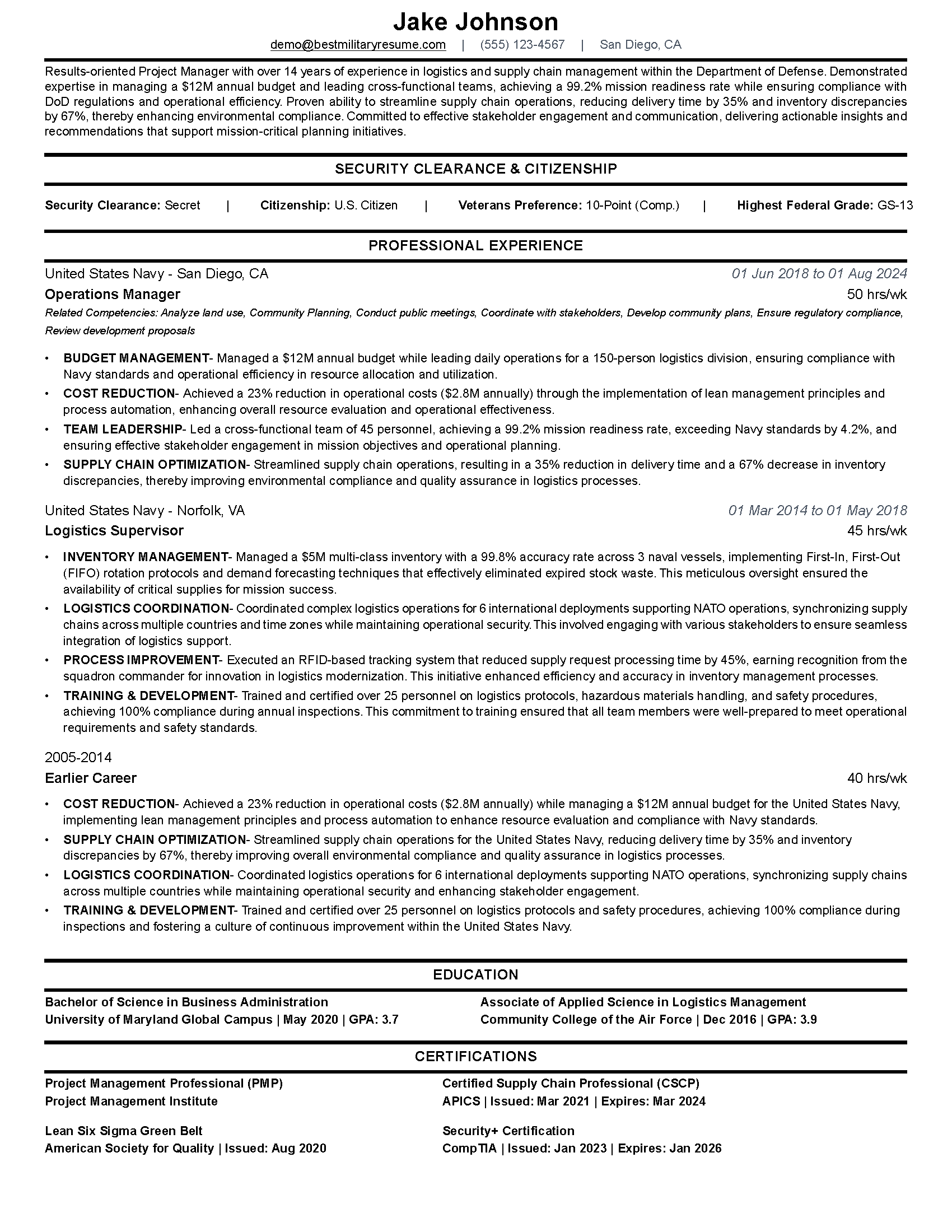
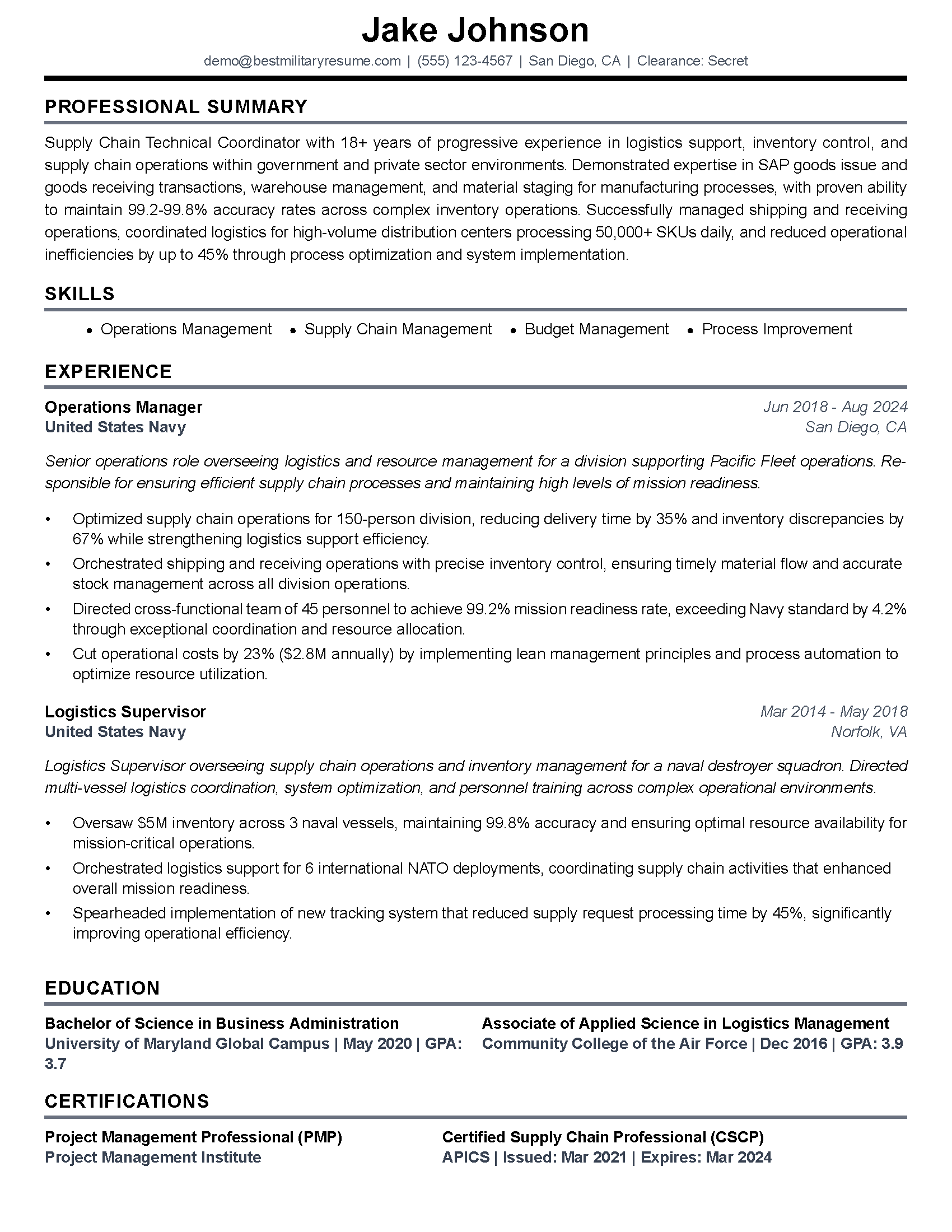
It covers veterans, former prisoners of war, and Guard members under AS 39.25.159. So the way you describe your service matters. Write it in the job's terms, with the tasks and scope spelled out. This guide shows how to translate military experience for a civilian resume.
If you serve in the Guard full time, this guide covers an AGR civilian resume.
Claiming It: Two State Sources Say Different Things
The state veterans page says Workplace Alaska "automatically identifies" 10-point veterans. Picked as a 10-point veteran? Then you must give a DD-214, a DD-215, or a VA letter.
The 2014 SOP puts it another way. It says "Veterans self-certify their preference." It asks for the DD214 only if HR requests it, such as when someone questions your claim.
So keep your DD-214 ready before you apply.
Where the top state page falls short
The veterans page ranked first in our November 2026 searches for this topic. It cites "AS 39.25.159 (a) and (c)," but (c) was repealed in 2022. It leaves out the 181-day test, spouses and the Guard route.
It also says a public employer "may provide" the preference and calls it "voluntary." For State jobs under AS 39.25, a qualified person "is entitled to an employment preference."
Law text: AS 39.25.159 and AS 39.25.150, from the Alaska Legislature's statute site. Bill text: HB 125, as the bill page lists it passed. Rule text: 2 AAC 07, from the Alaska Administrative Code. Practice: the DOP SOP (revised 08/2014). Checked November 2026.
The Preference Starts With "Necessary Qualifications"
The law opens with a condition. Preference goes to "a person who possesses the necessary qualifications" for the job. The SOP says the preference "does not guarantee the veteran a job."
So your resume has to show each minimum qualification first. A 10 then gets you an interview. Prep with these behavioral interview questions for veterans. For federal jobs, read how federal veterans preference works.
Gregory, an Army Sergeant First Class (E-7) in IT, used BMR for his search. His note doesn't say whether the job was public or private. He wrote: "Your resume builder got me an interview and I’m meeting the team next week."
Sign in to the military resume builder and paste the Alaska posting. The builder tailors your resume to that job.
Frequently Asked Questions
Can I use Alaska resident preference and veterans preference together?
Do I count as an Alaska resident for state jobs while still on active duty?
Does Alaska veterans preference help in a state layoff?
Does the preference override a union contract?
Does service in NOAA count for Alaska veterans preference?
About the author
Brad Tachi is the CEO and founder of Best Military Resume and a 2025 Military Friendly Vetrepreneur of the Year award recipient for overseas excellence. A former U.S. Navy Diver with over 20 years of combined military, private sector, and federal government experience, Brad brings unparalleled expertise to help veterans and military service members successfully transition to rewarding civilian careers. Having personally navigated the military-to-civilian transition, Brad deeply understands the challenges veterans face and specializes in translating military experience into compelling resumes that capture the attention of civilian employers. Through Best Military Resume, Brad has helped thousands of service members land their dream jobs by providing expert resume writing, career coaching, and job search strategies tailored specifically for the veteran community.
