Kansas Veterans Preference: First Hire, First Promotion and a VPE Interview
Taylor sent 200+ applications for 5 interviews. With BMR, 20 resumes all hit.
Taylor, E-7, Army, defense industry
Kansas veterans preference comes from K.S.A. 73-201(c). It covers your first state, county or city job and first promotion. The law says "Veterans shall be preferred for initial employment and first promotion" if "competent to perform such services." For state VPE postings, the state says a qualified veteran gets an interview, but not a sure job.
The law promises a preference. The interview comes from state hiring rules, and it has strings. This page covers the five tests for a state interview and who counts under the current law.
Sources: the Revisor of Statutes text of K.S.A. 73-201, with history through 2025 session law. Also the Department of Administration veterans preference pages. Both checked November 2026.
The Law Says "Preferred," and the Interview Comes From State Rules
The law never uses the word interview. It says the hiring officer must "consider the veteran for appointment." That holds when the veteran is "of good reputation" and can do the job.
The interview promise comes from the state's own pages. The state's job guarantee page puts it plainly.
"Qualified veterans are guaranteed an interview and to be considered for a position for which they apply and meet the qualifications for the position but are not guaranteed to be hired for the job."
The state's Bulletin 08-01, effective July 1, 2008, says the interview comes from a state rule. This page quotes the state's pages and the bulletin for the interview, not the rule itself.
What "competent" means in Kansas
The law defines it. Competent means a good faith call that you can likely do the job well. The call rests on things like your experience, training, schooling and licenses. The hiring side must write those down before it starts picking.
Bulletin 08-01 says what comes next. The job is offered to the veteran if they are the best fit. A tie for best counts too. When two veterans lead, the better fit gets the offer.
Five Tests Before a State Agency Owes You the Interview
The agency's page on when preference is given sets the bar. A veteran who meets a job's requirements gets the interview when all five of these hold. Miss one and the promise on that page does not apply.
- The posting is VPE: it's a regular classified job. Its notice says "Veterans Preference" Eligible (VPE), as the VPE page shows. That covers external, internal and agency only openings.
- No program applicant: no one eligible for the Kansas Employee Preference Program has applied for it.
- Your past state service: the page words it this way. "The military service member was not dismissed or did not resign in good standing from state service." That line can be read two ways, and the state's pages and bulletins do not settle it. If you left state service before, ask the hiring agency how it applies to you.
- Not training duty: your active duty is not for Reserves or National Guard training.
- Separated now: you're separated and not on active service when you apply.
The page names the Kansas Employee Preference Program but does not spell out its rules. If you're unsure it touches an opening, ask the agency. Don't guess.
Check the posting's preferred skills too. Under Bulletin 08-01, an agency can set them. Then the interview goes to veterans who meet the minimums and those extras.
Who Counts Under the Current 73-201 Text
The law lists five groups. Each one keeps its own conditions.
- Veteran: served in the active military, naval, air or space service. Left with an honorable discharge or a general discharge under honorable conditions.
- Purple Heart or disabled veteran: anyone issued the Purple Heart. Also a veteran with that service and discharge and a disability from duty. It must have started or worsened in the line of duty. The Kansas office of veterans services must confirm it is service connected.
- Spouse of a 100% veteran: the spouse of a veteran rated 100% combined, service connected, permanent and total.
- Surviving spouse: the spouse of a veteran who died in the line of duty in active service.
- Spouse of a POW: the spouse of a prisoner of war, as Kansas law defines it.
The law also counts groups a federal VA rule treats as active duty.
Two groups are left out. You get no preference if you retired from active duty at O-4 or above. That bar lifts if you retired due to combat wounds. It also lifts if you have a service connected rating of 10% or more. Conscientious objectors get no preference.
Where the agency pages lag the statute
Some state pages still use old words. If you read only the agency site, you can talk yourself out of a preference you have. These are the places they split from the current law.
- General discharge: Bulletin 08-01 says a general discharge is not eligible. The law now counts a general discharge under honorable conditions.
- Old tests: the agency eligibility page still uses war dates and campaign medals. It also has a retired O-3 or lower test. The law has none of those and sets the O-4 bar.
- Who certifies a disability: the statute names the Kansas office of veterans services. The agency page names the U.S. Department of Veterans Affairs.
- Surviving spouse: the agency page says "unremarried spouse" in its list. The law has no remarriage clause.
- Spouse of a 100% veteran: the agency page adds "100% unemployable" as a route. The law says permanent and total at 100%.
The law in force wins. If a page says otherwise, don't argue with the page. Name the section, 73-201(a)(1), when you ask the agency.
First Job, First Promotion, and the Jobs Left Out
The law ties preference to a first job and first promotion. Its display section, 73-201(f), says "initial employment and any first promotion" too.
Bulletin 08-01 reads wider. It gives preference for each VPE job you apply for. That holds "regardless of" past applications, hires or promotions. But that's a 2008 bulletin set against the current statute. Treat a first state job or first promotion as the solid case.
The 2008 bulletin also lists jobs with no veterans preference. Among them: elected offices, boards and commissions, and temporary or casual jobs. Department heads and key employees in the unclassified service are out too. So are jobs that need a physician or chiropractic license, or a Kansas law license. The current 73-201 text has no such job list.
Cities and Counties Follow the Statute, Not the State Interview Rules
The law covers "the counties and cities of this state" in plain words. The Revisor's page also notes an Attorney General opinion. Its summary says the law covers county and city jobs in public departments and public work.
So a city or county job notice must still name the preference. Under 73-201(e), it must say how it works and how to use it. It must also post the job's needs, the extras it wants, the standards and how it picks.
The five interview tests above are state classified service rules. A city or county follows the law and its own policy. Check that employer's posting for how it runs its preference.
Other states run preference their own way. Compare Kansas with Missouri's tie-breaker rule next door. Or see how federal veterans preference works. Your DD 214 proves the preference, but it's not a resume source.
Send Your Discharge Paper With the Application
Under 73-201(e)(2), you claim the preference with a copy of your discharge document. The law names a DD 214, DD 1300 or NGB 22. Another official discharge document the VA recognizes also works. A spouse or surviving spouse uses the veteran's paper.
For state jobs, the agency's how to apply page covers first time claimants. They send a complete, legible DD 214. You can attach it to your Careers Portal profile when you apply. The page also lets you mail it to the Office of Personnel Services.
Timing counts. Bulletin 11-01, from March 2011, tells agencies to wait two working days after a job closes. That gives staff time to check each DD 214 first. Then they pick who to interview. Don't wait on this one. Attach yours with the application so it's in before the close.
If you're not hired
Did you apply and not get hired? The employer must tell you within 30 days of filling the job. That notice goes by certified mail or by hand. It must name any appeal you have. After you use up that appeal, 73-201(g) lets you sue in district court.
K.S.A. 73-202 backs it up. An officer who knowingly and willfully breaks the act commits a crime, a misdemeanor. On conviction, the fine runs from $50 to $500, and the officer forfeits the office.
Turn the Interview Into the Job
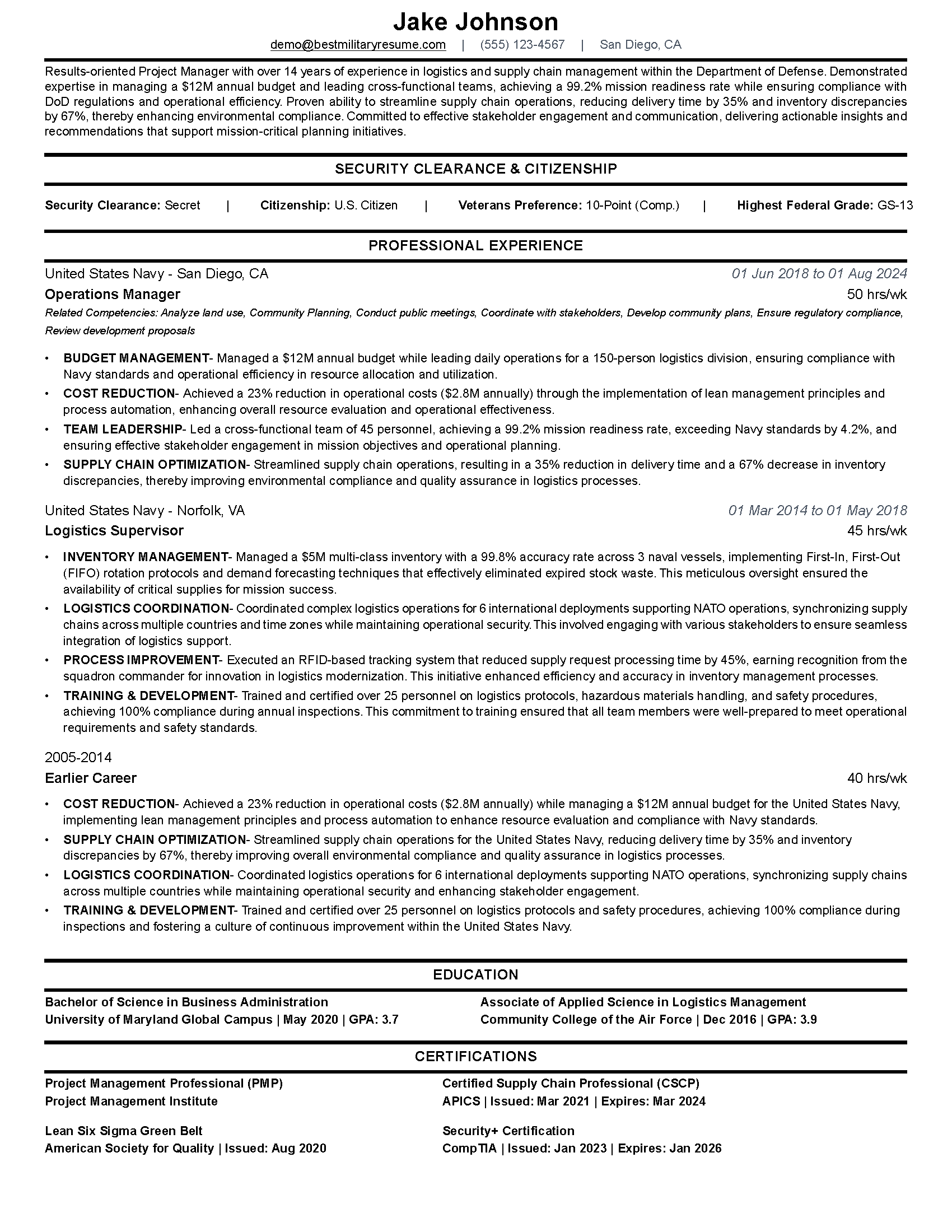
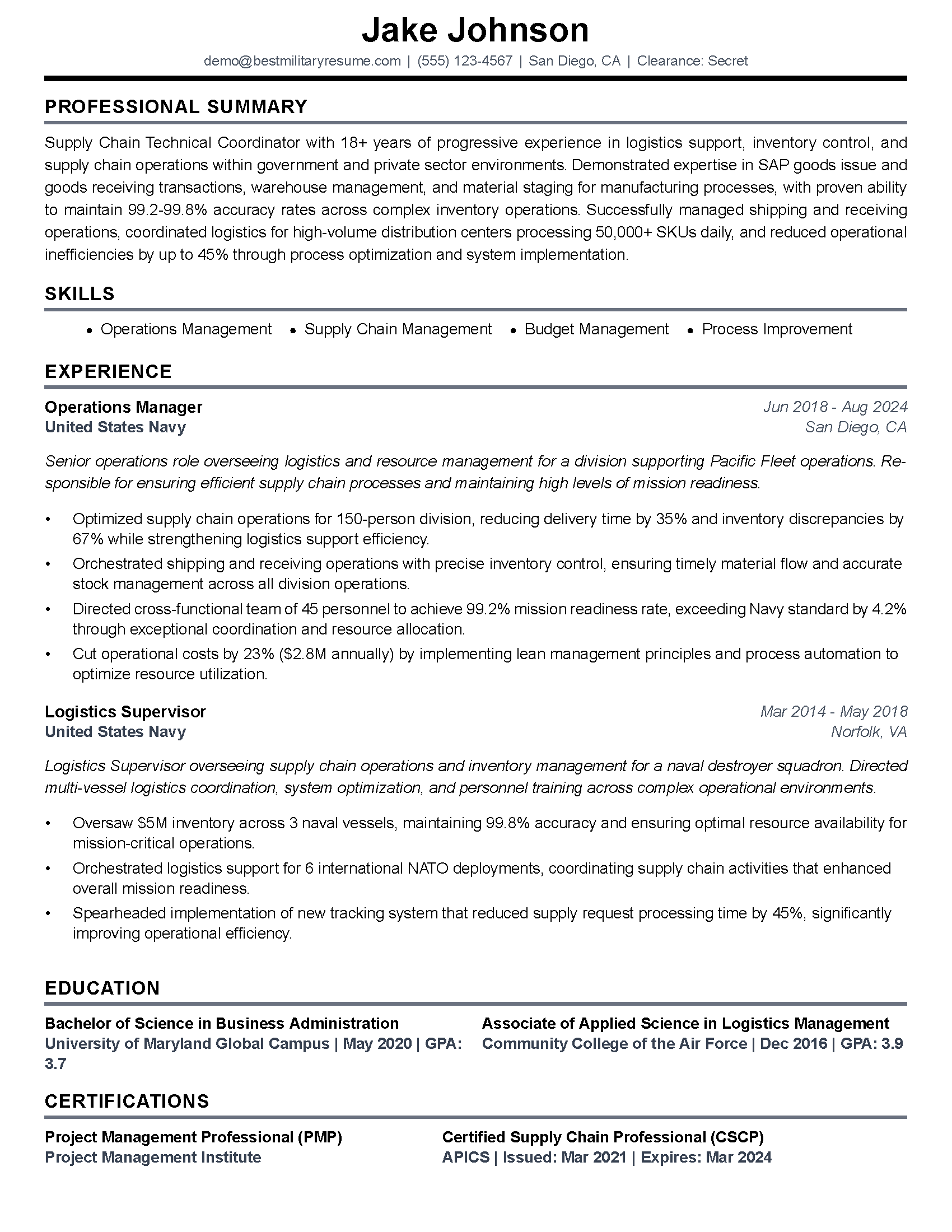
The preference gets you in the room. The resume and the interview do the rest. Our panel interview tips help with the second part. A Kansas posting must list what the job needs and how the work is judged. Build your resume from that list.
Victor, a Coast Guard Chief Petty Officer (E-7), used BMR on a federal job, not a Kansas one. He wrote: "the services provided has helped me land an interview with the Government. Now I wait to see if they select me for the position." That's the step this whole page is about.
Open the military resume builder, sign in, and paste the Kansas posting.
Frequently Asked Questions
Does Kansas add points to my score?
Can my age or a disability knock me out of the preference?
Does the preference override a mandatory retirement age?
Where should I see the preference posted?
About the author
Brad Tachi is the CEO and founder of Best Military Resume and a 2025 Military Friendly Vetrepreneur of the Year award recipient for overseas excellence. A former U.S. Navy Diver with over 20 years of combined military, private sector, and federal government experience, Brad brings unparalleled expertise to help veterans and military service members successfully transition to rewarding civilian careers. Having personally navigated the military-to-civilian transition, Brad deeply understands the challenges veterans face and specializes in translating military experience into compelling resumes that capture the attention of civilian employers. Through Best Military Resume, Brad has helped thousands of service members land their dream jobs by providing expert resume writing, career coaching, and job search strategies tailored specifically for the veteran community.
