Minnesota Veterans Preference: Pool Order for State Jobs, Points for Local Jobs
"Still getting interviews left and right. Now I have to say no."
Taranjeet, E-5, Army, optimized her LinkedIn and resume with BMR
Minnesota veterans preference gives state agency applicants a place in the applicant pool, not points. Under Section 43A.11, qualified disabled veterans are listed first, then other veterans, then nonveterans.
The 10 and 15 point credits come from a different law, Section 197.455. That one covers counties, cities, towns, school districts and other local units. So if you applied to a state agency and waited for points that never showed up, that's why.
By the end you'll know which rule covers your posting and every condition each rule sets.
State job or local job: check your posting first
Look at who is hiring. The employer's name on the posting tells you which law you're under.
- A State of Minnesota agency: Section 43A.11 applies. You get a place in the applicant pool. There are no points.
- A county, city, town, school district or other political subdivision: Section 197.455 applies. Points go on a passing exam score.
- A federal job in Minnesota: neither law applies. Federal veterans preference has its own rules.
- A private company: Section 197.4551 says it "may grant preference." It doesn't have to.
The state's own preference officer said it plainly. The October 2025 Department of Veterans Affairs slides read: "Local Government is different than State Government is different than Federal Government."
Wisconsin also skips points for state jobs. It works by adding extra veterans to the list of names. Minnesota changes the order of the pool instead.
Who Minnesota counts as a veteran
Both laws use the definition in Section 197.447. You need all three of these:
- You're a U.S. citizen or a resident alien.
- You were separated under honorable conditions from any branch of the U.S. armed forces.
- You meet one of the service tests in the next list.
The service tests are these. One is enough:
- Time: 181 consecutive days on active duty.
- Disability: you were separated because of a disability you got while on active duty.
- Federal minimum: you met the minimum active duty rule in 38 CFR 3.12a.
- Certified service: your service was certified under section 401 of Public Law 95-202. The Secretary of Defense must certify it, and the Secretary must issue a discharge under honorable conditions.
The Minnesota Management and Budget veterans page words the time test a bit differently. It says "181 consecutive days or more or for the full period ordered to active duty." That last phrase is MMB's wording. It isn't in the text of 197.447.
Spouses can use the preference in two cases. One is the surviving spouse of a veteran who died. The other is the spouse of a disabled veteran who can't qualify because of the disability. MMB's page adds that a surviving spouse must not have remarried.
State agency jobs: the order the law sets in the pool
Section 43A.11 subdivision 7 sets the order. It only counts for applicants who meet the minimum qualifications and claim the preference.
- First: applicants who claim disabled veteran's preference.
- Second: applicants who claim nondisabled veteran's preference.
- Third: everyone else.
For this pool, a "disabled veteran" has a compensable service-connected disability. The VA or a military retirement board must have decided it. The disability has to exist when you claim the preference.
Two more rules in 43A.11 help you. Once the state accepts you into its selection process, it must tell you that you may elect it. Say you claimed it, made the finalist pool and weren't picked. Then the agency must give you the reasons in writing.
The order doesn't hand you the job. It starts at the minimum qualifications, so your application has to show you meet each one.
Served on or after September 11, 2001: the top-five interview rule
43A.11 has a second rule for a "recently separated veteran." That's a veteran under 197.447 who served on active duty any time on or after September 11, 2001. You also must have been honorably discharged, as shown on your DD-214.
Each one who meets the minimum qualifications and claimed the preference must be considered for the job. The top five must get an interview. MMB's page says this rule took effect July 1, 2009.
The law doesn't say how the top five are chosen. It also covers state agency jobs only. MMB says you'll need to show your DD-214 if you're invited to interview. It helps to know what your DD-214 shows an employer before you hand it over.
Rated 30 percent or more: a state job without competing
Section 43A.111 lets a state agency appoint a disabled veteran to a classified job without a competition. All three of these must be true:
- You served in the U.S. armed forces. You're also on an armed forces permanent disability list rated at least 30 percent. Or the VA rated your compensable service-connected disability at 30 percent or more.
- You give the agency a written paper from the right federal department. It must certify your disability and how much it is. It must be issued within the year before your appointment.
- The agency decides you meet the job's minimum qualifications.
The law says the agency "may" do this. It's the agency's choice, not your right. If it does, it doesn't have to interview anyone else. The federal version of this route is a separate program with its own rules.
City, county and school jobs: the 10, 15 and 5 point credits
Section 197.455 adds points to your rating on a competitive open or promotional exam. You get them only if you choose to use them. You also have to pass the exam without the points first.
| Credit | Who gets it | Which exam |
|---|---|---|
| 10 points | A veteran who isn't disabled | Open exam |
| 15 points | A disabled veteran | Open exam |
| 5 points | A disabled veteran applying for a first promotion after getting a public job | Promotion exam |
"Disabled" means two things here. For the open exam, it's a compensable service-connected disability. The VA or a military retirement board must have decided it. It must exist when you claim it.
For the promotion credit, you must be entitled to VA disability pay when you elect it. That pay must be for a permanent service-connected disability rated 50 percent or more.
Four other rules come with the points.
- Ties: a score raised by preference goes ahead of a nonveteran with the same score.
- Notice: when you pass, the employer must show your rating and credits. It must also tell you that you may elect the preference.
- Rejection: if you're certified with preference and rejected, you get the reasons in writing. That notice is also filed with the local personnel officer.
- Teachers: a public school using a 100-point method applies the points. A school that doesn't must interview a veteran who applies and holds the right license.
A 2008 Minnesota House Research short subject still shows up in search. It lists the credits as 5 and 10 points. The current 197.455 says 10 and 15.
After probation: your right to a hearing before you're removed
This rule protects the job once you have it. Section 197.46 is about being let go after your first hiring probation ends. From then on, a veteran can be removed only for "incompetency or misconduct shown after a hearing, upon due notice, upon stated charges, in writing."
It reaches state workers through 197.455 subdivision 1(b). You must hold a classified job in the state civil service. You also must have finished that job's probation, as defined in Section 43A.16. Local government veterans get the same rights under subdivision 1(c).
State workers under a union contract face one hard choice. If you're fired, you pick the 197.46 hearing or your union contract's grievance steps. The law calls this choice "irrevocable." You can't use both.
The clock is short. Your employer must tell you in writing that it intends to discharge you. It must also tell you about your right to ask for a hearing. You have 30 days from getting that notice. Miss the 30 days and you waive the hearing. You also waive all other legal remedies for getting your job back.
Ask for the hearing in writing. Send it by mail or personal service to the employer's employment office or other proper office or person.
In the same request, choose who hears it. Your choices are a civil service board or commission, a merit authority, or an arbitrator. With no board or merit authority, an arbitrator hears it. If you don't choose, the employer may pick.
Some jobs are left out:
- Named roles: private secretary and superintendent of schools.
- Deputies: one chief deputy of any elected official or department head.
- Confidential roles: any job with a strictly confidential tie to the appointing officer.
- Teachers: the hearing section doesn't apply to the position of teacher.
For a confidential role, the appointing officer has to prove that tie.
One older source says otherwise. The 2008 House Research paper says dismissal protection doesn't reach state workers. A 2025 department slide lists 197.46 under "What is not covered." That box also lists 43A.11 and 43A.111, the state hiring laws.
The current text of 197.455 subdivision 1(b) reads differently. If your job depends on it, ask a lawyer to read it with you.
Keep your claim current, then build the resume for the posting
MMB says the claim is on you. You must "submit and maintain current veteran information in the Supplemental Information section in Resume Builder (online application system)." That Resume Builder is the state's application site. MMB also says you must show proof of preference before you're hired.
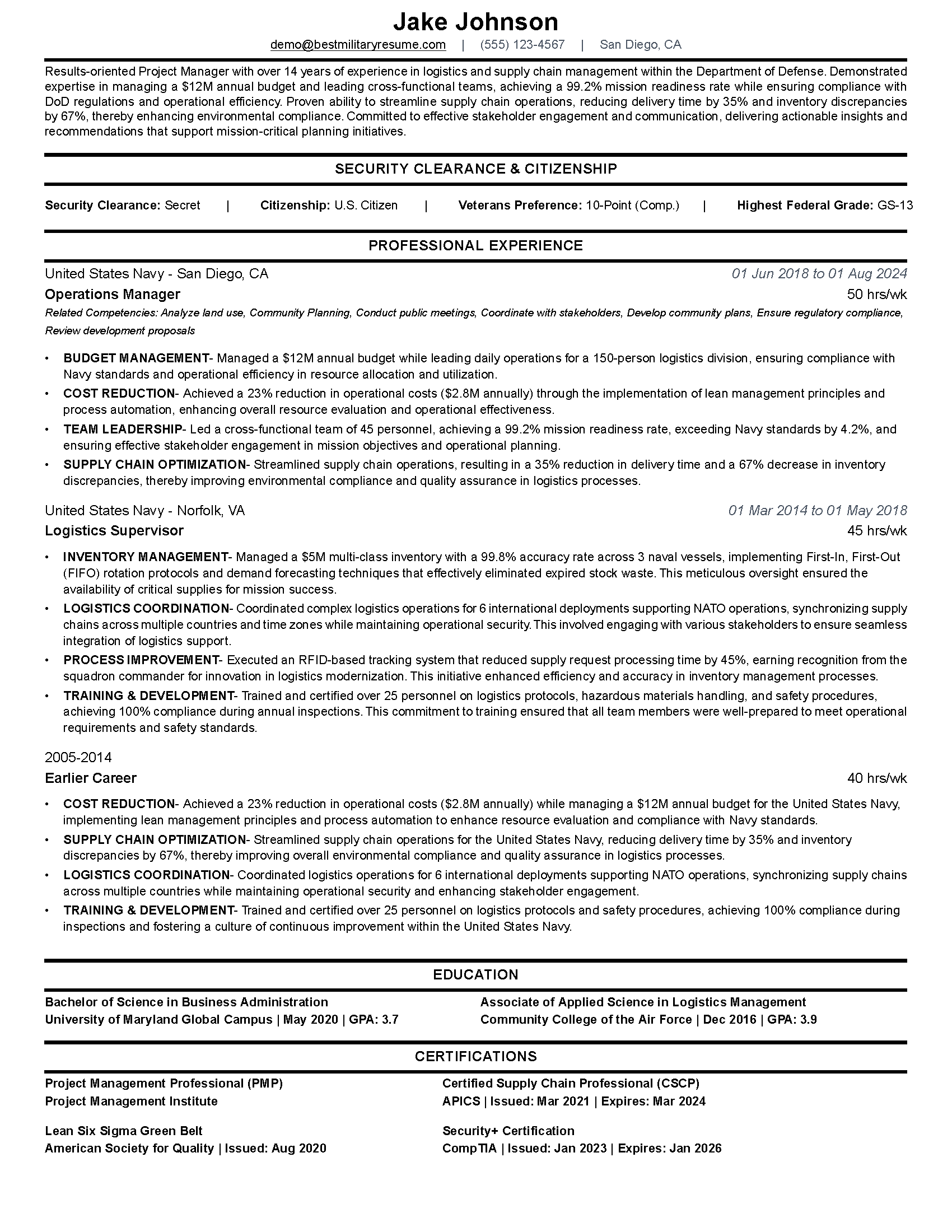
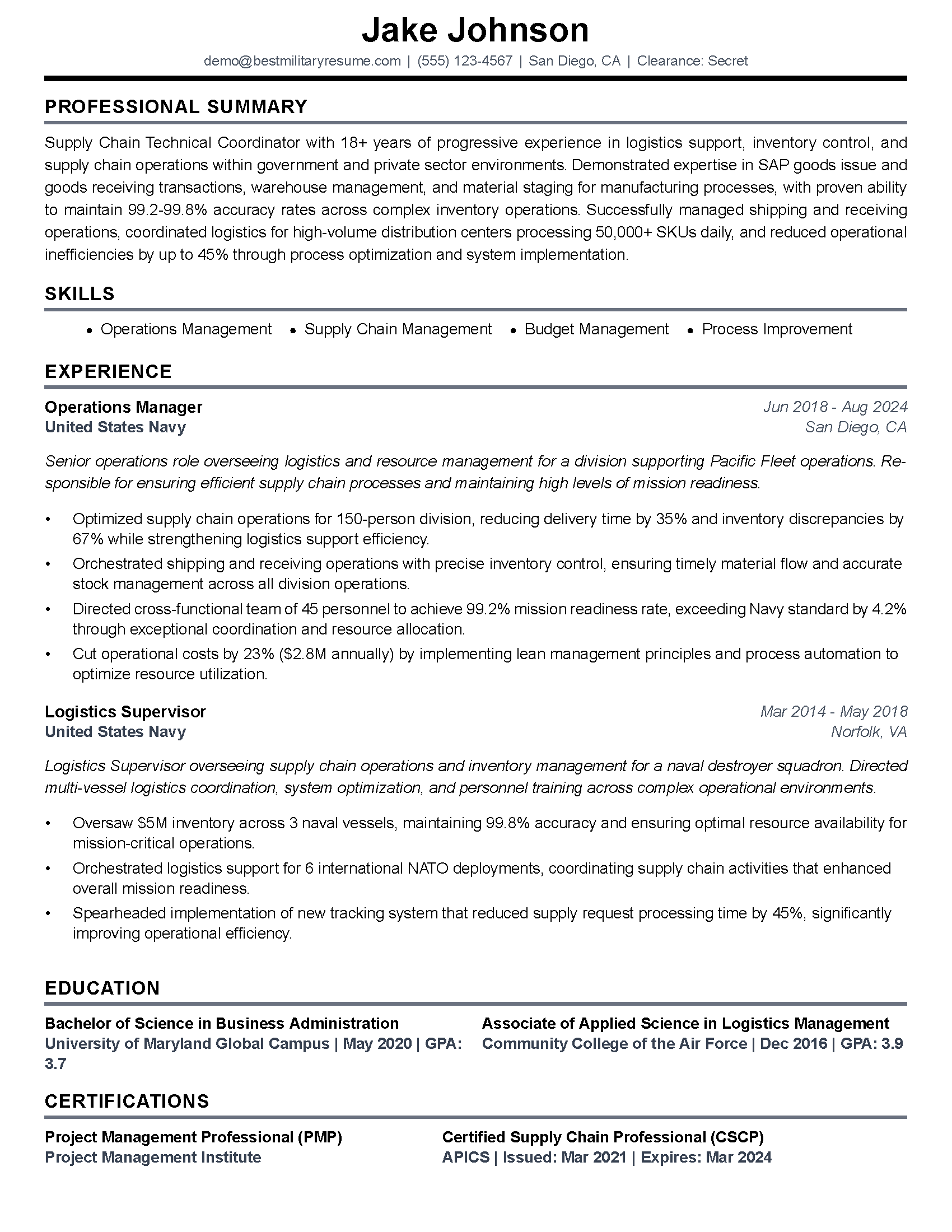
The state pool order only counts once you meet the minimum qualifications. Your resume has to show that you do. You need a version tailored to the posting in its own words.
Jason retired as an Army Sergeant Major. In his second job search, he tailored 32 resumes. Then he wrote to us: "BMR helped me get my first job, and now my second, this time with a 42% pay raise!"
Open the military resume builder, sign in and paste your Minnesota posting. Write one line for each minimum qualification. The state pool order only counts for applicants who meet them and claim the preference.
Statutes read on the Minnesota Revisor of Statutes site and the MMB veterans page, checked November 2026.
Frequently Asked Questions
Who pays for a Minnesota veterans removal hearing?
Can you appeal the hearing decision in Minnesota?
How is the arbitrator picked for a Minnesota veterans hearing?
What happens if a Minnesota employer ignores veterans preference?
Can a Minnesota private employer give preference to a veteran's spouse?
About the author
Brad Tachi is the CEO and founder of Best Military Resume and a 2025 Military Friendly Vetrepreneur of the Year award recipient for overseas excellence. A former U.S. Navy Diver with over 20 years of combined military, private sector, and federal government experience, Brad brings unparalleled expertise to help veterans and military service members successfully transition to rewarding civilian careers. Having personally navigated the military-to-civilian transition, Brad deeply understands the challenges veterans face and specializes in translating military experience into compelling resumes that capture the attention of civilian employers. Through Best Military Resume, Brad has helped thousands of service members land their dream jobs by providing expert resume writing, career coaching, and job search strategies tailored specifically for the veteran community.
