Wisconsin Veterans Preference: No Points for State Jobs, Extra Names on the List
"Still getting interviews left and right. Now I have to say no."
Taranjeet, E-5, Army, optimized her LinkedIn and resume with BMR
Wisconsin's state statutes, as published January 30, 2026, give veterans no preference points for state jobs. Instead, Wis. Stat. 230.25 adds extra veterans to the list of names a hiring agency gets.
You may have seen a chart that says 10, 15 or 20 points. That chart comes from old papers, and we'll show you which ones.
Which Wisconsin Route Fits You
Find your line below. Each route points to the section of state law that creates it. More than one line can fit you.
| If you are | Your route | Law |
|---|---|---|
| A veteran | The 3 top-ranked veterans get added to the list | 230.25(1m)(a) |
| A disabled veteran | 3 more top-ranked disabled veterans get added | 230.25(1m)(b) |
| A disabled veteran rated 70 percent or more | Another 3 top-ranked vets at that rating get added | 230.25(1g) |
| A disabled veteran rated 30 percent or more | A job with no competition, if all 5 tests are met | 230.275 |
| The spouse of a veteran rated 70 percent or more | The 3 top-ranked spouses get added | 230.25(1g) |
| The unremarried spouse of a veteran killed in action | The 3 top-ranked spouses get added | 230.25(1m)(c) |
| The unremarried spouse of a veteran who died of a service-connected disability | The 3 top-ranked spouses get added | 230.25(1m)(d) |
| A veteran on the list who is equal to another person being interviewed | You get the edge | 230.25(2)(am) |
| Just out, and a deadline already passed | A late application, if 4 tests are met | 230.16(7m)(b) |
The state's Wisc.Jobs veterans page lists the same three spouse groups. It sends the 30 percent group to a separate program page.
How Extra Certification Adds Your Name
When a state agency has an opening, the director sends it names from a register. That's a list of eligible applicants in rank order. Extra certification means the director adds more names after that first batch.
The rule sits in 230.25(1m):
"After certifying names under sub. (1), the director shall additionally certify the names of all of the following: (a) The 3 highest ranked veterans. (b) The 3 highest ranked disabled veterans who are not certified under par. (a). (c) The 3 highest ranked individuals each of whom is an unremarried spouse of a veteran who was killed in action. (d) The 3 highest ranked individuals each of whom is an unremarried spouse of a veteran who died of a service-connected disability."
So your rank still matters. The rule adds the 3 highest ranked veterans. It doesn't add every veteran who applied.
The 70 percent rule
Section 230.25(1g) adds one more batch:
"After certifying names under sub. (1), the director shall additionally certify the names of the 3 highest ranked disabled veterans whose disability is at least 70 percent and the 3 highest ranked individuals each of whom is the spouse of a disabled veteran whose disability is at least 70 percent."
What happens if the agency picks someone else
Being certified doesn't mean you get the job. But 230.25(1p) adds a paper trail. Say the agency hires a certified person who isn't a veteran or a veteran's spouse. Unless that hire serves affirmative action, the agency must write down why.
The agency must keep that record and make it available to the division named in chapter 230. The division writes a yearly report on those reasons for each agency.
The Tie Rule When Two Applicants Are Equal
Wisconsin also has a tie rule. It applies when you're on the list and equal to another person being interviewed. The full rule is 230.25(2)(am):
"If a veteran is included on a certification list and if the minimum qualifications and the skills, abilities, competencies, and knowledge of the veteran and any other applicant being interviewed for the position are equal, the appointing authority shall give a preference to the veteran for the position."
Note the two parts. The minimum qualifications must be equal. So must the skills, abilities, competencies and knowledge. If the other person is stronger on either part, the tie rule doesn't apply.
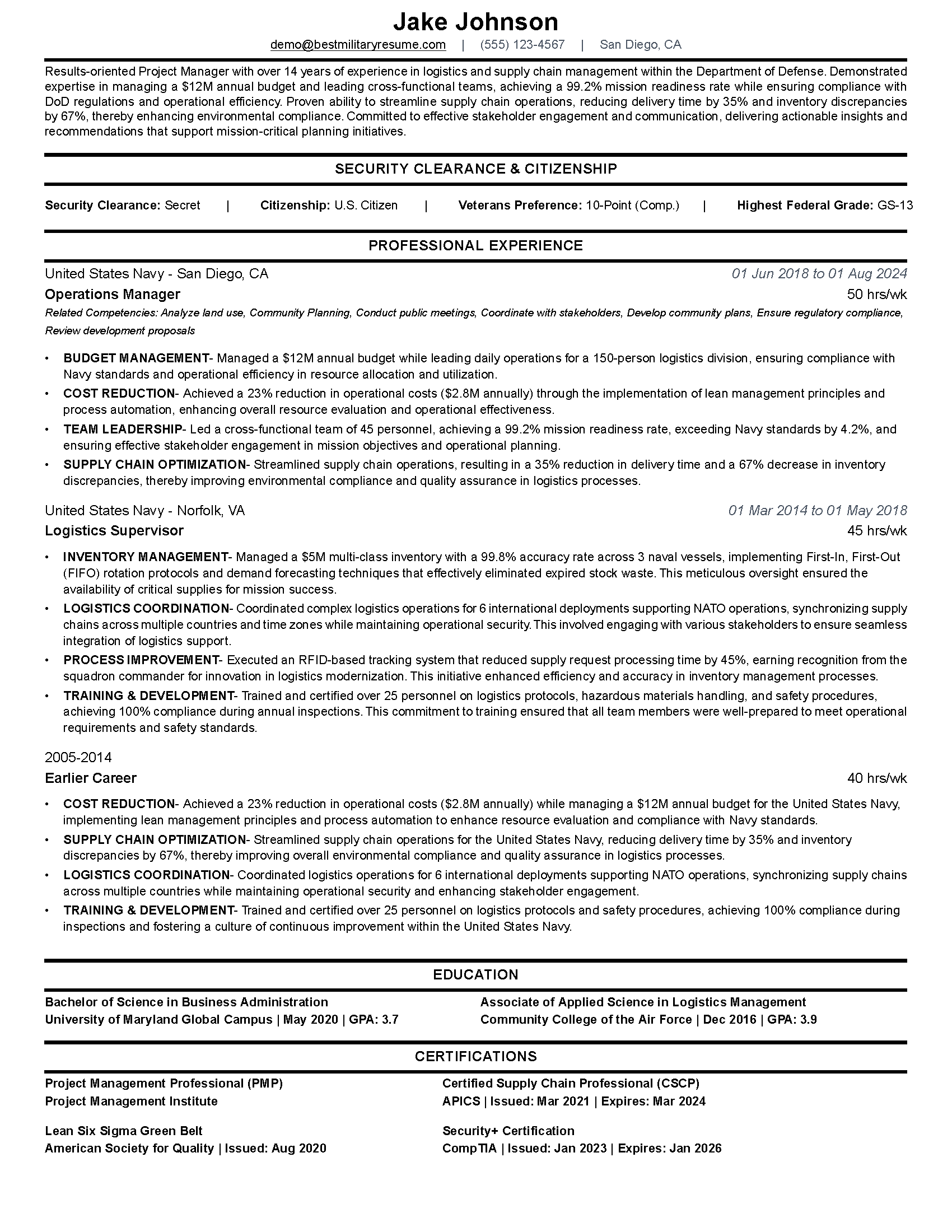
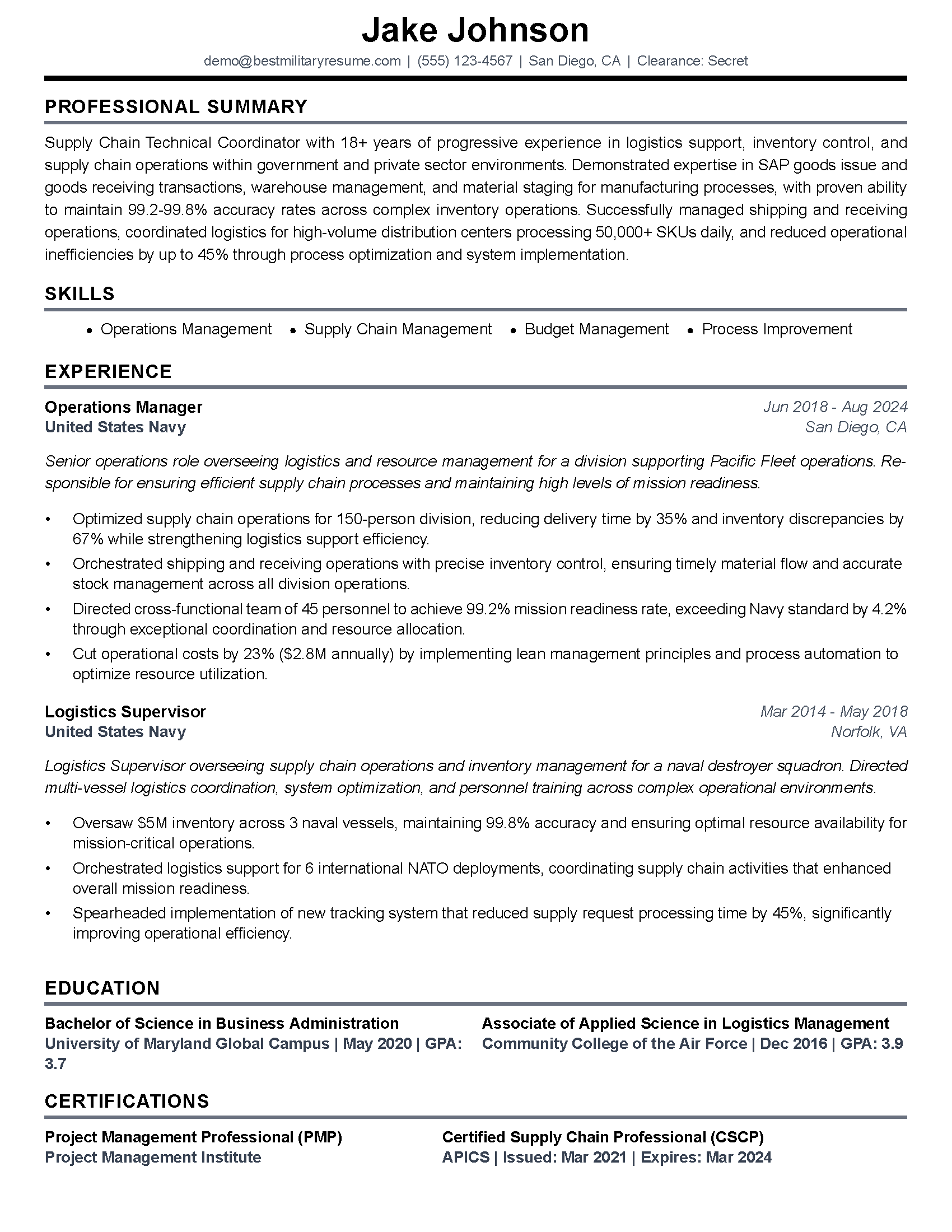
So your resume has to show you're equal. Spell out each skill the posting names, in civilian words, with a real example from your service.
Hiring Without Competition at 30 Percent or More
This route skips the competition. Under Wis. Stat. 230.275, an agency may hire a disabled veteran with no competition. But all five conditions in the law must be met:
- You have a disability rating of at least 30 percent. It can be a VA rating for a compensable service-connected disability. Or you served in the armed forces and are on the military's permanent disability list at that rating.
- You bring the agency a federal letter that shows the disability and its extent. The law says it must be issued "within the year preceding appointment."
- The agency decides you can do the job.
- The agency tells the director in writing that it will fill the job this way.
- You don't hold a permanent appointment or have mandatory restoration rights to one.
The word "may" matters too. The law lets an agency hire you this way. It doesn't make the agency do it.
The steps the state lists
The Wisconsin Department of Veterans Affairs employment page gives these steps for this program:
- "Create an account and apply online through Wisc.Jobs."
- Upload your resume.
- Upload your "DD214 (Member-4 or Service-2 copy) showing Honorable Discharge."
- Upload "VA documentation confirming your service-connected disability rating (dated within the past 12 months)."
- "Complete the application process and wait for potential job matches from state agencies."
The page says hiring officials may consider you "as vacancies arise." So your resume does the work here. It has to show the skills for jobs you've never seen yet.
The DD-214 proves your service. It can't stand in for the resume. Our guide on turning discharge papers into a resume covers why.
Federal jobs have their own version of this route. Our guide to the federal 30 percent disabled veteran hiring authority covers that one.
The 10, 15 and 20 Point Charts You May Have Seen
Search for this topic and you'll find point charts. A state bulletin dated April 15, 1992 lists 10 points for wartime veterans. Disabled veterans got 15 or 20. It lists 10 points for some spouses.
A bulletin dated February 25, 1998 extended 10 points to some peacetime veterans. An undated county handout repeats the 10, 15 and 20 point chart.
The current sections we read, 230.16, 230.25 and 230.03, contain no point section. 2015 Wisconsin Act 150 later moved the old points rule out of the state hiring chapter. The handout has no date. So go by the statute, not the chart.
Some states still use points, so a chart from one state can mislead you in another. Illinois veterans preference is one example of a state that does. So is New York's exam credit. Federal jobs use a separate federal preference system.
Three Definitions of Veteran in Wisconsin Law
Wisconsin law defines "veteran" in more than one place, and the tests differ. Meeting one doesn't promise you meet another.
- 230.16(7m)(a): This one covers late applications. You need only one of four things. One is 180 days of active duty, not counting training. Another is a discharge for a disability from active duty. That covers one the VA later finds came from active duty. The last two are an honorable discharge or eligibility for federal veterans benefits.
- 230.03(14): This is the general definition in the state employment chapter's definitions. It applies "except as provided in s. 230.16 (7m)." Its tests include certain medals, crisis zone service and war period service. Another is honorable active duty for 2 continuous years or your full first service obligation, whichever is less.
- 45.01(12): A third definition sits in Wis. Stat. 45.01. It has its own list of tests.
The 230.03(14) 2-year test has exceptions. It also counts people discharged for hardship or a service-connected disability. It counts people released in a force reduction, "regardless of the actual time served."
The Wisc.Jobs page lists the four 230.16(7m)(a) tests under "To apply as a veteran." By statute, 230.03(14) applies to chapter 230 except late applications. Meet only the Wisc.Jobs list? Ask the agency's HR office which test it applies.
Applying Late After You Separate
If a deadline passed while you were getting out, Wis. Stat. 230.16(7m)(b) may let you in late. The state must take your late application if all four of these apply:
- "The register established on the basis of timely applications was established not more than 60 days before the applicant's separation from the U.S. armed forces."
- "The register has not expired."
- "The application was filed not more than 45 days after the applicant's separation from the U.S. armed forces."
- "The appointing authority has not extended interviews for the position or filled the position at the time the application is received."
The 45 days count from your separation date. So if you're within 45 days of getting out, check postings that closed recently. One more catch: once interviews start or the job is filled, this door shuts.
Checked November 2026 from archived docs.legis.wisconsin.gov copies of 230.16, 230.25 and 230.275, 230.03 and 45.01. We also checked the Wisc.Jobs and WDVA pages.
Next: Write Your Resume for the Wisc.Jobs Posting
On the regular route, Wisc.Jobs says it asks all applicants about veteran status. It says status "will be verified at some point prior to hire." No state page we read gives a claim step beyond that.
So the step you control is the resume. Wisconsin veterans preference can add your name to a list. It won't write the application for you.
Joel is an Army Staff Sergeant (E-6). His result was a federal job, not a Wisconsin one. He wrote: "BMR slaps. Just rolled into a GS-12 job with the Federal Resume BMR built."
Open the military resume builder, sign in and paste the Wisconsin posting you want. Then tailor your resume to that posting.
Frequently Asked Questions
How long does my name stay on a Wisconsin state register?
Does the hiring agency learn which names on the list are veterans?
How fast must a state agency hire after it gets the list?
Does Guard or Reserve time count toward Wisconsin veterans status?
Do these rules cover city and county jobs in Wisconsin?
About the author
Brad Tachi is the CEO and founder of Best Military Resume and a 2025 Military Friendly Vetrepreneur of the Year award recipient for overseas excellence. A former U.S. Navy Diver with over 20 years of combined military, private sector, and federal government experience, Brad brings unparalleled expertise to help veterans and military service members successfully transition to rewarding civilian careers. Having personally navigated the military-to-civilian transition, Brad deeply understands the challenges veterans face and specializes in translating military experience into compelling resumes that capture the attention of civilian employers. Through Best Military Resume, Brad has helped thousands of service members land their dream jobs by providing expert resume writing, career coaching, and job search strategies tailored specifically for the veteran community.
