Air ForceAFSC: 1N7X1

Human Intelligence Specialist

The civilian and federal jobs that hire Air Force Human Intelligence Specialists — with real salaries and the resume that gets callbacks.

Every 1N7X1 has more options than a Google search will tell you. Below: career paths, BLS salary data, federal GS series, certifications by target career, and how to translate your experience without losing what made you valuable to the Air Force in the first place.

Free to start · Tailored resume in under 5 minutes

$52K–$125K
Salary Range
BLS-verified median salaries
13
Career Paths
14
Companies Hiring
9
Resume Examples
7
Federal GS Series
10
Certification Paths
10
FAQs Answered
BT
Brad Tachi
Navy Diver · BMR Founder

After the Navy I got hired into 6 federal career fields and tech sales, and sat on federal hiring panels along the way. I spent the last 2 years rebuilding everything I learned into BMR, tuned for how AI actually screens resumes today. This is the system I wish I'd had on day one.

65,000+ resumes built·Success stories every week
Free Sample · Emailed to You

Get a free 1N7X1 Human Intelligence Specialist sample resume

One page, built in our template, with your military experience translated into civilian terms hiring managers and ATS systems read. Use it as a reference for your own. Drop your email and we'll send you the download link.

Free. We'll also send occasional job-search tips. Unsubscribe anytime.

Military Role Overview

If you held the 1N7X1 Human Intelligence Specialist AFSC, your day was built around people, not platforms. You screened documents and open-source material to identify source leads, ran debriefings and interrogations in English, oversaw interviews conducted in foreign languages, and performed controlled operations officer duties. The job came down to one repeatable skill: getting a human being to give you accurate information, then turning that information into a report a commander could act on. Most of your career field never touched a single piece of collection hardware. The collection tool was you.

The pipeline backs that up. After Basic, 1N7X1 Airmen train through the ISR Fundamentals course and the Defense Strategic Debriefing Course (DSDC) before earning the 1N731 skill level, and many later cross-train into source operations and counterintelligence support roles. You worked in joint debriefing centers, on deployed collection teams, and alongside other intelligence disciplines, usually holding TS/SCI access. That clearance plus a documented record of structured elicitation is a combination civilian employers rarely see walk through the door.

Here is why that matters on the outside. BMR has built more than 60,000 resumes across every branch and specialty, and the 1N7X1 background lands offers fast when the resume stops reading like an interrogation report and starts reading like the civilian skill it actually is: structured interviewing, source assessment, and clear written reporting under ambiguity. The clearance opens the door. The way you translate "debriefing" into "structured stakeholder interviewing and assessment" is what lands the offer. Explore where this AFSC leads with our military career crosswalk tool, and if you came up through the analysis side, the 1N0X1 All Source Intelligence Analyst and 1N4X1 Fusion Analyst paths share a lot of your federal options.

I have watched 1N7X1 resumes get passed over not because the experience was thin, but because "source operations" and "debriefing" read as classified noise to a civilian recruiter. The skill underneath, getting accurate information out of a guarded human being and writing it up cleanly, is exactly what consumer research, fraud investigation, and mediation pay for. Name the skill, not the mission. — Brad Tachi, Navy Diver veteran & BMR founder

Security ClearanceTop Secret/SCI
ASVAB RequirementG: 72
TrainingBasic Military Training, then ISR Fundamentals course and the Defense Strategic Debriefing Course (DSDC) at the Defense Language Institute / military intelligence schoolhouse to earn the 1N731 skill level
Certs Earned in ServiceDefense Strategic Debriefing Course (DSDC), ISR Fundamentals for HUMINT

Pay Reality Check

The number that matters when you're deciding what's next: how does civilian pay compare to what you make now?

Air Force mid-career
$58K–$82K
E-5 to E-7 total comp (base + BAH + BAS + tax advantage)
Civilian Human Intelligence Specialist
$52K–$125K
BLS median across direct-match civilian roles
Federal (GS-9 to GS-13)
$58K–$120K
7 matching GS series + locality pay + step increases
+19% on average
Civilian roles for Human Intelligence Specialists pay ~$13K more than mid-career enlisted total comp.

Military comp is approximate (varies by location/dependents). Civilian is BLS median. Federal includes locality pay. Your real number depends on duty station, family status, GS step, and overtime.

Private Sector Career Paths

The most direct civilian paths keep you inside intelligence, investigations, and security work, where your collection and reporting background maps almost one to one. Pay figures below are BLS OEWS May 2024 medians.

Intelligence and investigations roles. Federal and corporate intelligence analyst positions, fraud investigation, and background investigation work draw directly on your source assessment and reporting. Detectives and criminal investigators (O*NET 33-3021.00) earned a median of $91,100, and the field leans heavily on cleared veterans. Private detectives and investigators (33-9021.00) sat at $52,370, a common entry point that does not require a clearance to start. Compliance work is another natural landing spot: compliance officers (13-1041.00) earned $78,420, and your experience documenting findings against a standard transfers cleanly.

Cleared contractor market. The demand for active TS/SCI holders is real but geographically concentrated around Washington D.C., northern Virginia, San Antonio, Tampa, and overseas postings. Be honest with yourself about location. A clearance is worth a measurable salary premium, which our blog breaks down in How Much Is a Top Secret Clearance Worth in Salary, but the highest-paying roles cluster near the agencies and contractors that need them. If you are weighing a contractor seat against a federal badge, Contractor vs Government: Which Path for Veterans lays out the tradeoffs.

Veterans coming off the analysis side of intelligence often find the same employers hiring across disciplines. The Navy Intelligence Specialist and Army 35M Human Intelligence Collector career pages cover overlapping civilian markets worth scanning. When you are ready to put the experience on paper, our military resume builder is built for exactly this translation.

Civilian Job Title Translations

Intelligence Analyst (Detective/Criminal Investigator)
Government & Defense
strong
$91,100median
0% (Little or no change)
O*NET: 33-3021.00
Compliance Officer
Corporate & Regulatory
strong
$78,420median
6% (Faster than average)
O*NET: 13-1041.00
Private Detective and Investigator
Security & Investigations
strong
$52,370median
5% (Faster than average)
O*NET: 33-9021.00
Information Security Analyst
Information Technology
moderate
$124,910median
33% (Much faster than average)
O*NET: 15-1212.00
Emergency Management Director
Government & Public Safety
moderate
$86,130median
3% (As fast as average)
O*NET: 11-9161.00
Training and Development Specialist
Corporate & Education
moderate
$65,850median
7% (Faster than average)
O*NET: 13-1151.00

Companies That Hire This Background

Cleared intelligence analysis and collection-management roles across the IC
Intelligence analysis, HUMINT support, and investigative contracts for federal customers
Intelligence and language-enabled collection support roles requiring TS/SCI
All-source and HUMINT-adjacent analyst positions on government contracts
Collection management, debriefing support, and analyst roles in the IC
HUMINT, all-source analysis, and collection roles at the lead DoD HUMINT agency
Collection, analysis, and operations roles for cleared veterans
Special agent and intelligence analyst roles valuing investigative interviewing
Background investigation and personnel security roles built on interviewing skill
Corporate investigations, loss prevention, and trust-and-safety roles
Risk, fraud investigation, and government-advisory practices hiring cleared veterans
Intelligence support and cleared analyst roles across federal contracts
Consumer insights and research roles for those pivoting out of intelligence
Intelligence, vetting, and investigative roles across DHS components

See a salary you want? Build a resume targeting it.

BMR rewrites your 1N7X1 experience for any of the civilian roles above — keywords, achievements, and language hiring managers actually scan for.

Free to start · 2 tailored resumes included

Build My Resume Free
Real Air Force success story
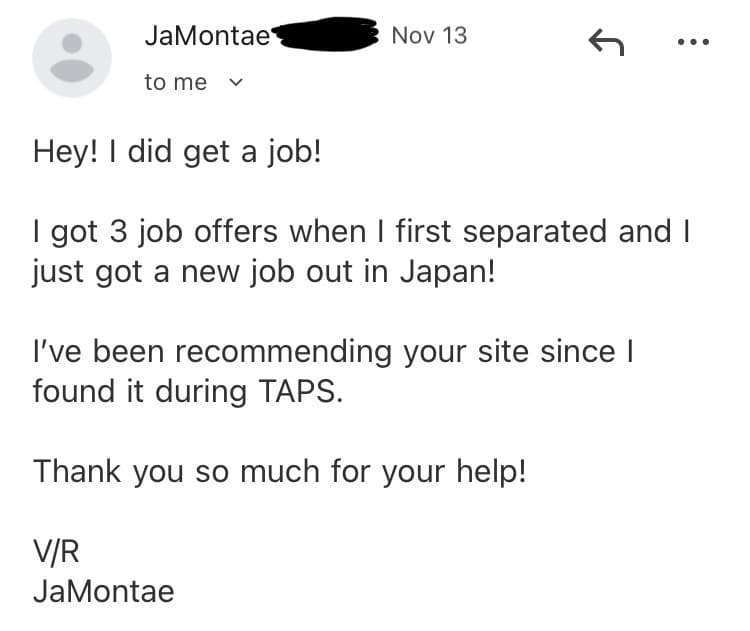
Hey! I did get a job! I got 3 job offers when I first separated and I just got a new job out in Japan! I’ve been recommending your site since I found it during TAPS. Thank you so much for your help! V/R JaMontae
JaMontae· Staff Sergeant (E-5)· Air Force
Information Technology and Computer Science
Read the full story

Federal Career Paths

Federal service is where a HUMINT background carries the most weight, because the hiring agencies already speak your language and value the clearance you hold. Veterans' Preference adds 5 or 10 points to your rated score, and for a 1N7X1 with TS/SCI, the qualification narrative is usually the easier half of the application.

The anchor series is GS-0132 Intelligence, which covers analysis, collection, and reporting positions across DIA, the service intelligence components, and the combatant commands. Most transitioning 1N7X1 Airmen target GS-0132 at the GS-9 through GS-12 range depending on time in service and education. From there the related series fan out:

  • GS-1811 Criminal Investigator and GS-1810 General Investigating: source interviewing and evidence-quality reporting transfer directly to federal investigative work at agencies like DCSA, DSS, and the OIG community.
  • GS-0080 Security Administration and GS-0086 Security Clerical and Assistance: personnel security, adjudications, and program protection roles where your clearance lifecycle knowledge is an asset.
  • GS-0343 Management and Program Analyst: collection management and requirements work translates into program analysis on the staff side.
  • GS-0301 Miscellaneous Administration and Program: a flexible series many cleared veterans use to enter an agency before lateraling into GS-0132.

For the application itself, a federal resume reads nothing like a private-sector one. It needs the month-and-year detail, hours per week, and the specialized-experience language each announcement asks for. Our federal resume builder formats for USAJobs, and if you are new to the process, DoD Security Clearance Status After Separation walks through keeping your access viable during the gap. Veterans targeting investigative series should also read Military to FBI: How Veterans Get Hired as Special Agents.

GS Series & Position Matches

GS-0132
Intelligence
Typical grades: GS-9, GS-11, GS-12
View Details
GS-1811
Criminal Investigator
Typical grades: GS-9, GS-11, GS-12
View Details
GS-1810
General Investigating
Typical grades: GS-7, GS-9, GS-11
View Details
GS-0080
Security Administration
Typical grades: GS-9, GS-11
View Details
GS-0301
Miscellaneous Administration and Program
Typical grades: GS-7, GS-9, GS-11
View Details
GS-0086
Security Clerical and Assistance
Typical grades: GS-5, GS-6, GS-7
View Details
GS-0343
Management and Program Analyst
Typical grades: GS-9, GS-11, GS-12
View Details

Federal resumes follow different rules. We know them.

Federal hiring uses keyword-matching and structured experience. BMR builds federal-format resumes (USAJobs-ready) with the right keywords, hours/week, and supervisor info — for any GS series above.

Free to start · Federal + civilian resume formats included

Build My Federal Resume Free

Want to Change Careers Entirely?

Not everyone wants to stay in a related field. These career paths leverage your transferable skills — leadership, risk management, logistics, project planning — in completely different industries.

Market Research Analyst

$76,950
Marketing and Consumer Insights(O*NET: 13-1161.00)BLS OEWS May 20248% (Faster than average)
Structured interviewing and elicitationSynthesis of fragmentary information into findingsPattern recognition across large source setsClear written reporting under deadline

Pulling honest answers out of guarded people and turning messy inputs into a report is exactly what consumer-insight work pays for. The subject changes; the method does not.

How to get there: A market research or analytics certificate plus a portfolio of survey and interview projects. Many start as a research associate and move up with demonstrated insight quality.

User Experience (UX) Researcher

$98,090
Technology and Product Design(O*NET: 15-1255.00)BLS OEWS May 20248% (Faster than average)
Eliciting unspoken needs through interviewsReading nonverbal cues and discomfortNeutral, non-leading questioningSynthesizing observations into actionable findings

UX research is professional elicitation. Getting a user to reveal what they will not say outright is the same instinct that made a HUMINT collector effective, applied to product decisions instead of intelligence requirements.

How to get there: A UX research certificate (such as the Nielsen Norman Group sequence) plus 2-3 portfolio studies. Veterans often enter through contract research roles before going in-house.

Arbitrator, Mediator, and Conciliator

$67,710
Legal and Dispute Resolution(O*NET: 23-1022.00)BLS OEWS May 20244% (As fast as average)
Reading people under pressureCross-cultural communication and rapportStaying neutral while controlling a conversationDe-escalation of high-stakes exchanges

Managing a tense, high-stakes conversation between people who do not trust you or each other is daily HUMINT work. Mediation rewards the same composure and rapport, channeled toward agreement instead of collection.

How to get there: A 40-hour basic mediation training and state or court roster certification. Many build hours through volunteer community-mediation programs before paid work.

Substance Abuse and Behavioral Disorder Counselor

$59,190
Healthcare and Social Services(O*NET: 21-1011.00)BLS OEWS May 202419% (Much faster than average)
Building rapport with guarded individualsInterviewing under emotional pressureNonjudgmental listening and assessmentDocumenting sensitive case notes accurately

Counseling depends on getting a defensive person to open up honestly, the exact rapport-building a collector lives on. The mission shifts from information to recovery, but the human skill is identical.

How to get there: A state counseling certification or associate-level license, often via GI Bill-funded coursework and supervised clinical hours. Demand is rising fast nationwide.

Probation Officer and Correctional Treatment Specialist

$64,520
Community and Social Services(O*NET: 21-1092.00)BLS OEWS May 20244% (As fast as average)
Investigative interviewing and assessmentJudging credibility and riskStructured case reportingWorking with reluctant subjects

Interviewing people who have every reason to mislead you, assessing what is true, and writing it up for a decision-maker is the core of the job, and the core of HUMINT collection.

How to get there: A bachelor's degree is typical, plus an agency training academy. Veterans' Preference applies at the many federal and state agencies that hire for this role.

News Analyst, Reporter, and Journalist

$60,280
Media and Communications(O*NET: 27-3023.00)BLS OEWS May 2024-3% (Decline)
Source development and interviewingVerifying competing accountsDistilling ambiguous information into clear narrativeWorking to deadline under uncertainty

Cultivating sources, getting them to talk, separating fact from spin, and writing it up fast is investigative reporting and it is also collection. Be honest that the field is shrinking, so target investigative or trade-specific outlets.

How to get there: A journalism portfolio built through freelance or local outlets. A communications degree helps but a track record of published work matters more.

Training and Development Specialist

$65,850
Corporate Learning(O*NET: 13-1151.00)BLS OEWS May 20247% (Faster than average)
Instructing source-handling and interview techniqueBuilding structured curriculaAssessing performance and giving feedbackCommunicating complex methods clearly

HUMINT specialists who taught debriefing or interview technique already design and deliver training. That skill ports straight into corporate learning-and-development teams.

How to get there: A talent-development certificate (such as ATD CPTD) plus a sample of training materials. Many enter via a learning-coordinator role and grow into design.

Pivoting industries? You don't need to start from scratch.

The skills that made you a good Marine, Sailor, Airman, or Soldier transfer further than you think. BMR rewrites your bullets for any of the pivot careers above — without making you sound like you've never done the work.

Free to start · Try as many career angles as you want

Tailor My Resume to a New Career

Skills Translation Guide

If you are staying inside intelligence, investigations, or cleared work, skip this section. Recruiters in those fields already know what a debriefing is. This translation is for the 1N7X1 who is done with the mission and wants into a completely different industry, where "source operations" on a resume reads as a security risk instead of a skill.

The fix is to describe the underlying competency in business language. Below are real before-and-after bullets for non-intelligence roles. Notice that none of them mention classified work, because the hiring manager for a UX research or consumer insights role does not have a clearance and does not need one.

Elicitation and interviewing:

  • Before: "Conducted debriefings and source operations to satisfy theater collection requirements."
  • After: "Ran structured interviews with reluctant and high-stakes subjects, surfacing accurate information that decision-makers used to act with confidence."

Reporting under ambiguity:

  • Before: "Authored intelligence information reports (IIRs) from raw source material."
  • After: "Synthesized fragmentary, conflicting inputs into clear written findings on deadline, flagging confidence levels so leaders knew what was solid and what was not."

Cross-cultural communication:

  • Before: "Oversaw interviews conducted through interpreters in foreign-language environments."
  • After: "Built rapport and managed sensitive conversations across language and cultural barriers, coordinating through interpreters without losing nuance or trust."

That reframing is the whole game for an outside-industry pivot. For more patterns, see Hidden Military Skills Civilians Don't Know You Have and Convert NCOER, OER, or FITREP into Resume Bullets, then let our military resume builder do the heavy lifting.

Resume Bullet Examples

Before (Military)
Conducted debriefings and source operations to satisfy theater collection requirements
After (Civilian)
Ran structured interviews with reluctant and high-stakes subjects, surfacing accurate information leaders used to act with confidence
Before (Military)
Authored intelligence information reports from raw source material on operational deadlines
After (Civilian)
Synthesized fragmentary, conflicting inputs into clear written findings on deadline, with explicit confidence levels
Before (Military)
Assessed source reliability and information credibility before reporting
After (Civilian)
Evaluated the reliability of competing accounts and flagged risk before findings reached decision-makers
Before (Military)
Managed standing and ad hoc collection requirements against commander priorities
After (Civilian)
Translated leadership priorities into a structured information-gathering plan and tracked it to completion
Before (Military)
Planned and conducted lawful interrogations to obtain time-sensitive information
After (Civilian)
Conducted investigative interviews, building rapport to obtain accurate, usable accounts
Before (Military)
Oversaw interviews conducted through interpreters in foreign-language environments
After (Civilian)
Built rapport and managed sensitive conversations across language and cultural barriers without losing nuance or trust
Before (Military)
Held TS/SCI access with CI-scope polygraph throughout the assignment
After (Civilian)
Maintained an active Top Secret/SCI clearance, a hiring differentiator for cleared roles
Before (Military)
Screened documents and open-source material to identify potential source leads
After (Civilian)
Researched large volumes of open-source material to identify high-value leads and patterns
Before (Military)
Provided counterintelligence support and force-protection threat assessments
After (Civilian)
Identified and assessed threats to people and operations, recommending mitigations to leadership

Get bullets like these auto-generated for your resume.

BMR turns your 1N7X1 duties and accomplishments into civilian bullets that match the job you're applying for — no manual translation, no rewriting.

Free to start · Tailored to each job posting

Generate My Resume Bullets

Certifications by Career Path

Which certifications you need depends on where you're headed. Find your target career path below.

Compliance & Regulatory

Certified Regulatory Compliance Manager (CRCM)
Optional
American Bankers Association
Cost: $700-$1,200Time: 3-6 months
For veterans entering corporate compliance and regulatory roles

Cybersecurity

CompTIA Security+
Recommended
CompTIA
Cost: $400-$500Time: 1-3 monthsGI Bill Eligible
Baseline cyber credential and DoD 8570 requirement for many cleared IT roles
Certified Information Systems Security Professional (CISSP)
Optional
ISC2
Cost: $700-$1,000Time: 6-12 monthsGI Bill Eligible
For 1N7X1 veterans moving into security analysis and management

Data Analytics

UX Research Certificate (e.g., Nielsen Norman Group)
Optional
Nielsen Norman Group / Coursera
Cost: $1,000-$5,000Time: 3-6 monthsGI Bill Eligible
Reframes interviewing and synthesis skills for user-experience research

General Career Transition

Mediation / Conflict Resolution Certificate
Optional
University and ADR provider programs
Cost: $500-$2,000Time: 1-3 monthsGI Bill Eligible
40-hour basic mediation training is the common entry route for arbitrator/mediator roles

Human Resources

Associate Professional in Human Resources (aPHR)
Optional
HRCI
Cost: $300-$400Time: 2-4 monthsGI Bill Eligible
Entry HR credential for those pivoting into talent and interviewing-heavy roles

Intelligence & Analysis

GIAC Certified Intelligence Analyst (GCTI / cyber threat intel)
Recommended
GIAC
Cost: $2,500-$9,000Time: 3-6 monthsGI Bill Eligible
Bridges HUMINT reporting discipline into cyber threat intelligence roles

Investigations

Certified Fraud Examiner (CFE)
Recommended
Association of Certified Fraud Examiners (ACFE)
Cost: $1,000-$1,500Time: 3-6 monthsGI Bill Eligible
Pairs interviewing skill with fraud detection; strong fit for corporate investigations
Professional Certified Investigator (PCI)
Recommended
ASIS International
Cost: $300-$600Time: 3-6 months
Validates case management and investigative interviewing for security careers

Project Management

Project Management Professional (PMP)
Recommended
Project Management Institute (PMI)
Cost: $1,000-$1,500Time: 3-6 monthsGI Bill Eligible
Translates collection-management coordination into recognized PM credential
PMI Risk Management Professional (PMI-RMP)
Optional
Project Management Institute (PMI)
Cost: $700-$1,000Time: 3-6 monthsGI Bill Eligible
For veterans whose collection role centered on threat and risk assessment

Security Management

Certified Protection Professional (CPP)
Recommended
ASIS International
Cost: $300-$600Time: 6-12 months
Board-level security management credential for those leading protection programs

Training & Development

Certified Professional in Talent Development (CPTD)
Optional
Association for Talent Development (ATD)
Cost: $900-$1,400Time: 3-6 monthsGI Bill Eligible
For 1N7X1 veterans moving instructor experience into corporate training

Got a cert? Don't bury it. List it the right way.

The wrong placement can sink an otherwise strong application. BMR knows where each cert ranks, what to call it, and how to frame it for ATS keyword matching and hiring manager attention.

Free to start · Built around your real certs and clearance

Build My Resume the Right Way

Transition Resources

Use these resources to move from AFSC to offer. They split into two tracks depending on whether you are staying in the intelligence and investigations world or pivoting out of it entirely.

Staying in intelligence, investigations, or cleared work:

Careers outside intelligence:

  • American Corporate Partners (ACP) pairs you with a civilian mentor in your target industry, which matters most when you are crossing into a field that has never hired a HUMINT specialist.
  • Use your GI Bill or VR&E strategically for the credential a pivot requires. VR&E vs GI Bill: Which Should Veterans Use First helps you sequence them.
  • SFL-TAP is your on-base starting point: SFL-TAP transition resources.

Build the resume: Start with our military resume builder for private-sector roles or the federal resume builder for GS positions, and when you are ready to commit, build your resume now.

See also: Army 35M Human Intelligence Collector, Marine Corps 0211 Counterintelligence/HUMINT, and Navy Intelligence Specialist career paths.

Your 30 / 60 / 90-Day Transition Plan

Most people do this backwards. They wait until terminal leave to start, then panic. Here's the sequence that works. Already out? Same plan, start at day one today.

1Days 0–30

Set the foundation

  • Pull your DD-214 (request from Milconnect if separated)
  • List your top 3 civilian roles AND top 3 GS series
  • Build your tailored 1N7X1 resume — BMR does it free
  • Write 1 strong LinkedIn headline (not "veteran seeking opportunities")
  • Pull together your evals/performance reports for accomplishments
Build my resume free
2Days 30–60

Apply with intent

  • Apply to 5–10 jobs/week — quality over quantity
  • Tailor every resume to the job description (BMR auto-tailors)
  • Connect with 5 people/week on LinkedIn (not a spray)
  • Set up a USAJobs profile and a saved-search alert for your GS series
  • Practice translating your military bullets out loud — explain to a civilian friend
Tailor my next resume
3Days 60–90

Close the offer

  • Track every application — date, status, contact, notes
  • Follow up 7–10 days after each application
  • Prep for behavioral interviews using the STAR method
  • Negotiate salary — don't take the first offer (BLS median is your floor)
  • Stay applying even after one offer — leverage = options
Track my applications

Print this. Tape it to your monitor. Veterans who treat the job search like a 90-day op get hired faster than the ones who treat it like an emergency.

Frequently Asked Questions

What civilian jobs hire former 1N7X1 Human Intelligence Specialists?
The most direct matches are intelligence analyst, fraud and background investigator, and corporate security roles, where source assessment and reporting transfer one to one. Per BLS OEWS May 2024, detectives and criminal investigators (O*NET 33-3021.00) earned a median of $91,100 and compliance officers (13-1041.00) earned $78,420. If you want out of the field entirely, the elicitation and reporting skills also open consumer research, mediation, and counseling. See our <a href='/military-to-civilian-jobs' class='text-blue-600 dark:text-blue-400 font-medium no-underline hover:underline'>career crosswalk tool</a>.
How much is my TS/SCI clearance worth on the civilian market?
An active clearance commands a measurable salary premium, especially for cleared contractor roles near Washington D.C., northern Virginia, San Antonio, and Tampa. We break down the specific dollar impact in <a href='/blog/career-transition/top-secret-clearance-salary-worth-premium' class='text-blue-600 dark:text-blue-400 font-medium no-underline hover:underline'>How Much Is a Top Secret Clearance Worth in Salary</a>. The key is timing: a clearance loses value once it goes inactive, so plan your transition before it lapses.
What if I want to leave intelligence work entirely?
Many veterans separate specifically because they are done with the mission. The good news is that HUMINT builds transferable skills most civilians never develop: structured interviewing, reading people under pressure, and writing clear findings from messy inputs. Those map to market research analyst ($76,950, BLS May 2024), UX researcher, arbitrator or mediator ($67,710), and substance abuse counselor ($59,190). See the Career Change Paths section above for the full list and entry routes.
Which federal GS series fit a 1N7X1 background?
GS-0132 Intelligence is the anchor, typically at the GS-9 to GS-12 range for transitioning Airmen. Related series include GS-1811 Criminal Investigator, GS-1810 General Investigating, GS-0080 Security Administration, GS-0343 Management and Program Analyst, and GS-0301 as a flexible entry series. Our <a href='/federal-resume-builder' class='text-blue-600 dark:text-blue-400 font-medium no-underline hover:underline'>federal resume builder</a> formats applications for USAJobs.
Do I need a degree to land an intelligence analyst job?
It depends on the employer. Many federal GS-0132 positions can be reached through specialized experience rather than a degree, and Veterans' Preference helps. Contractor and corporate roles often prefer a bachelor's, but a strong clearance and documented collection experience frequently outweigh the degree requirement. If you are weighing school, <a href='/blog/career-transition/vre-vs-gi-bill-which-to-use-first' class='text-blue-600 dark:text-blue-400 font-medium no-underline hover:underline'>VR&amp;E vs GI Bill</a> helps you decide how to pay for it.
How does Veterans' Preference work for these jobs?
Veterans' Preference adds 5 or 10 points to your rated score on competitive federal announcements, and disabled veterans may qualify for the 10-point category. It does not guarantee a job, but for cleared 1N7X1 candidates applying to GS-0132 and investigative series, it often moves you to the top of the certificate. You verify eligibility with your DD-214 during the federal hiring process, not for resume content.
What does the civilian market look like geographically?
Cleared intelligence and contractor work clusters around a handful of metros: the Washington D.C. and northern Virginia corridor, San Antonio, Tampa, Colorado Springs, and select overseas postings. If you are not willing to relocate to where the agencies and contractors are, plan to pivot into a field with broader geographic demand, such as consumer research or compliance, which exist in most major markets.
How do I interview for a job outside intelligence?
Lead with the skill, not the mission. A hiring manager for a UX research or fraud-investigation role does not have a clearance and cannot follow classified detail, so frame your experience as structured interviewing, rapport-building, and clear reporting under ambiguity. Practice telling a sanitized version of a real success in plain language. Our <a href='/blog/career-transition/informational-interviews-for-veterans' class='text-blue-600 dark:text-blue-400 font-medium no-underline hover:underline'>informational interviews guide</a> helps you build the network first.
Can I start my job search while still on active duty?
Yes, and you should. SkillBridge can place you with a defense contractor for up to 180 days before separation, often converting to a full-time offer. Start with our <a href='/blog/career-transition/skillbridge-program-guide-land-civilian-job-before-separation' class='text-blue-600 dark:text-blue-400 font-medium no-underline hover:underline'>SkillBridge 2026 guide</a> and begin building your resume early so you are ready when opportunities appear.
What other military jobs have similar civilian paths?
Intelligence and HUMINT roles across the branches share civilian markets. Worth reviewing: <a href='/military-to-civilian-jobs/army/35m-human-intelligence-collector' class='text-blue-600 dark:text-blue-400 font-medium no-underline hover:underline'>Army 35M Human Intelligence Collector</a>, <a href='/military-to-civilian-jobs/marines/0211-counterintelligence-humint' class='text-blue-600 dark:text-blue-400 font-medium no-underline hover:underline'>Marine Corps 0211 Counterintelligence/HUMINT</a>, and <a href='/military-to-civilian-jobs/navy/navy-is-intelligence-specialist' class='text-blue-600 dark:text-blue-400 font-medium no-underline hover:underline'>Navy Intelligence Specialist</a>.
Free for every veteran

Translate your 1N7X1 Human Intelligence Specialist experience into a resume that gets callbacks

Stop rewriting from scratch every time you apply. BMR turns your military experience into civilian and federal resumes — tailored to each job.

What you get — all free:
2
Tailored resumes
AI-rewritten for each job posting
2
Cover letters
Matched to the role
LinkedIn optimization
Profile rewrite for civilian recruiters
Elevator pitch generator
For interviews and networking
2
Company research reports
Know who you're applying to
Job tracker
Manage every application in one place
Start My Free Resume
Free to start · 90 seconds to sign upBuilt by a Navy Diver veteran. More than 65,000 resumes built for the military community.