MarinesMOS: 2841

Ground Radio Repairer

The civilian and federal jobs that hire Marines Ground Radio Repairers — with real salaries and the resume that gets callbacks.

Every 2841 has more options than a Google search will tell you. Below: career paths, BLS salary data, federal GS series, certifications by target career, and how to translate your experience without losing what made you valuable to the Marines in the first place.

Free to start · Tailored resume in under 5 minutes

$52K–$120K
Salary Range
BLS-verified median salaries
14
Career Paths
12
Companies Hiring
8
Resume Examples
10
Federal GS Series
6
Certification Paths
10
FAQs Answered
BT
Brad Tachi
Navy Diver · BMR Founder

After the Navy I got hired into 6 federal career fields and tech sales, and sat on federal hiring panels along the way. I spent the last 2 years rebuilding everything I learned into BMR, tuned for how AI actually screens resumes today. This is the system I wish I'd had on day one.

65,000+ resumes built·Success stories every week
Free Sample · Emailed to You

Get a free 2841 Ground Radio Repairer sample resume

One page, built in our template, with your military experience translated into civilian terms hiring managers and ATS systems read. Use it as a reference for your own. Drop your email and we'll send you the download link.

Free. We'll also send occasional job-search tips. Unsubscribe anytime.

Military Role Overview

Marine Corps Ground Radio Repairers (MOS 2841) are the technicians who keep tactical communications alive. They troubleshoot, repair, and maintain the full spectrum of ground radio systems — from handheld tactical radios (AN/PRC-117G, AN/PRC-152) to vehicular-mounted communication suites (AN/MRC-145) and satellite terminals (AN/PSC-5). When a radio goes down in the field, the 2841 is the one who gets it back online.

The MOS requires a strong foundation in electronics theory, RF propagation, digital and analog circuitry, and cryptographic (COMSEC) equipment. Training at the Marine Corps Communication-Electronics School (MCCES) in Twentynine Palms covers component-level repair, system diagnostics, spectrum analysis, and antenna theory. Many 2841s also gain hands-on experience with network infrastructure, data links, and satellite communication systems during fleet assignments.

What makes 2841s valuable to civilian employers is the combination of RF electronics expertise with field-proven troubleshooting under pressure. These are not bench technicians working in climate-controlled labs — they diagnose and repair complex electronic systems in austere environments, often under time pressure and with limited parts. That adaptability and diagnostic intuition is exactly what employers in telecommunications, defense electronics, and IT infrastructure need.

After my Navy time I pivoted into tech sales — and 2841s have a strong lane in that direction at companies selling RF gear, secure comms, and SATCOM services. The combination of hands-on RF repair plus deployed-environment experience plus clearance opens doors most civilian techs never have. — Brad Tachi, Navy Diver veteran & BMR founder

Security ClearanceSecret
ASVAB RequirementEL 105+
TrainingBasic Electronics Course at Twentynine Palms, CA (~12 weeks), followed by Ground Radio Repair Course (~16 weeks) covering AN/PRC-117G, AN/PRC-152, AN/MRC-145, SINCGARS, and satellite communications systems (AN/PSC-5). Advanced training available in COMSEC equipment repair and satellite terminal maintenance.
Certs Earned in ServiceElectronics soldering (J-STD-001), COMSEC maintenance, ESD handling certification, First Aid/CPR/AED

Pay Reality Check

The number that matters when you're deciding what's next: how does civilian pay compare to what you make now?

Marines mid-career
$58K–$82K
E-5 to E-7 total comp (base + BAH + BAS + tax advantage)
Civilian Ground Radio Repairer
$53K–$120K
BLS median across direct-match civilian roles
Federal (GS-9 to GS-13)
$58K–$120K
10 matching GS series + locality pay + step increases
Comparable on average
Civilian pay for Ground Radio Repairers lands within the same range as mid-career enlisted total comp.

Military comp is approximate (varies by location/dependents). Civilian is BLS median. Federal includes locality pay. Your real number depends on duty station, family status, GS step, and overtime.

Private Sector Career Paths

The telecommunications and electronics repair industries are the most direct landing zones for 2841s. According to BLS, telecommunications equipment installers and repairers earn a median of $61,070 (O*NET 49-2022.00, May 2024), while electronics engineering technologists and technicians earn $73,490 (O*NET 17-3023.00). For those who pursue RF engineering specifically, electrical and electronics engineering technicians earn a median of $73,490.

The wireless infrastructure buildout — including 5G expansion and broadband rural deployment — has created steady demand for technicians with RF expertise. Tower companies, wireless carriers, and equipment manufacturers need people who understand RF propagation, antenna systems, and signal analysis. A 2841 who spent years tuning and troubleshooting tactical radio systems has directly relevant experience.

Defense contractors represent another major employer. Companies like General Dynamics, L3Harris, and BAE Systems build the radio systems that 2841s maintained in the fleet. They need field service engineers and technical support specialists who already know the equipment inside and out.

Civilian Job Title Translations

Telecommunications Equipment Installer/Repairer
Telecommunications
strong
$61,070median
Little or no change (-1%)
O*NET: 49-2022.00
Electronics Engineering Technologist/Technician
Electronics / Manufacturing / Defense
strong
$73,490median
Little or no change
O*NET: 17-3023.00
Radio/Cellular Equipment Installer/Repairer
Wireless / Telecommunications
strong
$61,070median
Little or no change
O*NET: 49-2021.00
Electrical/Electronics Repairer (Commercial/Industrial)
Manufacturing / Utilities / Defense
strong
$65,250median
Little or no change
O*NET: 49-2094.00
Computer User Support Specialist
Information Technology
moderate
$59,660median
About as fast as average (5%)
O*NET: 15-1232.00
Broadcast Technician
Broadcasting / Media
moderate
$53,490median
About as fast as average
O*NET: 27-4012.00
Avionics Technician
Aviation / Aerospace / Defense
moderate
$75,400median
Faster than average (7%)
O*NET: 49-2091.00
Information Security Analyst
Technology / Defense / Finance
moderate
$120,360median
Much faster than average (32%)
O*NET: 15-1212.00

Companies That Hire This Background

Manufactures AN/PRC-117G and other tactical radio systems that 2841s maintained. Field service engineer and technical support positions.
Produces AN/PRC-152, Falcon radios, and satellite communications systems. Factory repair, field engineering, and technical sales roles.
Electronic warfare, communication systems, and defense electronics. Values hands-on military electronics experience.
Major wireless carrier with active veteran hiring programs. Network technician, RF engineer, and field operations positions.
Aggressive 5G deployment creating demand for RF-experienced technicians. Active SkillBridge partner with dedicated veteran hiring.
Largest U.S. provider of shared communications infrastructure. Tower technician, RF engineer, and network operations roles.
Tactical communications, avionics, and military-grade electronics. Field support and depot-level repair positions.
DOD agency managing global communications infrastructure. GS-2604 and GS-2210 positions for communications equipment maintenance and IT.
Land mobile radio systems, public safety communications, and mission-critical infrastructure. Technical support and field engineering roles.
Develops and sustains Navy and Marine Corps communications systems. Civilian electronics technician and engineer positions in San Diego and Charleston.
Global tower company managing thousands of communication sites. Technician and operations roles maintaining tower infrastructure.
Defense IT and communications integration. Field service and depot maintenance for military communication systems.

See a salary you want? Build a resume targeting it.

BMR rewrites your 2841 experience for any of the civilian roles above — keywords, achievements, and language hiring managers actually scan for.

Free to start · 2 tailored resumes included

Build My Resume Free
Real Marines success story
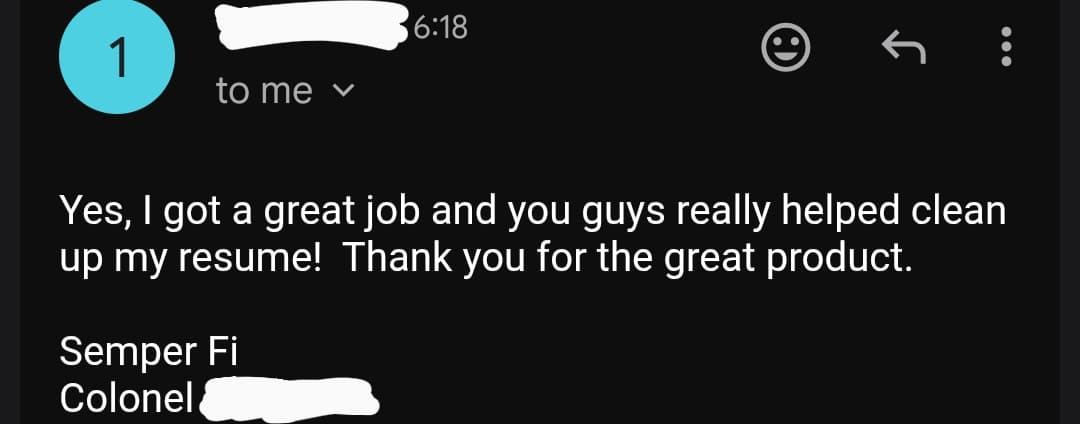
I used the resume program to transition a very government centric resume into one that could be easily understood and appreciated in the civilian sector. I applied to several government and corporate jobs using the resume builder to adjust my details according to the job I was applying for. I…
Eli· Colonel (O-6)· Marines
Operations and Intelligence
Read the full story

Federal Career Paths

The GS-2604 (Electronics Mechanic) and GS-2504 (Wire Communications Equipment Installation and Maintenance) series are the most direct federal matches for 2841s. These positions exist at military installations, federal agencies with communications infrastructure, and organizations like DISA (Defense Information Systems Agency).

IT Management (GS-2210) is increasingly relevant as tactical communications merge with network-based systems. 2841s who worked with IP-based radios, data links, and network configurations have a foundation for IT positions that many civilian applicants lack — practical experience troubleshooting network issues under operational conditions.

The Telecommunications series (GS-0391) covers positions managing communications systems across federal agencies. From the Secret Service communications division to FAA radio maintenance, these roles need exactly the RF and systems integration knowledge that 2841s bring.

GS Series & Position Matches

GS-2604
Electronics Mechanic
Typical grades: GS-7, GS-9, GS-11
View Details
GS-2504
Wire Communications Equipment Installation and Maintenance
Typical grades: GS-7, GS-9, GS-11
View Details
GS-0391
Telecommunications
Typical grades: GS-9, GS-11, GS-12
View Details
GS-2210
Information Technology Management
Typical grades: GS-7, GS-9, GS-11, GS-12
View Details
GS-0301
Miscellaneous Administration and Program
Typical grades: GS-7, GS-9, GS-11
View Details
GS-0340
Program Management
Typical grades: GS-11, GS-12, GS-13
View Details
GS-0802
Engineering Technician
Typical grades: GS-7, GS-9, GS-11
View Details
GS-1910
Quality Assurance
Typical grades: GS-7, GS-9, GS-11
View Details
GS-1712
Training Instruction
Typical grades: GS-7, GS-9, GS-11
View Details
GS-0346
Logistics Management
Typical grades: GS-7, GS-9, GS-11
View Details

Federal resumes follow different rules. We know them.

Federal hiring uses keyword-matching and structured experience. BMR builds federal-format resumes (USAJobs-ready) with the right keywords, hours/week, and supervisor info — for any GS series above.

Free to start · Federal + civilian resume formats included

Build My Federal Resume Free

Want to Change Careers Entirely?

Not everyone wants to stay in a related field. These career paths leverage your transferable skills — leadership, risk management, logistics, project planning — in completely different industries.

Medical Equipment Repairer

$62,630
Healthcare(O*NET: 49-9062.00)BLS OEWS May 20243% (As fast as average)
Component-level fault diagnosis on complex electronicsPrecision soldering and board-level repairReading schematics and signal-flow diagramsWorking from technical manuals under accuracy standards

Diagnosing a failing radio board and a failing infusion pump rely on the same skill: isolating an electronic fault inside a complex device using schematics and test gear. Hospitals value technicians who already think in signal paths and tolerances.

How to get there: Most biomedical employers hire on demonstrated electronics troubleshooting and train device-specific. An associate degree in biomedical equipment technology or the AAMI CBET certification speeds entry and pay.

Electro-Mechanical and Mechatronics Technician

$70,760
Manufacturing and Automation(O*NET: 17-3024.00)BLS OEWS May 20242% (As fast as average)
Integrated diagnosis across electronic and mechanical systemsRF and analog circuit troubleshootingReading control schematics and wiring diagramsField maintenance on networked equipment

Automated factory lines fail at the seam between electronics and mechanics, which is exactly where 2841s already work. Tracing a fault from a sensor through a controller to an actuator is the same diagnostic logic you ran on a radio suite.

How to get there: A community-college mechatronics certificate or an associate degree, plus a PLC course (Siemens or Allen-Bradley), converts radio-repair experience into automation-floor readiness.

Calibration Technologist and Technician

$65,040
Aerospace and Metrology Labs(O*NET: 17-3028.00)BLS OEWS May 20245% (Faster than average)
Precision calibration and alignment of test equipmentSpectrum analysis and signal measurementDocumenting measurements to traceable standardsOperating signal generators, oscilloscopes, and meters

Aligning and calibrating radio gear to spec is the core of metrology work. Calibration labs need people who already treat a measurement as something that has to be traceable and right, not approximate.

How to get there: Calibration labs hire electronics technicians and train on standards. An ASQ Certified Calibration Technician credential or an A2LA-aligned metrology course formalizes the path.

Industrial Machinery Mechanic

$63,510
Industrial Maintenance(O*NET: 49-9041.00)BLS OEWS May 202415% (Much faster than average)
Systematic fault isolation on complex systemsDiagnostics using test instrumentsField repair in austere conditionsReading equipment technical documentation

Plant maintenance rewards the same habit a radio repairer lives by: find the failed component fast, fix it, get the system back online. The electronics depth is a bonus on increasingly computerized machinery.

How to get there: Many plants hire on demonstrated troubleshooting and run apprenticeships. An NIMS industrial maintenance credential or a community-college mechanical-maintenance certificate accelerates it.

Solar Photovoltaic Installer

$51,860
Renewable Energy(O*NET: 47-2231.00)BLS OEWS May 202448% (Much faster than average)
Wiring and connecting electrical systemsTesting circuits and reading wiring diagramsWorking safely with live electrical equipmentField installation in outdoor and remote sites

Solar arrays are wiring, electrical testing, and outdoor field work, all of which a 2841 has done under far harder conditions. The growth in this field is among the fastest BLS tracks.

How to get there: Entry is direct with on-the-job training. A NABCEP PV Associate credential and a short PV install course make a veteran installer competitive quickly.

Training and Development Specialist

$65,850
Corporate and Technical Education(O*NET: 13-1151.00)BLS OEWS May 20246% (Faster than average)
Instructing on complex technical systemsBreaking down circuit and signal theory for learnersWriting maintenance and procedure guidesEvaluating hands-on technical proficiency

Repairers who trained junior Marines on radio systems already build curricula and assess skill. Technical training teams at electronics and equipment manufacturers hire that exact ability to teach hard material clearly.

How to get there: Move into a technical-trainer or field-instructor role at a manufacturer, then formalize with an ATD CPTD credential or instructional-design coursework.

Pivoting industries? You don't need to start from scratch.

The skills that made you a good Marine, Sailor, Airman, or Soldier transfer further than you think. BMR rewrites your bullets for any of the pivot careers above — without making you sound like you've never done the work.

Free to start · Try as many career angles as you want

Tailor My Resume to a New Career

Skills Translation Guide

If you are applying to defense contractors, telecommunications companies, or electronics repair shops, your technical vocabulary translates directly — they know what SINCGARS and AN/PRC-117G mean. This section is for Marines targeting careers outside of communications and electronics repair.

The challenge for 2841s moving into non-technical roles or different industries is that your most valuable skills — systematic electronics troubleshooting, RF theory, signal analysis — sound like engineering jargon to hiring managers outside the tech world. The key is reframing the underlying competencies: methodical problem-solving, equipment lifecycle management, training delivery, and the ability to restore critical systems under time pressure.

Resume Bullet Examples

Before (Military)
Performed component-level troubleshooting on AN/PRC-117G multiband radios, isolating faults to board level and replacing defective components to restore operational capability
After (Civilian)
Diagnosed and repaired complex electronic communication systems at the component level, isolating faults through systematic testing and restoring system functionality within established timelines
Before (Military)
Served as COMSEC custodian for battalion communications section, managing cryptographic key distribution, equipment accountability, and destruction procedures for 40+ COMSEC devices
After (Civilian)
Managed classified information security program for 40+ cryptographic systems, maintaining strict accountability, distribution protocols, and secure destruction procedures in compliance with federal security regulations
Before (Military)
Managed battalion comm maintenance shop: 8 technicians, 200+ radios in inventory, maintaining 95% operational readiness rate across all assigned equipment
After (Civilian)
Directed an 8-person technical repair facility responsible for 200+ electronic systems, achieving 95% operational availability through efficient workflow management, parts procurement, and quality control processes
Before (Military)
Coordinated frequency assignments and managed spectrum deconfliction for battalion-level exercises involving 150+ radio nets
After (Civilian)
Developed and managed RF spectrum allocation plans for 150+ concurrent communication channels, ensuring electromagnetic compatibility and eliminating signal interference across the operational environment
Before (Military)
Conducted quarterly PME/PMI on 80+ ground radio systems IAW TM 11-5820 series, documenting all findings and tracking equipment readiness trends
After (Civilian)
Managed preventive maintenance program for 80+ electronic systems on quarterly cycles, documenting inspection findings, tracking reliability trends, and recommending equipment replacement based on lifecycle analysis
Before (Military)
Served as primary instructor for Ground Radio Repair Course at MCCES, teaching 30+ students per class on radio theory, troubleshooting procedures, and test equipment operation
After (Civilian)
Delivered technical training programs to classes of 30+ students covering electronic system theory, diagnostic methodology, and equipment operation, developing curriculum materials and conducting performance assessments
Before (Military)
Performed emergency field repair on AN/MRC-145 vehicular radio suite during live-fire exercise, restoring battalion tactical communications within 45 minutes using expedient repair techniques
After (Civilian)
Executed emergency technical response to restore mission-critical communication system within 45-minute deadline, applying rapid diagnostic techniques and expedient repair methods under demanding field conditions
Before (Military)
Maintained equipment repair records for 200+ systems, documenting all maintenance actions in GCSS-MC, tracking fault trends, and generating readiness reports for battalion S-6
After (Civilian)
Maintained comprehensive equipment maintenance records for 200+ systems using enterprise asset management software, tracking repair histories, parts consumption, and generating operational readiness reports for senior management

Get bullets like these auto-generated for your resume.

BMR turns your 2841 duties and accomplishments into civilian bullets that match the job you're applying for — no manual translation, no rewriting.

Free to start · Tailored to each job posting

Generate My Resume Bullets

Certifications by Career Path

Which certifications you need depends on where you're headed. Find your target career path below.

Communications & Marketing

FCC General Radiotelephone Operator License (GROL)
Recommended
FCC
Cost: $25 - $100 (exam fees)Time: 2-4 weeks study
Civilian proof of RF competence. Required by many telecom and broadcast employers. Military training covers significant portions of the exam material.
IPC J-STD-001 Certified Soldering Specialist
Beneficial
IPC
Cost: $200 - $500Time: 1-2 weeks
Industry standard for electronics soldering. Some 2841s earn equivalent certification during service. Valued by electronics manufacturing and repair employers.

IT & Networking

CompTIA A+
Recommended
CompTIA
Cost: $350 - $500Time: 2-3 months studyGI Bill Eligible
Entry-level IT certification. Hardware troubleshooting experience from 2841 training gives you a significant advantage. Foundation for IT career path.
CompTIA Network+
Recommended
CompTIA
Cost: $350 - $500Time: 2-3 months studyGI Bill Eligible
Validates networking knowledge. IP-based radio systems and data link experience provides practical foundation. Stepping stone to higher IT certifications.
CompTIA Security+
Beneficial
CompTIA
Cost: $400 - $500Time: 2-3 months studyGI Bill Eligible
DoD 8570 compliant — required for many government IT security positions. COMSEC experience provides a conceptual foundation for information security.
Cisco Certified Network Associate (CCNA)
Beneficial
Cisco
Cost: $330 (exam)Time: 3-6 months studyGI Bill Eligible
For IT networking career path. IP radio and data link configuration experience provides a practical foundation. Valued by telecom and IT employers.

Manufacturing

Certified Electronics Technician (CET)
Beneficial
ETA International
Cost: $200 - $400Time: 2-4 weeks studyGI Bill Eligible
Industry certification for electronics technicians. Associate and Journeyman levels available. Validates civilian-recognized electronics competence.

Operations Management

Six Sigma Green Belt
Beneficial
ASQ or IASSC
Cost: $300 - $500Time: 2-4 monthsGI Bill Eligible
Process improvement methodology. Diagnostic troubleshooting mindset transfers to process analysis. Valued for manufacturing and operations management roles.

Project Management

Project Management Professional (PMP)
Beneficial
PMI
Cost: $400 - $600Time: 3-6 months studyGI Bill Eligible
For transition to project management roles. Maintenance workflow management and equipment program oversight count toward experience requirements.

Safety & EHS

OSHA 30-Hour General Industry
Recommended
OSHA
Cost: $150 - $300Time: 4 days
Standard safety certification for manufacturing and industrial settings. Quick certification to add before separation.

Got a cert? Don't bury it. List it the right way.

The wrong placement can sink an otherwise strong application. BMR knows where each cert ranks, what to call it, and how to frame it for ATS keyword matching and hiring manager attention.

Free to start · Built around your real certs and clearance

Build My Resume the Right Way

Transition Resources

For Staying in Communications / Electronics

SkillBridge Programs: Companies like General Dynamics Mission Systems, L3Harris, and several wireless carriers participate in DOD SkillBridge. Check the SkillBridge database 180 days before separation. Tower companies and telecom contractors also participate.

FCC Licensing: The FCC General Radiotelephone Operator License (GROL) is the civilian equivalent of proving RF competence. Many wireless and broadcast employers require it. Your military training covers much of the material.

Industry Associations: The ARRL (American Radio Relay League) and Society of Broadcast Engineers provide networking and continuing education in RF-related careers.

For Careers Outside of Communications

IT Certifications: CompTIA A+, Network+, and Security+ validate your technical skills for the broader IT market. Your electronics and networking background gives you a head start. Security+ satisfies DoD 8570 requirements for IT security positions.

Project Management: The PMP certification (PMI) leverages your experience managing repair workflows, equipment inventories, and team coordination. Cost: ~$555 (PMI member).

Federal Employment: Create your USAJobs profile early. Key agencies: DISA, NAVWAR, FAA, DHS, and any federal installation with communications infrastructure. Federal resumes are 2 pages max. Build yours here.

Veteran Networking: American Corporate Partners (ACP) pairs you with mentors in your target industry — free for all veterans.

Clearance Leverage: Your Secret clearance is valuable to defense contractors and federal agencies. ClearanceJobs.com lists positions requiring active clearances. It stays active up to 24 months after separation.

Education Benefits: Use the GI Bill Comparison Tool to verify program approval. For electronics techs, an associate's or bachelor's in electronics engineering technology, IT, or cybersecurity opens doors that certifications alone may not.

BMR Career Resources

Marine Infantry Resume Guide | Complete Military Resume Guide | Top Companies Hiring Veterans | Build Your Resume Free

Your 30 / 60 / 90-Day Transition Plan

Most people do this backwards. They wait until terminal leave to start, then panic. Here's the sequence that works. Already out? Same plan, start at day one today.

1Days 0–30

Set the foundation

  • Pull your DD-214 (request from Milconnect if separated)
  • List your top 3 civilian roles AND top 3 GS series
  • Build your tailored 2841 resume — BMR does it free
  • Write 1 strong LinkedIn headline (not "veteran seeking opportunities")
  • Pull together your evals/performance reports for accomplishments
Build my resume free
2Days 30–60

Apply with intent

  • Apply to 5–10 jobs/week — quality over quantity
  • Tailor every resume to the job description (BMR auto-tailors)
  • Connect with 5 people/week on LinkedIn (not a spray)
  • Set up a USAJobs profile and a saved-search alert for your GS series
  • Practice translating your military bullets out loud — explain to a civilian friend
Tailor my next resume
3Days 60–90

Close the offer

  • Track every application — date, status, contact, notes
  • Follow up 7–10 days after each application
  • Prep for behavioral interviews using the STAR method
  • Negotiate salary — don't take the first offer (BLS median is your floor)
  • Stay applying even after one offer — leverage = options
Track my applications

Print this. Tape it to your monitor. Veterans who treat the job search like a 90-day op get hired faster than the ones who treat it like an emergency.

Frequently Asked Questions

What civilian jobs can a Marine 2841 get?
Direct paths include telecommunications equipment installer/repairer (BLS median $61,070, O*NET 49-2022.00), electronics engineering technician ($73,490, O*NET 17-3023.00), field service engineer for defense contractors, and RF technician for wireless carriers. Beyond direct electronics work, 2841s move into IT support ($59,660, O*NET 15-1231.00), network administration, cybersecurity, and technical project management.
What is the salary range for former 2841s?
BLS May 2024 data shows telecommunications equipment installers and repairers at a median of $61,070 and electronics engineering technicians at $73,490. IT support specialists earn a median of $59,660, while information security analysts earn $120,360. Defense contractor field service engineers are not tracked separately by BLS but typically fall in the $65,000-$95,000 range depending on clearance and specialization.
Is the FCC GROL license worth getting?
Yes, if you are targeting telecommunications, broadcasting, or RF engineering roles. The FCC General Radiotelephone Operator License proves civilian RF competence and many employers in wireless infrastructure, broadcasting, and maritime communications require it. Your military training covers significant portions of the exam material. The exam costs approximately $25-50 per element.
What if I want to leave electronics entirely?
Many 2841s successfully transition into non-technical careers. Project management (BLS median $100,750), operations management ($102,950), and logistics ($80,880 with 17% growth) are strong paths that leverage your planning, coordination, and equipment management experience without requiring you to touch a soldering iron. See the Career Change Paths section above for specifics.
How valuable is my Secret clearance?
An active Secret clearance saves employers $3,000-10,000 and several months of processing. Defense contractors (General Dynamics, L3Harris, BAE Systems), federal agencies (DISA, NAVWAR, NSA), and some private sector firms with government contracts require clearances. ClearanceJobs.com lists positions specifically. Your clearance remains active up to 24 months after separation — start job searching before it lapses.
Should I get CompTIA certifications?
If you are targeting IT careers beyond pure RF/electronics, yes. CompTIA A+ validates hardware/software troubleshooting skills. Network+ proves networking knowledge. Security+ satisfies DoD 8570 requirements and is required for many government IT positions. Your 2841 electronics background gives you a significant advantage on the technical portions of these exams.
How does Veterans Preference work for federal jobs?
Veterans Preference adds 5 or 10 points to your federal hiring assessment score. Disabled veterans receive 10 points. You need your DD-214 (Member 4 copy) and SF-15 form. Direct Hire Authority at agencies like DISA can bypass competitive processes entirely. Apply at GS-7 through GS-11 where VPref has the greatest impact. Build your federal resume at bestmilitaryresume.com — federal resumes have different formatting rules.
Is 5G expansion creating jobs for former radio techs?
Yes. The ongoing 5G buildout and rural broadband expansion have increased demand for RF technicians, tower climbers/technicians, and network engineers. Companies like T-Mobile, Verizon, Crown Castle, and American Tower are actively hiring. Your RF propagation knowledge, antenna systems experience, and troubleshooting skills are directly applicable to wireless infrastructure deployment and maintenance.
Can I start job searching while still on active duty?
Yes — and you should. Begin 12 months before your EAS. At 180 days out, you may qualify for DOD SkillBridge. At minimum: resume ready 6 months out, LinkedIn networking 6 months out, federal applications 6 months out (federal hiring takes 3-6 months). Check with your career planner about SkillBridge opportunities with defense electronics companies.
Should I use my GI Bill for a degree or certifications?
Depends on your goal. For telecommunications and electronics repair, certifications (FCC GROL, CompTIA) combined with your military experience may be sufficient. For RF engineering roles at higher levels, an associate's or bachelor's in electronics engineering technology opens doors. For IT careers, a degree in cybersecurity or information systems is increasingly expected. Use the VA GI Bill Comparison Tool to verify any program before enrolling.
Free for every veteran

Translate your 2841 Ground Radio Repairer experience into a resume that gets callbacks

Stop rewriting from scratch every time you apply. BMR turns your military experience into civilian and federal resumes — tailored to each job.

What you get — all free:
2
Tailored resumes
AI-rewritten for each job posting
2
Cover letters
Matched to the role
LinkedIn optimization
Profile rewrite for civilian recruiters
Elevator pitch generator
For interviews and networking
2
Company research reports
Know who you're applying to
Job tracker
Manage every application in one place
Start My Free Resume
Free to start · 90 seconds to sign upBuilt by a Navy Diver veteran. More than 65,000 resumes built for the military community.